The era of "buy everything AI" is over, Goldman Sachs traders warn explicitly
Hedge funds are systematically pulling out of tech stocks.
According to the latest Goldman Sachs data, the tech sector has seen net selling for four consecutive weeks, and Goldman Sachs traders have explicitly warned: the market has bid farewell to the "buy everything AI" narrative, and an era of differentiation is on the horizon.
According to Goldman Sachs' latest weekly briefing, in the week ending July 2, hedge funds were net sellers of U.S. stocks for the third consecutive week, with the main pressure coming from long position reductions in individual stocks, while long buying in macro products only partially offset the impact.
Meanwhile, the Goldman Sachs High Beta Momentum Portfolio (GSPRHIMO) — composed primarily of chip and memory stocks — has posted a cumulative 19% decline over the past two weeks, including a historic two-day rout.
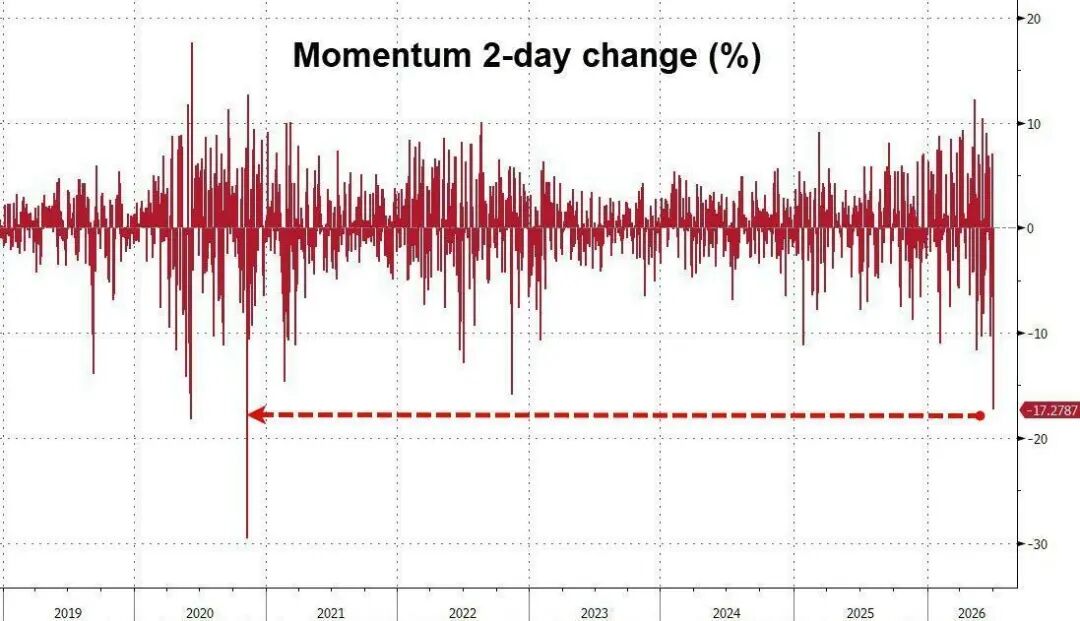
Goldman Sachs trader Benny Quek summarized in the report that the current market mindset remains "buy the dip" rather than "sell the rally," but a key shift has taken place: this is no longer a "buy everything AI" market, and "the market will reward quality and execution once again, rather than mere beta exposure."
This assessment marks a critical style inflection point for the AI thematic trade that has swept the market over the past two years.
Continuous Position Reduction: Hedge Funds Accelerate Exodus from Tech Sector
Goldman Sachs data shows that net selling of tech stocks by hedge funds has persisted for four weeks.
Just a week earlier, Goldman Sachs Prime Brokerage reported that hedge funds sold tech stocks at a record pace ahead of the Russell index rebalancing, pushing both the gross and net exposures of the "Magnificent Seven" to their lowest levels of the year.
In the week ending July 2, net selling pressure stemmed mainly from long position reductions in individual stocks. Long buying in macro products provided some offset but failed to reverse the overall trend.
Looking at fund performance, Goldman Sachs' estimated equity fundamental long-short strategy return fell 1.53% between June 26 and July 2, while the MSCI All Country World Total Return Index rose 1.67% over the same period, a clear performance gap.
Within this, the alpha contribution was -1.42%, with losses recorded on both long and short sides; the beta contribution was -0.11%. Systematic long-short strategies fared worse, declining 2.09% over the same period with an alpha contribution of -2.30%, dragged down mainly by losses on the short side, while a +0.21% beta contribution partially offset the losses.
Chip Stock Rout: High Beta Momentum Portfolio Plunges 19% in Two Weeks
Over the past two weeks, the hardest-hit segment has been the Goldman Sachs High Beta Momentum Portfolio (GSPRHIMO), which consists primarily of chip and memory stocks. It has tumbled a cumulative 19% in two weeks, including the historic two-day plunge at the end of last week.
Regarding the nature of this round of selling, Quek argues that it is "more the result of a confluence of factors: end-of-quarter rebalancing, summer seasonality, crowded positioning, and trading style rotation, rather than a fundamental change in market mechanics."
This assessment is crucial for investors: it implies that the current tech stock correction is more of a structural position unwinding, rather than a rejection of the AI investment narrative itself.
Asia Flows: Record Selling in Japan, Chinese Funds Outperform Against the Trend
In terms of regional flows, the Japanese market saw its largest net selling on record in June, while selling in the South Korean market erased all net buying year-to-date.
In contrast, Asian fundamental long-short funds delivered a monthly return of around 7% in June, outperforming the broader market (which fell roughly 1% over the same period). Performance drivers included short-term momentum, crowded longs, and tech tilts, while South Korea positioning and volatility factors weighed on returns.
Notably, net selling in Asian markets in June almost completely reversed the record net buying surge seen in May, reflecting the market's heightened sensitivity to AI-related positioning amid the rapid capital in-and-out flows.
Style Shift: From "Buy Everything AI" to "Quality First"
Quek explicitly states that the market has entered a new phase — "'The 'buy everything AI' rally is over, and differentiation will return. The market will reward quality and execution, not beta.'"
As for the future trajectory of the AI narrative, Goldman Sachs' core conclusion is that the imbalance signals seen before the 1990s tech bubble burst are not currently visible, and strong earnings tailwinds can sustain the investment boom; however, risks are rising — if the market continues to over-extrapolate recent trends far into the future, valuation pressures will build up.
On the investor side, respondents are slightly optimistic about risk assets overall. In terms of asset class preferences, developed market equities are the most favored asset class, while credit debt is the least favored.
For the S&P 500 year-end target, the mainstream expectation among respondents centers on the 7500 to 8000 range (Goldman Sachs' own forecast is 8000), while the federal funds rate is expected to land between 3.5% and 3.75%.
When asked about the biggest risk to AI trading and which sector would benefit most from AI diffusion, client views diverge noticeably — which in itself confirms that the "return of differentiation" described by Quek is taking place.
This article does not constitute personal investment advice and does not represent the views of the platform. Market investing carries risks, and you should exercise independent judgment and make decisions with caution.
This article is from the WeChat public account "Wall Street CN", author: Xu Chao, published with authorization from 36Kr.