Setting the fastest review record on the Sci-Tech Innovation Board at 104 days, can Unitree Robotics win the tough battle for humanoid robots?
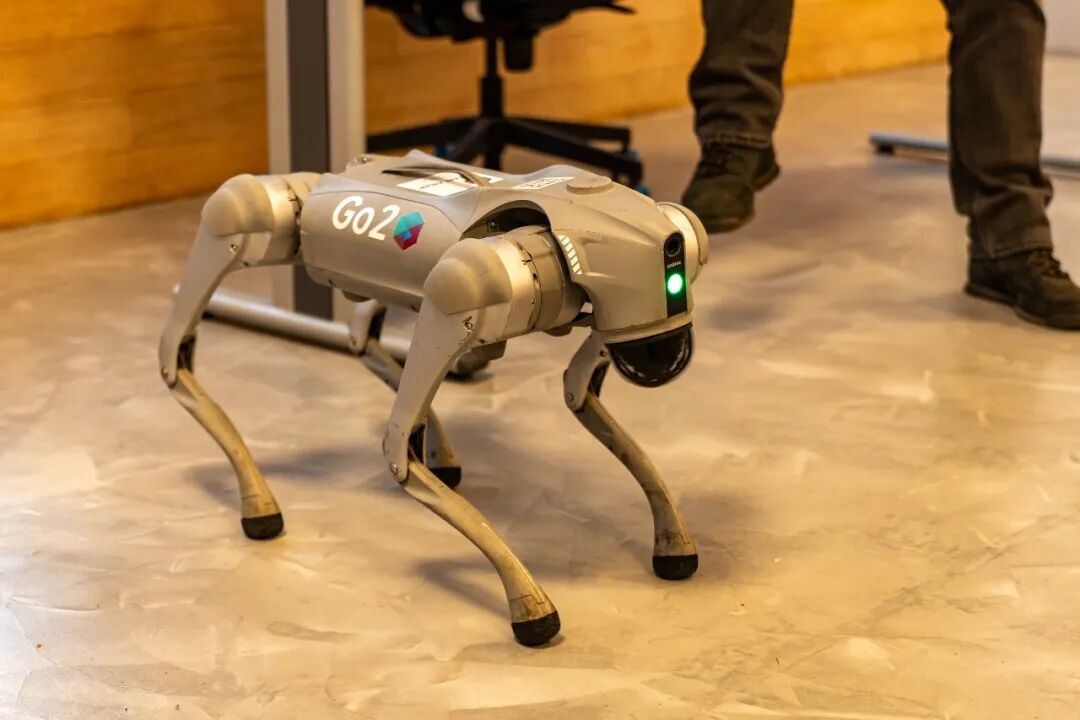
Image Source: pexels
On July 2, the China Securities Regulatory Commission (CSRC) issued an approval for the initial public offering (IPO) registration of Unitree Robotics Co., Ltd., granting its official consent to the company's IPO application.
Back on March 20, the Shanghai Stock Exchange accepted Unitree Robotics' STAR Market IPO application, and the offering obtained approval at the listing hearing on June 1. The company secured its official registration approval in just 104 days, setting the fastest review record since the implementation of the STAR Market's pre-approval mechanism.
This means Unitree Robotics is poised to land on the capital market as the "first A-share humanoid robot stock". As the humanoid robot industry enters a period of rapid growth, the challenges facing Unitree Robotics are only set to increase. According to IDC data, the global humanoid robot market saw explosive growth in 2025, with shipments reaching approximately 18,000 units and total sales hitting around 440 million USD, representing a year-on-year increase of roughly 508%. Chinese manufacturers dominated this market, with Deep Robotics and Unitree Robotics leading the sector at about 5,000 units in shipments each. IDC forecasts that global humanoid robot shipments will exceed 510,000 units by 2030, achieving a nearly 95% compound annual growth rate.
Against this backdrop, automotive manufacturers worldwide have successively entered the humanoid robot space. Amid intensifying competition, can Unitree Robotics maintain its existing market advantages?
Building Cost-Effectiveness Advantages
Looking back at Unitree Robotics' development path, the company has consistently adhered to its "in-house R&D + cost-effectiveness" strategy. Founded in 2016, Unitree Robotics focused on motor drive technology, independently developing the motor drive systems, full-machine mechanical structures, and whole-body control systems for quadruped robots. Building on the XDog prototype developed by its founder in the early stage, the company fully redeveloped and launched its first commercialized product, the Laikago. In 2019, Unitree Robotics independently developed and released the high-dynamic-performance quadruped robot AlienGo, establishing a full-stack in-house R&D model for both complete machines and core components in the hardware field.
In 2020, Unitree Robotics achieved mass production of its self-developed new-generation quadruped robot A1, lowering the product price to the consumer-grade range for the first time. In 2021, the Go1 entered the mass consumer market with a retail price of 16,000 yuan; in 2023, the Go2 brought the company's quadruped robot price below 10,000 yuan for the first time at a retail price of 9,997 yuan. That same year, Unitree Robotics officially expanded into the humanoid robot sector, launching its first full-size humanoid robot product, the H1. Since 2024, the company has developed the G1, a mid-sized humanoid robot with a starting price below 100,000 yuan.
At the 2025 CCTV Spring Gala, the Unitree H1 series participated in the dance performance "YanggeBOT", demonstrating natural and fluid dance movements. At the 2026 CCTV Spring Gala, the Unitree G1 and H2 took part in "WushuBOT", completing martial arts routines including fast running, dynamic formation changes, and projectile flips. These appearances showcased Unitree Robotics' technological progress in humanoid robots to the public.
Benefiting from economies of scale, the average selling price of Unitree Robotics' robots has gradually declined. In 2025, the company sold 23,000 quadruped robots, representing a year-on-year increase of 222.83%; the average selling price reached 30,300 yuan per unit, down 6.27% year-on-year; sales revenue hit 698 million yuan, up 202.6% year-on-year; and the revenue proportion of quadruped robots decreased from 75.78% in 2023 to 41.62% in 2025.
During the same period, Unitree Robotics sold 5,215 humanoid robots, a year-on-year surge of 1,165.78%; the average selling price stood at 166,400 yuan per unit, down 36.1% year-on-year; sales revenue reached 868 million yuan, up 708.81% year-on-year; and the revenue proportion of humanoid robots rose from 1.88% in 2023 to 51.78% in 2025.
Unitree stated that while product shipments have grown rapidly, the gradual decline in average unit prices directly stems from changes in product mix and targeted price adjustments, with indirect drivers including steadily falling unit costs and intensifying industry competition. Leveraging the economies of scale from sustained production growth and optimized manufacturing processes, the company's average unit product cost has dropped significantly during the reporting period.
Overall, from 2023 to 2025, the company's operating revenue reached 159 million yuan, 393 million yuan, and 1.699 billion yuan respectively, with a compound annual growth rate of 226.78%; net profit hit -11.1451 million yuan, 95.4747 million yuan, and 278 million yuan. The gross profit margin of its core business increased from 44.22% in 2023 to 60.13% in 2025.
This clearly shows that technology-driven cost reduction and economies of scale have built Unitree's "profit moat".
Notably, the review inquiry once raised the question of whether the company's leading shipment volume was primarily achieved through differentiated product application scenarios. Unitree Robotics responded that its diverse product portfolio effectively meets differentiated technical requirements for general robots across various application fields and scenarios. Furthermore, since its establishment, the company has adhered to the full-stack in-house R&D approach for complete machines and core components, significantly improving product performance and reliability while effectively reducing production costs and public selling prices. Supported by full-stack R&D capabilities spanning embedded low-level drivers to advanced motion control algorithms, the company has built profound technological leadership in robot software and algorithms. As a result, its products deliver outstanding performance alongside remarkable cost-effectiveness, effectively meeting the broad needs of numerous customers in sectors such as scientific research and education, commercial consumption, and industrial applications.
Intensifying Competition
As the robotics market evolves, it is no longer easy for Unitree Robotics to maintain its previous rapid revenue growth. In its prospectus, the company noted that after the audit cutoff date of its financial report, with its revenue base significantly expanded, industry enthusiasm gradually cooling, and market competition becoming increasingly fierce. The company's audited operating revenue for the first quarter of 2026 reached 423 million yuan, up 68.49% year-on-year; however, due to the rapid growth of period expenses, its non-recurring net profit stood at 40.2536 million yuan, down 52.55% year-on-year.
Meanwhile, Unitree Robotics estimates that its operating revenue for the first half of 2026 will be approximately 1.052 billion yuan to 1.128 billion yuan, representing a year-on-year increase of 35.62% to 45.41%. However, due to the rapid rise in period expenses such as R&D investment, its non-recurring net profit is projected to be around 236 million yuan to 283 million yuan, a year-on-year decline of 21.97% to 6.43%.
In terms of industry competition, Unitree Robotics mentioned that Tesla, an international tech enterprise with advantages in large-scale mass production, supply chain integration, AI technical resources, and self-owned factory deployment, has announced the launch of small-batch trial production for its humanoid robot Optimus Gen-3. Once it achieves commercial mass production, Tesla will directly compete with industry players including Unitree. Multiple domestic automotive manufacturers and consumer electronics enterprises have officially entered the humanoid robot sector. These companies possess certain advantages in resource investment, market promotion, and manufacturing experience, further intensifying competition in the humanoid robot industry in areas such as product development, talent acquisition, and R&D investment. After their related products enter the market, they may bring potential competitive pressure to Unitree in aspects including product pricing, market share, and profit margins.
For this IPO, Unitree Robotics plans to raise 4.202 billion yuan in total. Among the funds, 2.022 billion yuan will be allocated to the intelligent robot model R&D project; 1.11 billion yuan to the robot body R&D project; 445 million yuan to the new intelligent robot product development project; and 624 million yuan to the construction of the intelligent robot manufacturing base.
The largest investment will go to the intelligent robot model R&D project, whose R&D direction will focus on continuous investment and technical breakthroughs in key technologies related to the core embodied intelligence modules "brain" and "cerebellum". This will continuously optimize and upgrade embodied intelligence models, enhance robots' generalization capabilities, complex instruction understanding and execution capabilities, as well as operation precision and flexibility, to drive continuous performance iteration of its products.
According to public information, Unitree Robotics has open-sourced the general WMA model UnifoLM-WMA-0 and the general VLA model UnifoLM-VLA-0 in September 2025 and January 2026 respectively. In early 2026, its self-developed industrial-grade embodied large model UnifoLM-X1-0 completed pilot deployment and testing in its own factory, capable of independently completing tasks such as joint motor assembly.
Setting the fastest STAR Market review record at 104 days, Unitree Robotics has delivered an impressive growth speed. Facing multi-layered competition from leading tech giants and cross-industry entrants, alongside the new competitive landscape of accelerating industry technology iteration, the company still needs to present a new answer after its listing to sustain its technical advantages and cost-effectiveness competitiveness.
This article is from the WeChat official account "Zhentan Finance", written by Wuren, and authorized for release by 36Kr.