Waymo self-driving vehicles were once again disrupted by fireworks
Waymo has hit another snag.
Last Saturday marked the 250th Independence Day of the United States. While the night sky over San Francisco was lit up by fireworks, a Waymo self-driving vehicle unexpectedly "caught fire"...
According to a notification from the San Francisco Fire Department, near the 1200 block of Connecticut Street that night, an unmanned Waymo vehicle drove straight over burning fireworks on the road, resulting in the fireworks igniting the vehicle.
Firefighters arrived immediately afterward to extinguish the open flames, and the burning Waymo was towed away from the scene. Fortunately, there were no passengers inside the vehicle at the time of the incident, and no injuries were reported.
This was not the most dramatic part. Many San Francisco residents at the scene that night captured footage of numerous Waymo vehicles simply giving up: malfunctioning, breaking down, and even having to call for tow trucks, causing severe traffic congestion that lasted for 3 to 4 hours.
San Francisco on Independence Day used a fireworks display to give Waymo a hands-on lesson in long-tail scenario operations...
Moreover, this is already the third operational accident caused by Waymo in just two months.
One Fiasco After Another
This recent vehicle fire incident, while not technically Waymo's direct fault, was entirely of its own making—what "properly functioning" car would drive straight through a lit firework as if it were a normal stretch of road?
On the X platform, a passenger inside the vehicle recorded this thrilling scene. The video shows a pedestrian lighting fireworks at an intersection, while an autonomous taxi approaches normally from behind. After the fireworks are ignited, the pedestrian moves to the side of the road, but this passenger-carrying Waymo did not choose to detour, instead driving directly through the burning fireworks zone.
The video also captures the passenger saying "Oh no, no, no," then asking "Dude, are we on fire?" Fortunately, this vehicle was not ignited.
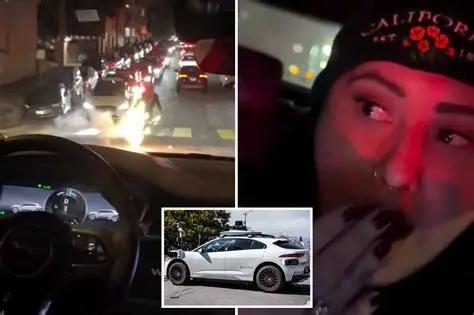
But the real headache is not the few Waymo self-driving vehicles that "clashed" with the fireworks. What is truly worth pondering is the subsequent series of butterfly effects: vehicles stalling, power depletion, waiting for tow trucks, and worsening gridlock.
Videos posted by multiple San Francisco residents show that amid the chaos of the July 4th celebrations, Waymo vehicles either malfunctioned, broke down, or were towed away.
According to a report by Business Insider, severe traffic congestion occurred in northern San Francisco that night, and unplanned road closures took place after the Golden Gate Bridge fireworks show. A large number of Waymo vehicles were trapped in the congested traffic flow. Some vehicles ran out of battery while idling and waiting, requiring tow truck assistance.
"We were told it could take 3 to 4 hours to tow away all these broken-down vehicles before traffic could resume," an X user named Marco Gutierrez wrote under a video showing a Waymo being towed away.
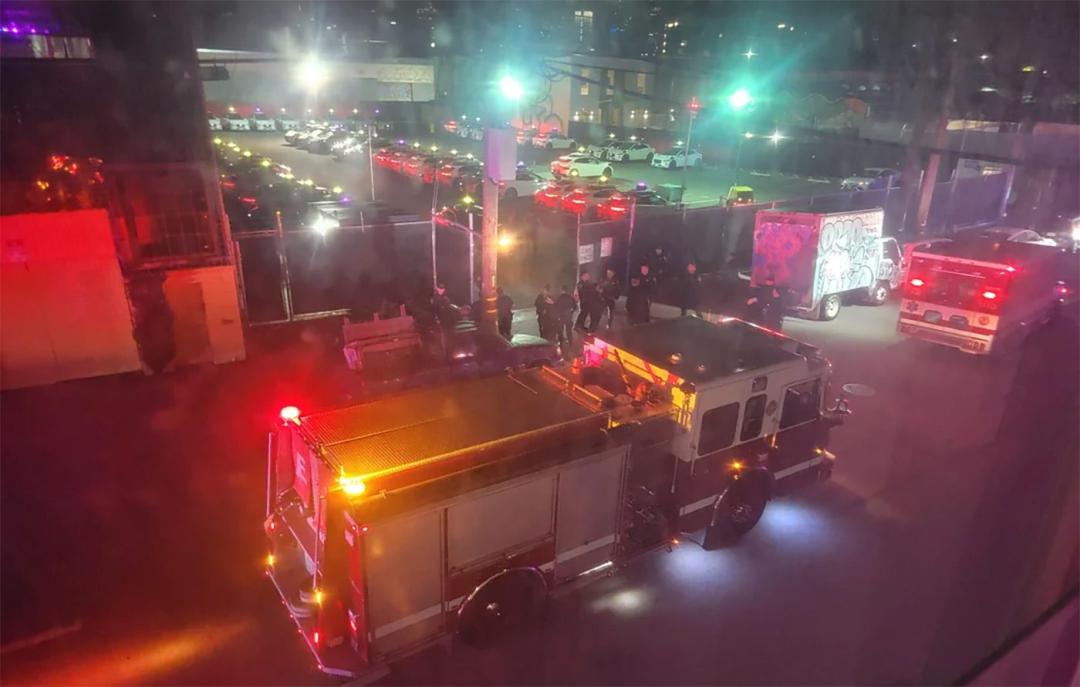
Shortly afterward, a Waymo spokesperson issued an emergency statement, claiming that "extreme traffic congestion" disrupted normal operations. The company had coordinated with local authorities to clear the vehicles, there were no injuries, and all the vehicles were operating in fully autonomous mode at the time. The spokesperson also stated, "Our team is constantly evaluating various methods to enhance Waymo's ability to respond to major traffic disruptions."
Not a single mention was made of their vehicles driving into the fireworks explosion zone and causing the fires.
While it must be acknowledged that San Francisco was indeed in an extremely chaotic state on the night of Independence Day: fireworks exploding at intersections, crowds of onlookers, temporary road closures, gridlocked traffic, and a surge of ride-hailing and private vehicles all pouring into the area simultaneously.
But this should not be an excuse for a self-driving car to fail to identify dangerous scenarios such as a fireworks ignition zone.
Continuous Setbacks
Since the beginning of this year, Waymo has been plagued by repeated operational failures.
Not long ago, Waymo announced a recall of 3,871 autonomous taxis, essentially its entire fleet—marking the sixth recall initiated by Waymo in the past two years.
The reason for the recall sounds almost absurdly simple: there is a defect in the vehicle's perception recognition system, which may fail to correctly identify signs and barriers in highway construction zones, leading the self-driving cars to mistakenly enter closed construction sections.
Prior to the recall, Waymo had confirmed at least 13 such incidents—4 in Phoenix, 7 in San Francisco, and the remaining 2 in undisclosed cities.
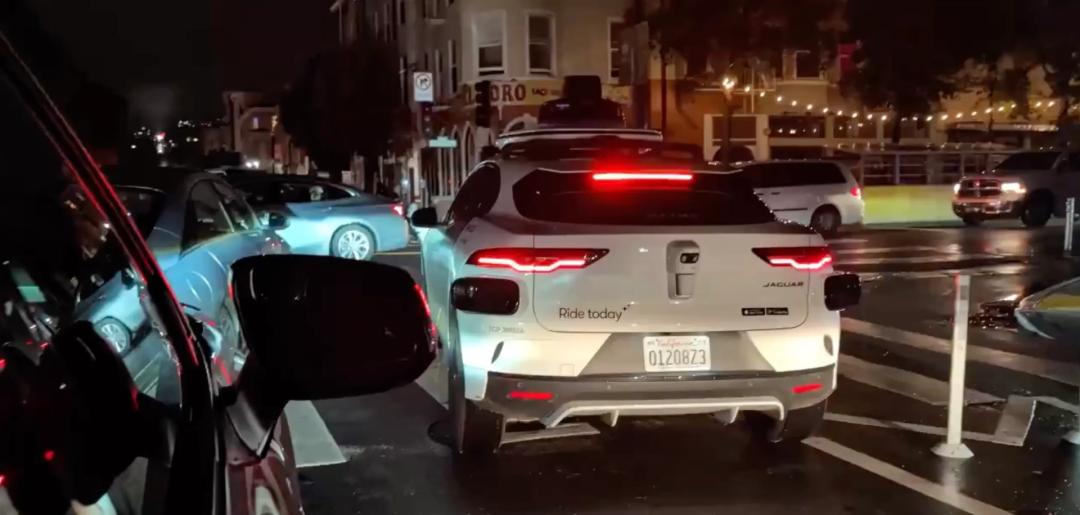
Six consecutive accidents occurred in Phoenix on April 11 and 19, where vehicles drove straight past ramp closure signs into construction zones. In the San Francisco Bay Area, 7 incidents happened in a single day on May 18, with vehicles weaving through traffic cones and entering highway lanes that were still under construction.
Some netizens even shared firsthand accounts, posting videos on social media showing vehicles rushing past traffic cones, weaving left and right between massive construction trucks, and even accelerating, before being chased by police cars.
After the accidents, Waymo halted all Robotaxi highway operations the very next day, then submitted a voluntary recall filing to the National Highway Traffic Safety Administration (NHTSA), with the formal recall taking place last month.
Also in May, Waymo self-driving vehicles exhibited a "phantom traffic" phenomenon: at 6 a.m., one Waymo vehicle after another drove in line into a dead-end street, then turned around and left the same way. Nearly 50 vehicles arrived within an hour—no passengers, no drivers, and no one even knew why they were there.
Subsequently, a resident placed a children's traffic warning sign at the intersection, resulting in all 8 Waymo vehicles getting trapped, circling around in the narrow street.
Waymo later issued a statement: "We value community feedback and have worked with our partner fleet to resolve this route issue."
Then in April this year, a Waymo self-driving vehicle got stuck in extreme weather. Even though the system had detected standing water on the road, the vehicle continued moving forward at low speed. Since the water flow was far stronger than the system had judged, it was eventually swept into a stream.
Waymo later acknowledged that its software had flaws, but has not yet fully developed a final solution to identify and avoid flooded areas. For now, it can only push temporary software updates via the recall, using geofencing to restrict vehicle travel in specific times and zones.
Earlier, in January 2026, a Waymo vehicle in Phoenix mistakenly drove onto light rail tracks, prompting passengers to make an emergency escape. That same month, a Waymo vehicle in Santa Monica hit a child at a crosswalk near an elementary school, causing minor injuries. At San Jose Airport, a Waymo vehicle drove off with a passenger's luggage, forcing the passenger to board their flight empty-handed.
Waymo's response pattern to all these incidents is highly consistent: acknowledge the problem, push a software update, and emphasize its safety record.
Yet violations keep occurring, as if the company only ever fixes the last problem, while being completely unable to predict the next one.
The Persistent "Long-Tail" Ailment
In fact, reviewing all the operational accidents Waymo has encountered since the start of this year—whether in extreme weather conditions, highway maintenance construction zones, or the chaotic urban environment during Independence Day—all point to the same type of technical pain point: "long-tail complex scenarios".
For example, on normal roads, with clear lane lines, standard traffic signs, and predictable behavior from other road users, autonomous driving systems can handle the situation relatively easily.
But construction zones are completely different: temporary road barriers are placed irregularly, lane lines may be covered or repainted, traffic signs differ from their usual designs, construction workers appear randomly, and even speed limits and traffic rules may be temporarily altered in some sections.
The superposition of these variables places exponentially higher demands on the perception system. Waymo's perception system does perform excellently in conventional scenarios, which is why it has obtained the largest number of commercial operation permits worldwide.
Yet Waymo's repeated setbacks reveal a core contradiction: its system excels at handling scenarios that fall "within established rules", but still makes mistakes when facing scenarios where rules are temporarily changed.
Currently, Waymo uses a multi-sensor fusion technical solution, and most of its vehicles in operation are equipped with the 5th-generation autonomous driving system, which includes 29 cameras, 5 LiDAR sensors, and 6 millimeter-wave radars.
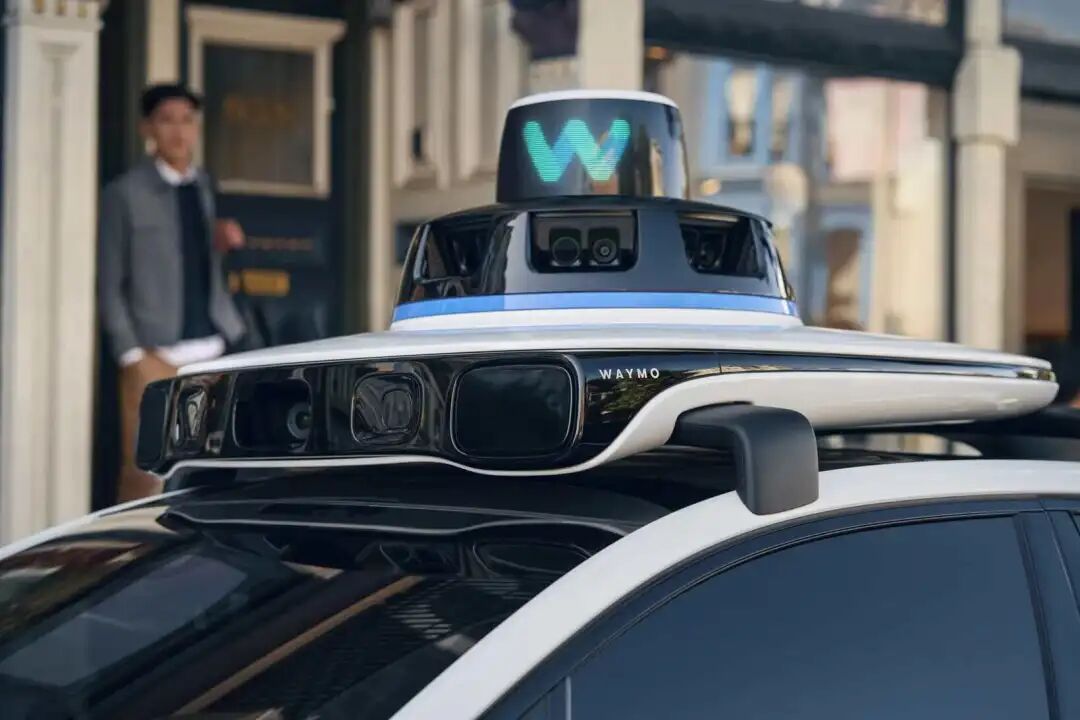
Waymo's technical approach is inherently highly dependent on pre-mapped high-definition maps and rule-based, condition-triggered driving strategies. While this delivers excellent driving experiences in structured environments, it also means the system is naturally vulnerable to scenarios "outside the map".
This is why Waymo can achieve a severe injury and fatality accident rate 13 times lower than human drivers in regular scenarios, yet repeatedly fails in temporary, non-standard road change scenarios.
For instance, the self-driving car that ran over the fireworks and caught fire shows that its sensors failed to recognize that the "small firework" on the road was a dangerous object. LiDAR and cameras can detect obstacles, but "burning fireworks" might be categorized as "tiny obstacles" in the training data, leading the system to determine that evasive action is unnecessary.
These failures do not stem from poor algorithms, but from the fact that no one ever taught the system that even with data simulating 100 million kilometers of driving, it could never replicate the chaotic scene in San Francisco on the night of July 4th, where "everyone was celebrating and no one followed the rules".
Perhaps Waymo performs flawlessly in 99% of scenarios, but the remaining 1%—the so-called "long-tail scenarios"—are where unexpected incidents are most likely to occur, and this is exactly the real world that commercial operations must confront.
While cloud-generated scenario distributions can cover various failure modes encountered in the real world, the combinations of actual failures are always more unpredictable than simulations. The larger the fleet, and the more miles it travels, the higher the probability of encountering extremely complex scenarios.
Although Waymo's safety statistics are better than those of human drivers "on average", long-tail scenarios are precisely where statistical averages become invalid. As Waymo's shortcomings become increasingly obvious, the global rankings of Robotaxi players are bound to be reshuffled.
This article is from the WeChat public account "SuperEV-Lab" (ID: SuperEV-Lab), written by Wang Lei, and published with authorization from 36Kr.