Alexandr Wang, Head of Meta AI, in a latest interview: From "appetizer" to "main course", we are cooking models that can change the world
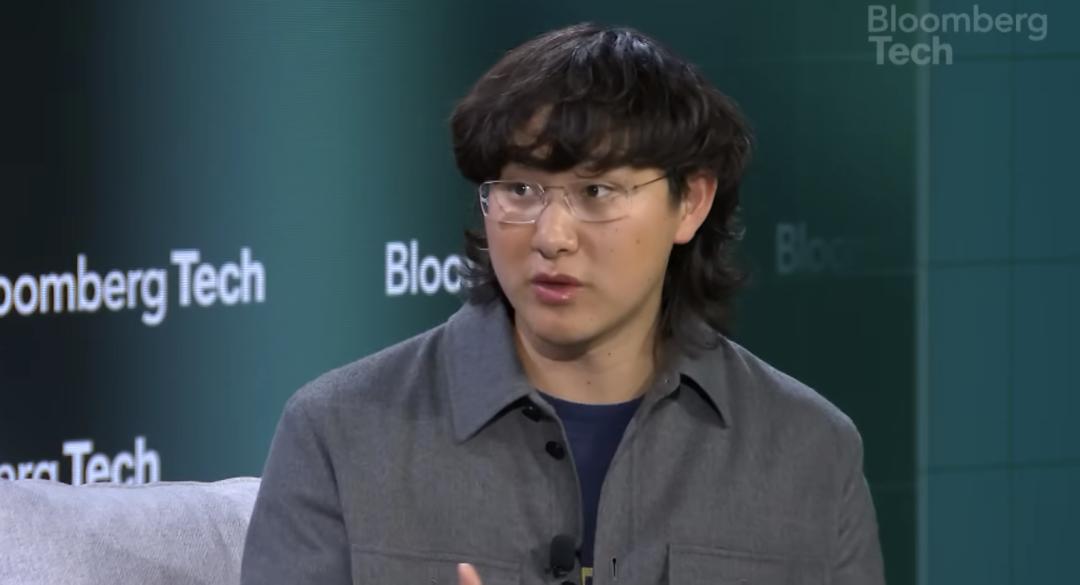
About a year ago, Alexandr Wang joined Meta to lead its AI team. A year later, Meta's AI strategy has undergone a fundamental transformation. At the Bloomberg Tech 2026 conference, the Meta AI head shared the story of the company's transition from a follower to a contender — a complete vision spanning from open source to security-first, from "appetizer" to "main course", and from conversational models to personal agents.
I. The "Appetizer" Is Served, the "Main Course" Is in the Making
When asked "How is Meta different as an AI company today compared to a year ago", Alexandr Wang admitted: "The launch of Llama 4 last year was exciting, but it didn't quite put us on the exact trajectory Meta needed."
But over the past year, they have been "cooking" something new. "We built a completely new model scaling architecture, developed new infrastructure and new research methodologies."
This past April, the first batch of results — the New Spark series of models and the Meta AI update — officially debuted.
"The feedback was extremely positive, even better than our internal expectations. Meta AI climbed to the top of the charts in many app stores."
But Wang made it clear that this is only the "appetizer". "We are 'cooking' much larger models. We expect the upcoming models to be very competitive with the world's leading models."
The core belief driving the entire research effort is predictable scaling — "As models grow in size, you see predictable gains in capabilities. New Spark is an early data point on that scaling path, and the next models will reach far higher points on that scaling curve."
II. The Shift in Open Source Strategy: Why New Spark Is Not Open Source
A striking change is that New Spark is not an open source model — a departure from Meta's past legacy of being widely known for open source AI models.
Wang explained the reasoning behind this: "We updated our 'Advanced AI Scaling Framework', which is essentially our assessment of the risks we face in developing these powerful models, and how we want to approach those risks during early testing."
While building New Spark, the team observed several high-risk areas being triggered — "especially CBRN (Chemical, Biological, Radiological, Nuclear) risks, and several other risks that were also elevated."
"When we release a model like New Spark in our products, we have many ways to mitigate those risks. But when you open source a model, it becomes far more difficult to do that — people can use it in all kinds of environments that we don't fully understand."
But he emphasized that Meta will still do open source. "We are developing models that we believe are appropriate and safe to open source, while preserving as much performance as possible."
III. The Advantages of Meta's Models: Multimodality, Health and Code
When talking about the unique strengths of Meta's models, Alexandr Wang highlighted several key areas:
Multimodal Capabilities: "The ability to process images, videos, and audio is obviously very critical to Meta's business."
Health Domain: "Health is an area we see as extremely critical when scaling these models to billions of people around the world. New Spark's capabilities in health are truly impressive."
Code Generation: "The model's ability to create 'vibe code', build small games or artifacts is incredibly powerful."
He revealed that the team is doubling down on these areas. "We are very excited about the upcoming models — they will become very, very capable agents, equipped with strengths in multimodality, health, and other domains."
The Ultimate Goal: To build the best personal agent for everyone in the world.
When asked about his views on China's progress in the AI field, Alexandr Wang's answer was firm and thoughtful:
"I think it's extremely important that the United States leads in technology. If you look at the history of civilization, technological progress is incredibly important for a country or a civilization."
"Right now I think the US is leading. But we need to constantly track progress from many other countries — especially China — to very thoughtfully understand what is happening in each country and why it is happening."
He believes that what could threaten the US leading position is failing to keep advancing research progress and failing to keep scaling these models. "The progress and speed we are seeing today is almost miraculous."
IV. The Vision: Everyone Will Have a Deeply Personalized AI
Wang shared his vision for the future of AI agents:
"People will probably have one, maybe two, maybe a small handful of agents that they rely on. Maybe a personal agent that focuses on health, maintaining relationships, helping them become better parents, better friends and family members."
"Maybe they use that same agent for their work life too — especially if they work in a small business or are an entrepreneur. If you work in a larger enterprise, those might be separated."
He compared it to email: "This won't be all that different from email. This will become a critical technology that people use every day."
He wants agents to become something that is "deeply personalized". "Over time, you'll find yourself relying on them more and more, both in your personal life and your work life. That's a process the whole of society will go through together."
When asked "whether people would be willing to trust a Meta agent with their personal life tasks", Alexandr Wang acknowledged that this is a key challenge.
"I think this is one of the most important social questions around agents. We have done a lot of work on genetic safety, to ensure that these agents respect your privacy, respect your boundaries."
"This is not just a Meta problem, this is an industry-wide problem. As we build more and more powerful agents, this will be in many ways a redefinition of the relationship between humans and technology. We all have to think through this and solve it together."
V. How AI Has Changed His Life
Wang shared how he uses AI agents himself:
"I use agents to support my work — as a company leader, you need to understand as much as possible about everything that's happening in the company."
"But the most exciting use cases are in my personal life. I use agents to help myself be healthier. I use agents to help me stay in touch with friends, to make sure I maintain those relationships."
"These use cases are very different from a world where I don't use agents at all. For me, staying healthy and staying connected with all my friends has historically been very hard to do. Having an agent that supports you in doing those things well is incredibly transformative."
When asked "how do you face the reality that Meta is investing heavily in AI while conducting layoffs", Wang's answer was honest and reflective:
"Saying goodbye to teammates is extremely difficult. Going through that as a team is challenging, and it's important to acknowledge that. We are very excited about the progress we are making and the products we are building, but we don't take any of this lightly."
Regarding the broader fear of job losses, he offered a perspective that is often overlooked:
"AI is enabling more new businesses to be created in world history than ever before. We see this in the data — more new companies are being founded today through AI tools than ever before, and that number keeps growing."
"As AI tools become more powerful, we will see more entrepreneurs, more small businesses being founded. The economy is a complex machine, and what we see in the data today is: more small businesses are being started, more entrepreneurs are emerging."
When asked about "the Trump administration's executive order on reviewing AI model releases", Alexandr Wang stated:
"This is very important and powerful technology, and it's a good thing that the government is deeply involved and thinking about it thoughtfully."
On the question of "whether regulation will slow down innovation", he admitted: "It's very hard to get regulation perfectly right in any scenario. But what we are seeing from these models is that their capabilities are increasing dramatically. We need to stay thoughtful about how we end up deploying them."
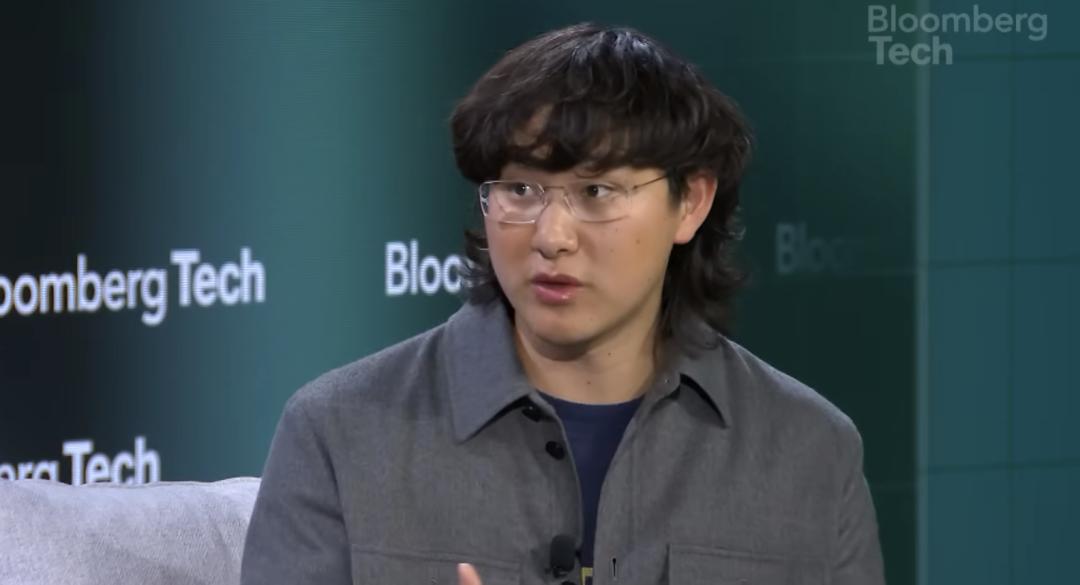
From Llama 4 to New Spark, from open source to security-first, from follower to contender — Alexandr Wang used the metaphor of "appetizer" and "main course" to outline Meta AI's transformation trajectory. And the end point of this trajectory is to give everyone a deeply personalized AI agent that helps manage health, maintain relationships, and boost productivity. In this AI race, Meta is redefining its position at an accelerated pace.
This article is from the WeChat official account "Afterwave Evolution Planet", authored by Mark, and republished by 36Kr with authorization.