"Summer cooling magic tool" is a smash hit, with prices ranging from 9.9 to 799, and some merchants achieve an annual sales of 1 billion yuan
In the past, small fans were not quite considered a "category."
They cost just a dozen or so yuan each and were used temporarily in summer. People didn't seem to mind much if the wind was a bit weak, the noise was a bit loud, or they had a strong plastic feel. When they broke, they would just buy a new one the next year.
However, in the past two years, this "little thing" has started to gain more and more attention.
Tianxia Wangshang interviewed brands such as Airmate and Diamond, as well as Taobao industry experts. They found that the category of handheld small fans is being reshaped: it is no longer just a white-label small commodity, a non-standard digital accessory, or a marginal part of the large fan category. Instead, brands are starting to treat it as a business that can involve R & D investment, product line planning, and increased customer unit price.
Airmate's handheld small fan is priced at over 120 yuan. It is expected to achieve high double-digit growth during the 618 period this year and throughout the year. Lei Zhonglin, the product manager of Airmate, mentioned at the beginning of the interview that they are already planning new fan products for 2027.
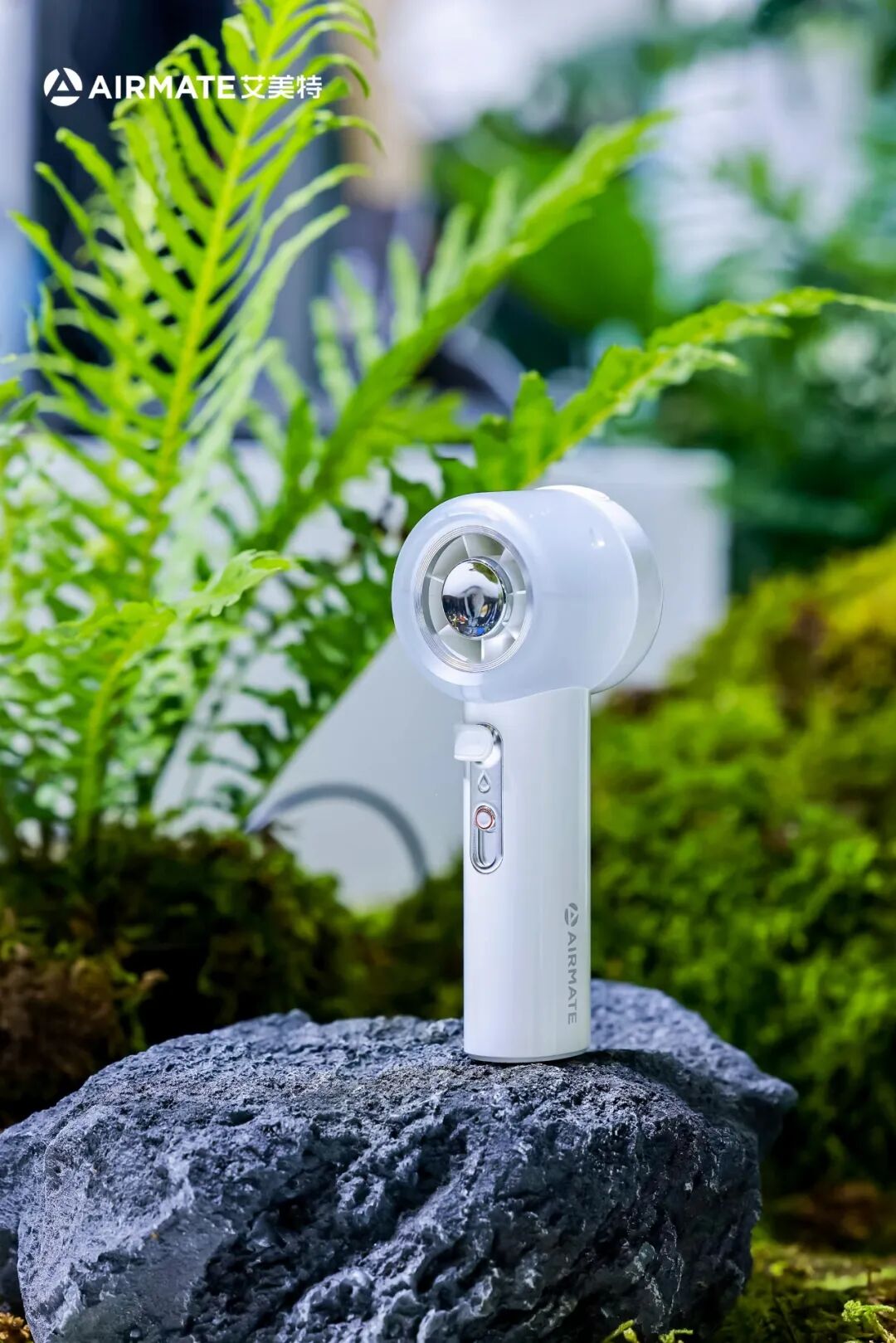
Airmate small fan
Chen Lu, an expert in Taobao's household appliances category, has a more direct feeling. In the past, small fans "were sold cheaply, mainly for high volume," so neither the platform nor the brands paid much attention. But this year, many brands that used to focus on home appliances have entered the market, including Diamond, Gree, Xiaomi, Dyson, and Laifen, all flocking to this small segment. According to his assessment, the sales volume of pure brand products in the small fan category (including products in other forms such as neck fans, umbrella fans, and waist fans, all classified as portable outdoor fans) is expected to reach about 5 billion yuan across the whole network. And in the next 3 - 5 years, this category is expected to grow to 7 billion yuan. During the 618 period in 2026, the handheld small fan category under the household appliances category he is in charge of saw a year - on - year growth of 160%.
The price range has been expanded, and the scale is far from reaching its peak
It's not that no one bought small fans in the past. On the contrary, in terms of sales volume, they have always sold well. But just because something is bought doesn't mean it will be seriously managed. In the past, small fans were more often labeled as low - priced, high - volume, free gifts, or for temporary emergency use. This demand was not taken seriously by brands. Additionally, in the past, small fans were long scattered among different "terms." Some were classified as USB fans or outdoor fans, and some in the industry defined them as mini - fans or outdoor fans. The standards were not unified, and the development path was relatively scattered. Although this small category had good sales, few enterprises could turn it into a brand.
Jisu is one of the early brands that tried to break this situation. Recently, Luo Yonghao promoted Jisu's small fans on a podcast, half - seriously and half - jokingly saying that "this is the greatest invention since the invention of the lithium - ion battery."
When Tianxia Wangshang previously talked to He Zhiqiang, the co - founder of Jisu, he mentioned that small fans used to be a "chicken rib" category that no one cared about, "consumers just picked them casually." What Jisu wants to do is to turn this "tasteless but wasteful to discard" small product into a necessity.
Now, with "micro - innovations" in product appearance and function, as well as improvements in underlying motor technology, Jisu has become a leading brand in the small fan category with an annual sales volume of 30 million units and an annual revenue of over 1 billion yuan.
From casual selection to brand recognition; from throwing them away when they break to being willing to spend more money; from buying one temporarily in summer to considering an upgrade every year. The change in small fans really started with the change in the relationship between consumers and products.
It has entered more scenarios such as commuting, offices, concerts, camping, parent - child activities, and makeup. It is no longer just taken out for emergency use in a hot moment but appears repeatedly throughout the whole summer. Once something changes from a "temporary item" to a "carry - around item," its fate will change accordingly.
Things you hold in your hand every day can't be too ugly; things you put in your bag can't be too "clumsy"; things you put on your table can't be too noisy; and things you hang on your body had better not be too cheap. There's no need to label this as consumption upgrade. It's just that as the usage frequency increases, users will naturally have requirements.
The current popularity of small fans should not be misinterpreted as it being a mature large category. It still has the characteristics of being scattered and highly seasonal, and there are still a large number of white - label and low - priced products. In the overall fan market, handheld small fans are not yet the absolute main force. Chen Lu mentioned that in the household appliances category, floor fans and circulation fans are still the main sales force in the fan category. The transaction volume of small fans in the fan category is not very large, but the proportion has already exceeded one - tenth.
In other words, small fans are a category with excellent growth potential. This explains why so many brands are willing to enter the market this year: the scale has not reached its peak, but the price range has been expanded. In the past, most small fans were priced at 9.9 yuan or 19.9 yuan. Now, the price structure has become more diverse: below 50 yuan is still the white - label and low - price area, 100 - 150 yuan has become the mainstream promotion price range, and above 200 yuan begins to carry brand, design, and differentiated functions.
Lei Zhonglin mentioned that with the development of high - speed motors, upgraded styling, and changed product positioning, the customer unit price of handheld small fans has increased significantly, which is valuable for both home appliance brands and domestic brands.
Duan Pengjun, the product manager of Diamond's small fans, told us that Diamond started making small fans this year. The reason for the project is not complicated: the company needs growth, and the categories related to USB fans and electric fans have already performed well, so they started looking for factories, introducing products, and launching operations.
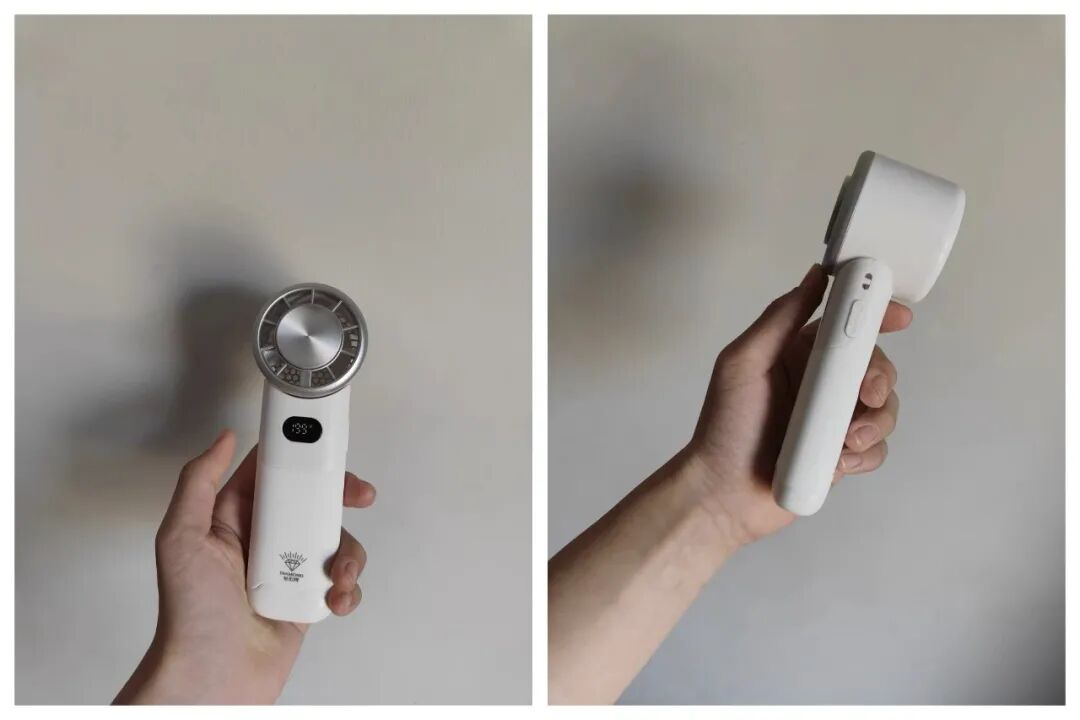
Diamond small fan
However, Diamond does not produce low - priced fans. It has set relatively cautious sales targets for this new category and will add orders in batches according to the sales situation, rather than stocking up a large amount of inventory at the beginning.
For brands that have just entered the small fan market, the biggest concern for seasonal products is inventory. After summer, unsold goods become a burden. A brand's willingness to enter the small fan market is not only because it sees the popularity but also because it is recalculating the relationship between gross profit, inventory, brand image, and long - term investment.
Consumer electronics transformation is rewriting the business language of small fans
It is almost the consensus of all interviewed brands and industry insiders that small fans are undergoing consumer electronics transformation.
But how exactly is this transformation happening? The most obvious change is that the industry has started to communicate with users using parameter language.
In the past, only mature consumer electronics products such as mobile phones, computers, and cameras would use parameters as a common language for users to compare. CPU, memory, refresh rate, fast - charging power... Consumers may not fully understand them, but they use them to judge the product level.
Now, small fans are also starting to adopt a similar communication method. Brands such as Jisu and Airmate are starting to talk about wind speed per second, motor speed, battery capacity, introduce fast - charging technology, and use LCD digital display screens and aluminum alloy casings.
The deep reason why parameters can become a new language for brands to communicate with users today is that evaluation and social platforms have made information more transparent.
Wind speed corresponds to performance, battery capacity corresponds to battery life, gear adjustment corresponds to interaction, casing material corresponds to texture, and the motor corresponds to the technical route. Horizontal evaluations on social media make these technologies quantifiable and comparable, and also drive brands to present real parameters to win the market.
Of course, parameters may not directly translate into demand. Chen Lu mentioned that there may not be a significant difference in actual experience between 99 - gear wind and 88 - gear wind. Many parameters should avoid becoming marketing gimmicks, which may instead increase the decision - making cost for consumers.
But even as a marketing language, it shows one thing: the industry has started to package and explain small fans in the way of consumer electronics. A small fan can be sold at a high price, with users willing to buy it, enthusiasts conducting evaluations, and people seriously discussing whether it's worth it. This is a very intuitive manifestation of consumer electronics transformation.
In this regard, Dyson, which has pushed the high - end imagination to the "ceiling," can serve as evidence. In April this year, Dyson launched a handheld small fan priced at 799 yuan, and the single link in its official flagship store has sold over 4,000 units. The reason behind this is not complicated: small fans are easy to be seen and compared, and can also become a social symbol.
Not all high prices are justifiable, and not all parameters are meaningful. But this once 9.9 - yuan little thing has changed its business language.
Small fans are more like power banks than large fans?
From the perspective of business evolution, the benchmark for small fans may not be the larger floor fans or circulation fans.
Chen Lu put forward an interesting reference: the development path of small fans may be more similar to that of power banks.
Power banks were not initially a category with much imagination. They solve a very specific problem: a mobile phone running out of power, which is a high - frequency, real, and on - the - go demand. Small fans solve a similarly specific problem: a person feeling hot. Not a room or a living room being hot, but a person feeling hot in a mobile scenario.
The reason why there was a lack of brand investment in cheap small fans in the past is similar to that of power banks - the industry defaulted that they had no life cycle. Even Yang Meng, the founder of Anker, now the leading brand in the power bank category, admitted in a recent interview with LatePost that he didn't expect power banks to develop for so long at the beginning.
The sword of Damocles for power banks was the increase in mobile phone battery capacity and the popularization of fast - charging technology. The problem with small fans is that they are sold in summer, thrown away when they break, and a new one is bought the next year. The combination of seasonality and disposability makes this business good for volume but difficult to build a brand.
However, even though large - capacity batteries are now widely available and fast - charging technology is approaching 100 - watt, power banks not only haven't "died" but have become more and more high - end. This reminds small fans that a seemingly ordinary small accessory can have a longer life cycle than expected if it can be integrated into high - frequency mobile scenarios and continuously differentiated in terms of technology, design, and brand.
Of course, the reference is not a copy. The core opportunity for power banks comes from the mobile phone era, while the core opportunity for small fans comes from the increasingly fragmented outdoor, commuting, entertainment, and parent - child scenarios. This is why the competition for small fans will not just be about wind power but will become a competition among portable devices.
From this perspective, both consumer electronics and home appliance brands have their own advantages. But referring to other industries, for this kind of personal small appliances, brands that understand users better will be more likely to capture the market.
Laifen is a good example for observation. Its small fan is not just a change of the casing on an existing high - speed handheld fan but has a structure with retractable fan blades. When Chen Lu talked to us about this product, he described a very real - life scenario: now many small fans blow directly on the face, only cooling a small area on the face while the surrounding area remains hot. So on the road, you can often see people waving small fans back and forth like they're drying their hair. Laifen's fan - surface structure tries to make the wind more natural, softer, and cover a larger area.
To put it simply, it's more like natural wind.
This is not just a superposition of parameters but a change in the way the wind is generated. But there is also a cost. According to what Laifen employees told us, the brand is satisfied with the innovation of this small fan. However, due to the innovative structural design, the enterprise faced some engineering problems in the early stage. Now, the production capacity supply has gradually stabilized, and the product's shipment volume has started to keep up with the sales volume.
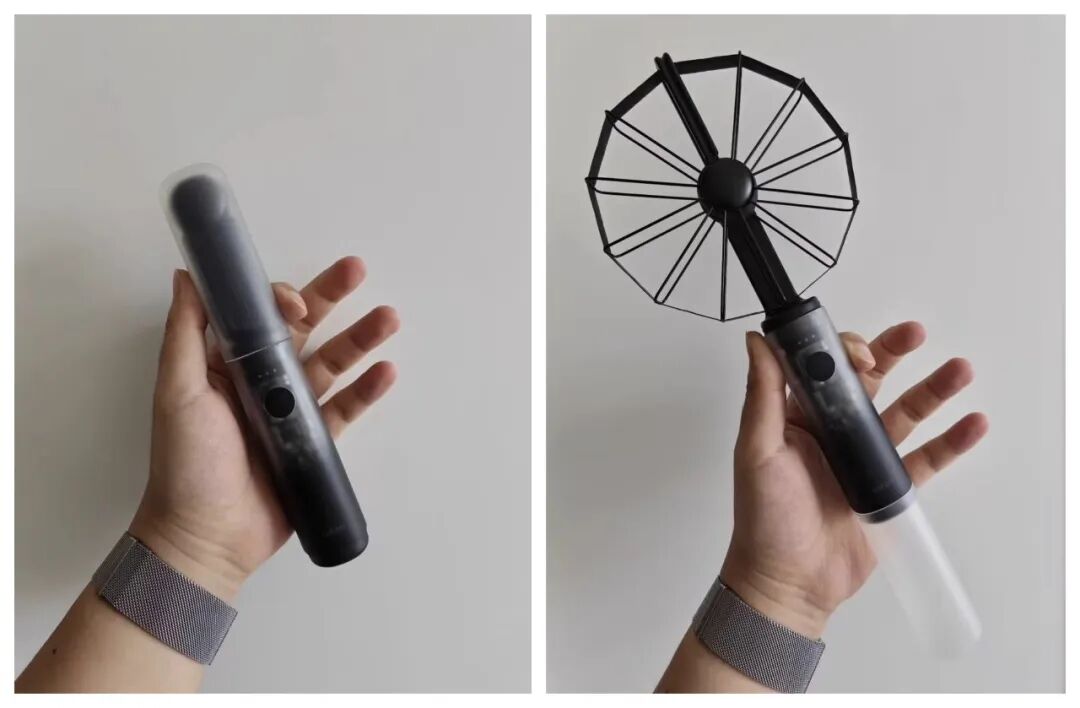
Laifen small fan
If a brand is just testing the waters in the short term, it wouldn't be willing to bear such complexity for a small fan. Laifen's willingness to develop a new structure, Dyson's willingness to launch a portable bladeless fan separately, and Jisu's willingness to continuously invest in underlying fan technology all together indicate that the certainty of handheld small fans is being re - recognized by the industry.
On the other hand, we can't underestimate the home appliance brands that are entering the market.
Home appliance brands may not understand young users the best, but they understand the manufacturing supply chain better. A fan is ultimately a combination of motor, air duct, battery, structural design, noise control, safety standards, and manufacturing consistency. Making a prototype is one thing, and stably delivering hundreds of thousands of products is another.
Lei Zhonglin put it quite realistically: handheld fans and traditional large fans do not share the same production and manufacturing industry chain, and the components cannot be simply reused. However, home appliance brands still have advantages in performance research, supply chain technology precipitation, production process management, delivery standards, and after - sales service. The higher - end the small fans become, the more important these capabilities are.
Chen Lu said that if brands just use existing molds, the differences are not significant enough, and there is a lack of real - sense barriers. Simply comparing wind power and speed, the differences in experience blown out by different platforms and brands may not be very obvious. For example, Airmate is promoting its water - mist series this year, focusing on cooling the body's perception. Its water - mist fan can achieve a 17 - degree Celsius cooling effect on the body's perception under laboratory standard tests, and it will continue to iterate around the spraying method, water tank structure, spraying stability, and appearance in the future.
This direction is reasonable. What users really want is not the wind - speed number but to feel cool. Water - mist, ice - cooling, and improvements in fan - blade structure... all come back to one question: does it really make users more comfortable in a specific scenario? This is also the core of the next - step competition for small fans.
So in the future market, there will probably not be only one type of player.
Ultimately, who can really stay in the market does not depend on their origin but on their ability to build capabilities at both ends: one end is the user insight, product definition, and experience design that consumer electronics brands are good at; the other end is the supply chain management, quality stability, and mass - delivery capabilities that home appliance brands have accumulated over the years. If you only understand parameters but not users, the product will lack warmth; if you only understand experience but not manufacturing, it will be difficult to sustain a hit product.
Chen Lu predicts that the brand concentration of handheld small fans will increase in the future. The early chaos will leave room for white - label and small factories. But when users start to look at parameters, evaluations, after - sales service, and brands, the low - price supply will gradually retreat to the bottom