400 Startups Gathered, AstraZeneca Invested 1.3 Billion Euros Heavily, This City Is Indispensable for Innovative Medicines Going Global to Europe | Frontline
Text | Hu Xiangyun
Editor | Hai Ruojing
At the end of June 2026, Vall d’Hebron University Hospital in Spain announced the completion of the first single - port robotic pediatric nephroureterectomy in Europe.
Vall d’Hebron University Hospital is one of the largest general hospitals in Spain, with an annual reception of over one million patients. In the entire European medical system, this hospital can be regarded as a “pioneer” in the exploration of cutting - edge medical technologies and products. Previously, the world's first facial transplant surgery with a donor from an euthanized patient was completed here.
This time, the hospital told 36Kr that the core equipment supporting the completion of this “milestone pediatric surgery” comes from Surgrobotics, a Chinese surgical robot company. This is the first time that Vall d’Hebron University Hospital has purchased Chinese medical devices through direct sales. After implementation, it is expected to add 200 - 300 minimally invasive robotic surgeries to the hospital each year, becoming a key channel for Chinese high - end medical devices to enter the European clinical scenario.
The implementation of a surgical robot is actually just a microcosm of the in - depth integration of the life - health industries between China and Spain.
In Barcelona, along the Mediterranean coast, this city, once famous for Gaudi's architecture, port shipping, and the automobile industry, has long grown into the fourth - largest life - science innovation hub in Europe.
Recently, invited by the Catalonia Trade & Investment, 36Kr visited the biomedical industrial parks and R & D centers of leading pharmaceutical companies in Barcelona, the capital of Catalonia, in an attempt to restore the industrial transformation taking place on this land along the Mediterranean coast.
Industrial ecosystem taking shape:
Catalonia creates a fertile ground for European life - science innovation
Jaume Baró, the Secretary of Business and Labor of the Catalan government and the director of the Trade and Investment Bureau, provided a set of data showing that currently, there are 1,523 life - science - related enterprises in the region, absorbing 7.3% of the local population in employment and contributing 4.1% to the GDP. Its foreign exports rank first in Spain, and 46% of the country's pharmaceutical product exports are completed by Catalonia. In 2024, pharmaceutical products contributed nearly 90% of the local total export volume.
From the perspective of foreign investment, during the five - year period from 2020 to 2024, the total foreign direct investment in the local life - health industry reached 2.28 billion euros, with 46 foreign - funded projects launched and 6,050 high - quality jobs created. “More than half of all foreign investment in life sciences in Spain flows to Catalonia.”
Digging deeper, the reason why the life - science industry in Catalonia can stand out in Southern Europe and continuously attract global pharmaceutical companies to “heavily invest” lies in the closed - loop ecosystem integrating industry, academia, research, medicine, and capital, with the Parc Científic de Barcelona (PCB) as the core hub. This mature resource - linking mechanism not only continuously incubates local innovative enterprises but also provides a development environment that is difficult to replicate quickly for foreign investors.
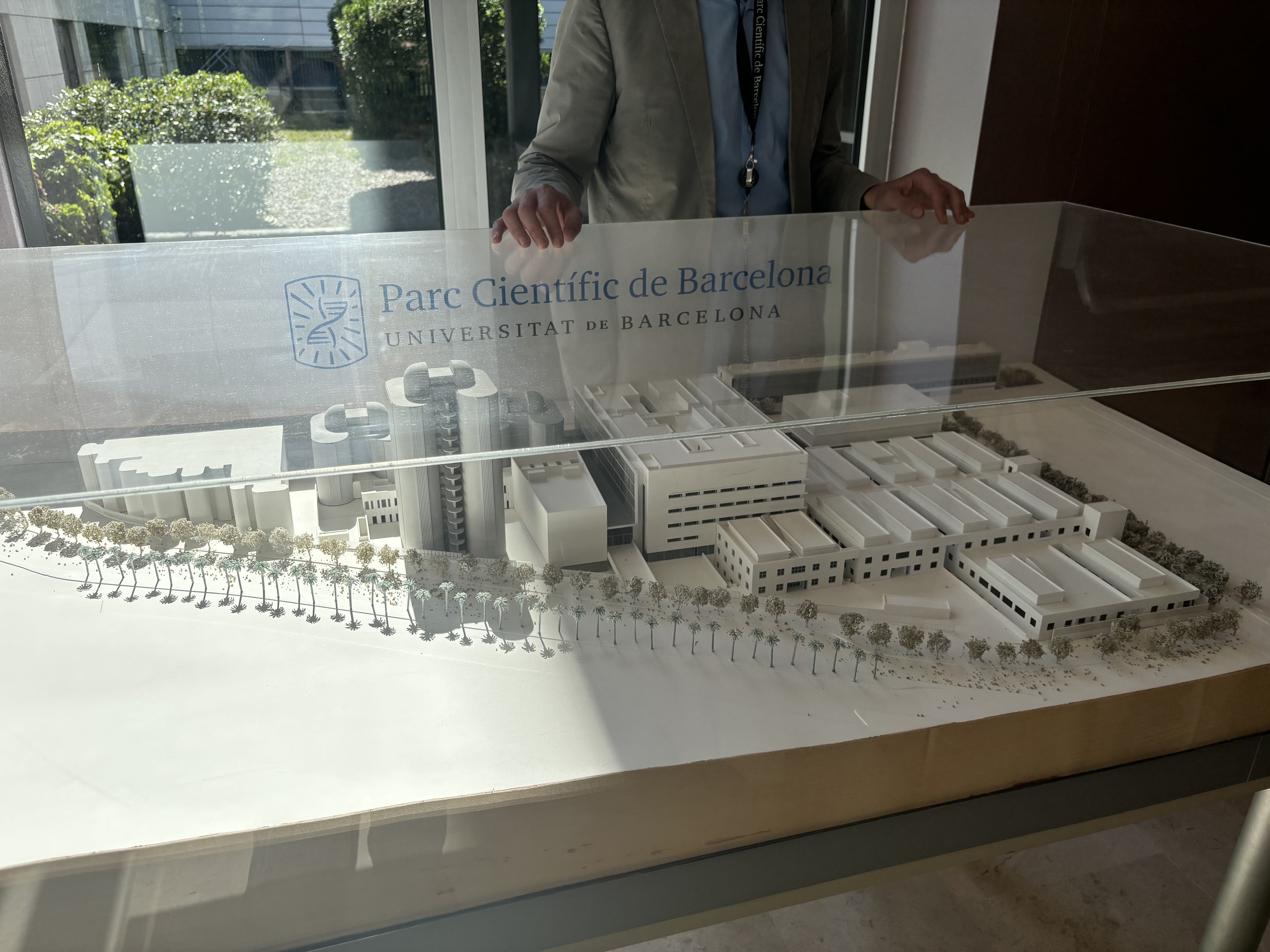
Schematic diagram of the park planning of the Parc Científic de Barcelona (PCB)
Established in 1997, PCB is the first professional life - science technology park in Spain. Currently, the park has opened up the resource channel between medical laboratories and the clinical end, achieving seamless connection between basic scientific research, clinical verification, and industrial transformation, forming a sustainable innovation cycle: researchers produce cutting - edge technologies relying on university laboratories, complete early verification relying on the park's shared platform, and then complete human trials with the help of a large number of local multi - center clinical resources, and finally incubate commercial enterprises.
A set of figures can serve as evidence: According to statistics from Biocat, a local public - private partnership foundation jointly established by the Catalan government and the Barcelona city government, more than 400 start - up companies have been born in the life - health field in Catalonia in the ten - year period from 2015 to 2025. It is also known that more than 90% of clinical trials in Spain are completed in Catalonia.
Grisha Domakowski, the marketing and communication director of PCB, introduced that currently, this ecosystem has produced a mature model. For example, SpliceBio, which is engaged in gene - therapy development, once settled in the PCB park. Its core pipeline, SB - 007, is a gene therapy for hereditary retinal degenerative diseases and has entered the clinical research stage. In June 2025, SpliceBio completed a Series B financing of $135 million, setting a record for single - round financing in the life - science field in Catalonia.
Meanwhile, PCB's perfect resource - linking ability is also the core reason for overseas pharmaceutical companies to layout here. Jaume Baró mentioned that in the core motivations for overseas life - science enterprises to choose to settle here, industrial clusters and scientific and technological innovation resources each account for 40%. And PCB is the core carrier of clusters and scientific and technological innovation resources. Multinational enterprises do not need to build a complete R & D supporting system from scratch. After settling in, they can connect with the university doctoral talent pool, third - party CROs, and even industrial capital and intellectual property service institutions, greatly shortening the R & D implementation cycle.
Take the layout of the British pharmaceutical giant AstraZeneca in the local area as an example. In 2020, AstraZeneca selected Barcelona to build a global biomedical innovation center and planned to invest an additional 1.3 billion euros in total by 2027. Since it was put into operation in 2023, the center has carried out nearly 400 R & D projects and 190 clinical trials, covering disease fields such as oncology, cardiovascular diseases, and rare diseases.
In addition, Japanese companies such as AGC Pharma Cheminaik and Towa Pharmaceutical, and the American telemedicine company Teladoc Health have also successively settled in Catalonia, with a cumulative investment of hundreds of millions of euros and the creation of thousands of high - end industrial jobs.
Jaume Baró believes that this competitiveness of connecting “clinical practice, scientific research, industry, and capital” enables leading medical institutions, scientific research centers, an active start - up ecosystem, and mature pharmaceutical companies to empower each other, naturally becoming the gateway for global innovative enterprises to enter Europe.
From introduction to co - creation,
China - Spain life - science cooperation enters deep water
When the industrial ecosystem of a region matures, its vision will inevitably extend outward, that is, to find new technology sources and expand a larger market hinterland. The evolution trajectory of the life - science industry in Catalonia also follows this logic. In the past decade, this Mediterranean industrial cluster has completed a leap from internal accumulation to external connection.
The rise of Chinese innovation power happens to complement this demand.
This complementarity is rooted in the deep - seated differences in the endowments of the two medical systems. Albert Salazar, the dean of Vall d’Hebron University Hospital, believes that there are differences in the medical system architectures between China and Europe, but “both sides have mature experiences worthy of mutual reference.”
“China has shown extremely strong implementation capabilities in fields such as the implementation of AI technology, digital health platforms, telemedicine, and the management of medical services for a large - scale population. European medical institutions can learn from China's implementation experience in aspects such as the speed of digital transformation and the large - scale popularization of medical technologies. The advantages of the European medical system lie in aspects such as the integrated public medical system, evidence - based medicine system, and clinical governance norms. Therefore, the greatest opportunity for cooperation between the two sides lies in complementary advantages: Europe exports experience related to clinical verification and medical quality control, while China has outstanding capabilities in large - scale technology implementation, innovative industrial ecosystems, and industrial development.” Albert Salazar said.
Now, this judgment is being confirmed by more and more actual cooperation.
As China's domestic innovative drug industry has gradually completed the leap from “follow - up imitation” to “source - based innovation,” finding European and American pharmaceutical companies that can cooperate in developing the global market for self - developed new drugs has become the core task of Chinese innovative pharmaceutical companies in the past two years. In 2025, the total base amount of BD overseas expansion of Chinese innovative drugs reached $130 billion. To some extent, this role transformation has fundamentally reshaped the connotation of cooperation between Chinese and European and American enterprises.
FA professionals who pay attention to the overseas expansion of Chinese innovative pharmaceutical companies have observed that previously, many European pharmaceutical companies had an early layout in the Chinese market, but their style was relatively conservative, and the actual cooperation was not as frequent as that between Chinese and American pharmaceutical companies. However, since 2025, some European pharmaceutical companies have started from the C - level to have an extremely strong demand to understand the Chinese market, even if it is only from the perspective of personal career development.
In Catalonia, local enterprises are also adjusting their postures. In March this year, Almirall (ALM), an established leading pharmaceutical company in the field of dermatology, officially set up an office in Shanghai to be responsible for exploring suitable innovative drug projects in China and building cooperative relationships. Karl Ziegelbauer, the chief scientific officer of Almirall, told 36Kr that the Chinese market is a “supplementary layout” for the company, aiming to broaden the boundaries of innovative R & D through various forms of cooperation.
As early as 2022, Almirall reached a cooperation with Simcere Pharmaceutical Group (02096.HK) to jointly develop a new drug for the treatment of alopecia areata and atopic dermatitis, with milestone payments of up to $492 million. In March this year, the company also reached a global research cooperation and licensing agreement with Huaao Tai, a subsidiary of Huahai Pharmaceutical (600521), to jointly develop an early - stage monoclonal antibody candidate drug, with cumulative payments of up to $340 million.
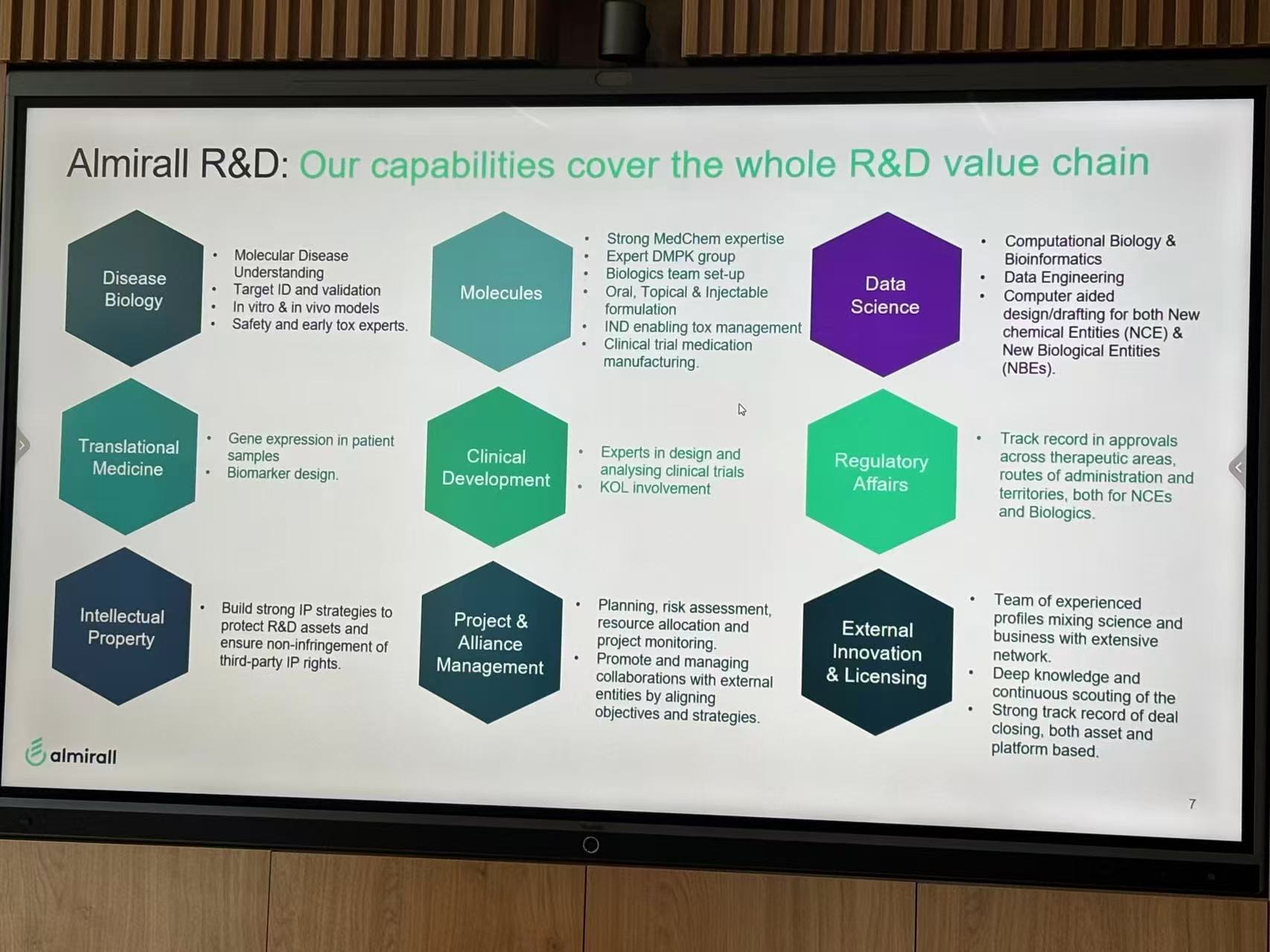
Schematic diagram of Almirall's R & D pipeline
Ziegelbauer believes that Chinese innovative enterprises generally have the advantages of “high execution efficiency, flexible and agile operation, and rapid iteration of the innovative industrial ecosystem.” “After setting up an office in Shanghai, we will not set an annual transaction - scale indicator. The priority assessment criteria are the scientific research quality and strategic matching degree to ensure that the R & D assets selected can bring real and subversive treatment value to skin - disease patients.”
“The cooperation between the two sides is no longer limited to commodity trade. The number of cases of joint innovation projects, industrial cooperation, technology transfer, R & D collaboration, and two - way investment is continuously increasing.” Jaume Baró commented on the current cooperation situation.
The next stage of China - Spain life - science cooperation
However, opportunities coexist with challenges.
“Currently, there are still challenges in the cooperation between the two sides in the life - science field, such as complex regulatory rules in different countries, geopolitical uncertainties, and cultural differences. This requires all cooperation parties to establish mutual trust, maintain stability, and have a long - term development vision.” Jaume Baró admitted.
Overall, in the past five years, the international layout of Chinese enterprises in Europe has been more concentrated in the manufacturing field, and the life - science industry is still in a relatively early stage.
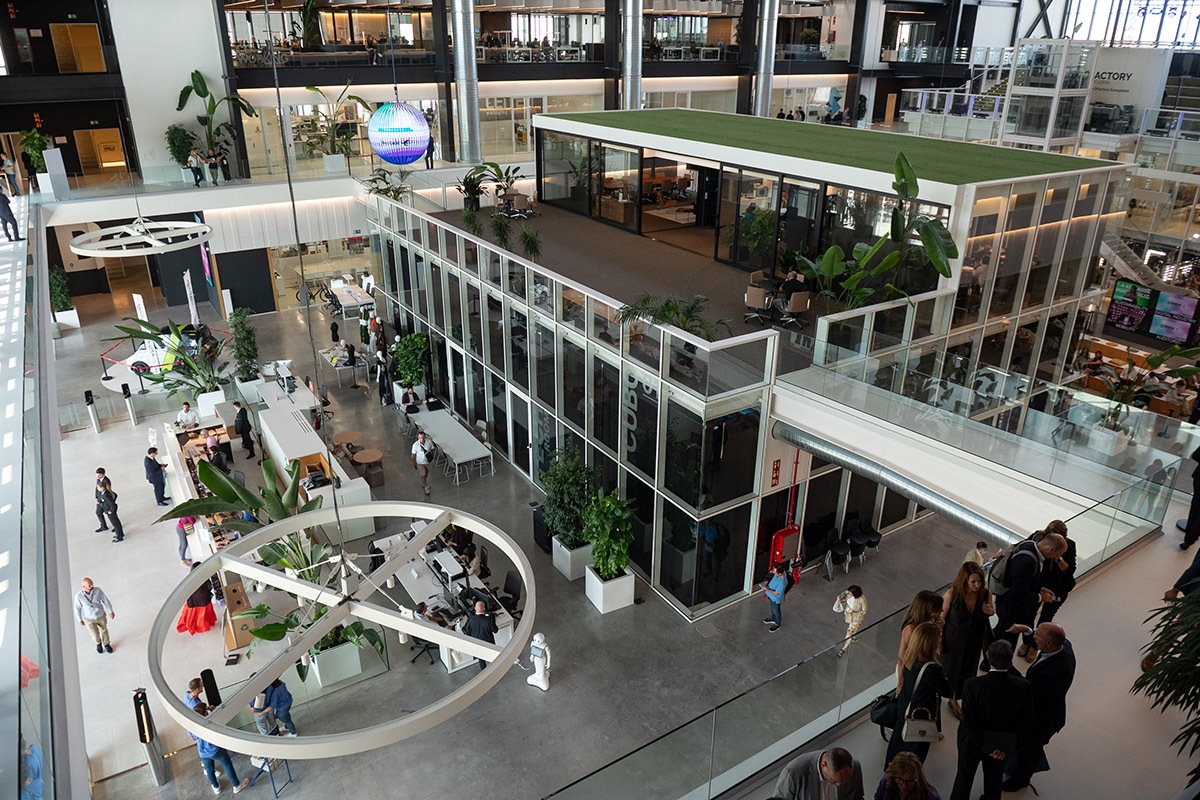
DFactory, a local industrial park in Catalonia, has already had several Chinese medical device enterprises settle in
This is not only because the European market has significant differences from the Chinese drug and medical device regulatory systems, and the processes of cross - border clinical trials and product registration are complex, which lengthens the project implementation cycle and thus raises the cooperation cost. At the same time, the access threshold of the life - science industry is much higher than that of the manufacturing industry, and it is difficult to copy the model of independent factory - building in the whole - vehicle and chemical industries. Therefore, enterprise joint ventures or scientific research cooperation have become the mainstream, but it is also easy to have disputes over cooperation rights and responsibilities and intellectual property distribution.
Silvia Labé, the head of the market, communication, and competitive intelligence department of PCB, also mentioned that the park has received a large number of medical delegations from China, covering government units, enterprises, medical institutions, and scientific research institutions. Most of their core demands for the visit are to learn the local biomedical industry model and explore cooperation opportunities. But sometimes, “it is difficult to continue to connect and follow up after the delegation's visit.” “Due to limited resources, we will be more cautious in choosing cooperation partners. For us, it is not easy to fully understand the current changes in China's biomedical industry from afar in Europe.”
Regarding how to deepen cooperation, the Catalan government has formulated a clear strategy. Jaume Baró introduced that the Catalonia Trade and Investment Bureau has set up offices in Shanghai, Beijing, and Hong Kong to provide full - process services for Chinese enterprises interested in investing in Catalonia: from assisting in preparing investment application materials, site selection, visa processing, and talent recruitment to continuous follow - up after the investment is implemented. Chinese enterprises investing in Catalonia can also apply for special - fund financial support.
“Our ultimate goal is to make Catalonia one of the core gateways for Chinese innovative technologies to enter Europe and become a reliable cooperation partner for both sides' enterprises in technology and industrial collaboration.” Jaume Baró said.