What makes Kao, the Japanese soap seller, a stealth player in the semiconductor industry?
Nowadays, side hustles are no longer exclusive to office workers. Many enterprises have also been making great strides in cross - border business to seek profits.
When it comes to Kao Corporation in Japan, the public's first impression is always its personal care products such as soaps, facial cleansers, and shampoos.
However, few people know that this century - old daily chemical factory has quietly established itself in the semiconductor industry chain and controls a key link in global chip manufacturing with its wafer cleaning materials.
Daily chemical care products seem to have nothing to do with high - tech chips. Why can Kao have a place in the semiconductor field?
A Friend to Women
When it comes to being "a friend to women", Kao is definitely worthy of the title.
People who love watching Japanese dramas must be familiar with its iconic green moon logo.
It once occupied a quarter of the shampoo market and half of the washing powder market in Japan.
Well - known products in China, such as Laurier sanitary napkins and Curel facial cleansers favored by people with sensitive skin, also come from Kao.
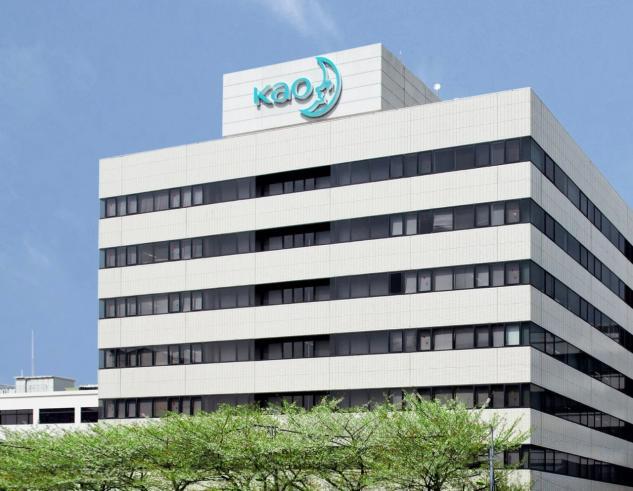
This century - old brand has never been aloof. It started with affordable soaps, and more than 600 kinds of good products have become an indispensable part of people's daily lives. It has long become an old acquaintance that everyone can't do without.
Its story dates back to the Meiji Restoration era.
In 1887, 24 - year - old Tomio Nagase founded the Nagase Store in Tokyo, mainly dealing in imported foreign goods such as soaps, cosmetics, and stationery. This was the predecessor of Kao.
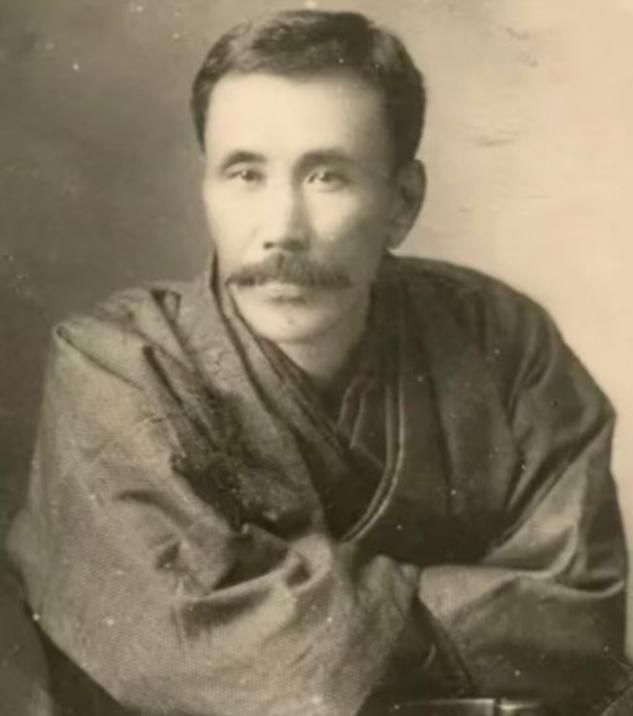
Tomio Nagase. Image source: Kao official website
At that time, Nagase noticed that the imported Ivory Soap from the United States had a good texture and a strong fragrance, but it was extremely expensive. A bar of soap cost a skilled worker two or three months' salary. At that time, Japan's industrialization had just started, and good fats were reserved for consumption or export.
Local soaps were made by mixing spoiled lard with a large amount of strong alkali. Although they were cheap, they were harsh on the skin and could only be used for washing clothes, not for washing faces.
Facing a huge market gap, Tomio Nagase was determined to develop an affordable domestic facial soap on his own.
In 1890, the soap was officially launched. To highlight its positioning as a facial - specific product, he chose "Kao", which has the same pronunciation as "face" in Japanese, as the brand name, and the brand was born.
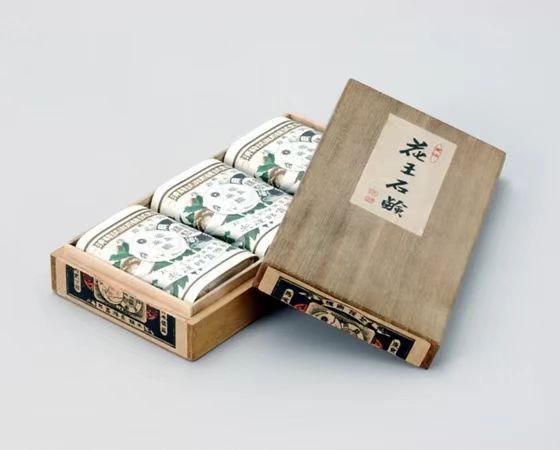
Kao soap. Image source: Kao official website
This soap was very popular after its launch and became a national favorite.
Subsequently, the brand expanded its product categories. Kao continuously enriched its product line, gradually extending from a single soap to the fields of personal care, cleaning, and individual care, and established a complete daily chemical system.
The brand began to expand overseas in the 1960s. In the 1960s, Kao started to explore overseas markets. It first exported to Southeast Asia and then entered China in the 1990s, and its business territory continued to expand.
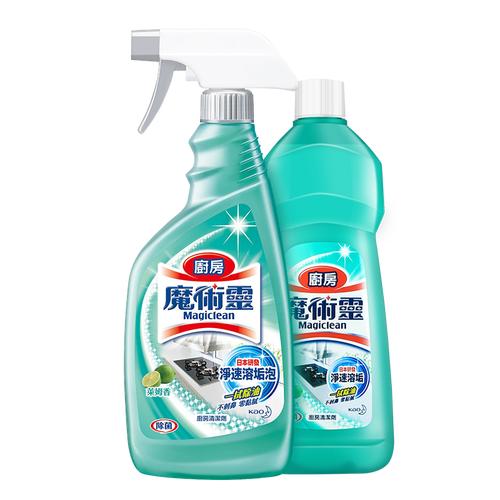
Kao cleaning agent
Today, Kao is the second - largest daily chemical enterprise in Japan, second only to Shiseido.
In the fiscal year 2025, its total revenue was 1,688.6 billion yen (about 81 billion RMB), and 76% of it came from the daily chemical business. Its sales cover more than 140 countries around the world. Popular products such as diapers, steam eye masks, and sunscreens under its brand are very popular globally.
Kao not only focuses on daily necessities but is also an invisible industrial powerhouse.
24% of Kao's annual revenue comes from the industrial chemicals sector, and the average annual growth rate of this business is 7%, far exceeding that of the daily chemical business, which has a large scale but a growth rate of less than 1% for many years.
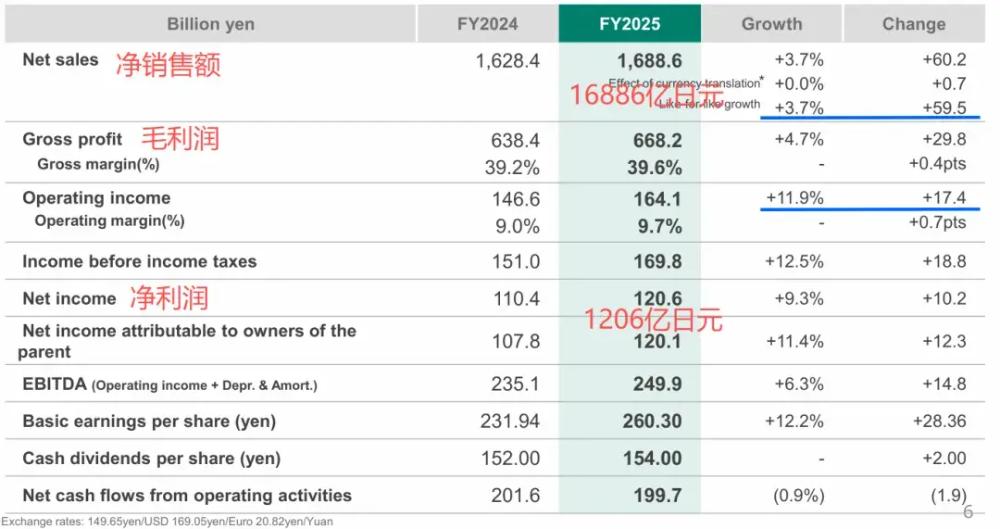
Kao's data in the fiscal year 2025
Among them, semiconductor precision cleaning agents are the ace growth point, with an annual growth rate of 40% for a single product. It has captured 60% of the global market share and ranks at the top of the industry.
From the daily chemical industry to the semiconductor industry, why can Kao succeed in cross - border business?
Cross - border Cleaning for Chips
While engaging in the daily necessities business, Kao can also conquer the semiconductor cleaning agent market. It seems contradictory, but in fact, every step has a trace.
There are three reasons behind this: the similarity of technologies, years of process accumulation, and proper implementation and layout. These factors have laid the foundation for its cross - border success.
First, on the surface, the technologies are homologous, providing innate conditions for cross - border business.
Chip production involves multiple processes such as coating and photolithography, and each step requires cleaning. The advanced 2/3nm process has extremely strict requirements for cleanliness. Even a single invisible particle attached to the wafer can easily cause circuit failures, rendering the entire wafer useless. Therefore, cleaning cannot tolerate the slightest neglect.
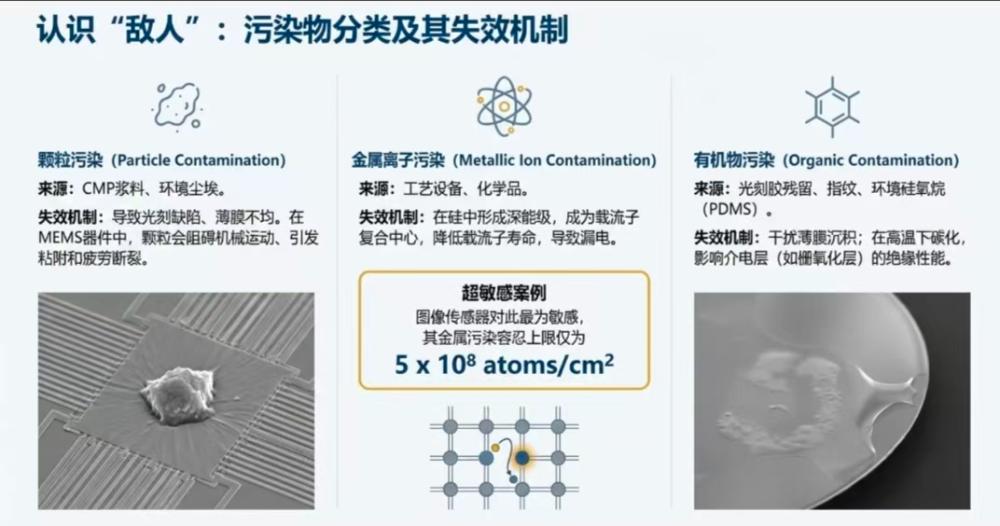
Classification of wafer contaminants
Interestingly, the principles of cleaning chips and washing the face are actually similar. Both rely on weakening the surface tension of water to "pull" the dirt off the wafer surface and then wash it away.
In the early days, Kao's success in making soaps and shampoos relied on two key skills: good control of chemical reactions and precise purification of raw materials.
In this way, it can remove dirt without damaging the substrate and leaving no residue. The same logic applies to chips.
Therefore, Kao only needs to remove the redundant auxiliary materials in daily chemicals and improve the purity of raw materials, and its existing technologies can be transformed into semiconductor cleaning agents.
Its ace product, the CleanThrough wafer - specific cleaning agent, can not only "remove makeup" from the wafer by penetrating into nanoscale gaps but also change the charge properties (Zeta potential) of the wafer surface. Based on the principle of like - charges repelling each other, it prevents the washed - off dust from being re - adsorbed on the wafer surface, protects the silicon wafer circuits while cleaning and decontaminating, and strictly controls ion residues.
However, relying solely on the similarity of technologies is far from enough. Many daily chemical factories understand basic chemical engineering. Why has only Kao stood out?
The core reason is that in the early days, limited by resources, Kao spent decades delving into fine chemical engineering and developed a solid technical foundation.
In the 1950s, with the popularization of washing machines and the hot sales of Tide by Procter & Gamble, the soap industry was impacted. The R & D director, Yoshiro Maruta, went to the United States to bring back samples, and Kao then transformed into the R & D of washing powder and took the opportunity to tackle synthetic detergents.
At that time, Japan was short of supplies after the war, and there was a shortage of fats and petroleum. Kao had to build its own factory to extract fatty alcohols, the core raw materials for washing, from natural fats. This process was difficult, but the products produced had less foam and were easy to rinse.
In 1951, it launched the first domestic washing powder in Japan and quickly opened up the market through the promotion of giving away personal care products when buying a washing machine.
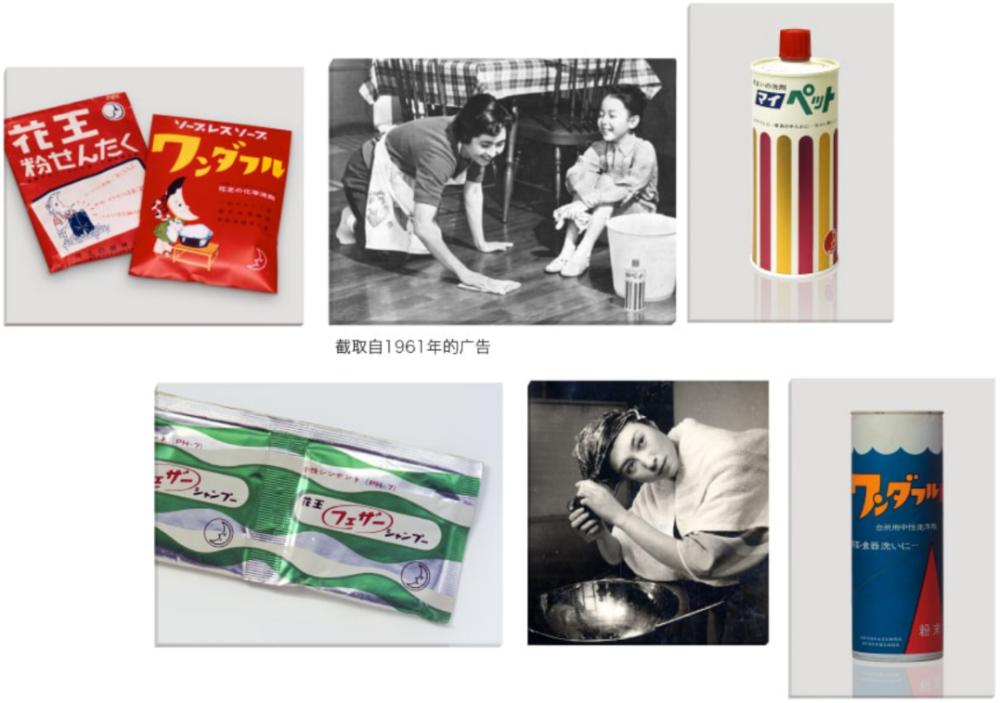
Natural fatty alcohol series products. Image source: Kao official website
The decades - long accumulation of daily chemical technologies did not stop at consumer products. Overnight, it became Kao's winning card for cross - border business in the semiconductor industry.
In 1987, the Montreal Protocol was introduced, and the use of Freon, which damages the ozone layer, was gradually restricted globally. The original wafer cleaning methods that relied on Freon were in trouble, and all other alternative solvents had their own defects. The semiconductor industry couldn't find a new, compliant, and high - purity cleaning agent for a while.
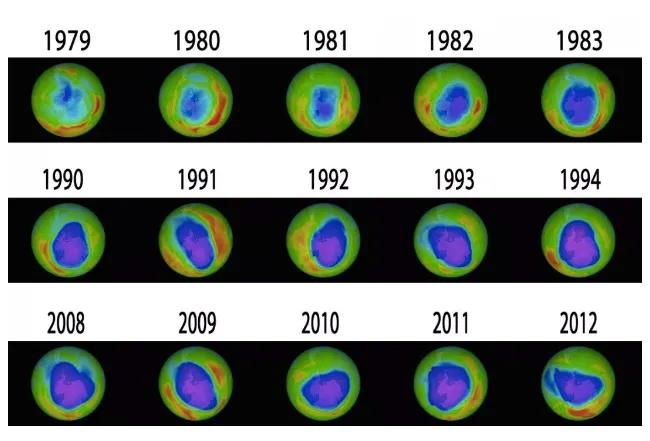
The historical changes in the ozone hole over Antarctica
The purification and low - residue formula technologies developed by Kao in the early days due to resource shortages were just the right solutions.
The enterprise upgraded its mature surface chemistry technologies in the daily chemical industry, purified the raw materials to the ultra - high - purity specifications required by the semiconductor industry, strictly controlled trace metal impurities, and customized surfactants suitable for the narrow gaps of wafers based on its mature molecular design experience to specifically remove polishing particles and nano - organic contaminants.
With the technical foundation, finally, through implementation and operation, Kao secured its position as the industry leader: by binding with large manufacturers and building factories nearby, it turned its technical advantages into exclusive barriers.
In the stage of technology implementation, on the one hand, Kao followed the iteration of chip processes, from mature processes to advanced processes such as 7nm and 2nm, and continuously optimized the purity of chemical agents. On the other hand, instead of simply selling products, it sent engineers to stay at TSMC to customize formulas according to demand, greatly shortening the product verification cycle and locking in long - term stable orders.
In terms of production capacity layout, Kao targeted Hsinchu, Taiwan, China, a global semiconductor industry cluster, and set it as an overseas strategic fulcrum.
At the end of 2025, Kao's Hsinchu Precision Cleaning Center was completed and put into use. This is the company's second precision chemical base globally and the first overseas one. In April 2026, the factory was officially put into production. The base integrates three functions: R & D, product verification, and mass production, closely meeting the needs of front - line chip manufacturers.
It can not only quickly respond to customized orders, reduce cross - border logistics costs but also ensure the stable supply of raw materials nearby, and deeply integrate into the local semiconductor industry chain in Taiwan.
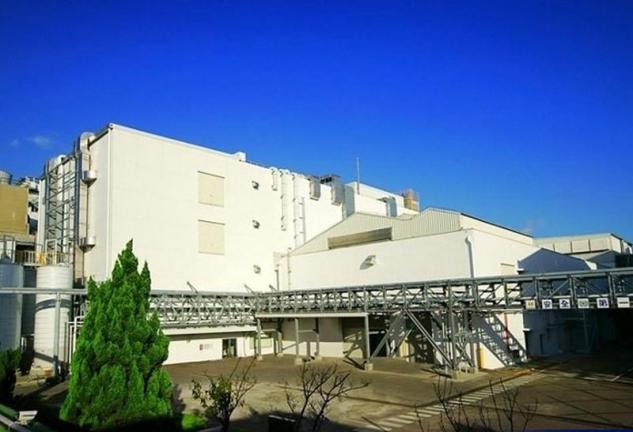
Hsinchu factory in Taiwan. Image source: Kao official website
Relying on the geographical advantages of the Hsinchu factory, Kao continues to expand its high - end wafer and packaging cleaning business and has successfully entered the supply chains of leading enterprises such as TSMC, Samsung, and Kioxia.
The company plans to double its sales of electronic materials in 2027 to consolidate its leading position in the global semiconductor cleaning field.
Accumulation for Change
In January last year, Kao achieved a new result. It independently developed a sub - micron copper particle packaging material that can replace high - priced silver paste for bonding high - power chips. It has lower costs, good heat - conduction effects, high temperature resistance, and is suitable for the third - generation automotive semiconductors. This enables Kao to smoothly enter the field of chip bonding from chip cleaning.
In the Japanese manufacturing industry, Kao is not an exception. There are many enterprises that rely on underlying technologies to enter the semiconductor materials field through cross - border business.
The bathroom giant TOTO entered the field of semiconductor precision ceramic parts by relying on its ceramic sintering process; the condiment enterprise Ajinomoto overcame the key raw materials for photolithography by leveraging amino acid chemistry.
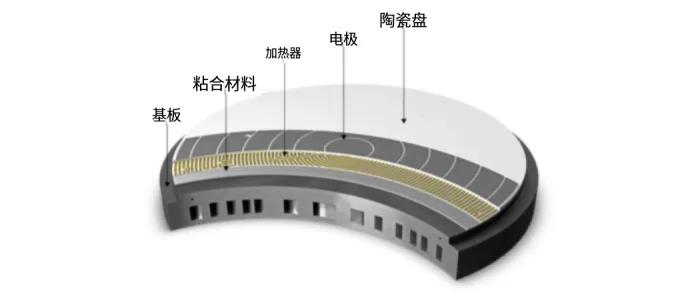
Electrostatic chuck for fixing wafers
Currently, Japanese enterprises hold nearly half of the global semiconductor materials market. Among the 19 core chip raw materials, 14 are dominated by Japanese enterprises. The century - long industrial precipitation is their confidence to enter high - end fields through cross - border business.
The success of these enterprises provides a good reference for domestic manufacturing industries to break through material bottlenecks.
First, they should focus on basic chemistry and make full use of existing technological resources.
Many domestic enterprises are good at finished