Unable to outcompete in model development, Meta pivots to become a "computing power lessor", crashing the US stock market's AI chain overnight
Failing to outperform in models, Meta has decided to sell its own computing power, directly encroaching on AWS's territory. Overnight, its former financial backers, CoreWeave and Nebius, saw their stocks plummet by 17%.
Just recently, Meta was reported to be making a major move that could shake up the entire cloud - computing landscape. It is going to enter the market to sell computing power.
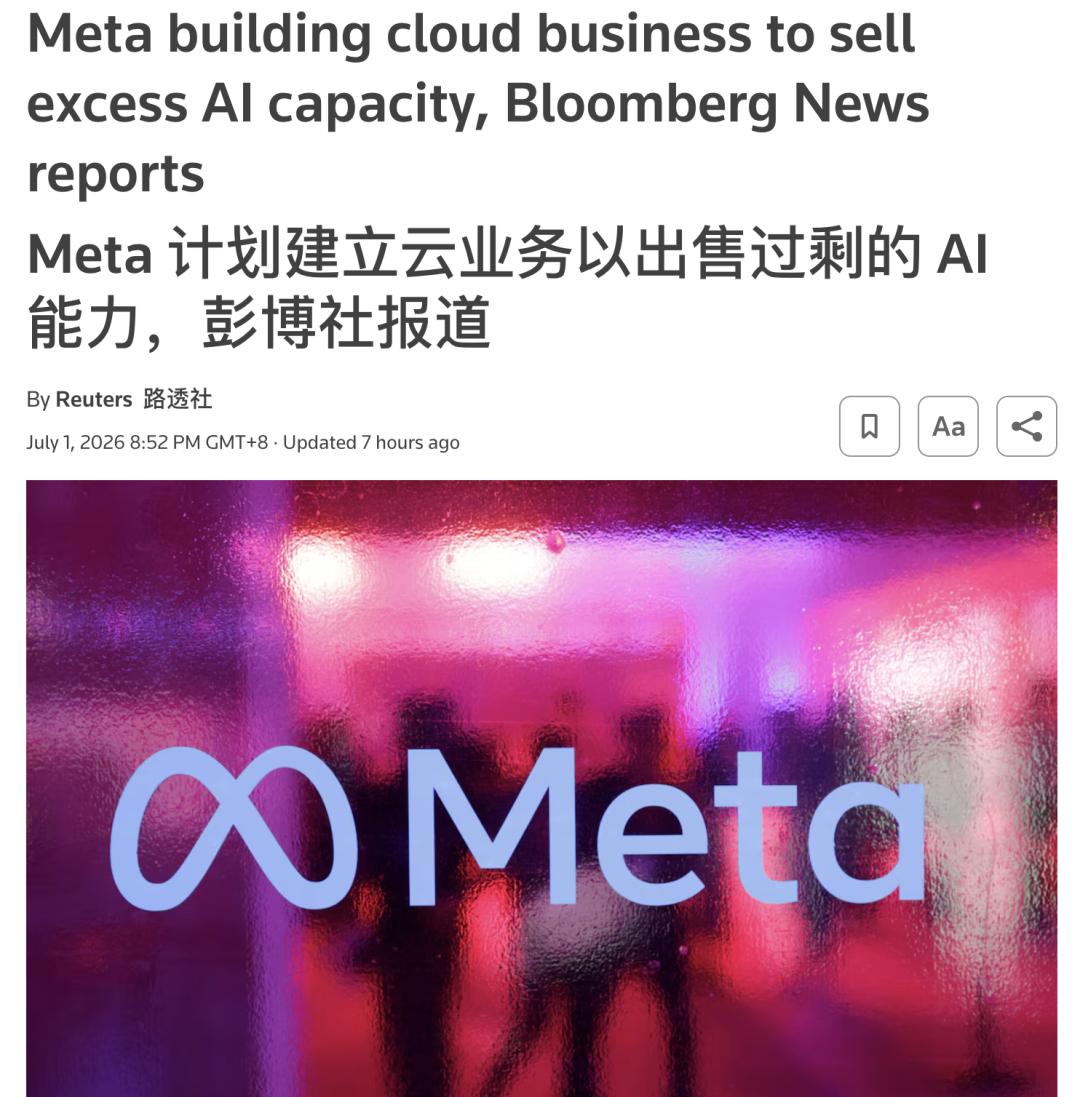
According to Bloomberg, Meta is establishing a cloud infrastructure business called "Meta Compute" to sell AI computing power and model access rights to the outside world.

Put simply: This social media giant is going to bring its own data centers and directly enter the territory of AWS, Microsoft Azure, and Google Cloud, going head - to - head with the three cloud giants.
As soon as the news broke, the capital market voted with real money.
Meta's stock price soared by more than 10 points at one point, reaching $627, marking the largest intraday increase since April and boosting its market value by nearly $98 billion.
On the other hand, CoreWeave, a company that makes a living by selling computing power, tumbled 14%, and Nebius, a Dutch data - center company listed in New York, crashed 17%.
Chip stocks were not spared either. NVIDIA, Broadcom, and AMD all saw their stock prices decline.
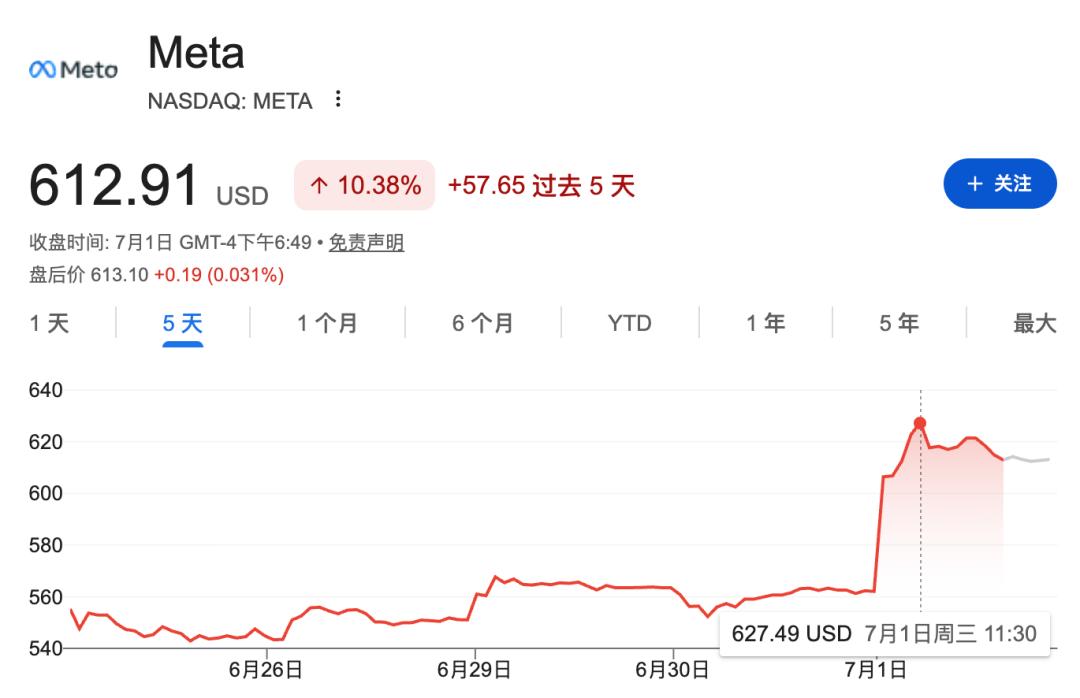
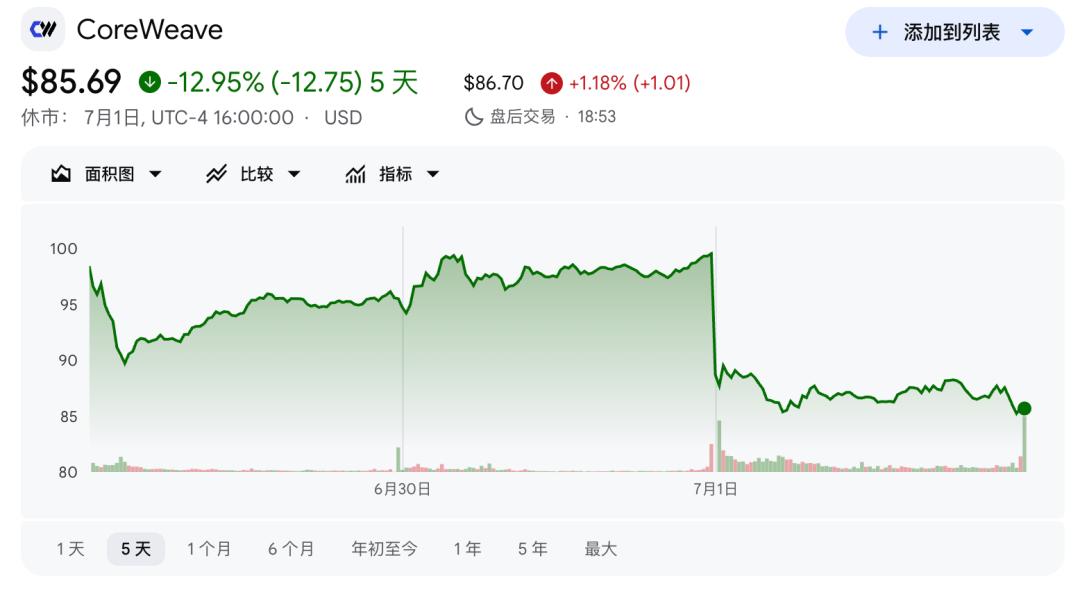
When a giant is about to enter the market, those who sell the "shovels" are the first to panic.
The most ironic thing is that CoreWeave holds a $21 billion contract with Meta. Its partner has suddenly become its biggest competitor.
The market is well aware that once a player of Meta's scale enters the market, it will take away others' share of the pie.
A Fortune Built with $182.9 Billion
Why has Meta suddenly decided to do this?
In the past two years, in order to catch up with the top - priority goal of AI "super - intelligence", Meta has been frantically stockpiling chips and building data centers. The speed of its spending has made its own investors restless.
It spent $72.2 billion in 2025, and the amount doubled in 2026. The capital expenditure guidance was raised to between $125 billion and $145 billion.
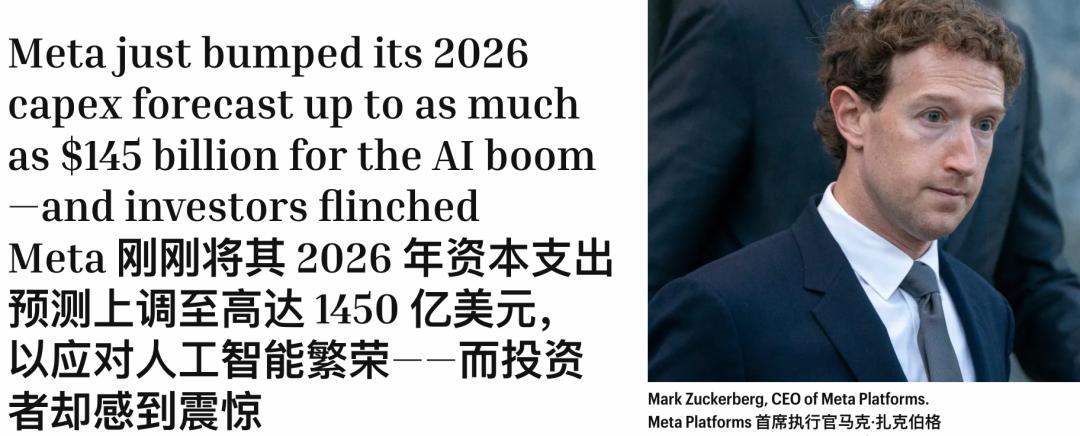
To raise funds, Meta issued $25 billion in bonds, laid off 8,000 employees, and cut 6,000 positions.
As of the end of the first quarter of this year, Meta has committed to investing $182.9 billion in AI infrastructure in the coming years.
With such a large investment, a problem has emerged: Wall Street has been constantly asking where the return on this huge investment is.
Embarrassingly, unlike Google and OpenAI, the market demand for Meta's own AI models and services is not very high.
In its financial reports, Meta didn't even dare to list the separate revenues of Meta AI and Llama. Instead, its executives repeatedly emphasized how AI improves efficiency within the company, such as making the advertising system more accurate and content recommendation more intelligent.
This means that Meta's AI business cannot yet support a decent independent revenue stream.
So, what should be done with the excess computing power?
Following Musk's Example: Idle Resources Are a Waste
Meta's move is actually learned from Elon Musk.
Just a few weeks ago, SpaceX did the same thing through its xAI subsidiary.
In May, SpaceX disclosed in its IPO filing that Anthropic had signed a contract to use all the computing power of the Colossus 1 data center, paying $1.25 billion per month until 2029, with a total contract value of over $40 billion.

In June, it signed a contract with Google, renting out about 110,000 NVIDIA GPUs for $920 million per month, also until 2029.
The combined annualized revenue from these two contracts is about $26 billion, while SpaceX's total revenue in 2025 was only $18.7 billion.
What's more interesting is the backstory. xAI built Colossus 1 to train the Grok model. However, this data center mixed three types of GPUs: H100, H200, and GB200. The architecture was too complex, and the efficiency of large - scale training was only 11%.
Realizing it wouldn't work, xAI moved the training to the newly built Colossus 2, leaving Colossus 1 as an idle asset.
Rather than letting hundreds of thousands of GPUs sit idle and gather dust, it's better to rent them out. This rental business has become the world's largest computing - power rental business.
With such a proven money - making opportunity in front of it, Meta has no reason not to be tempted.
After all, it took AWS, Azure, and Google Cloud decades to turn the computing - power rental business into a multi - billion - dollar quarterly business, and Meta just happens to have a goldmine of computing power that others can only dream of.
Two Strategies for Success
How exactly will Meta sell its computing power? People familiar with the matter revealed that Meta has two strategies.
The first strategy is to follow CoreWeave's example and directly sell "naked computing power" to the outside world. Those in need of GPUs can rent them and pay according to usage. It's a simple and straightforward approach.
Moreover, the cost of Meta's self - built data centers is likely to be much lower than CoreWeave's cost of renting from others and then sub - renting.
The second strategy is even more aggressive. It's to learn from AWS's Bedrock model and package various AI models hosted on its own infrastructure into APIs for external services.
This means that Meta is not only selling the "shovels" but also getting involved in the "mining" business. Customers will pay according to the number of tokens used.
The most notable product in this "API store" is Meta's recently released closed - source model, Muse Spark.
Yes, Meta, which is well - known for its open - source Llama models, has finally started to make money from closed - source models.

The people in charge of this big plan are a heavy - weight team: Santosh Janardhan, the head of infrastructure; Daniel Gross from Meta's Super - Intelligence Laboratory; and President Dina Powell McCormick.
Having people in charge of data centers, AI models, and corporate strategy shows that Meta is serious about this.
Zuckerberg Dropped Hints Earlier
Actually, at the shareholders' meeting in May, Zuckerberg made his intentions clear.
"It's definitely on the table," he said. "Almost every week, external companies approach us, either asking for our API services or inquiring if we have computing power that can be sold to them at a premium."
The reason for not taking action at that time was that "we thought we still needed this computing power for ourselves."
But Zuckerberg also left a thought - provoking statement: "If one day we find that we've built too much, this will be an option for us. And the existence of this option gives us the confidence to continue making large - scale investments."
To put it simply: There's no need to worry if we've built too much. We can just rent it out to make money. This fallback option has become Meta's confidence to continue investing heavily in infrastructure.
It seems that "that day" has arrived.
The Second Half of the AI Race
On the surface, Meta's entry into the computing - power market is just a new business line for a giant. But looking deeper, it's a thought - provoking signal.
As SpaceX and Meta are both selling computing power, a clearer conclusion is emerging:
The ultimate winner of this AI race may not be the company that creates the most powerful model, but the company that controls the most data centers.
Models can be caught up with, open - sourced, or distilled, but computing power is a tangible and valuable asset. Whoever holds it has the say.
Of course, there have always been doubts about the bubble.
Some have warned that this infrastructure arms race is based on rapidly depreciating chips. The GPU clusters bought for billions of dollars today may become electronic waste in three years.
Others doubt whether AI companies can generate enough end - user revenue to support these trillion - dollar gambles.
The prerequisite is that the demand for computing power remains strong and data centers retain their value.
But at least for now, the market has shown its attitude with a 9.3% increase in Meta's stock price and a nearly $100 - billion increase in its market value.
Meta has realized one thing: Rather than worrying about an under - utilized goldmine of computing power, it's better to offer the "shovels" to the world and make money in the process.
References:
https://www.bloomberg.com/news/articles/2026 - 07 - 01/meta - is - building - a - cloud - business - to - sell - excess - ai - compute
https://techcrunch.com/2026/07/01/meta - like - spacex - looks - to - turn - excess - ai - compute - into - cash/
https://aihot.virxact.com/items/cmr259c3104wjsl8z81g6p5op
This article is from the WeChat official account "New Intelligence Yuan". The author is ASI Revelation. It is published by 36Kr with authorization.