2026 H1 Sales Final Review: Auto Market Bids Farewell to Scale Expansion, System Capabilities Will Determine Long-Term Ranking
On July 1, 2026, major domestic automakers collectively released their new car delivery and sales data for June. The China Passenger Car Association (CPCA) also released the forecast data for the retail sales of narrow - sense passenger cars in June. The domestic retail sales volume in that month was approximately 1.65 million units, a 9.3% increase from May. Among them, the retail sales volume of new energy vehicles reached 1.05 million units, and the market penetration rate remained stable at over 60%. The market share of fuel - powered vehicles continued to shrink, and the long - term trend of the shift from fuel to electric vehicles became more prominent.
As June is the node for the half - year performance sprint, almost all automakers launched terminal promotions and maximized production capacity to boost sales. Leading brands with complete industrial chains and diverse product portfolios achieved remarkable growth, while mid - tier and niche brands faced problems such as weak growth and insufficient order conversion. The polarization within the industry continued to widen.
New Energy Vehicles Dominate Completely, and Growth Resources Continue to Concentrate on Leading Brands
From the delivery data released by various automakers in June, it is obvious that new energy vehicle models have become the mainstream in the domestic auto market. Fuel - powered vehicles only retain a small and stable basic consumer group. The internal growth resources of the market are constantly tilting towards leading enterprises with multiple advantages in scale, technology, and channels.
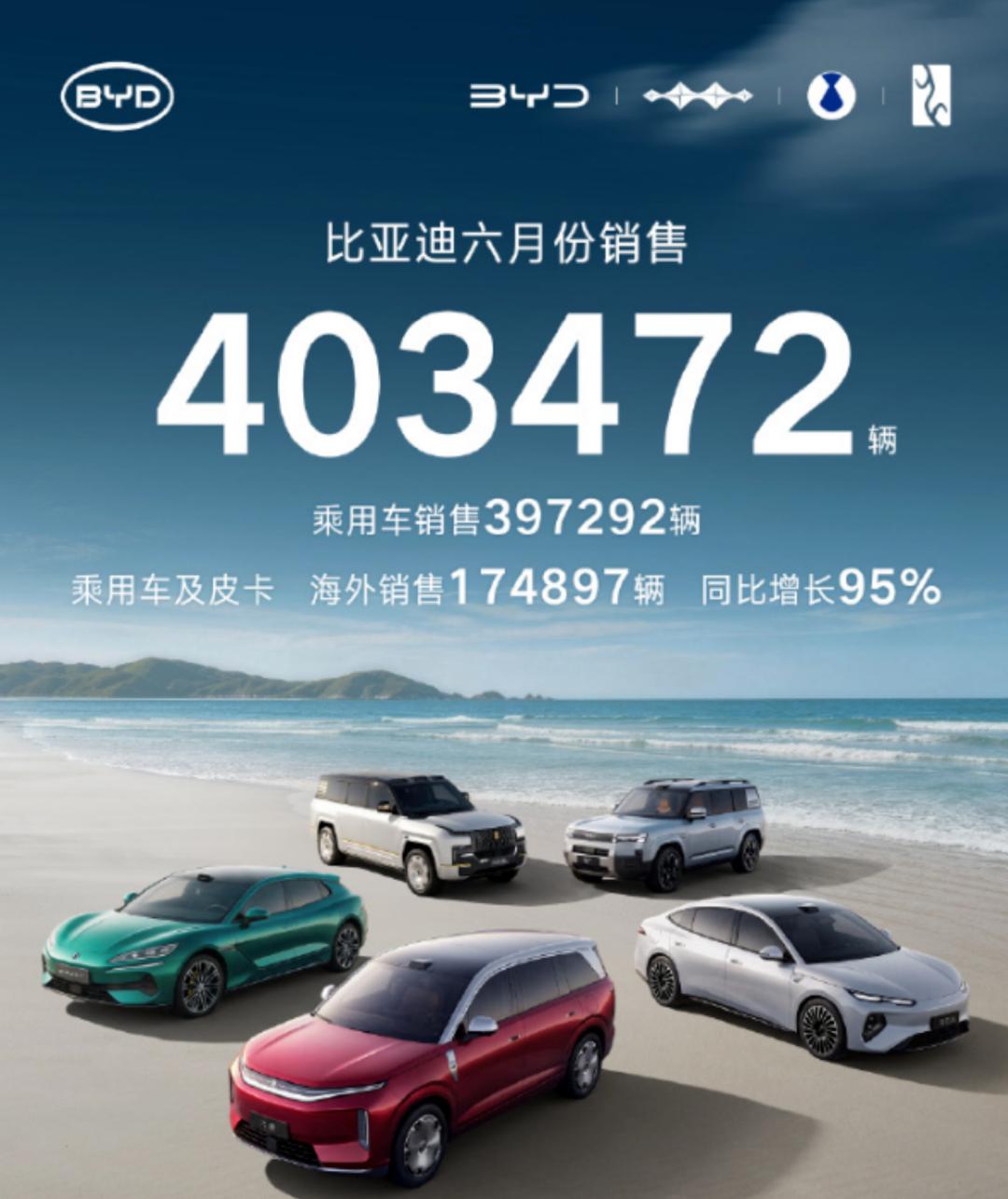
BYD sold a total of 403,472 vehicles in June, firmly holding the top position in the industry's sales ranking. Its Dynasty and Ocean series, as the basic volume - driving product lines, contributed 340,863 units in sales. Fang Cheng Bao, Denza, and Yangwang cover the off - road, high - end household, and ultra - luxury segments. The multi - brand matrix covers the entire price range, and there are no obvious short - comings in sales within the brand.
BYD's overseas sales exceeded 170,000 units in June, a year - on - year increase of 95%. The overseas market has become a stable source of incremental growth. The dual support of the domestic market and overseas exports enables the brand to maintain positive growth in an environment where the overall retail sales of the industry have slightly declined. This is also the unique anti - risk ability of vertically integrated automakers.
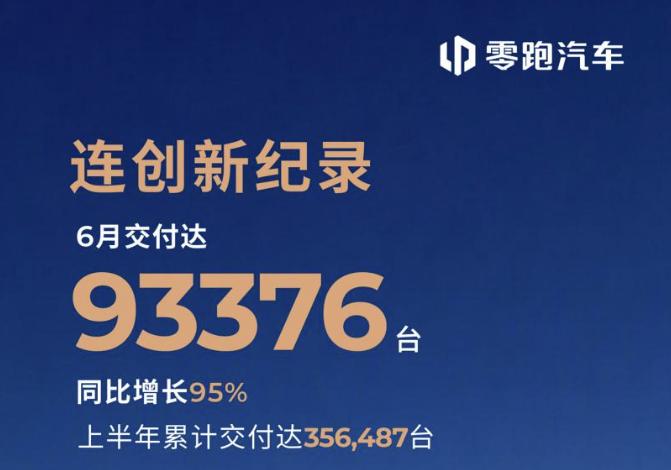
The sales stratification phenomenon in the new - force camp was very clear in June. Leapmotor delivered 93,376 vehicles globally that month, a year - on - year increase of 95%, setting a new record for its monthly delivery volume. The cumulative delivery volume in the first half of the year exceeded 350,000 units, making it the only brand among new forces to exceed 90,000 units in monthly sales. The brand focuses on high - cost - performance household models, precisely meeting the car - buying needs of the sinking market. Overseas export business also contributes nearly 20% of the sales volume. The simultaneous development of the dual markets supports its high - speed growth.
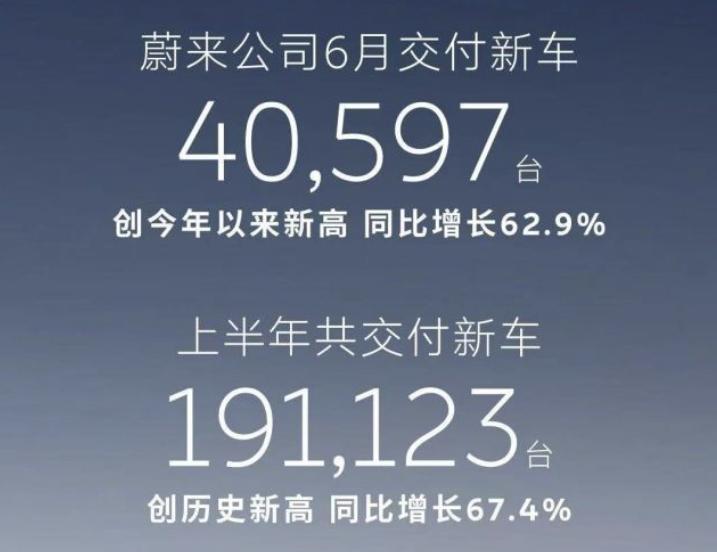
The monthly delivery volume of NIO and XPeng remained stable above 40,000 units. NIO delivered 40,597 units in June, a year - on - year increase of 62.9%. Its sub - brands, LeDao and YingHuoChong, continue to attract users at different price points, enabling the brand's product structure to break away from its dependence on a single high - end model. XPeng delivered 40,126 units, and the cumulative delivery volume in the second quarter exceeded 100,000 units. The new MONA model is scheduled to be launched in early July. The industry generally believes that the new car will drive the brand's sales to further increase in the second half of the year.
HarmonyOS Smart Mobility delivered a total of 50,624 units in June, a slight month - on - month increase of 9.7%. The single - brand delivery volume of AITO was 30,199 units. The intelligent cockpit and intelligent driving system empowered by Huawei technology have become the core selling points to stably attract family users. Xiaomi Auto's monthly delivery volume has exceeded 30,000 units for the third consecutive month. Although the official has not released the exact figure, the stable monthly delivery scale proves that the brand has firmly established itself in the 250,000 - yuan pure - electric sedan segment. Relying on its offline stores and online traffic channels, it has quickly opened up the young consumer market.
Li Auto delivered 30,895 units that month. Its extended - range six - seat models still firmly hold the mid - to - high - end household vehicle segment. The brand's cumulative total delivery volume has exceeded 1.73 million units, and its user replacement and repurchase rate remains at an upper - level in the industry. However, limited by the product line update rhythm, the brand's monthly growth rate lags significantly behind brands such as Leapmotor and Zeekr.
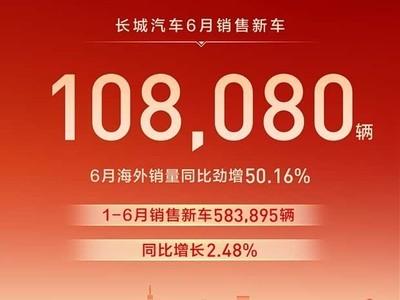
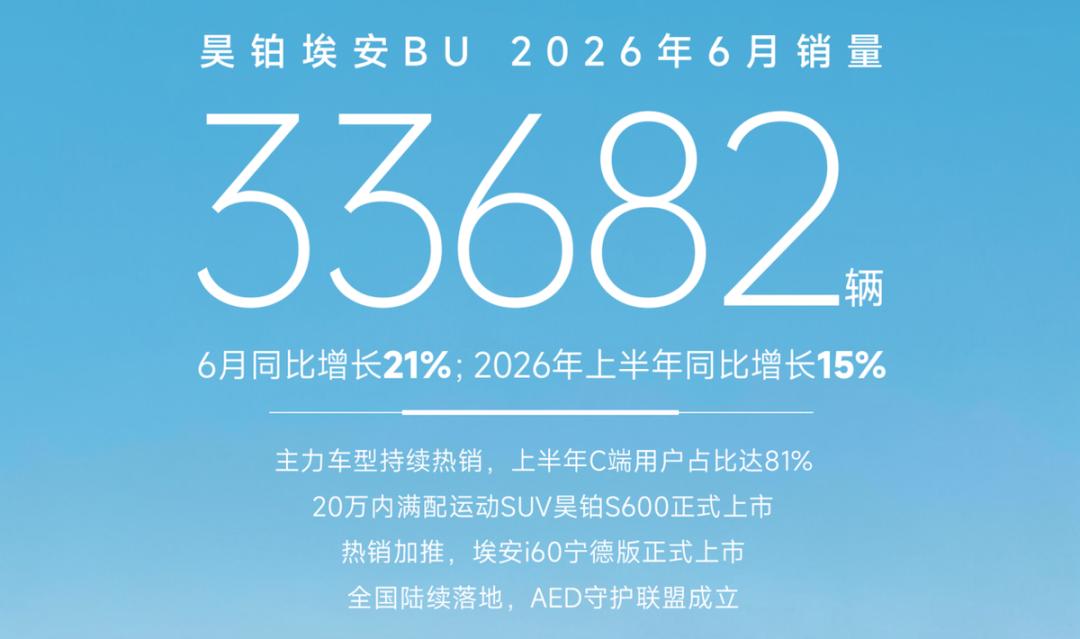
The traditional independent automaker sector showed an uneven performance. Great Wall Motor's total sales volume in June was 108,080 units, a slight year - on - year decline of 2.36%. The shrinking sales volume of Haval's fuel - powered models dragged down the overall sales. Although the new energy sub - segments of Ora and Tank had stable sales, they could not offset the decline in the fuel - powered product line. GAC Aion sold 33,682 units in June, a year - on - year increase of 21%. Its affordable pure - electric household models maintained stable demand in the county - level market, making it a brand with strong growth resilience in the new energy sector of traditional automakers.
In addition, Tesla China delivered 61,484 units in June, with a stable production rhythm. Relying on the two mature models, Model 3 and Model Y, it maintained its market share in the high - end pure - electric market. Volkswagen Anhui delivered 2,423 units in June, a year - on - year increase of 120%. However, the overall base is relatively low, and it cannot form a scale effect for the time being.
Shift from Scale Expansion to Competition in Comprehensive Strength and Profitability
The negative impact of the continuous price war in the entire industry in the first half of 2026 was also reflected in the automakers' delivery data in June. The competition logic in the industry has moved beyond the stage of simply comparing monthly sales volume in previous years. Five dimensions, including product technology, channel operation, overseas layout, cost control, and profitability, jointly determine the long - term viability of automakers. The differences in the sales growth rates of various automakers in June essentially reflect the gaps in their comprehensive system strength.
In the past two years, the industry generally adopted the business strategy of "trading price for volume". Most automakers boosted monthly deliveries by reducing terminal prices and offering free optional features. Although the short - term data showed growth, the profit margin per vehicle was continuously compressed. The industry report released by AlixPartners on June 30 clearly stated that the three - year - long price war has entered a stage of diminishing marginal returns. Simply reducing prices cannot stimulate new orders; instead, it intensifies consumers' wait - and - see attitude. The focus of industry competition has officially shifted from the sales list to the financial profit statement.
The cost advantage of leading vertically integrated automakers was fully demonstrated in June. BYD's self - developed full - industrial - chain system for batteries, motors, electronic controls, and automotive chips can buffer and hedge the cost pressure brought by fluctuations in the prices of upstream raw materials. Even if the terminal models maintain preferential prices, the brand still maintains a stable profit level. According to relevant calculation data from Morgan Stanley, BYD's net profit for the whole year of 2026 is expected to exceed 38 billion yuan. The complete industrial - chain layout is the core for the brand to resist the price involution in the industry.
The differences in overseas market layout directly widen the growth gap among automakers. In the first half of 2026, China's automobile exports increased by 63% year - on - year. The overseas market of independent automakers has become the second growth curve. The industry predicts that the total export volume in the first half of the year will be close to 5 million units, and the annual overseas export volume is expected to be close to 10 million units, setting a new record for China's automobile exports. The overseas market provides stable incremental growth, hedging the pressure brought by the decline in domestic retail sales. Most niche automakers focusing only on the domestic market have lost the buffer of overseas incremental growth and are continuously under pressure to grow in the domestic stock - market competition.
Based on the publicly available sales data of various automakers in June 2026 and the market conditions monitored by the CPCA and multiple consulting agencies, the domestic passenger - car market has formed a stable structure dominated by new energy vehicles, with the continuous shrinkage of fuel - powered vehicles. The incremental resources in the market are concentrating on leading independent automakers, and the polarization within the industry will continue to deepen. As the end - of - half - year node, the sales - boosting actions of various automakers led to a short - term month - on - month increase in sales. However, the overall domestic retail market is still in the stock - adjustment cycle.
It is worth noting that nine departments, including the Ministry of Commerce, have jointly issued the "Notice on Several Measures to Cultivate and Expand the Consumption of the Automobile After - market". Focusing on six major fields such as automobile modification, RV camping, and automobile racing, 17 policy measures to stimulate the vitality of the automobile after - market have been proposed, aiming to cultivate new forms of automobile consumption and create new diversified consumption scenarios.
In response, Cui Dongshu, the secretary - general of the China Passenger Car Association, said on June 29 that the policy combination is a "traditional Chinese medicine" with a long - term vision. It may not be as immediate as short - term subsidies, but once its "medicinal effect" is fully released, it will inject continuous growth momentum into automobile consumption and even the entire national economy. In the future Chinese automobile market, it is not only about allowing consumers to "buy a good car" but also enabling them to "use and enjoy a car well". This is the real blue ocean of automobile consumption.
This article is from the WeChat public account "Auto Market Insights". Author: Auto Market Insights. Republished by 36Kr with authorization.