Midea's overseas expansion is a smash hit, while its AI transformation faces headwinds
This summer, Europeans experienced the wonder of air conditioning for the first time.
For a long time, in Europe, which prides itself on being the birthplace of modern civilization, the penetration rate of household air conditioners has been incredibly low, only ranging from 5% to 20%. In contrast, about 90% of households in the United States are equipped with air conditioners, and the figure in China reaches around 60%.
In previous years, Europeans could get through the heat by keeping a calm mind. However, this time, the high temperature of 40°C catapulted Midea's portable split air conditioner, PortaSplit, to stardom.
The product was completely sold out in Germany, Spain, and France. In the second - hand market, the price soared to two to three times the original price. It was also included in the "Best Inventions of the Year" list by Time magazine in 2025.
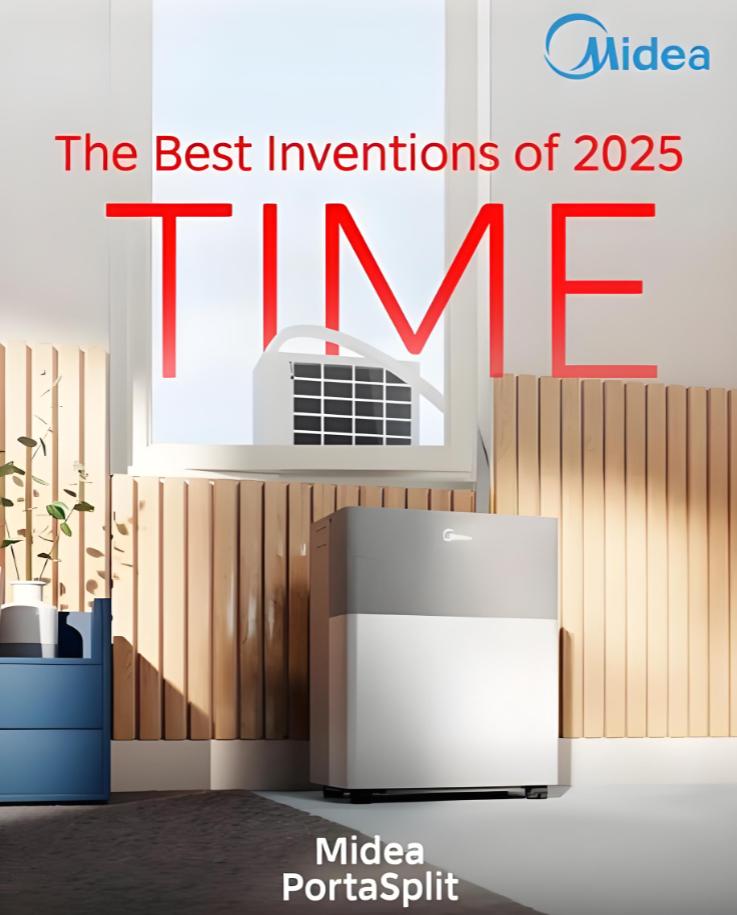
The great success of PortaSplit is the result of Midea's long - term deep - rooted globalization strategy. In 2025, Midea achieved a revenue of 195.948 billion yuan from overseas markets, with a growth rate higher than that of the domestic market.
Midea deserves this popularity.
However, for Midea, which is striving to reach a revenue of 500 billion yuan, this is just a "small treat". This large - scale traditional home appliance enterprise is now focusing on cultivating its second growth curve.
Especially in the AI era, anxiety always hovers over Fang Hongbo, the chairman of Midea Group. He said, "If the favored ones of the previous cycle fail to keep up with the changes, they will perish in the next cycle."
Midea has taken many actions in the AI field, but more exploration is needed to bring about substantial changes in product and revenue aspects.
During the days of its popularity in Europe, Midea Group's stock price rose and then fell. As of the close on July 1st, its market value was about 589.3 billion yuan.
Facing the challenges of the times, a hot - selling product in the overseas market cannot save Midea from this elimination round. While it is extremely popular in Europe, its AI transformation is facing difficulties. Midea is caught in a "two - sided situation of ice and fire".
A Chance - Driven Boom
The crazy sales of Midea air conditioners in Europe is a chance event that combines favorable timing, geographical advantages, and good human relations.
Europe is experiencing an unprecedented heatwave this summer. The temperature has repeatedly hit record highs this week. Countries such as France, the UK, and Spain have successively broken historical high - temperature records, and the temperature in many places has exceeded 40°C.
A series of strange regulations and ingrained ideas have suppressed Europeans' demand for cooling for decades.
Until this year's 40°C heat, the passive heat - dissipation advantage of old buildings faded. Europeans may be stubborn in words, but their actions are honest: it seems that life is more important than the sense of environmental superiority.
Just at this moment, Midea bypassed all the "barriers" in an ingenious way and successfully installed air conditioners in Europe, becoming the "wall - breaker" for Europeans:
With the innovative split design of PortaSplit and fixed through the window frame support, there is no need for punching holes, which saves the cumbersome process of getting the approval from the homeowners' committee to work on the exterior wall. Since there is no punching, it doesn't count as installation, and there is no need to hire expensive workers. The refrigerant capacity is 1.99 kg, perfectly staying below the 2 - kg limit. By placing the compressor in the outdoor unit and optimizing the shock - absorption structure and air duct, the noise in the silent mode is locked at 35 decibels, precisely meeting the German noise control standard.
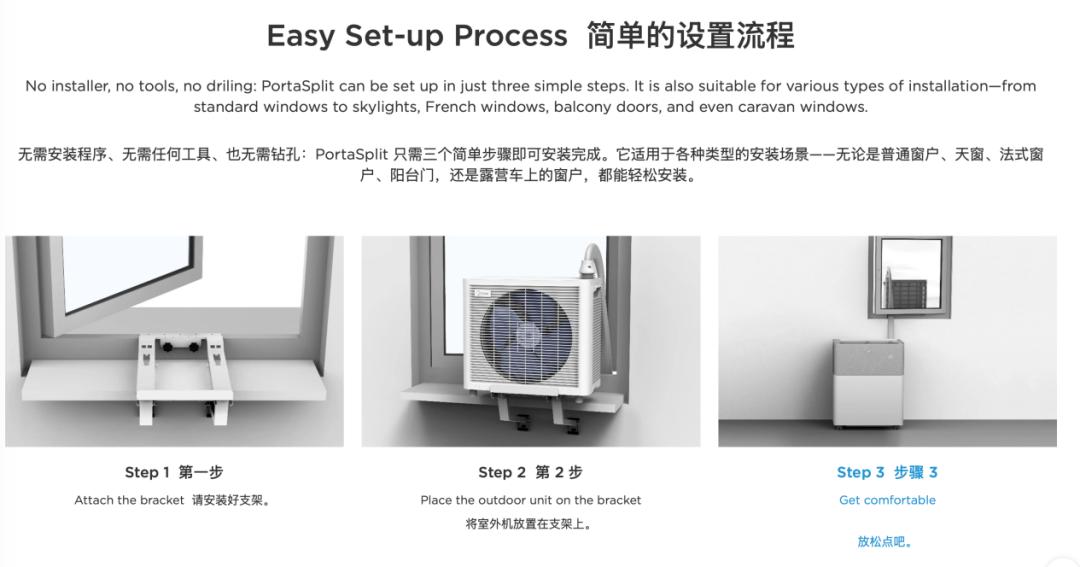
After overcoming all these difficulties, Midea created an ultimate competitive product that smoothly reached consumers' homes.
Huang Tao, a columnist, believes that "Different from previous products, PortaSplit combines the convenience of a portable air conditioner with the low noise and high - efficiency cooling of a split air conditioner. It also meets European energy - efficiency standards and seizes the demand in extreme high - temperature situations."
"The heatwave has significantly boosted sales, especially for the PortaSplit air conditioner, which has been sold out in some sales channels," Midea said. In May this year, the sales volume in the German e - commerce channel increased by about 37% year - on - year, and the shipment volumes in Spain and France also increased by 108% year - on - year respectively.
Behind this is a transformation in the thinking of Chinese manufacturing - from the previous "selling what we have" to "making what the pain points are".
Liang Zhenpeng, a senior industry observer, told AI Blue Media that "If Midea wants to turn this chance event into a long - term advantage, it needs to continuously improve its local R & D centers, track climate and policy changes to reserve and iterate products in advance, and strengthen its own brand channels and supply - chain resilience to ensure that self - operated channels are prioritized over the second - hand market during the peak sales period."
Midea has given a vivid lesson to all Chinese brands going global.
The Overseas Market Is Not the Answer for the Second Half
Midea has always attached great importance to the overseas market.
Fang Hongbo said at the 2025 annual general meeting of shareholders, "Currently, the consumer market is characterized by low growth and high uncertainty. Midea needs to become a resilient enterprise, maintain its domestic market share, and seize overseas opportunities."
In 2025, the growth rate of the company's overseas business was significantly higher than that of the domestic business. Last year, Midea achieved revenues of 260.504 billion yuan and 195.948 billion yuan in the domestic and overseas markets respectively, with year - on - year growth rates of 9.4% and 15.92% respectively. Meanwhile, the revenue proportion of Midea's overseas business continued to increase, rising from 41.52% in 2024 to 42.93% in 2025, further narrowing the gap with the domestic business.
However, overall, the traditional home appliance market where Midea operates has long reached its ceiling. Even if there is a small explosion in the overseas market, it is difficult to change the situation.
According to data from Aowei Cloud Network, the retail market scale of domestic home appliances (excluding 3C) in 2025 was 893.1 billion yuan, a year - on - year decline of 4.3%. In the first quarter of this year, it declined by 6.2% year - on - year. It is predicted that the decline will further widen in the second quarter.
In 2026, the performance growth rate of Midea Group also slowed down. In the first quarter, the company achieved an operating income of 131.099 billion yuan, a year - on - year increase of 2.55%. However, the non - recurring net profit decreased by 14.02% to 10.962 billion yuan.
As the dividends fade, all enterprises trapped in the stock market need a new story to break the deadlock.
Midea has clearly defined the strategic positioning of its seven major sectors - home appliances, heating, ventilation and air - conditioning, robotics, energy, medical, logistics, and industrial technology, dividing them into different quadrants of "core business", "secondary core business", and "cultivation - type business". The group positions itself as a "globally leading technology group".
However, most of Midea's technology genes come from cooperation and acquisitions.
For example, Kuka Robotics. In 2017, Midea completed the acquisition of Kuka, a German industrial robotics giant, for 29.2 billion yuan. It was one of the landmark transactions in Midea's transformation into a technology group.
However, according to Midea's 2025 financial report, the revenue proportion of robotics and automation was only 6.79%, which is not enough to become the second growth curve.
Moreover, Midea is too large, and its helmsman, Fang Hongbo, is too conservative. Maintaining the basic business is the top priority.
Not long ago, Fang Hongbo clearly stated at the general meeting of shareholders that "There will be no major mergers and acquisitions and no major capital expenditures in the next three years."
He frankly said that Midea's most core businesses are still white goods and heating, ventilation and air - conditioning. Robotics and new energy belong to secondary core businesses - because all second - curve businesses need the support of white goods and HVAC businesses.
To break through the shackles of traditional businesses, AI is the key.
Slow Progress in AI Transformation
Among traditional home appliance enterprises, Midea is very active in embracing AI.
When ChatGPT was first launched, Midea introduced and applied it immediately. In the past two years, the annual cost of buying tokens has been in the tens of millions of yuan, and thousands of graphics cards have been purchased.
However, in this wave of AI trends, Midea has clearly stated that it will not develop a basic large - scale model but will keep up with the iteration of large - scale models and make a lot of optimizations on this basis to generate vertical models that meet Midea's business needs.
In 2023, Midea introduced large - scale model capabilities into its whole - house intelligent system and developed the "Xiaomei AI Intelligent Agent" to upgrade the "smart brain" of home appliances.
However, while the entire industry is using the AI concept to compete for existing customers, the functionality has fallen into a dead end of homogenization. AI refrigerators for ingredient recognition and AI air conditioners for intelligent temperature adjustment don't give consumers a strong sense of experience.
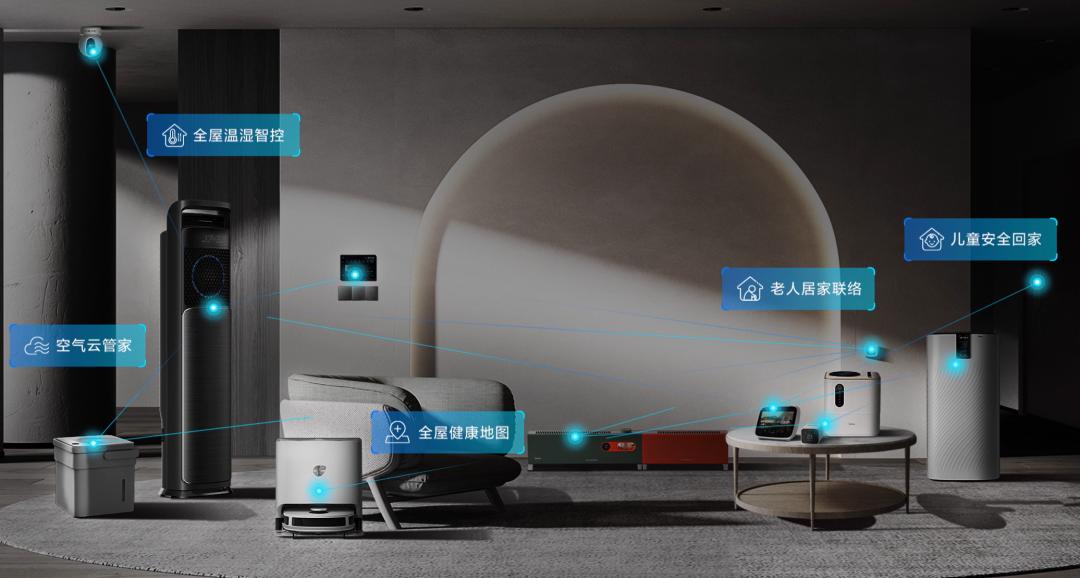
Despite the industry's strong marketing, the results are not as expected.
In 2025, Midea's sales expenses were 42.891 billion yuan, a year - on - year increase of 10.68% to 42.891 billion yuan, and management expenses were 16.092 billion yuan, a year - on - year increase of 10.94%.
According to data from the National Bureau of Statistics, in 2025, the cumulative main business income of China's home appliance industry increased slightly by 0.1% year - on - year, showing almost no improvement.
However, the exploration cannot stop. Recently, Midea has been taking frequent actions in the field of AI.
On June 8th, the WeChat Open Class released the "Guidelines for Developers to Access the WeChat AI Ecosystem". As one of the first whole - house intelligent beta - testing enterprises, Midea completed the access and connected core home appliances such as air conditioners, water heaters, and washing machines to the WeChat AI Agent.
Only two days later, on June 10th, Midea Group and Alibaba Group officially signed a strategic cooperation agreement. They will jointly develop an AI brain for the home scenario based on the Qianwen large - scale model and jointly explore the new form of next - generation smart home and computing power infrastructure.
The most obvious change is the convenience of operating AI home appliances.
After the Midea Meixiangjia product suite is integrated with the WeChat AI ecosystem, when users buy a new smart home appliance, they don't need to download a new APP. They only need to open the WeChat mini - program to complete the network configuration.
Users can control Midea's smart products with a single sentence without flipping through the APP or memorizing the operation process. The Agent can also remember users' needs and home scenarios to achieve natural linkage of the entire scenario.
This is the embodiment of Midea's AI strategy - Midea plays more of an "applicator" rather than a "definer" in the AI industry chain.
It doesn't matter if Midea lacks a self - developed large - scale base model. As long as it is firmly bound to AI giants and ensures that the super - entry can call Midea's smart home appliances at any time.
There will be more development of product AI functions and cooperation with AI enterprises in the future. Midea clearly announced in its 2025 annual report that it will invest more than 60 billion yuan in frontier - field research in the next three years, focusing on AI, embodied intelligence, and other directions.
However, no one can guarantee whether these large - scale investments in AI functions can create a new round of performance miracles.
This article is from the WeChat official account "AI Blue Media". Author: Feng Hua, Editor: Wei Xiao. Republished by 36Kr with permission.