Global Supply Chain Shift: Why Are Industry Giants in Southeast Asia and the U.S. All Choosing Chinese Partners?
Text by | Wang Yi
The world's largest FMCG giant Procter & Gamble has added another Chinese partner to its global automation cooperation list.
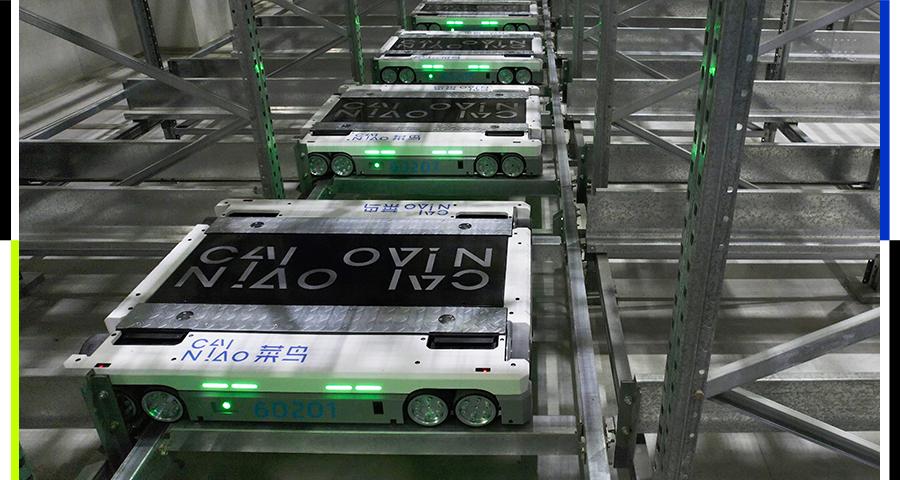
Recently, reporters learned that Cainiao has become Procter & Gamble's global strategic partner for warehousing and logistics automation. The two sides will jointly promote the intelligent transformation of Procter & Gamble's warehouses in North America, Europe, and Asia. Currently, the intelligent warehouse in Guangzhou has been officially put into operation, and the automation project in Canada has entered the on - site construction stage.
According to official statements, Cainiao is now one of Procter & Gamble's largest warehousing and logistics automation service providers globally.
Not long ago, Cainiao also won an overseas warehousing cooperation order from CP AXTRA of the Thai CP Group. The latter owns several supermarket brands such as the chain supermarket Lotus's and the warehouse - style supermarket Makro.
One is a global FMCG giant with a worldwide supply chain system, and the other is a well - known Thai national chain supermarket. Their successive overtures to Chinese logistics service providers may not be just accidental business choices but rather signals of the iteration of the underlying logic of the global supply chain and the switch of business reference samples.
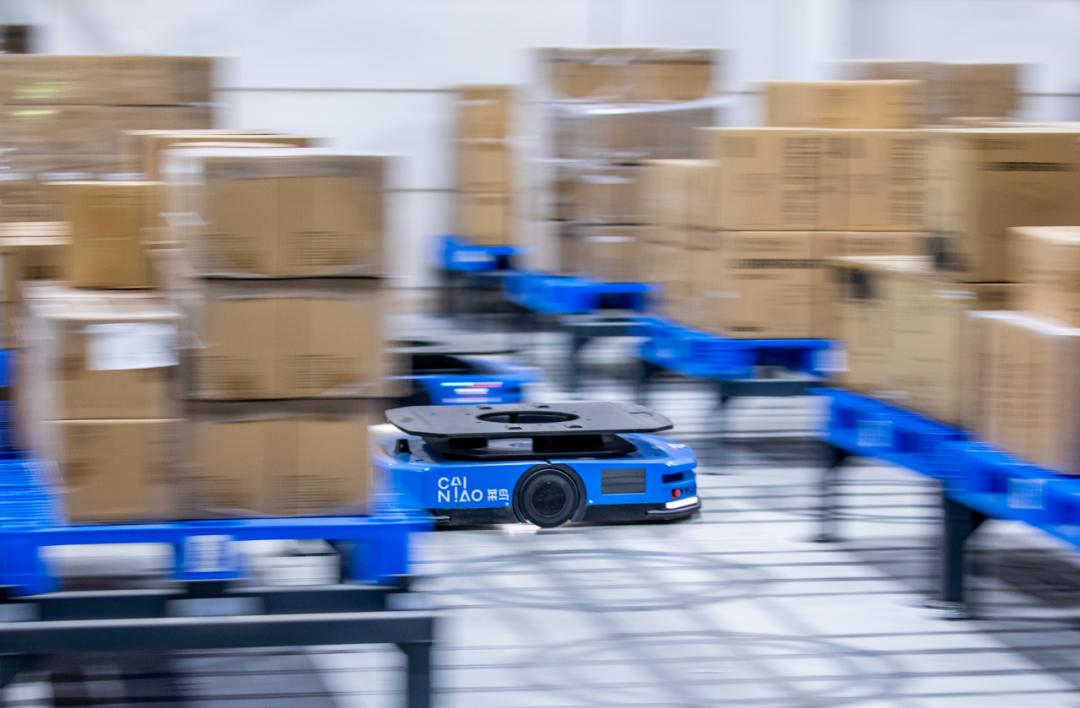
In the past, the modernization standards of global retail were long defined by European and American enterprises. In the past decade or so, with the rapid development of domestic e - commerce and the going - global of numerous Chinese merchants, some local supply chain operators like Cainiao have completed the integrated polishing of basic networks and technological capabilities.
Based on this, whether it is enterprises in emerging markets like Southeast Asia and Latin America, regarded as "China two decades ago," or the most globalized multinational corporations, when facing supply chain upgrades, they are now turning their eyes to Chinese solutions with practical experience.

Regional Fragmentation - A Common Problem for Multinational Giants
As a leading FMCG group covering markets in multiple countries around the world, Procter & Gamble has thousands of SKUs, with parallel operations in offline supermarkets, online DTC, and cross - border distribution channels, and its global warehouses are scattered across the continents.
At the end of 2024, it launched the "Supply Chain Value Community" strategy, building a supply network with more than 60,000 retailers, distributors, raw material suppliers, and service providers globally to meet the high requirements for supply chain collaboration, inventory allocation, and risk buffering.
In fact, data islands formed by regional fragmentation are common problems faced by major multinational brands, especially those in the high - frequency FMCG category.
On the one hand, usually, Europe, America, Asia - Pacific, and Latin America have different logistics partners, and each region operates independently. Data is completely isolated, and inventory data cannot be shared in real - time. Brands find it difficult to predict cross - regional consumption fluctuations, often resulting in an imbalance where there is overstock in one region and shortages in another.
On the other hand, a single regional service provider usually cannot handle both B - to - B bulk distribution and C - to - C scattered retail fulfillment. For example, most local warehousing providers in Europe focus on offline supermarkets and lack experience in high - frequency picking of small e - commerce items. Facing the explosion of online orders, they can only temporarily increase staff, accepting rising labor costs.
In addition, with the continuous changes in geopolitics and regional policies and the frequent adjustment of overseas warehouse compliance and tax rules, it is difficult for a single regional service provider to keep up with the policy details of multiple countries simultaneously. Brands need to set up separate cross - border compliance teams, which further increases management costs.
The changes in the European market are a typical example. In the past two years, with the implementation of cross - border tax reforms in Europe, the demand for local overseas warehouses has soared. However, local warehousing resources are scarce, and the cycle for building new warehouses is long. Most local logistics providers are unable to rapidly expand their multi - country warehouse networks. If multinational enterprises sign contracts with local warehousing companies in the UK, France, Spain, etc., respectively, they need to deal with multiple sets of operating standards and management teams, which is extremely difficult to coordinate.
In this context, Cainiao's global operation foundation just fills this gap.
Currently, Cainiao operates more than 50 overseas warehouses in 18 countries. This cross - regional warehouse network built for Chinese merchants going global can uniformly undertake the fulfillment of both B - to - B and C - to - C channels in different countries and adapt to the tax and warehousing rules of each country. This operational capability can be directly exported to Procter & Gamble, reducing the latter's management costs of dealing with multiple local service providers.
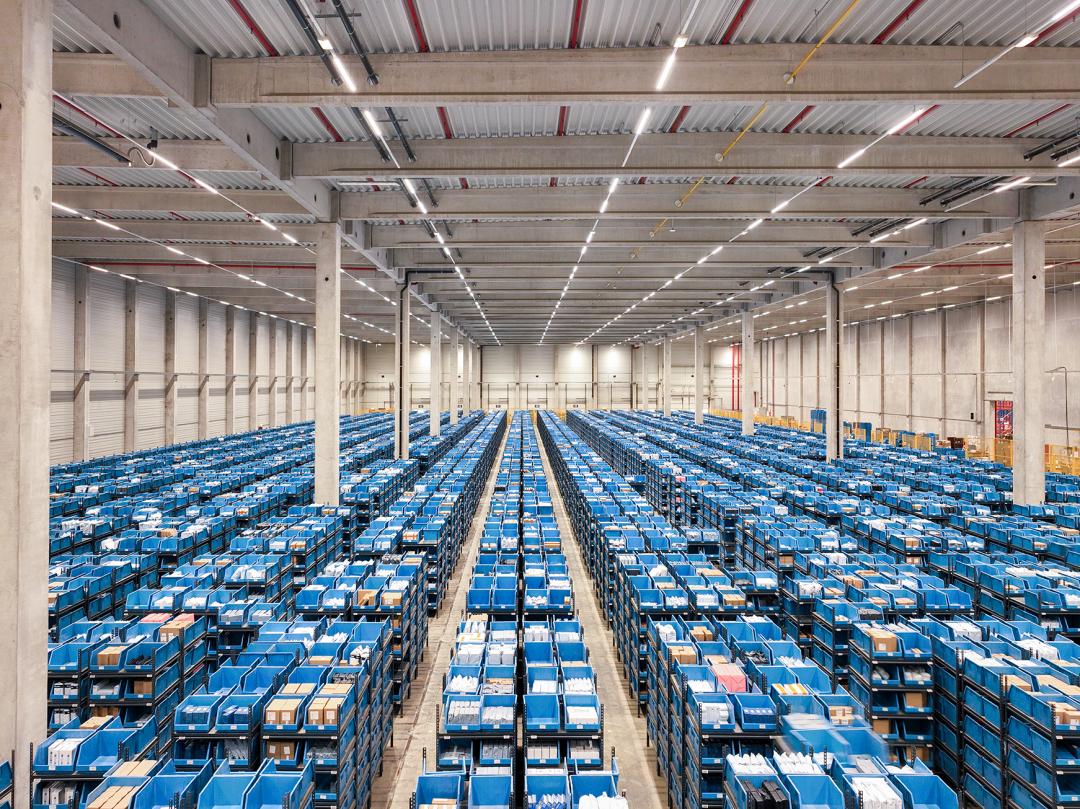
Looking back on the decade - long cooperation between the two sides in the domestic market, it is not difficult to understand Procter & Gamble's choice. After being tempered in the large domestic e - commerce market, Cainiao is familiar with the fluctuations of FMCG promotions and the management logic of multi - category mixed warehouses. It can provide standardized operational solutions, making up for the lack of e - commerce fulfillment capabilities of local European and American service providers.
The cooperation experience and trust accumulated in the domestic market have also become a practical factor for many international brands to choose Chinese solutions. Data shows that currently, Cainiao's logistics technology serves more than 400 global customers, including 214 industry - leading enterprises and 26 Fortune Global 500 companies.

The Lack of Chinese Soil for Robot Manufacturers
In the stage where all global industries are collectively undergoing intelligent upgrades, FMCG enterprises are also large - scale increasing their investment in warehouse automation transformation. However, the European and American automation systems have inherent underlying shortcomings: equipment manufacturers only focus on hardware R & D and manufacturing without self - operated warehouses to carry out large - scale real - order testing; warehousing operators are only responsible for daily fulfillment and do not participate in technological iteration and optimization. As a result, "equipment R & D" and "warehousing operation" are disjointed.
In the actual implementation process, this shortcoming brings about efficiency pain points.
According to the 2026 Global Warehouse Robot Industry Guide data, when European and American manufacturers launch new - type warehouse robots, they generally only deploy a small - scale unit of 10 - 30 robots in the pilot stage. And it usually takes 2 - 3 years from the stable operation of the pilot to the global large - scale commercial use.
This pace obviously cannot keep up with the business rhythm of FMCG brands, which frequently launch new products and experience a short - term surge in order volume during promotions.
The deeper contradiction is that when the R & D team is divorced from the real picking and storage scenarios, problems such as mismatches in shelf, bin, and product specifications and scheduling glitches during promotions are likely to occur after the equipment is put into use. High costs are also required for later transformation and maintenance.
In contrast, with the rapid expansion of e - commerce in China over the past decade or so, unique high - density, high - fluctuation, and omni - channel fulfillment scenarios have emerged globally. The complex demands of massive e - commerce promotions, multi - category mixed warehouses, and cross - border distribution have objectively forced logistics operators to not only build their own warehousing networks to handle real orders but also improve operational efficiency through self - developed automation equipment.
Cainiao's automation implementation logic is a typical example of this local model.
In April this year, Cainiao launched its self - developed climbing robot, and 134 units were deployed at once in the first warehouse in Dongguan. Two months later, it faced the 618 promotion directly. According to official data, the storage area of this warehouse is three times that of a manual warehouse, and the picking efficiency is twice that of a manual warehouse.
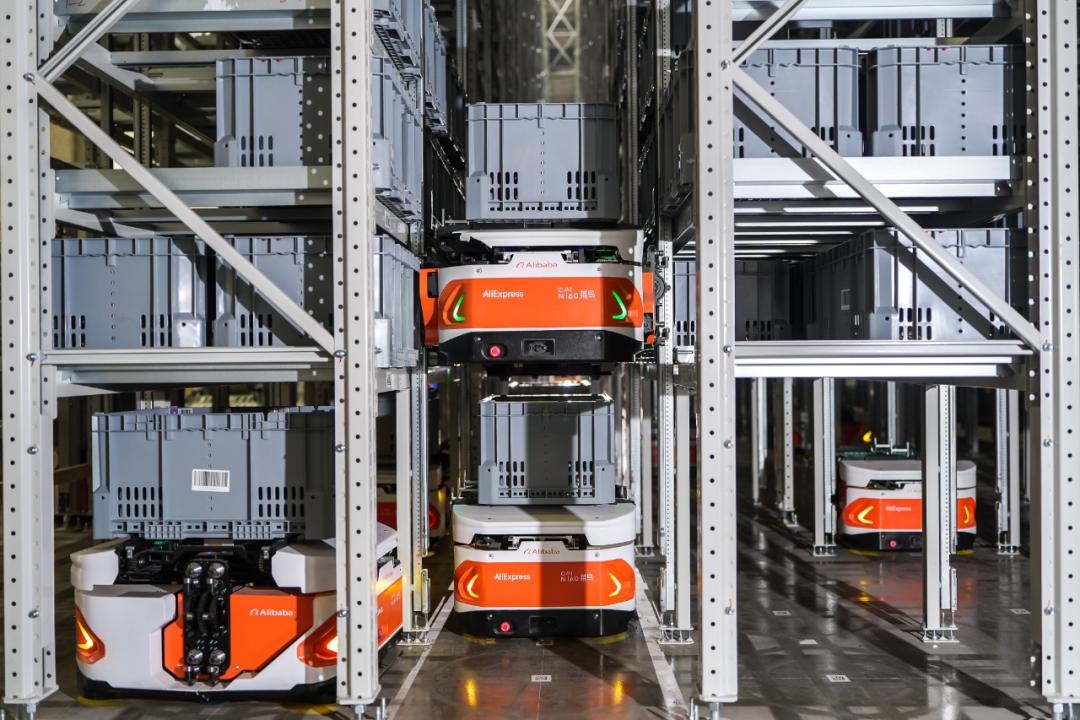
After being tested in the promotion battle, Cainiao officially announced that it plans to deliver four climbing robot warehouses simultaneously in Guangzhou, Hong Kong, the Netherlands, and Spain within the next four months.
For the automation warehousing and distribution project integrating AI and robots delivered for the maternal and infant brand Yeehoo, it also ensured that the delivery time during the first 618 was comparable to that on normal days.
This means that technology R & D based on real - world scenarios has a high maturity level and can be replicated on a large scale in a short period.
Returning to the actual business cooperation level, for multinational enterprises like Procter & Gamble, choosing a software - hardware integrated solution born from the Chinese e - commerce soil eliminates the need to separately deal with equipment manufacturers and operators. The unified AI scheduling system can adapt to different warehouse types in Europe, America, and Asia, which can quickly alleviate the problems of labor shortages and insufficient warehousing space in each region. This is a comprehensive value that single European and American equipment manufacturers can hardly provide.

Integrated Capabilities Break the Multi - Supplier Model
For a long time, there has been a fixed industry division of labor in global warehouse upgrades. The R & D of automation equipment and the daily operation of warehouses belong to two completely independent suppliers. Under the trend of omni - channel retail, this exposes cost and efficiency loopholes and is also one of the core pain points in the supply chain upgrade of multinational brands.
From the project implementation process, enterprises usually need to go through several steps such as planning and tendering, equipment procurement, and screening of operation service providers when transforming intelligent warehouses. The standards of all parties are not unified, and the pre - project planning involves repeated negotiations, which often significantly extends the project implementation cycle.
After the equipment is built, if the operation team is not familiar with the robot scheduling logic and the equipment manufacturer does not understand the order fluctuation rules, problems such as order jams and storage chaos are likely to occur.
In terms of long - term operation costs, the two sets of service providers charge service fees and equipment maintenance fees respectively. Coupled with communication and management costs, the overall supply chain expenditure increases significantly.
Currently, FMCG enterprises generally have the demand to streamline their supply chain partners. However, looking at the global market, service providers with both global warehouse network operation and self - developed automation equipment capabilities are very scarce. Most enterprises only focus on one of them and cannot provide integrated solutions.
Cainiao is one of the few service providers with both cross - border warehouse network operation and self - developed logistics technology capabilities. For example, in the factory warehouse project of Yeehoo in Liuyang, Cainiao provides full - link services from automation planning and construction to operation. Judging from the current disclosed information, in the overseas cooperation with Procter & Gamble, the two sides are also jointly promoting automation construction and long - term warehousing operation, reducing the cost losses caused by dealing with multiple parties. In the future, it is expected to form a replicable FMCG supply chain transformation model, providing a new choice for multinational enterprises different from the traditional model.
Conclusion
Procter & Gamble's choice to cooperate with Cainiao to promote global automation upgrades is not an accidental strategic cooperation but a microcosm of the shift in the global business supply chain pattern. Behind this is that multinational enterprises are actively choosing Chinese solutions that meet their own business needs to solve multiple structural pain points in the global supply chain.
With the technology and operation experience polished in the domestic e - commerce market, Cainiao's logistics supply chain technology and operation - integrated, globally replicable supply chain solutions just meet the current transformation needs of multinational enterprises. As more global giants start their supply chain digital upgrades, Chinese solutions verified by a large number of complex domestic scenarios are expected to continuously enter the global market and become the mainstream choice for multinational enterprises to optimize their global fulfillment networks.