The Iteration History of Running Shoe Technology: Breaking the 2-hour Marathon Barrier – Runners or Shoes?
In the war of racing running shoes, the marathon is undoubtedly the most eye - catching battlefield. At this year's London Marathon, Kenyan athlete Savi won the championship with a time of 1 hour, 59 minutes and 30 seconds, becoming the first athlete to break the 2 - hour mark in an official marathon. The runner - up, Kjellecha, also broke the 2 - hour mark, making history. After the event, the media noticed that Savi, Kjellecha, and the women's champion of this race, Asefa, were all wearing Adidas' Adios Pro EVO 3. However, before this, Nike had dominated the marathon field for 10 years. It was also Nike that launched the once - booming Breaking 2 project, aiming to help athletes break the 2 - hour mark in the marathon.

Although the sport of running has existed since ancient times, it wasn't until the 1960s that people truly had modern running shoes specifically designed for road running. In this podcast episode, we invited Gerd, the host of the sports - specific podcast "Di Tan Gai Lun". He was once a product manager for sports brands such as Nike, Adidas, and Saucony, and is now a full - time self - media person. We talked about what technological changes have taken place in road running shoes over the past 60 - plus years. How have sports shoe brands represented by Nike and Adidas been competing with each other both on and off the marathon field?
The following is a selection of the content of this conversation:
01 The Iteration History of Running Shoe Technology: Which Shoe's Innovation Is the Most Ground - breaking?
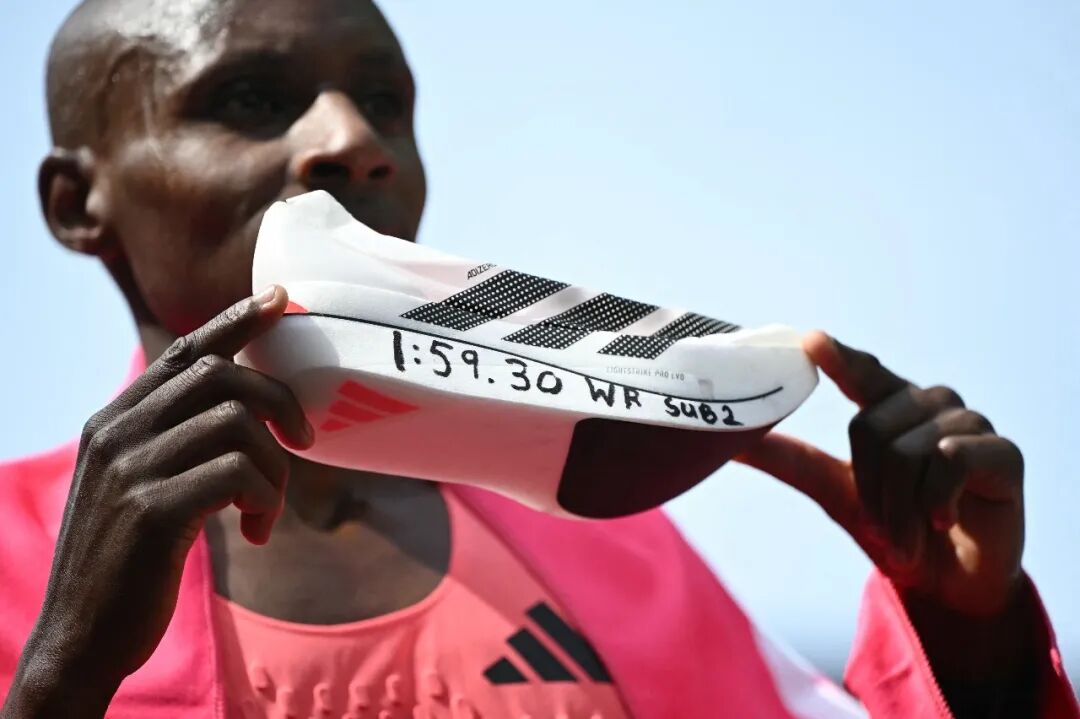
After Kenyan athlete Sebastian Savi broke the 2 - hour mark in the London Marathon, he took a photo with his battle boots, the Adios Pro EVO 3. Photo source: adidas
Mahua: In the April London Marathon, two runners wearing Adidas' latest running shoes broke the human record and both ran under 2 hours. Many people say that the future of running shoes or the marathon will enter an era defined by Adidas. However, in the history of running shoes, there have been many so - called era - defining running shoes.
In the 1960s, New Balance's Trackster became the first running shoe with a wavy sole, offering better grip. In the 1970s, Brooks' Vantage was the first to widely use EVA foam technology. Later, there were Nike's waffle - sole running shoes, running shoes with Air cushions, and Asics' GEL shock - absorbing gel. After entering the 21st century, there were Nike Free, Adidas Ultra Boost, Nike's Vaporfly, and then Adidas' Adios Pro EVO 3.
I want to know what sports shoe companies are actually competing for behind the obvious running shoe war. How do those so - called epoch - making products come about? The technological iteration of many running shoes is related to the midsole. Why is the midsole so important for running shoes?
Gerd: Those so - called era - defining running shoes before were actually more of the brands' own publicity. They innovated the previous running shoe technology in one aspect or a certain detail. However, I think there are two relatively significant events to truly dominate the running shoe market.
The first is Adidas' Ultra Boost. It was the first to introduce super - critical materials into running shoes. However, it didn't dominate the jogging shoe market but quickly dominated the commuting market. Its visibility and exposure rate were very high in those years. Later, Yeezy also used Boost technology.
Later, Nike managed to dominate the marathon field. It combined the carbon plate and super foam and put them into marathon racing running shoes. From 2019 to 2021 on the marathon field, Nike's Vaporfly and Alphafly achieved a dominant proportion of being worn.
Mahua: Ultra Boost should be the first to use the TPU super - critical foam technology. What's the advantage of this technology compared to the previous EVA soles?
Gerd: Super - critical foaming is to add nitrogen or some inert gas to the midsole substrate and then fuse them into a super - critical state between solid and liquid. This is actually a two - fold problem. One is the upgrade of the running shoe substrate, from the previous EVA to the current more advanced midsole substrates such as TPU, TPEE, and PEBA. The foaming process has also advanced from the previous chemical foaming to the current super - critical foaming.
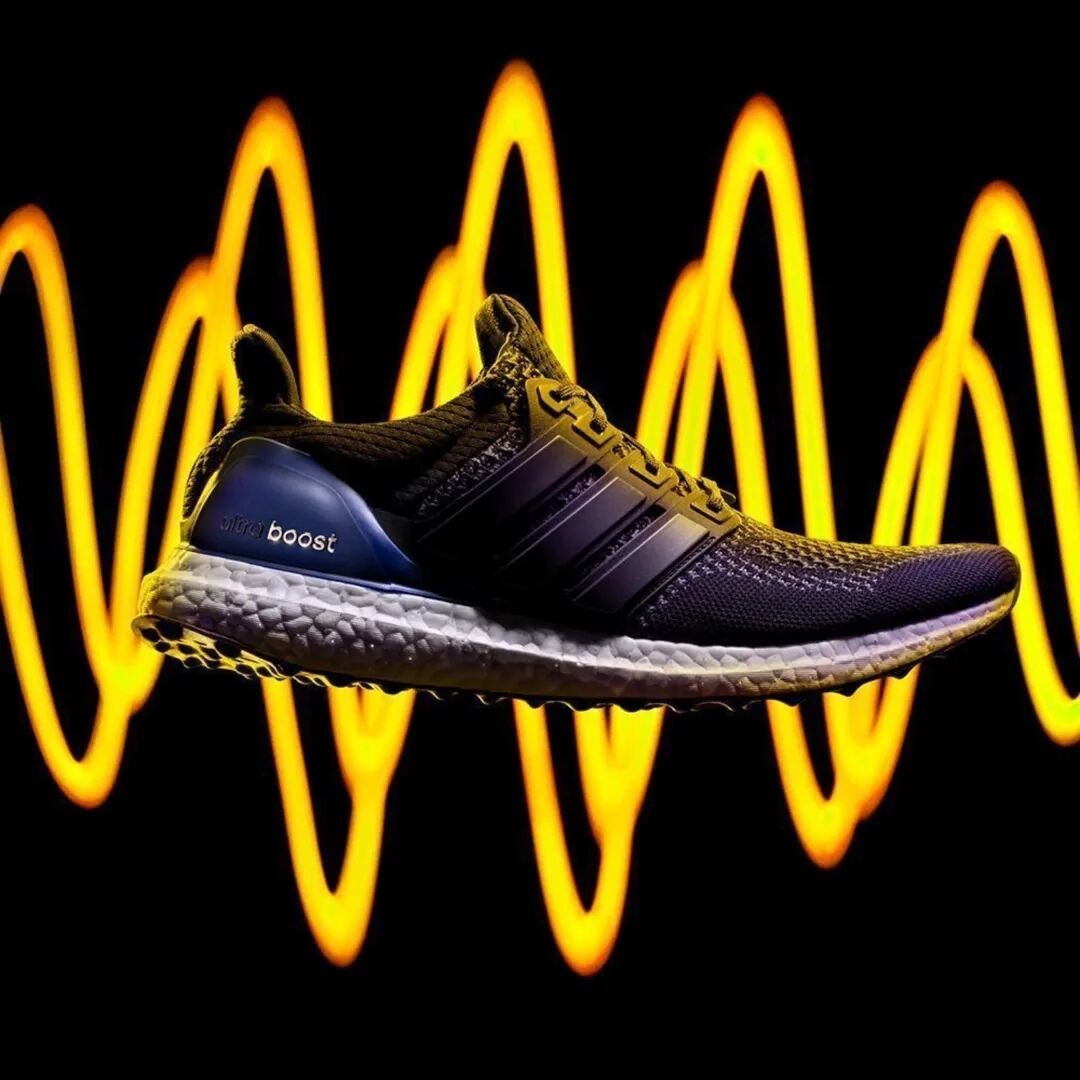
The Ultra BOOST released by adidas in January 2015. Photo source: adidas
Mahua: Although TPU has good rebound and shock - absorbing effects, it is relatively heavy. So it didn't dominate the road running market but instead dominated the commuting market. People like to wear shoes with a "stepping on shit" feeling. After Nike's Vaporfly was born, why could it dominate the marathon running shoe market?
Gerd: Many people think it's because of the carbon plate, but in fact, the carbon plate is only one aspect. The history of using carbon plates in running shoes is very long. In the 1980s, Brooks had already used carbon plates in running shoes. Carbon plates have also been widely used in basketball shoes, including Nike's Air Jordan 11 and later Foamposite, which both used large full - length carbon plates.
The reason why Nike re - defined the marathon racing running shoe is that its carbon plate is combined with super foam, which is Nike's ZoomX foam.
First of all, it is very light in weight, and the foaming ratio can be made very large, making it extremely soft and elastic. So Nike added the carbon plate to the super foam. The carbon plate plays a supporting role, preventing it from being too soft. At the same time, the carbon plate can also play a propelling role, maximizing the propelling force in combination with the elasticity of the foam.
Before the birth of this running shoe, the soles of marathon racing running shoes were very thin. It was difficult for the previous EVA midsoles to be both light and have good shock - absorbing and rebound effects. Marathon athletes pursue lightness, so the soles are generally very thin. But for us amateur runners, if you wear such thin - soled shoes to run a marathon, your feet may be in bad shape by the end. However, Nike combined the carbon plate and super foam, making the midsole have both shock - absorbing and lightweight features, and its popularity spread rapidly.
Mahua: Nike's Vaporfly 4% is named so because it claims to improve running economy by 4%. The so - called running economy is the energy consumed by a runner in a marathon. Is this data scientifically based in your research and development of running shoes in the industry?
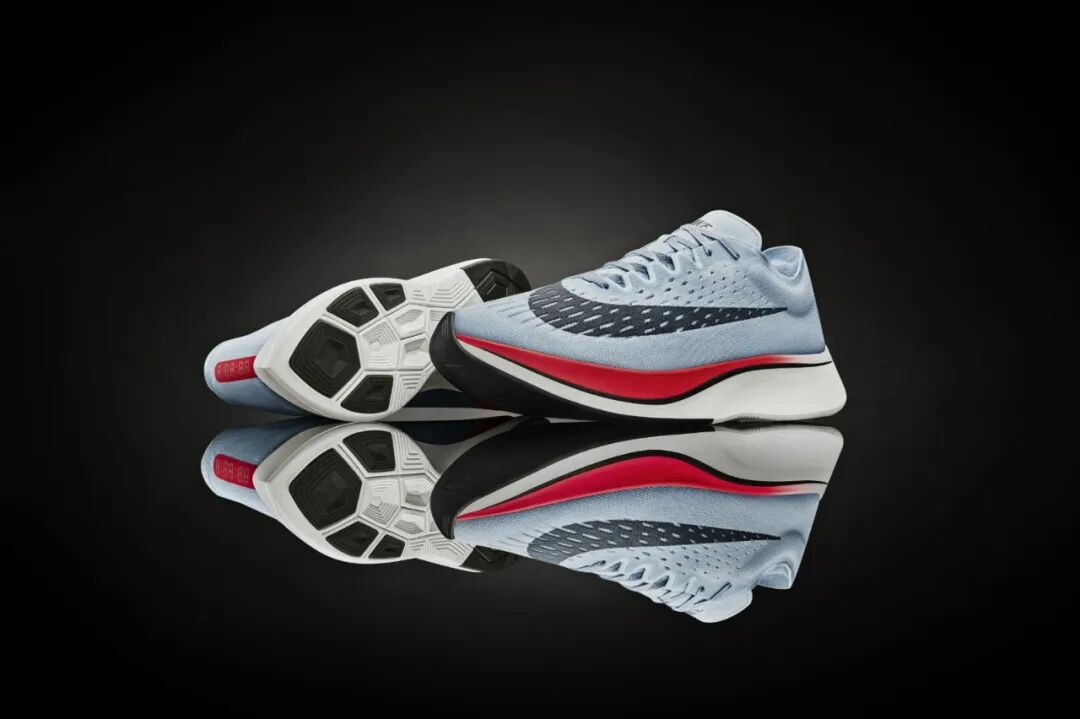
The Nike Zoom Vaporfly 4% launched in 2017, equipped with ZoomX foam and a full - length arc carbon fiber plate, claims to improve running economy by about 4%. Photo source: Nike
Gerd: This is mostly done in an ideal laboratory environment. After being worn on each consumer's feet, everyone's feet are different. Your running posture, weight, running frequency, and shoe - wearing frequency are all different. The actual effect may vary greatly, which is what we often call "a thousand people, a thousand feet".
Mahua: The midsole technology is divided into two major types: mechanical structure and foaming material. According to what you just said, before Nike and Adidas made breakthrough innovations, other products were not considered era - defining. Is it true that the updates of running shoes through mechanical structures are not really breakthrough innovations, and only after the update and iteration of foaming materials have there been breakthrough progress?
Gerd: Yes. Previously, when using mechanical structures for shock absorption, including Nike's Shox and Adidas' A3, there was a big problem. Using structural shock absorption would increase the weight, so it was mostly used in basketball shoes.
Running is very different from other sports. It is a single action that is repeated continuously. In a 42.195 - kilometer marathon, you may run more than 40,000 steps, which means repeating the same action more than 40,000 times. Other sports do not have such a single - action continuous repetition. Only in running, the impact force accumulates with each landing, and the pressure is exerted on the joints, muscles, and the midsole of the running shoes. So the midsole is crucial for running.
Mahua: Is the technology competition of running shoes only about the midsole? Are there other aspects?
Gerd: There are many other aspects. The materials of the upper are also constantly being upgraded. At first, leather materials were used, which were very heavy and had poor breathability. Later, engineered mesh was introduced, which has been used in many jogging shoes. It has good ductility, breathability, and comfort, and is well - balanced in all aspects. Now, many racing running shoes use some high - strength and relatively light materials to balance lightness and wrapping. The side of the shoe needs to have enough strength to support your feet and prevent them from shaking inside the shoe. However, such materials often have poor comfort.
The shoe last is also very important. Some domestic brands often claim in their promotions that their shoe lasts are specially optimized for the foot shapes of Chinese or Asian people. The reason why there are the "Four Major Jogging Shoes" (Brooks, Saucony, New Balance, and Asics) is that their shoe lasts are very comfortable. They can provide wrapping without being overly narrow and causing foot - squeezing. Moreover, they offer various shoe lasts with different widths, which is still relatively rare in domestic running shoes.
Another aspect is the drop, which is the difference in height between the heel and the forefoot of the running shoe. This is a very controversial topic online, and everyone has different preferences, so there is no definite conclusion. Many people say that zero - drop is the best, as it is most in line with the natural gait of the human body. However, some people prefer a high drop, with the heel more than 1 cm thicker than the forefoot, believing that the shock absorption at the heel is more sufficient.
Mahua: What is the general R & D process of a running shoe? What is the approximate time and process from the birth of a new technology in the laboratory to its appearance on the feet of athletes and then on the shelves for the public?
Gerd: There are significant differences among different brands. I understand Nike the most. It has an Innovation Kitchen at its headquarters in Oregon, which is a top - secret area. Even when we visited the headquarters, this area was off - limits. The most cutting - edge technology R & D is carried out there. For example, Nike's Vaporfly is said to have been in R & D for more than 4 years.
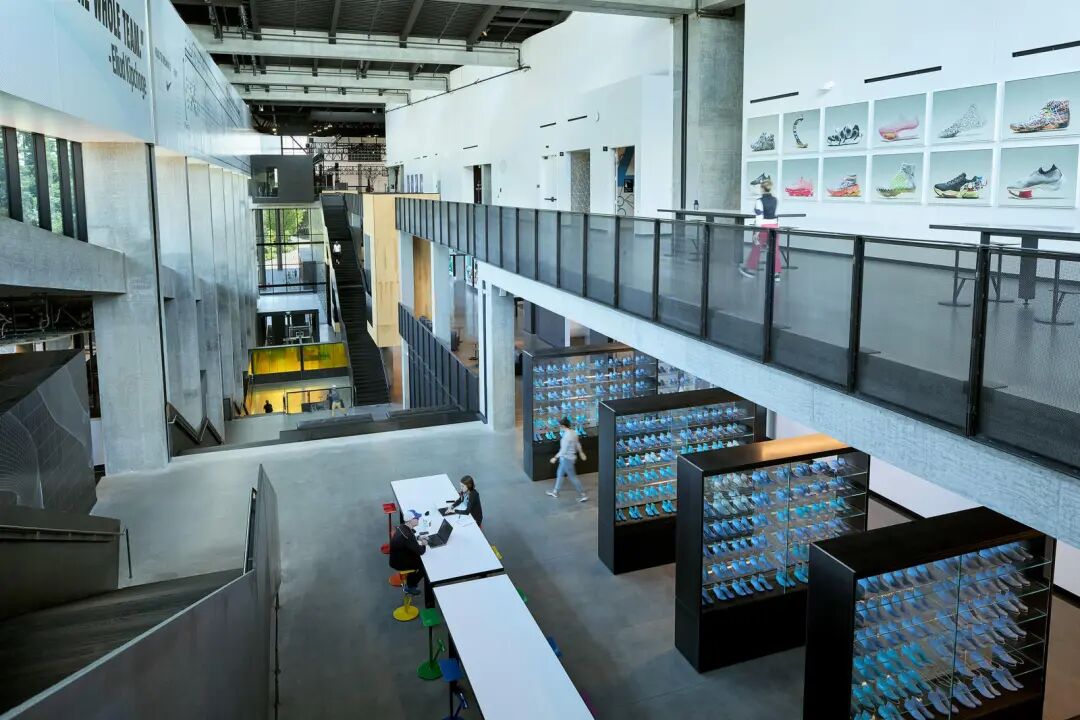
The Nike Sports Research Laboratory at the LeBron James Innovation Center. Photo source: Nike
For example, Saucony's first carbon - plate racing running shoe, the Endorphin Pro, also went through more than 20 versions of iteration. From the first version to athlete testing, feedback, and modification, it took more than 20 versions to finally determine the version for mass production and market launch. Xtep also has a running product laboratory covering more than 3,000 square meters on an entire floor. There are various equipment and instruments, as well as a short track for athletes to test on. They use various human infrared sensors or slow - motion cameras to capture running postures.
However, some small domestic or foreign brands may only have one or one and a half years of R & D time because they need to meet the launch schedule of new products each season. With an 18 - month cycle, the time is very short. Since 18 months is the time from the start of R & D to the final market launch, the actual time available for running shoe R & D may only be 3 to 6 months, and then there is still the process of ordering and production.
Mahua: What external institutional support is there behind the iteration of running shoes? Adidas' Boost is a cooperation with Germany's BASF, and Nike's ZoomX super foam is a cooperation with France's Arkema. Some running shoes even take the advice of podiatrists. What other external factors are involved in the iteration of running shoe technology?
Gerd: On the one hand, the midsole substrates are currently mainly provided by large European chemical groups, such as BASF, Arkema, and Evonik. Many domestic brand running shoes also source their substrates from them. Chinese chemical brands, such as Wanhua, are also constantly catching up. Currently, it is undeniable that Europe is still in a leading position.
However, China is gradually catching up in foaming technology. Using the substrates from French BASF or Arkema, through China's relatively advanced foaming technology, midsole products with better performance can be obtained. For example, Guosheng in Jinjiang and the Ningbo Institute of Materials of the Chinese Academy of Sciences have cooperated to produce midsole materials that are now used by Saucony, Li - Ning, and Bimai. Damaoniu, which has developed rapidly in recent years, is also a company with very advanced foaming technology.
Mahua: Since Nike's Vaporfly, the soles of running shoes have become thicker and thicker. However, from 2005 to 2015, running shoes with a bare - foot feeling still had a certain market, such as Nike Free and Vibram FiveFingers, which specializes in five - toe shoes. Why do bare - foot feeling running shoes seem to have lost their popularity?
Gerd: Bare - foot shoes can indeed have a good exercise effect, but most ordinary consumers still pay more attention to the first - step feeling when putting on the shoes. Thick - soled shoes are like fast food, such as McDonald's and KFC. You get a very good taste when you take the first bite and a great sense of satisfaction. Five - toe shoes are more like light - food salads. You may find them very unpalatable at first, but they are definitely beneficial in the long run because they can help you exercise many small muscle groups in your feet and restore the original function of the sole muscles.
The problem is that the first - step feeling of these shoes is really not good. Many people find it difficult to keep wearing them after buying them. If you can't keep wearing them for a long time, they won't have the exercise effect.
02 Adidas vs. Nike: Alternately Dominating the 21st - Century Marathon Tracks
Mahua: Finally, two runners in the marathon broke the 2 - hour mark. Is it the athlete or the shoe that contributed to the