Who is actually operating, profiting from, and bearing the risks of domestic concerts?
If you were to ask what business formats are thriving these days, offline concerts would definitely be on the list.
Over the just-passed weekend, Jay Chou's concerts at the Bird's Nest Stadium were held for three consecutive days. The spots where official concert merchandise was placed were swarmed by people, and the supply of the merchandise was out of control. The police intervened in the investigation, and the topic topped the social media hot searches.
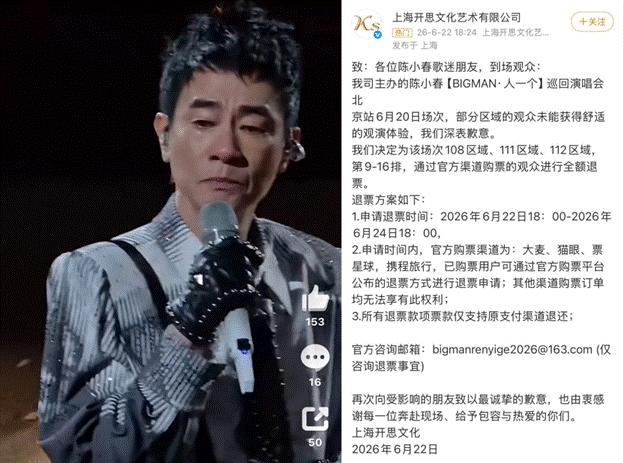
Even earlier, at the opening of the first Beijing stop of Jordan Chan's "BIGMAN · One Man" concert tour, audiences who paid 1,288 yuan for their tickets found that the giant stage props blocked their view. They said, "I spent the whole concert trying to find the singer in the gaps." Subsequently, the organizer, Shanghai Kaisi Culture, announced that it would refund the tickets for some audiences and apologize.
These incidents have made the term "concert organizer" particularly prominent. When debating issues such as "whether actors and hosts can sing well in cross - over concerts" and "whether to refund tickets due to a poor concert experience," a deeper question is often overlooked by the public: Who is actually in charge of a concert? Who is making money? Who is taking the risks? Whether a singer gets a fixed appearance fee or participates in box - office revenue sharing represents two completely different business logics.
According to the monitoring and research calculations of the ticketing information collection platform of the China Association of Performing Arts, the total revenue of the national performing arts market in 2025 is 83.722 billion yuan, of which the box - office revenue is 61.655 billion yuan and other revenues are 22.067 billion yuan. The average driving coefficient of large - scale performances for other consumption is 1:6.85, directly driving more than 220 billion yuan in transportation, accommodation, catering, and tourism consumption. This is not just a niche entertainment category but a complete industrial chain. And at the origin of this industrial chain are the companies with the words "Organizer" printed on the concert tickets.
Two Ways of Making Money
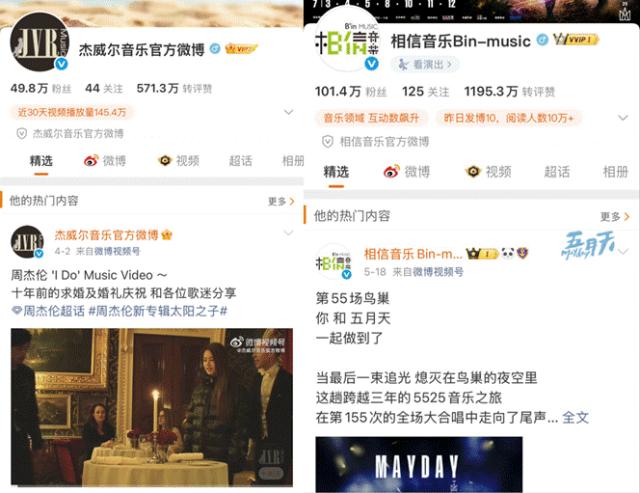
Concert organizers can be roughly divided into two business models. The first is that the singer's own team or company participates in the organization and shares the box - office revenue. In this case, the box - office performance directly affects the singer's income. The singer is not only the content provider but also shares the business risks. For example, JVR Music of Jay Chou and B'in Music of Mayday. The artists are not just "invited to sing a few songs" but are also one of the operators of the entire performance.
The second is that the organizer directly contracts the entire concert, and the singer gets a fixed appearance fee. The box - office profit or loss has nothing to do with the artist. In this model, the organizer bears all the market risks. If the tickets are not sold out or sold well, it's all on the organizer. The recent controversies about actors and hosts having cross - over concerts are essentially putting the second model under the spotlight: When the organizer is willing to pay an appearance fee to anyone with "media attention," they still have to bear the box - office risks themselves.
As the "engine" of the entire industrial chain, the role of the organizer is far more than just "paying to invite people." A complete organizing process includes: project evaluation (judging the artist's market appeal), performance approval (submitting song lists, lyrics, and stage design plans), venue rental (securing a suitable stadium or arena in the competition for schedules), stage construction (setting up lighting, sound systems, large screens, and stage props on - site), ticket pricing and distribution, security and emergency plans, and the development of merchandise and derivative income.
Each link tests the organizer's resource - scheduling ability and industry experience. Organizers with different backgrounds also have different advantages, disadvantages, and characteristics in each link.
How Many Camps Are There in the Industry?
Currently, concert organizers on the Chinese mainland can be divided into four major camps, each with its own unique characteristics in terms of background, strategies, and competitive advantages.
The first camp consists of national leading giants, which are like "local snakes" in the concert market.
CMC Live is undoubtedly the leader. In 2018, it joined hands with 21 provincial leading performance companies across the country to form an alliance and established a physical operation platform through equity integration. According to industry insiders, its market share in the concert industry has exceeded half, and it has absolute advantages in terms of capital, production, scale, and operation. It has organized the concert tours of top - tier Hong Kong and Taiwanese singers such as G.E.M., Li Ronghao, Zhang Shaohan, Ren Xianqi, Yang Qianhua, Liu Ruoying, and Eason Chan.
CMC Live's competitive advantage lies in its full - industrial - chain layout of "content incubation - venue operation - ticket consumption - talent training," as well as its self - operated venue resources such as the Jiukeshu Future Art Center. It also innovates the "ticket + cultural and tourism new consumption + MCN" model with its wholly - owned subsidiary, Fenwandao, extending the business of a concert beyond the performance itself.
Luopan Culture is an established private giant. It was founded in 2009 and has held more than a thousand performances within five years of its establishment. It has the resources of top - tier artists such as Zhang Jie, Phoenix Legend, and Wang Sulong and is the core operator of top - star concert tours. It's worth noting that Xue Liping, the founder of Luopan Culture, is a business partner of Xu Mingchao, the husband of Linghua, the lead singer of Phoenix Legend. The two co - founded the idol management company, Jichuang Gravity.

Additionally, , Kuo Jing Music, a holding company of Tencent Music Group, has formed a cross - regional layout through its labels such as Chaoshi Music and Qiyun Culture and has signed a large number of top - tier artists. Taihe Performance (under Taihe Music) covers both independent music and mainstream singers. Yongdaoxing Entertainment focuses on top - tier Chinese artists and has organized more than a hundred S - level artist concert tours.
These leading giants have a common feature: they have deep roots. They are not supported by just one or two hit projects but by decades of accumulated industry resources and local relationship networks, which are the most difficult things for new entrants to replicate.
The second camp consists of artist - bound companies, where one artist can support an entire company.
Yamei Entertainment has been collaborating with Hua Chenyu for more than a decade. It has created a unique IP, the "Mars Concert," around the "Martian" community culture. Hua Chenyu even held his concert by the seaside in Yantai, pioneering the concept of a "day - long concert" and turning the "Mars Concert" into a long - term asset. Nanjing Yingmaizhe Culture is the core organizer of Li Jian's concert tours. From "More Than Just Li Jian" to "When All Things Are at Peace," it has been targeting the stable audience of middle - aged singers.
Some top - tier artists are also organizers themselves. JVR Music, the organizer of many of Jay Chou's concert tours, is owned by Jay himself. B'in Music, the organizer of Mayday's concerts, was also co - founded by the band members. The essence of this model is that the artists are not only content providers but also business operators. They use their organizer status to control the presentation of their works and the commercial returns. This strong bond means extremely high loyalty - it's almost impossible for top - tier artists to be "poached."
The third camp consists of international giants, which have global resources but are limited by localization.
Live Nation China is the world's largest live - entertainment group and the core organizer of international artists' (such as Taylor Swift and Coldplay) concert tours in the Chinese mainland. In the second quarter of 2025, Live Nation's global revenue reached 7 billion US dollars (about 50.3 billion yuan). Recently, it also reached a strategic cooperation with Ctrip to upgrade the "travel + performance" service. AEG Presents is good at large - scale stadium performances and the localization of international IPs.
The advantages of international giants are obvious: global artist resources and a mature industrialized performance system. However, in the process of entering the Chinese market, they also face challenges such as policy approval, cultural differences, and the connection with local channels. Their projects are large - scale and high - end, but the number is limited, and they highly depend on whether overseas artists can come to China smoothly.
The fourth camp consists of Internet platform - based companies. Damai Performance (Alibaba - affiliated) and Maoyan Performance (Meituan - affiliated) are the representatives of this camp. Damai has over 300 million users. In terms of content layout, it has been focusing on performance content through six major labels such as Mailive and Xiami Music Entertainment. However, the problem is that they are more like "ticketing platforms" rather than "content organizers." Selling tickets is their strength, but organizing concerts is a completely different field. There is a deep industry barrier between user traffic and organizing ability.
Can They Seize the Market Share?
Damai and Maoyan have a large amount of traffic and capital but cannot capture most of the market share like they do in the ticketing platform business. Behind this is the most core competitive barrier in the concert - organizing industry, which also explains why the Internet has not "conquered" this market yet.
Firstly, the resources of top - tier artists have been "locked up." Currently, the concert resources of top - tier domestic artists are almost firmly in the hands of several giants. After signing with these artists, these companies usually do not distribute the rights externally.
In a market with highly concentrated supply, the chances for new entrants are slim. More importantly, the relationship between top - tier artists and organizers is often based on years of cooperation and trust. It's not just about the negotiation of business terms but also a deep understanding of the artist's brand image, tour rhythm, and production standards. This kind of tacit understanding cannot be bought overnight with a high - priced contract.
Secondly, the core competitive advantage of organizers is not just money but also "relationships + experience." Concert organizers need to understand content, fans, production, and business. From performance approval to venue coordination, from stage construction to security and emergency response, each link requires years of accumulated industry experience and local resource networks. The 39 holding companies of CMC Live and Luopan Culture's right to operate stadiums are all "moats" that Internet platforms cannot replicate in the short term.
Traffic can be bought, and capital can be burned, but building relationships with local cultural authorities, getting the priority to negotiate venue schedules, and establishing the tacit understanding for emergency response need to be achieved step by step. There is no shortcut, and it's not something that Internet platforms can achieve overnight.
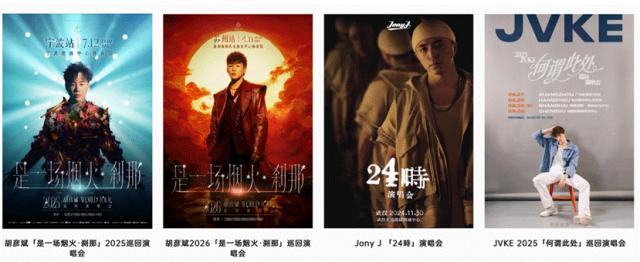
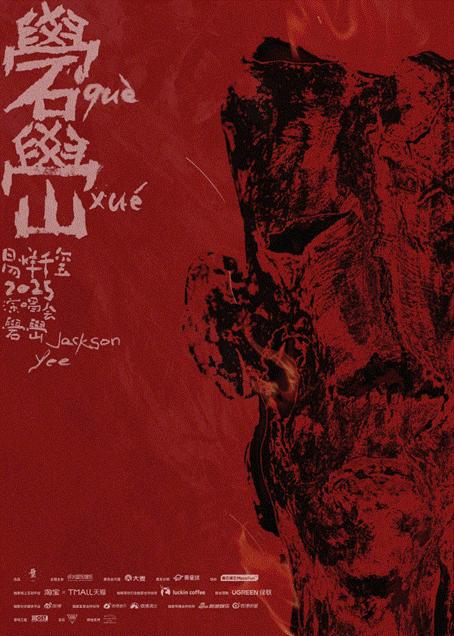
Therefore, Internet - platform companies can only use "clumsy methods" to break into the market. Damai's approach is to forcefully enter the market by deeply binding with Jackson Yee and organizing his 2025 concert. Industry insiders say that Damai needs such top - tier projects to meet the KPIs of its performance business. Internet - platform companies are still relatively passive when competing for top - tier resources. Most of the projects organized by Maoyan are for "veteran artists" like Lao Lang.
The market is expanding, and the market structure is solidifying. The resources of top - tier artists are firmly in the hands of several giants. Internet platforms with traffic and capital cannot get in. International giants are eyeing the market but are limited by policies and localization. However, organizing concerts is never an easy - money business. When organizers focus more on competing for artists and resources, the most basic concert - going experience is often overlooked. Whenever concerts are concentrated during holidays, the "peak season" and "chaos" in the market always go hand in hand, and in the end, it's still the organizers who have to pay for every "fiasco."
This article is from the WeChat official account "Entertainment Talk," written by Zeze. It is published by 36Kr with permission.