Dialogue with Jun Peng of Pony.ai: An "anti-common-sense" autonomous driving company
In 2016, when Peng Jun founded Pony.ai, he had already anticipated that the large-scale implementation of Robotaxi (autonomous driving taxi) from vision to reality would require at least 10 years of efforts, as it depends on the maturity of technology, laws and regulations, and also needs to take full account of public acceptance.
Today, whether it is the Waymo fleets shuttling on the streets of San Francisco or the Pony.ai fleets receiving orders in the busy downtown area of Nanshan, Shenzhen, all confirm this point. Autonomous driving vehicles have been integrated into the social traffic flow and started commercial operations.
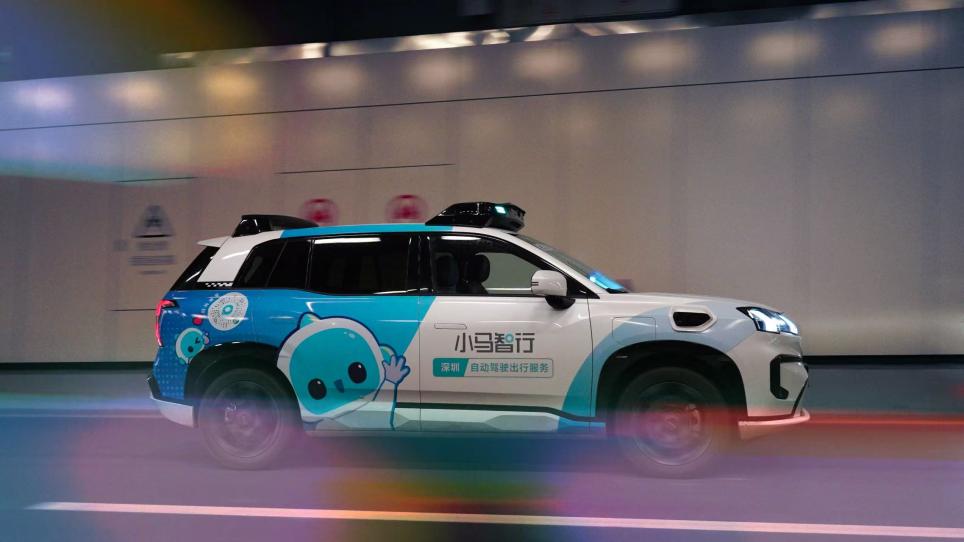
However, what Peng Jun might not have expected 10 years ago is that a key problem restricting the rapid expansion of his fleet is a series of trivial operation and maintenance work after the removal of human drivers.
When human drivers are at the wheel, tasks including charging, car washing, vehicle maintenance, and even helping passengers carry luggage are done by drivers conveniently. But after autonomous driving vehicles are put on roads, these invisible trivial matters have become prominent problems instead.
Peng Jun, CEO of Pony.ai, recently accepted an interview with 36Kr Auto, and exchanged views on topics including the implementation and operation of Robotaxi, the choice of mass-produced L2 business, the reason for not rushing to lay out embodied intelligence, and the selection of technical routes.
Peng Jun told 36Kr that Pony.ai has set up an operation team and explored a set of operation and maintenance standards to provide logistical support for autonomous driving vehicles. "These personnel include not only remote safety staff, but also ground support and logistical staff."
Even if the fleet size expands rapidly in the future, the vehicle-to-person ratio will not increase significantly (that is, breaking the traditional growth logic of more vehicles requiring more personnel). From this perspective, Peng Jun believes that this is a capability blind spot that current ride-hailing companies or automakers may ignore when entering the Robotaxi sector.
After 10 years of development, coupled with the rapid maturity of the automotive intelligent supply chain, autonomous driving technology has entered the substantive commercial operation stage in various fields. A representative case is the unmanned logistics vehicle sector, where companies including White Rhino, Neolithic, and Jiuzhi Intelligent have successively received capital support, and have become the business card of China's automated logistics industry.
As one of the most imaginative markets for autonomous driving vehicles, the Robotaxi track has attracted a large number of automakers and ride-hailing platforms to enter the market one after another. Tesla, XPeng Motors, Geely and other enterprises have all announced clear unmanned vehicle operation plans.
A mainstream view in the industry holds that automakers, with complete full-vehicle engineering capabilities and an assisted driving to autonomous driving technical system that can realize data snowball effect, will be the core players in the Robotaxi track. But Peng Jun told 36Kr that manufacturing capacity has been oversupplied in China. For Robotaxi, if a company has no relevant experience before, it almost still has to start from scratch.
Peng Jun believes that for Robotaxi, technical capability determines the 0-1 breakthrough, that is, whether the business can be realized, while operation capability determines operational efficiency. At present, Pony.ai has gradually explored a set of clear commercial models in practice.
Along the way, the development of Robotaxi has not been all smooth. It has long faced commercialization difficulties, and a large number of peer autonomous driving companies have shifted their focus to the L2 intelligent driving supplier business to find more revenue channels.
Pony.ai is one of the few companies that have been adhering to the Robotaxi track all the time. At present, the 7th generation vehicles of Pony.ai have achieved single-vehicle profitability in Guangzhou and Shenzhen. After the financial model is verified, Pony.ai plans to rapidly expand its fleet size to 3500 vehicles this year.
Looking back at the choices made along the way, most of Pony.ai's decisions are "counter-intuitive judgments".
Peng Jun said that the company once tried the mass-produced L2 assisted driving business briefly, but soon found that this is an industry doomed to low profit, because "the technical threshold is low and the user experience is not standardized, automakers hold the dominant position, and intelligent driving companies are easily dragged into price wars".
Facing the aggressive layout of Robotaxi by automakers and ride-hailing platforms, Peng Jun sharply pointed out that "making announcements is always easy", "Tesla has been calling for Robotaxi for 10 years, have they achieved it?"
Most automakers hope to follow Tesla's path, using their existing end-to-end algorithm capability as a homologous technology to support both assisted driving and Robotaxi businesses at the same time.
However, Peng Jun put forward a technical judgment different from the mainstream view of the industry in the interview. Pony.ai does not follow the technical rhythm of large language models to build an integrated autonomous driving algorithm with super large parameters, but adopts an algorithm strategy of multiple small models, so as to improve operating efficiency and reduce computing power dependence.
For the current situation that the assisted driving industry is overly sensitive to the mention of maps, Pony.ai also does not follow the trend. Peng Jun admitted that the company will continue to adopt the light map route for a long time.
"You are familiar with the roads you often drive on, so you drive easily; you will feel tired when you drive to places you have never been to. This is very normal, so why not use maps?" Peng Jun said, "Even Tesla is using maps."
Pony.ai also did not enter the hot embodied intelligence track immediately, but chose to wait and observe.
"This is another matter that requires at least a 10-year cycle", Peng Jun gave a more straightforward judgment, "There will always be opportunities to enter this track, but we need to see the situation clearly and think it through first."

Peng Jun, CEO of Pony.ai
The following is the edited transcript of the conversation between 36Kr Auto and Peng Jun from Pony.ai:
Discussion on Robotaxi Deployment: Automakers and Ride-hailing Platforms Are Not Good at It
36Kr Auto: I remember that the industry once claimed that Robotaxi (autonomous driving taxi) would be put into use around 2020. But judging from the pace of Waymo or your team, it seems that this matter has only been realized today, delayed by nearly five or six years. Where do you think this gap comes from?
Peng Jun: I think that claim was made by people who do not understand this industry. I have always believed that Robotaxi requires at least 10 years of effort. Just like Musk has been promising Robotaxi every year for 10 years and has not achieved it, these are all claims made by people who do not understand, because he obviously does not know what L4 autonomous driving is. Those who made loud claims at the beginning, such as Cruise under General Motors, have now gone bankrupt. I think people who really know the industry understand its complexity. From technological development to the maturity of laws and regulations, and then to public acceptance, it requires at least 10 years of efforts.
36Kr Auto: After the current Robotaxi is deployed and operated, many problems will be amplified. For example, sometimes Waymo vehicles break down directly at traffic lights, or drive into railway tracks. Are these the most difficult parts in the deployment process?
Peng Jun: These problems cannot be exhaustively listed. They will always appear, and we can only fix them one by one. 99.99% of the work in this world has been completed, but for the last 0.01% or 0.001% of the edge cases, we still need to keep working on them.
36Kr Auto: What kind of mechanism should be adopted to solve these problems?
Peng Jun: There are several systems. First, just like treating diseases, we implement early detection. After detecting problems, we can quickly add the universalized solution to the boundary conditions within one development cycle. The world model we built can accurately model the surrounding environment of the vehicle, including accurately reflecting the kinematic model of the self-driving vehicle and the kinematic models of surrounding traffic participants. By continuously enriching the scene data in the world model, when the system detects a new special situation, it can quickly incorporate it into the training samples of the world model, so that the model can learn to handle such boundary conditions, thus improving the generalization ability of the autonomous driving system. In addition, under such circumstances, we must set up a perfect fallback mechanism.
36Kr Auto: What does your fallback mechanism look like?
Peng Jun: There are many mechanisms. First, we have technical fallback. For example, we have a lot of redundancy in the design, and all sensors are redundant. The control of the whole vehicle, including acceleration, brake, steering, power, electricity and network, all have their own redundancy. Secondly, we have a complete detection and failover mechanism. You can imagine that we have a three-layer degradation mechanism. The main system is responsible for driving, which works 99.9% of the time. If the main system really fails, we actually have a mechanism to pull over and stop. If it is on the highway, it can even pull over to the side of the road and drive to the nearest exit. So this is a degradation mechanism. If this level also fails, the worst case is to stop safely in the lane line, and the sensors still work. But the third level of failure is relatively bad, the vehicle will block the road. But we also have remote monitoring, which can find problems in time and dispatch ground staff to the site for assistance.
36Kr Auto: You have set a target of 3500 vehicles this year. How did you calculate this number? Why 3500 instead of 5000 or 10000?
Peng Jun: Production is relatively easy. Production and stocking are arranged according to demand, which is also based on the prediction of the development of market and licenses at home and abroad, so we got this number. In particular, many people from vehicle manufacturers who have no experience in Robotaxi forgot that taxi drivers and ride-hailing drivers have done many things besides driving, such as charging, maintenance, cleaning and many user-related matters, like carrying bags and lifting items. All these things are done by drivers conveniently, but for autonomous vehicles, we need to have efficient solutions for all these things, and these supporting systems also need to be built. This is also the reason why ride-hailing platforms claim that they have operation capabilities to do L4 operation, but their operation is not the same as the operation we are talking about. All ride-hailing platforms and taxi platforms do not need to do the things I just mentioned, because they only need to manage the drivers, and the drivers will finish these tasks. But these tasks do not exist in the traditional operation system, so these operating companies do not naturally have greater advantages. For vehicle manufacturers and mobility platforms, Robotaxi is actually a new species, which cannot be directly grafted from their existing business. Everyone says this is a platform business, but in fact, the platforms are familiar with another set of operation logic, and they don't even know what Robotaxi is about.
36Kr Auto: How does Pony.ai plan to do these things now?
Peng Jun: We need to do all these things by ourselves first, to establish standards and build platforms. In fact, there are many technical solutions. For example, how to make vehicles come back to charge together in a centralized way, and how to optimize the peak and valley of electricity consumption. How can you make 20 vehicles charge and wash at the same time. Plugging in the charging gun is only a matter of half a minute, and there are many things you can do to improve the efficiency of other links. We have established a set of standards. Of course, we can find third-party partners to do these things in the future, but now we need to establish our own standards first.
36Kr Auto: Now you have 1000 vehicles. How many vehicles are matched by one person for this kind of ground operation? What is the vehicle-to-person ratio?
Peng Jun: Adding up all the ground staff, remote maintenance personnel and supervisors, the vehicle-to-person ratio is already very low, and the labor cost accounts for a very small part of the total operation cost.
36Kr Auto: Is this model based on the current fleet size, or the long-term situation?
Peng Jun: In the long run, the ratio may increase slightly, but not much.
36Kr Auto: What do you think is the proportion of these invisible operation work in the moat of Robotaxi?
Peng Jun: It does not determine whether the business can be realized from 0 to 1, but it determines the operational efficiency. If one person can manage 30 vehicles while another person can only manage 20, the cost is completely different. So it does not determine the 0-1 breakthrough, but it affects many key indicators. Technology determines the 0-1 breakthrough, which means 99% of the players have been eliminated. But after you have the technology, these operation capabilities are also very important, because they determine your efficiency.
Discussion on L2 Business: Once Price Competition Starts, It Will Become a Red Ocean
36Kr Auto: There is a view in the industry that the mass production of intelligent driving products is too difficult and the engineering cycle is too long, so you have been focusing on Robotaxi and did not do L2 business. Is that the reason?
Peng Jun: Mass production is actually easier, and the L2 market is closer and shorter, but it is already a red ocean. In the final analysis, it is an industry where there is no profit left after brutal price competition. The market size of Robotaxi is definitely much larger, but the commercialization path is much longer. From the perspective of the industry, the technical threshold for realizing L2 is relatively low, and most enterprises have R&D and production capabilities. The technical paths and implementation methods are converging, and the performance differences between different products are difficult to be intuitively perceived by users. There is no unified standard. Taking over the driving once every 10 kilometers or once every 100 kilometers will not make a big intuitive difference for ordinary people, because L2 essentially has the user (driver) to take the final responsibility. In this case, automakers hold the dominant position, market competition gradually focuses on price, and the industry profit margin is constantly compressed. We saw this very early.
36Kr Auto: When did you realize this point?
Peng Jun: Around 2021 and 2022, when many people began to turn to the L2 track.
36Kr Auto: The revenue volume of L2 business is still very large. I see that Pony.ai's target revenue for Robotaxi this year is about 100 million US dollars, but if you do L2 business, getting a mass production project from an automaker may reach this revenue scale?
Peng Jun: The market cake of Robotaxi is getting bigger and bigger, and it will still grow in 10 years. But the cake of L2 will get smaller and smaller in the next two years, and its shipment volume will not grow much. You can see that the current penetration rate of L2 is 60%. Even if the penetration rate reaches 100%, the shipment volume will only double, but the charge per vehicle is dropping rapidly. So the overall market cake of L2 is getting smaller, not bigger.
Discussion on Automakers Doing Robotaxi: They Have to Start From Scratch
36Kr Auto: Take the first-tier cities in China as an example, the number of ride-hailing vehicles is about 100,000. How many Robotaxi vehicles are needed to cover the whole city?
Peng Jun: Our current goal is not full city coverage, but to reach at least 10%-20% of the number of ride-hailing vehicles. I think the market has enough capacity to support this scale.
36Kr Auto: Do the production process or manufacturing standards of vehicles need to be updated at this time? Or can we continue to use the current standards?
Peng Jun: We are constantly updating. We need to improve several capabilities, first is operation capability, and then production