Frontline | Photon Transition Launches Personal Intelligent Imaging Ecosystem, Unveils AI Ring and Other Products to Build Multi-Device Collaboration Layout
On June 30, the intelligent imaging company Photon Leap held an imaging technology press conference in Shenzhen, unveiling its personal intelligent imaging ecosystem and showcasing a variety of products, including the LEAPTIC Cube action camera and the AI ring, as well as its future ecosystem plans.
Photon Leap stated that the company hopes to connect different imaging devices through end - to - end AI capabilities, upgrading traditional imaging devices from simple recording tools to creative terminals with scene understanding and intelligent collaboration capabilities.
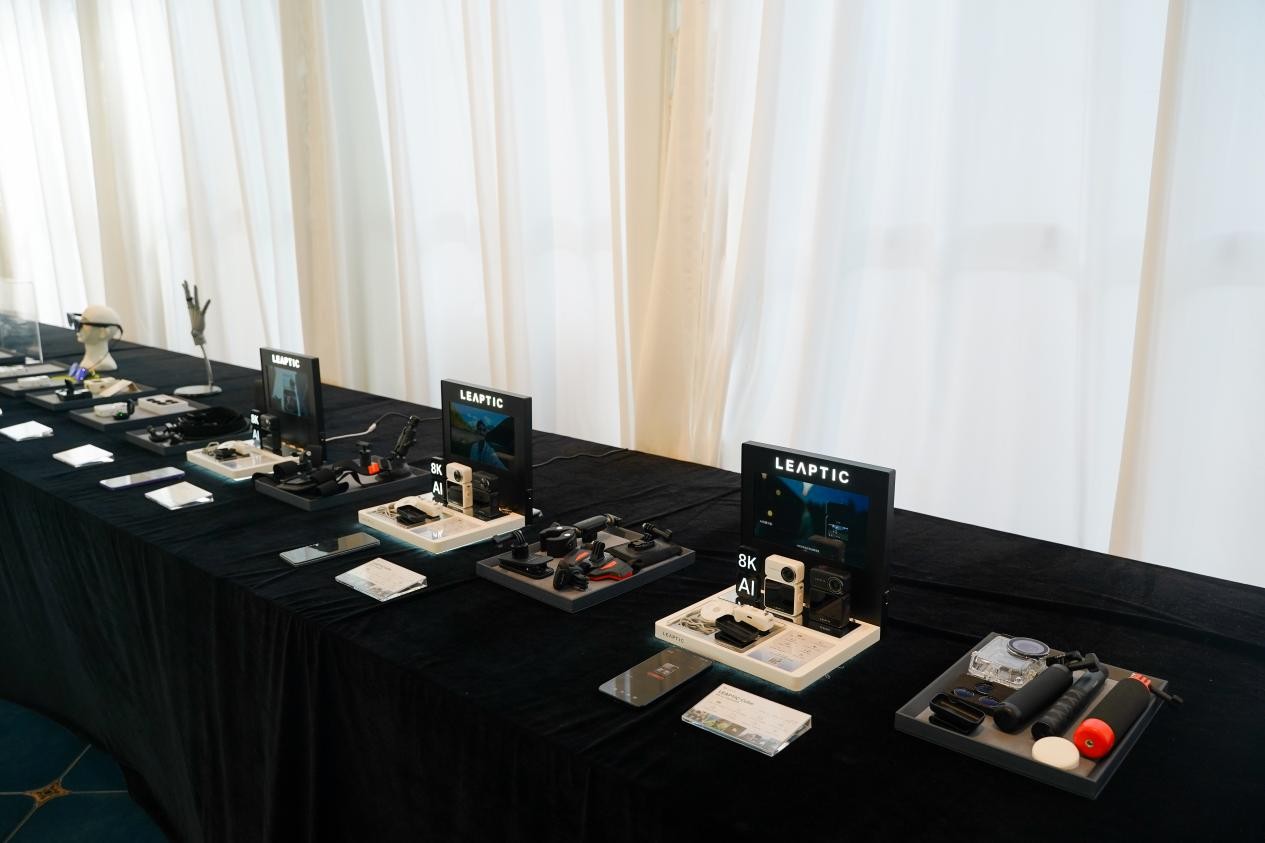
At the press conference, Photon Leap further introduced its first product launched this year, the LEAPTIC Cube. Positioned as an 8K AI thumb - sized action camera, it weighs approximately 55.9 grams, is equipped with a 1/1.3 - inch sensor, supports 8K/30fps video recording and 4K/120fps slow - motion shooting, and features a magnetic modular design. It can be paired with accessories such as a neck strap, a cap brim clip, a selfie stick, and a battery module to adapt to different shooting scenarios like sports and Vlogs.
(Image source/Company)
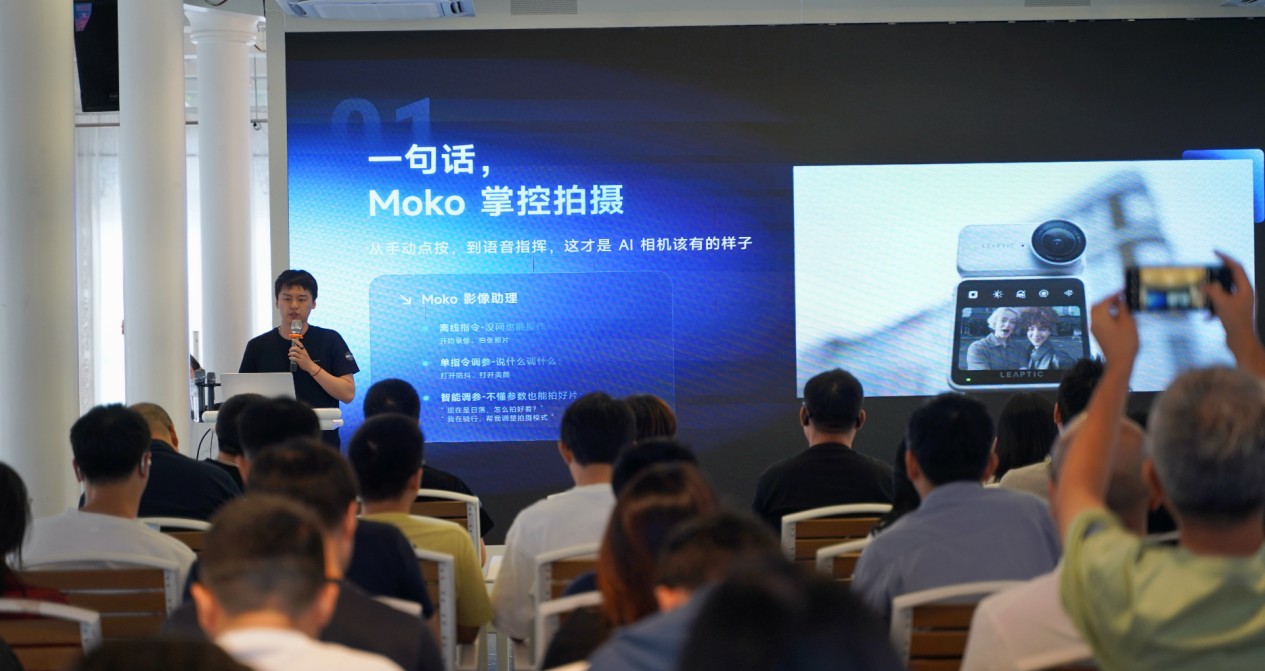
In terms of intelligent capabilities, Photon Leap has equipped the Cube with a personal intelligent voice assistant named Moko. Users can control shooting through voice. Using Moko as the interaction entry, Photon Leap integrates the "end - to - end intelligence" capabilities into the Cube's creative process, creating a closed - loop experience covering pre - shooting, in - shooting, and post - shooting: Before shooting, the system can automatically recommend suitable shooting modes based on environmental perception; during shooting, it can achieve intelligent tracking and automatic composition optimization through real - time algorithms; after shooting, the built - in AI editing engine can automatically generate video clips based on content semantics.
(Image source/Company)
The underlying capabilities are supported by the MemoryOS system independently developed by Photon Leap. The company introduced that this system can associate and structure multi - dimensional information such as videos, people, locations, and events, realizing personal imaging content management and retrieval capabilities, and providing a data and system foundation for subsequent AI understanding and content generation.
Compared with single - hardware products, Photon Leap emphasizes the overall layout of the "personal intelligent imaging ecosystem" this time.
The AI ring that made its debut at the press conference has become the first wearable device in this ecosystem. This product can be connected to the Cube in real - time. In addition to supporting common health monitoring, it can also automatically trigger shooting based on changes in the user's heart rate. For example, when the system detects a rapid increase in the user's heart rate during exercise, it can automatically start the camera to record the corresponding footage, reducing the need for the user to operate actively.
Photon Leap believes that in the future, imaging devices will rely more on AI for collaboration rather than just relying on traditional accessories to expand functions. In the future, the company plans to connect more AI hardware to this ecosystem, including AI glasses, gimbal cinema cameras, and gimbal mirrorless cameras, to build a multi - device system covering shooting, creation, and sharing.
Yuan Qian, the president of Photon Leap, said at the press conference that the company hopes to promote the evolution of imaging devices from "recording images" to "understanding scenarios", enabling AI to penetrate every aspect of shooting, processing, and content management.