"In 10 years, there will be only two types of people left in the workplace" —— Li Feifei never said that.
Recently, many self - media outlets have been spreading an idea: "Fei - Fei Li said that in 10 years, there will only be two types of workers in the workplace."
So, after watching the full video of Marina Mogilko's podcast episode on June 19th, I found that the original proponent of this idea was not Fei - Fei Li, but David Rogier, the CEO of MasterClass. Fei - Fei Li just agreed when the topic was brought up.
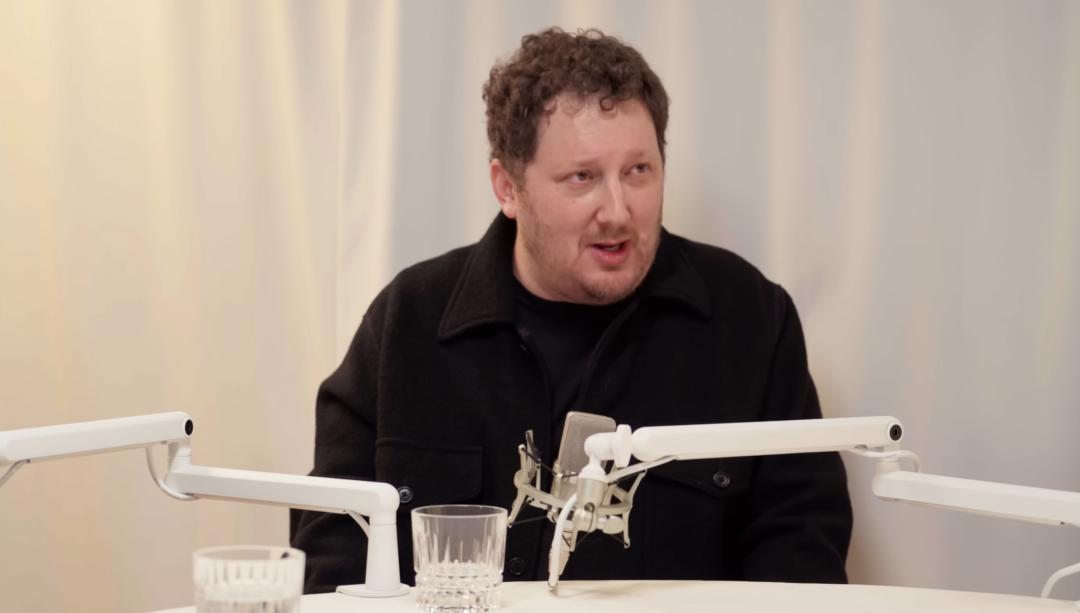
David Rogier, CEO of MasterClass. Image source: Internet
In my opinion, she just politely expressed her agreement because this statement is actually quite misleading and not the key point she wanted to make. However, the media ignored the key points, which we'll discuss later.
This "misinterpretation" incident exactly exposes a typical oversimplification in "knowledge dissemination in the AI era" by the media.
01
Interview background: A two - person conversation "misappropriated" by clickbait
On June 19th, Marina Mogilko, a well - known YouTube education influencer, released a podcast episode titled " 'AI Godmother' Fei - Fei Li: In 10 Years There Will Be Only 2 Kinds of Workers".
There were two guests in this conversation:
Fei - Fei Li - the "AI Godmother", a Stanford professor, and the founder of World Labs
David Rogier - the founder and CEO of MasterClass (the company is valued at $2.75 billion)
The core topic of the conversation was work, education, and the relationship between humans and machines in the AI era. However, since it was a two - guest conversation and Fei - Fei Li's personal IP influence was much greater than David Rogier's, the original author used "AI Godmother" Fei - Fei Li in the title. Then, when domestic media reported it, they almost unanimously attributed the "two types of people" idea to Fei - Fei Li.
So, the original author should take the blame first.
02
Who proposed the "barbell effect"? — David Rogier
The real "insight" of this interview was proposed by David Rogier.
His original words roughly meant:
"My hypothesis is that you'll see the 'barbell effect' emerge. One group of people is becoming real experts. An average copywriter can now do a decent job with the help of large language models. But if I'm the best copywriter in the world, or in the top 1%, AI can't easily beat me. The other group we see are 'high - autonomy generalists' - they can do many different things and have strong abilities in judgment and initiative."
The "barbell effect" he described is specifically as follows:
Left end (heavy): Top 1% real domain experts
Right end (heavy): High - autonomy "generalists"/"polymaths"
Middle (light): People who "passively perform tasks", whose living space will be squeezed by AI
The original intention of this effect might be to encourage everyone to develop towards the two ends, but it's not easy for most ordinary people and can easily cause anxiety.
So, after listening, Fei - Fei Li added a key point:
"Whether you're on the expert side or the generalist side, you need to have 'agency' - you should be able to use tools in a unique, creative, and in - depth way."

Fei - Fei Li. Image source: Internet
That is to say, the idea of "two types of people" was proposed by David, and the "common point (agency) of the two types of people" was added by Fei - Fei Li. The media attributing the whole idea to Fei - Fei Li is a typical "halo effect" - big IP + simplified title.
Personally, I think the value of discussing this idea is not to arouse anxiety, but to tell everyone not to focus on AI replacing humans, but on the direction in which humans should develop.
03
What high - quality ideas "missed by the media" did Fei - Fei Li contribute in the interview?
To be honest, many media didn't spread several valuable ideas of Fei - Fei Li in this interview.
Idea 1: The cost of intelligence will not reach zero
Fei - Fei Li opposes the statement that "AI makes the cost of intelligence approach zero". She thinks this statement is "irresponsible".
Her argument is:
Human intelligence includes perception, emotion, spatial, and physical intelligence formed through 500 million years of evolution - far more complex than what large language models can replicate.
She used the example of "playing basketball":
When a person shoots a basketball, language intelligence, spatial intelligence, and physical intelligence work together. Currently, AI is mainly good at the language level. In fields that require in - depth judgment, creativity, empathy, and decision - making in uncertain areas, humans will maintain an advantage.

Image source: Internet
The significance of this idea for business readers is: Don't be deceived by the "zero - cost intelligence" claim. What is truly scarce is "judgment + empathy + decision - making in uncertainty".
Idea 2: Three pitfalls in AI management
Fei - Fei Li warns companies not to fall into three AI management pitfalls:
Pitfall 1: Using AI as a tool for layoffs
AI should not replace designers and engineers but shorten process time, allowing employees to solve more difficult problems.
Pitfall 2: Stacking tools
Just buying tools is not enough. Employees need to redesign the work system.
Pitfall 3: Causing employee panic
Top - down and harsh orders make employees worried about losing their jobs. AI should be introduced through "curiosity" to let employees see how it can empower them.

Image source: Internet
These three pitfalls are a "guide to avoid mistakes" for all companies in the process of AI transformation.
Idea 3: The essential change in education
Fei - Fei Li believes that the core of education in the AI era is to cultivate "agency" - autonomy.
"In the face of a technology with such powerful cognitive abilities, agency or initiative is the key. Get familiar with it, master it, don't be afraid, and don't avoid it."
The core of education is no longer "transmitting knowledge" but "cultivating people who can continuously relearn, adapt, and be curious".
04
David asked Fei - Fei Li a key question. How did Fei - Fei Li answer?
During the interview, David Rogier asked Fei - Fei Li a very pointed question:
"If AI can't learn physical intelligence and spatial intelligence, can it ever reach the same level of intelligence as humans?"
How did Fei - Fei Li answer?
She used the example of "playing basketball":
"Human activities deeply integrate language, spatial, and physical intelligence. When shooting a basketball, you're not only calculating the angle and force (physical intelligence), but also judging the opponent's position (spatial intelligence), and deciding the best time to shoot (language intelligence/judgment)."
She used this example to illustrate that human intelligence is not "modular" but "deeply integrated". Currently, AI is good at the language level, but spatial and physical intelligence are still "the next major breakthroughs for AI" - which is also the core reason for her to found World Labs (World Labs is a "spatial intelligence" company founded by Fei - Fei Li at the end of 2024. It raised $1 billion in June 2026 and is now valued at over $1 billion).

Image source: Internet
Fei - Fei Li's answer has a profound insight:
"The problem with AI is not just 'lacking a module', but 'how to integrate multiple modules'."
This is fundamentally different from the current "tool - use" approach of large language models. Fei - Fei Li believes that true AGI requires the deep integration of "language + space + body", rather than "a large language model with a few tools attached".
Moreover, Fei - Fei Li doesn't like the concept of AGI (Artificial General Intelligence). She said that from a scientist's perspective, there is no clear definition of this "general" concept at present, which is rather vague. So, she doesn't want to discuss this unclear topic, but she finds that it's the most discussed topic in the public opinion field.
05
What is the root of agency (autonomy)? — A "risk - allowing environment"
Many media emphasized in their reports that "agency (autonomy) is very important", but no one asked: "What is the root of agency (autonomy)?"
The real highlight of this interview lies here:
David Rogier put forward a very profound insight -
"Agency (autonomy) is not innate. The root of agency is a'rebellion' - a rebellion against the logic of 'pursuing praise'. Agency is cultivated in an environment that allows people to take risks, fail, and stand up again."
David Rogier further explained:
"Inside the company, we see many employees becoming anxious in the AI era - worried about being replaced. But the people who will succeed are those who actively use AI to test and make mistakes. Agency is not a skill, but a matter of 'daring'."
This is in line with the "fail fast" culture in the Silicon Valley startup circle - the essence of agency (autonomy) is "the ability to take the initiative in an uncertain environment".

Image source: Internet
The "incubator" for agency (autonomy) is:
An environment that allows for trial and error
A culture that encourages proactive action
An organization that doesn't punish failure
Providing "time for trial and error" and "space for trial and error"
Fei - Fei Li's understanding of agency (autonomy) is more "philosophical":
"Agency is a belief that 'I can change something'. It comes from curiosity and the obsession with 'I don't know the answer, but I must find it'."
Combining the two views, agency (autonomy) is a composite ability of "initiative + curiosity + daring to make mistakes" - its source is not training, but the combination of "environment + belief + culture".
06
David Rogier and MasterClass: Two "atypical Silicon Valley startup stories"
Actually, this podcast episode made me notice an interesting entrepreneur: David Rogier.
David Rogier is not a typical Silicon Valley elite who graduated from Stanford and started a business directly and went public in three years. His career trajectory has several counter - intuitive nodes, and when strung together, it's more like a story of an "atypical serial entrepreneur".
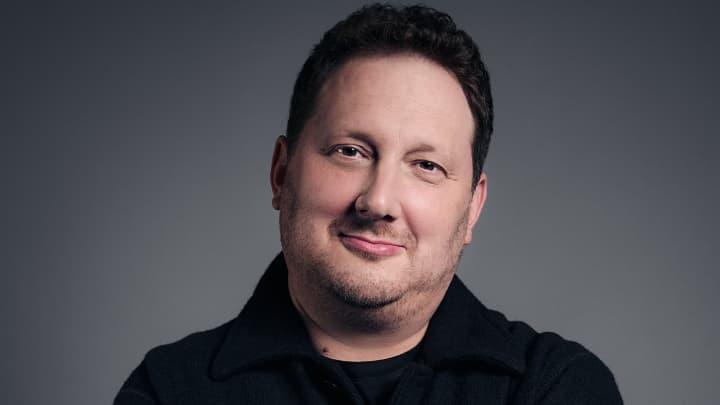
Image source: Internet
He graduated from Washington University in St. Louis for his undergraduate degree, which is neither an Ivy League school nor Stanford. After graduation, he went to Tesco in the UK - not to work in finance or technology, but to join the early 60 - person team of Tesco's first stores in the US (Fresh & Easy). That was Tesco's first attempt to enter the US market, which later failed and they withdrew. But David experienced a complete "case of failed cross - border retail expansion". This experience made him realize that "the methodologies of large companies often fail in cross - cultural and cross - market situations" - this understanding later directly influenced MasterClass's operating strategy.
Later, he went to Stanford to pursue an MBA and met the famous investor Michael Dearing. Dearing later recalled that David's most prominent trait at that time was not "being good at answering questions", but "being good at asking questions". After graduating from MBA, David joined Dearing's fund as a VC, but he was "unhappy" after a short time - he told his boss that "I want to start a business", and Dearing actually agreed and later became an early investor in MasterClass.
In the fall of 2014, David started making cold calls - not to investors, but to