Why are embodied AI and mobile robots being pushed to their limits in factories this year?
Factories are becoming the application field targeted by both mobile robots and embodied intelligence.
A few days ago, a cluster of multiple Yuanzhi Elf G2 robots entered the mass - production factory of Longcheer Technology in Nanchang, Jiangxi. They conducted a 11 - hour fully transparent live broadcast of the production line operations for 6 consecutive days. Meanwhile, the heavy - duty humanoid robot Galbot S1 of Galaxy Universal was reported to have entered the smart production line of CATL, undertaking long - range autonomous operations in the production process of modules and battery packs. Tashizhihang announced a cooperation with Tianhai Automobile to explore implementation in the automotive wiring harness assembly scenario...
According to the information from the Humanoid Robot Scenario Application Alliance, many integrated manufacturers are promoting the implementation of humanoid robots in industrial manufacturing scenarios. For example, Shenzhen Haoling Robot deployed a humanoid robot in the piston pin installation process of Weichai Engine's production line, realizing the full - process automation of piston pin sorting, grasping, reversing, and placement. Anhui Juyi Technology deployed a humanoid robot at the core battery feeding station of an automobile battery cell module assembly production line to complete the feeding operation...
As embodied intelligence is gearing up to enter factories, mobile robot enterprises that have already been implemented in factories (adopting the standards of the Mobile Robot Industry Alliance, including various robot companies with navigation devices and on - board control systems characterized by wheels, such as AGV, AGC, AMR, mostly based on deep - learning algorithms) are also undergoing technological iterations, promoting the application of robots with a wheeled chassis and a humanoid upper body in factories. Some enterprises are also implementing general brains on specialized equipment.
Industrial manufacturing and warehousing logistics have always been the largest application scenarios for mobile robots. Now, in these two major scenarios, the manufacturers of embodied intelligence and mobile robots, two generations of robots, are presenting a implementation situation with different focuses but overlapping in forms and scenarios.
Why are manufacturers increasing their efforts in the factory scenario this year? What are the differences in the scenarios of the two generations of robots, and how is their ability evolving? What kind of capabilities will the new - generation robots need to have in factories in 2026?
01 Why has industrial manufacturing become one of the main battlefields?
The key to accelerating the entry of embodied intelligence into factories does not lie in the maturity of technology.
From industry data, factories are not currently the largest buyers of embodied intelligence.
Li Jinke, the secretary - general of the Humanoid Robot Scenario Application Alliance, sorted out at the Third Humanoid Robot Scenario Conference recently that from last year to this year, the largest actual implementation scenario of embodied intelligence was data collection - local governments built data collection bases and purchased robots in batches for training data; the second was education and scientific research - universities and research institutions were stable customers; the third was performance and commercial services - leasing, exhibitions, and event performances had formed a small market, but the competition quickly became white - hot, "from 10,000 yuan a day to 8,000, and then to 1,000".
Industrial logistics ranks fourth in the embodied implementation scenarios in 2025, accounting for about 4%.
Why has a scenario with relatively small implementation now become the key implementation scenario this year?
The driving factors from policies cannot be underestimated. On June 10, the Ministry of Industry and Information Technology and the State - owned Assets Supervision and Administration Commission jointly launched the "Special Action for Real - world Training of Humanoid Robots and Embodied Intelligence". Zhao Qingbo, the senior vice - president of Taiying Technology, observed that the action clearly required 10 provinces and a number of central enterprises to deploy embodied intelligent robots in real industrial and logistics scenarios, "submit a progress report on June 30 and another on November 30, and each province should select no less than 10 excellent cases".
A senior industry insider said that many localities are reacting quickly, "holding meetings on Saturdays and Sundays and actively collaborating with enterprises for scenario matching".
Li Jinke regards the "Special Action for Real - world Training" as the license for the embodied intelligence industry, believing that it is beneficial for promoting the transition of embodied intelligence from laboratories to real production and living scenarios such as industry, services, and special fields.
Secondly, in the current capital market environment, the entry of embodied intelligence into factories is also beneficial for enterprises to build a narrative and gain an edge in the fierce industry competition. This year, the financing in the field of embodied intelligence has repeatedly set records. Under the nuclear - level financing scale, scenarios with great implementation potential and policy support, such as intelligent manufacturing, have become important markets for manufacturers to enter.
In addition, factory data is crucial for embodied manufacturers to run the intelligent flywheel from data to model.
Lu Xiangang, the vice - president of Yuanzhi Robot in the Chinese region, recently mentioned that the industrial environment is relatively structured, with production lines, processes, and rhythms, and actions can be disassembled and quantified. Compared with the openness and uncertainty in home scenarios, it is actually an environment for embodied intelligence to move from value exploration to the deployment - state data flywheel.
The "deployment state" is a concept proposed by Yuanzhi this year. After achieving a mass - production breakthrough (15,000 units were off the production line in the first half of this year), Yuanzhi hopes to generate a data flywheel through feedback from the production line, making robots more intelligent and ultimately achieving greater - scale popularization.
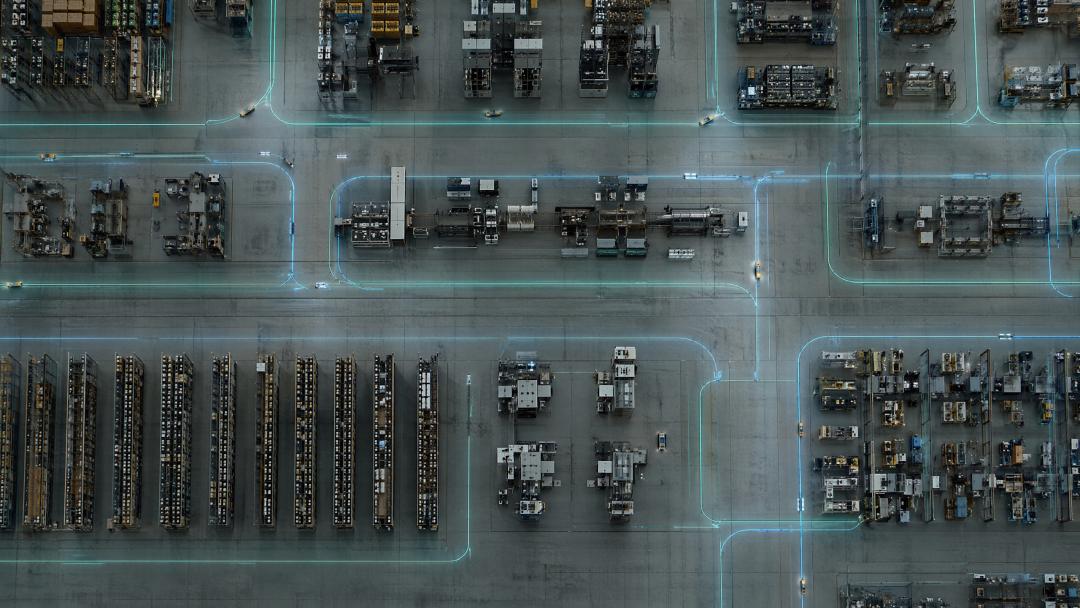
Some integrators believe that embodied intelligence can enable the manufacturing industry to achieve unprecedented flexibility and solve the pain points of industrial manufacturing.
Li Jiong, the dean of the Dalian Hausen Intelligent Research Institute and the general manager of Haoling Robot, has been in the automotive industry for more than 20 years. He has seen the speed of production line model change accelerating sharply. In 2025, 300 new new - energy vehicle models will be launched in China, with an average of 3.21 models per day. The traditional rhythm of model changes every 3 years and full - generation updates every 5 years has been completely broken.
Frequent line changes pose challenges to traditional rigid automation solutions - PLC programming, fixed fixtures, and special tooling need to be redeployed every time the line changes. If the control brain based on embodied intelligence is used instead, the manufacturing flexibility will be greatly improved.
Take automotive wiring harnesses as an example. This process has been manually completed by workers for decades due to the flexibility of cables, complex paths, and sub - millimeter - level precision requirements. Tashizhihang, which recently set the largest single - financing record in the embodied industry, selected this scenario. The logic is that if it can succeed in the most difficult flexible scenario, it will be natural to be compatible with other scenarios.
As embodied manufacturers are gearing up to promote implementation, mobile robot manufacturers that have already been implemented in factories on a large scale are also evolving. They have launched humanoid - like wheeled products, and some manufacturers are exploring connecting general brains to existing products.
Two months ago, at the Intelligent Manufacturing Conference, Hikrobot's wheeled humanoid robot made its debut. Compared with the "professional worker" mobile robots that have proven their commercial value, Hikrobot defines the wheeled humanoid robot as a "multi - purpose worker" integrating mobility, operation, and intelligence. The combination of "eyes + feet + hands" can realize applications such as small - material picking and part loading and unloading at multiple points in the factory that require the use of "hands", achieving "one machine for multiple uses and rapid adaptation".
Zhang Wencong, the vice - president of Hikrobot, believes that there is a collaborative relationship between wheeled humanoid robots and the original AMR specialized equipment, which is used to make up for the problems in scenarios where the original specialized equipment is not applicable.
There is also a path of "re - creating" existing products with the VLA brain, which aims at the problems of fragmented scenarios, high delivery costs, and long cycles that have troubled the industry.
The mobile robot industry has developed for more than a decade. Currently, there are more than 20 players with an annual shipment volume of over 10,000 units in the industry. Although the scale - up has accelerated, there is still room for further scale - up in the industry.
Last year, Seer Robotics implemented the VLA model on industrial forklifts, exploring ways to improve generalization ability while ensuring industrial reliability. Ye Yangsheng, the co - founder of Seer Robotics, said that the previous robot products were based on rule - based control systems. When pre - programmed actions encountered new scenarios, they had to be reprogrammed, which easily led to difficulties in large - scale delivery. A more general brain is undoubtedly a solution.
It can be seen that the wave of embodied implementation and the need for mobile robots to break through the implementation ceiling have driven the two generations of robots to increase their efforts in the industrial scenario in 2026.
02 Specialized Upward, Generalized Downward
"It is currently difficult to have a general robot that can both apply glue and tighten screws," a system integrator admitted. The implementation of embodied intelligence in factories is not an overnight success.
Ye Yangsheng of Seer Robotics recently divided the implementation of robots into five different stages in an interview.
The 1.0 stage is the fully hard - programmed industrial robotic arm, with all actions written in detail. The 2.0 stage is the collaborative arm and mobile robot, with some algorithms and autonomy, but the hardware is still specialized. A forklift is a forklift, and a latent - type robot is a latent - type robot. In the 3.0 stage, AI is added, and the software becomes more general and generalized, but the hardware remains the same, still in a specialized form. The 4.0 stage has both general software and hardware, more like the humanoid robots we talk about today. The 5.0 stage is the ultimate form in the future.
Ye Yangsheng judged that the products of the 3.0 stage and the 4.0 stage will coexist, but from the perspective of implementation opportunities and progress, it is more likely to find opportunities in the 3.0 stage. Therefore, Seer Robotics chose to use a more general brain to re - create its original products based on the intelligent forklift equipment it had previously deployed, thereby greatly improving the scenario generalization ability.
This overlapping picture of the 3.0 and 4.0 stages actually depicts the current implementation reality of different robot manufacturers in factories.
We have observed that at the current stage, the scenario implementation of embodied intelligence manufacturers is still relatively narrow. To some extent, they are in the stage of 'below generalization', which can be regarded as the 4.0 - stage products in Ye Yangsheng's view.
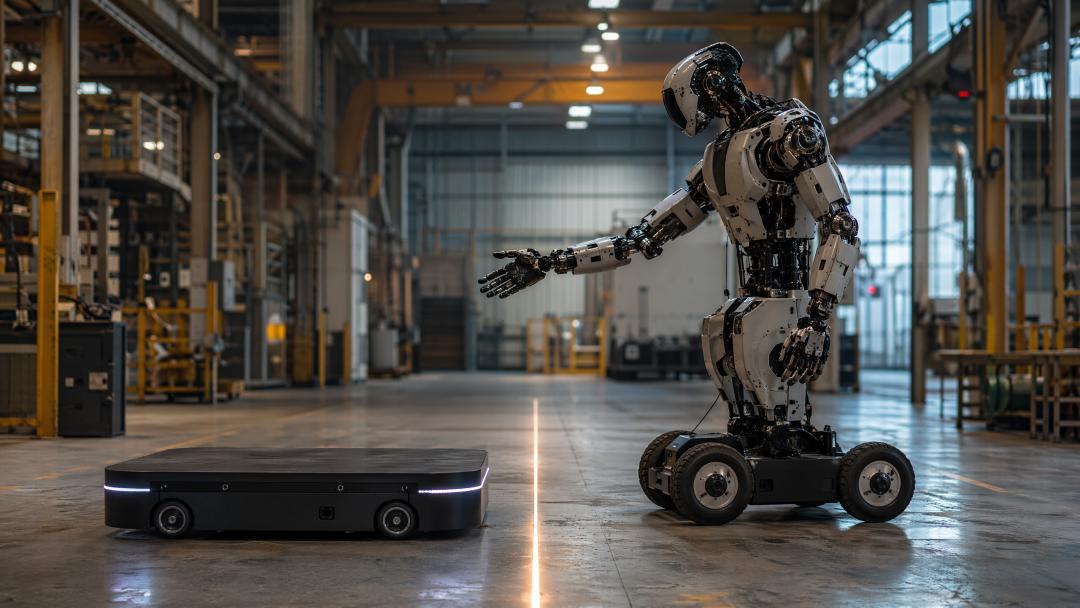
Currently, players such as Yuanzhi, Ubtech, Galaxy Universal, and Xingdong Jiyuan are at the forefront of implementation in industrial and warehousing logistics scenarios. The industrial scenarios currently demonstrated by Yuanzhi are mainly in sorting and handling processes. Zhou Jian, the founder of Ubtech, mentioned in an interview that currently, they focus on handling, sorting, and quality inspection stations. These are not only the areas where customers urgently need humanoid robots to provide collaborative capabilities but also the areas where humanoid robots are more suitable to exert their capabilities at this stage.
Xingdong Jiyuan cooperates with SF Express in the logistics field, mainly in package sorting and non - standard package handling processes, dealing with non - standard packages of different specifications, materials, and shapes, such as soft packages and hard boxes, where traditional automation equipment has relatively limited capabilities.
It is not difficult to see that the enterprises at the forefront of these applications are still in the very early stage of "generalized" handling of open tasks. Laying eggs along the way, accelerating demand verification and scenario refinement through specific scenarios is the current reality and also a part of the process for enterprises to obtain production - level scenario data and rotate the model's intelligent flywheel.
The implementation integrators of embodied intelligence have also adopted a gradual implementation strategy. As a subsidiary of Hausen Intelligent, a senior player in automotive intelligent equipment and assembly, currently Haoling in Shenzhen is exploring the implementation of humanoid products in multiple scenarios such as fender handling, battery loading and unloading, and piston pin installation. Li Jiong of the Hausen Intelligent Research Institute mentioned that their gradual technical path focuses on action arrangement in the short term, transitions to hierarchical model - driven in the medium term, and finally reaches the end - to - end route of large models in the long term.
Haoling has refined 25 scenarios in the automotive assembly scenario, including seven categories such as movement, handling, assembly, sealing, connection, marking, and filling. Different categories have different requirements for robots. For example, glue application requires high trajectory accuracy, motion flexibility, and planning, while screw tightening requires high torque.
This makes it impossible to use a general form to complete all the work at present. Currently, Haoling cooperates with various ontology enterprises, not limited to humanoid robots. It selects different ontologies according to scenarios, which can be multi - armed or just have hands without legs.
Some manufacturers also use product design modularity to improve the adaptability of products in different scenarios. For example, Xingdong Jiyuan has full - size bipedal L7, wheeled service Q5, half - body module M7, and independent dexterous hand XHAND. Different modules can be flexibly combined according to different scenario requirements.
From the perspective of mobile robot manufacturers, in addition to Seer Robotics, a group of companies established before this wave of embodied intelligence have also attached importance to the layout of large - model technology.
Shuzhi Qianxian has learned that Hikrobot, which currently ranks first in mobile robot shipments, in addition to using small deep - learning models for hand - eye coordination, eye - foot coordination, and eye - hand - foot coordination, also has a considerable team researching and following up on the exploration and implementation of end - to - end models for integrated perception and control.
However, Hikrobot mentioned that the industrial scenario has a fast rhythm, low tolerance for errors, and clear ROI requirements. Currently, mobile robots with autonomous perception, environmental decision - making, and autonomous mobile operation capabilities are the most mature general - embodied forms in the current industrial scenario. Humanoid robots are one of the forms of embodied intelligence. For Hikrobot, they are an extended form of robot technology and also one of the future layout points.
Currently, they are also adopting a dual - track strategy. Deeply specialize in certain areas, accumulating sufficient data and engineering experience in certain scenarios. Continuously evolve for multi - purpose use, achieving "one machine for multiple uses and flexible adaptation" through technologies such as adaptive learning and cross - scenario autonomous decision - making.
This year, as the entire robot track is moving from specialization to generalization, with specialized products moving upward and generalized products moving downward, the new - generation embodied players and mobile robot manufacturers are currently in a situation where they have different focuses but overlap in scenarios and forms.
03 The Threshold of Factories and the Road to the Data Flywheel
Although the forms are compromising and integrating, and the implementation is gradual, the acceptance standards of factories will not be lowered.
Zhong Nanhai, the deputy general manager of Chongqing Qianli Technology, mentioned at a conference on the commercial implementation of humanoid robots a few days ago that as a potential scenario demander, Qianli Technology has also been evaluating internally how to measure the entry of currently popular embodied products into factory production lines. Finally, they formed a set of evaluation indicators internally.
Qianli Technology's predecessor was Chongqing Lifan Automobile. After a genetic restructuring in 2022, it integrated multiple genes of motorcycle manufacturing, automobile manufacturing, general machinery, and autonomous driving and AI. There are more than 5,000 workers in the factory.
The acceptance indicators include quantitative and qualitative aspects, which can be summarized as "Three 100s and One 3" - the success rate should reach over 95% for 100 consecutive tasks and over 99% in special scenarios; the number of manual take - overs should be less than 1 within 100 hours; referring to the reliability standard of industrial robots, the number of failures should be less than 1 within 100 days; and the overall cost of ownership should be lower than the cost