How do 106 medicinal and edible products break through the first 10 million outlets and hundreds of millions of channels?
If 2025 is the "Year of Rapid Development" for the homologous medicine and food track, then 2026 is the "watershed" for determining the outcome.
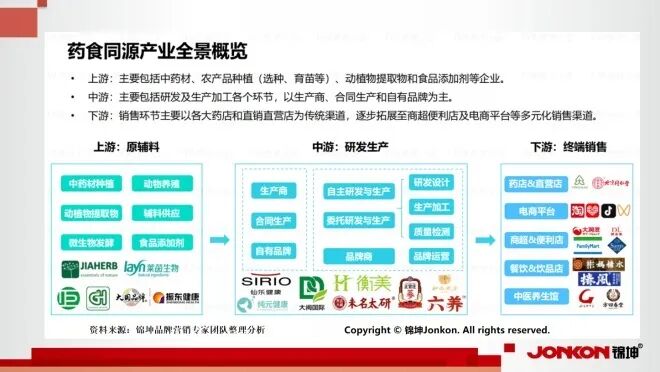
According to industry data, the market scale of homologous medicine and food in China has exceeded 370 billion yuan, and the valuation of the entire industrial chain has exceeded 2 trillion yuan.
Behind this is the awakening of the national health - preservation awareness, especially in the post - pandemic era. Young people have replaced the goji berries in their thermos flasks with ready - to - eat bird's nests on their desks. Middle - aged people have started to study the differences between tangerine peels of different years, while the elderly have more trust in those time - honored brands with a century - long inheritance.
Homologous medicine and food is no longer the exclusive domain of the middle - aged and the elderly. It is becoming a national lifestyle.
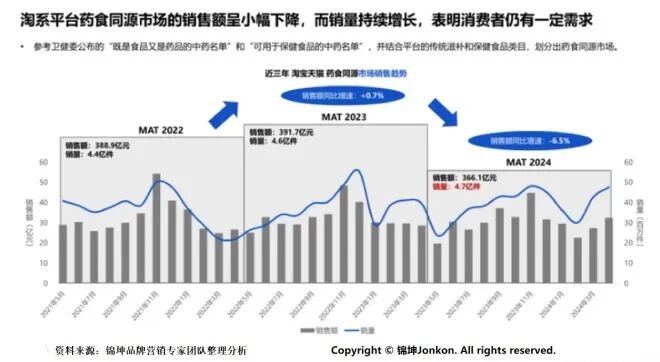
However, on the other side of the coin, a large number of products are still waiting to die on the shelves of pharmacies and traditional e - commerce platforms, while a few popular products are out of stock in Sam's Club, Hema, and even hot pot restaurants.
The difference between life and death for homologous medicine and food products lies not in the quality of the products themselves, but in the logic of the entry channels.
As a well - known national brand service provider for industrial parks, enterprises, and a super promoter for homologous medicine and food brands, the brand marketing expert group of Jinkun will conduct an in - depth analysis of how homologous medicine and food products can truly enter the fast - lane of "millions of outlets and billions of channels" through channel layout in 2026.
Panoramic analysis of homologous medicine and food channels: Who is reaping the big rewards, and who is getting the leftovers?
In the past, we often thought that homologous medicine and food products should be sold to middle - aged and elderly people in pharmacies or given as gifts to elders. This kind of perception is very dangerous in today's era.
The channels are undergoing drastic differentiation and reorganization. If we still view the new market with old eyes, we are likely to miss the real growth opportunities.
(1) Pharmacies and supermarkets: The trust remains, but young people don't like to go there anymore
Let's first look at the traditional channels that we are accustomed to. They are still the basic market for the sales of homologous medicine and food products at present, but this basic market is quietly loosening.
The traditional shelves in pharmacies and supermarkets can be regarded as the strongholds of time - honored brands like Dong'e Ejiao and Tongrentang.
The most prominent feature of these channels is that consumers have a very high degree of trust in the brands, and the average customer order value is also relatively considerable. However, the biggest problem is that the purchase frequency is too low.
Consumers usually enter a pharmacy with a clear purchase purpose. For example, they come to buy Ejiao cakes today and leave right after buying, hardly having the impulse for random purchases. This leads to a serious lack of vitality in these channels. Many products lie on the shelves for months without being asked about and can only rely on the strong promotion of salespeople to maintain sales volume.
Nowadays, the traffic of these traditional channels is being divided by various emerging channels. It is very difficult to maintain the business only by the "sitting - business" model.
For example, many exclusive stores of time - honored brands, although located in prosperous areas, are experiencing a year - by - year decline in the number of in - store customers. If no changes are made, they are likely to be marginalized in the future.
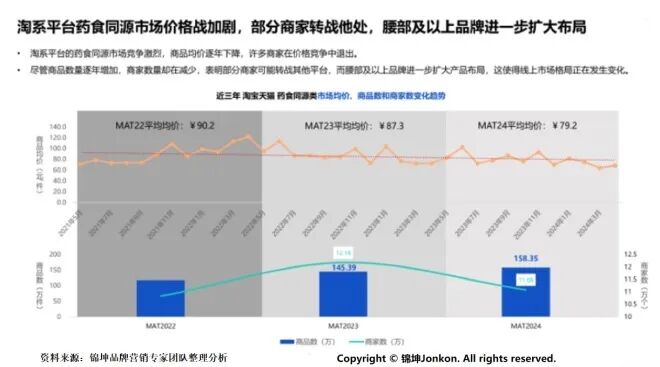
Another type of traditional channel is herbal tea shops and tonic stores. Although Wanglaoji launched a high - end diamond set priced at 1,828 yuan in an attempt to break into new markets, the market response was mediocre. The fundamental reason is that the channel image is divorced from the "fashionable health - preservation" needs of young consumers.
Young people may be willing to spend thirty yuan on a cup of Heytea, but they are not willing to enter an old - fashioned herbal tea shop to drink a cup of black, medicinal - flavored herbal tea.
If these channels do not reconstruct the scenario, that is, make the store decoration more fashionable and the products more like beverages, they will gradually lose the favor of young people and eventually become places that only the middle - aged and the elderly will visit.
(2) Sam's Club and Hema: Why can they sell out health - preservation products?
So, which channels are growing rapidly now?
What is the growth logic of these high - growth channels?
We found that the definition right of new channels no longer lies in the "location" itself, but in whether it can represent a "lifestyle".
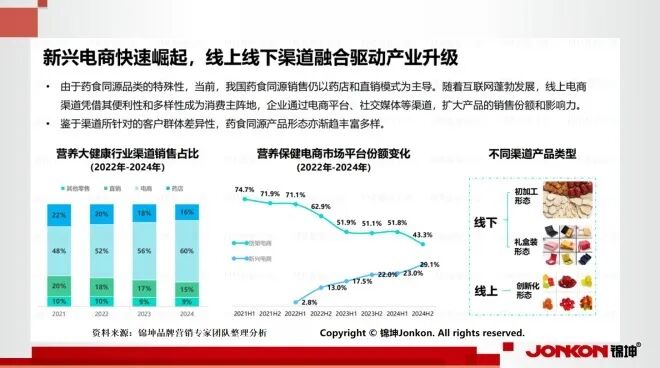
Membership - based warehouse supermarkets, such as Sam's Club and Costco, have become the "super incubators" for homologous medicine and food products.
You may find it hard to imagine that a place where you need to spend hundreds of yuan to get a membership to go shopping can become the birthplace of popular health - preservation products.
But the fact is that the sales of Hao Xiang Ni's black - gold dates exceeded 10 million yuan in the first month of its launch at Sam's Club and over 30 million yuan in half a year. The monthly sales volume of the apple and astragalus drink customized by Panpan and Sam's Club exceeded 50,000 pieces.
Why is this the case?
Because the channel value of Sam's Club lies in its ability to endorse product selection.
Essentially, Sam's Club is not just a supermarket. It is a "buyer" that screens lifestyles for middle - class families.
Getting into Sam's Club means that the products have passed extremely strict quality and aesthetic screenings. This kind of "passive trust" cannot be replaced by any advertisement.
Consumers will think that since Sam's Club has selected the products for them, it must be right to buy this product.
This trust mechanism greatly reduces the decision - making cost of consumers and gives the products a halo as soon as they are put on the shelves.
Another type of high - growth channel is new - retail convenience stores and boutique supermarkets, such as Hema, especially their HPP cold - storage areas. The turmeric, ginger, and lemon drink launched by Hema using HPP technology, that is, ultra - high - pressure cold sterilization technology, has been jokingly called "white people's traditional Chinese medicine" by young people, but it has topped the repurchase list of refrigerated beverages.
Why?
Because the growth of these channels does not lie in simple "selling goods", but in reconstructing the consumption experience with technology.
The HPP technology locks in the active ingredients of turmeric and solves the pain points of "bad taste and low efficiency" of traditional health - preservation beverages. It turns the original health - preservation process that requires boiling into a "healthy quick - charge" that young people can enjoy at the office at any time.
As Shi Zhangqiang, the founder of Jinkun Brand and the secretary - general of the Shanghai Brand Committee, believes, the channel here is no longer just a simple shelf. It is a technology experience field that integrates people, goods, scenarios, and data, allowing consumers to directly feel the convenience and health value brought by technology.
(3) Hot pot restaurants, offices, and souvenirs: When the scenario is right, the product will thrive
In addition to these high - growth channels, there are also some very segmented scenario - based channels, and their adaptability is very worthy of attention. Here, the channel itself is the scenario, and the scenario in turn defines the product.
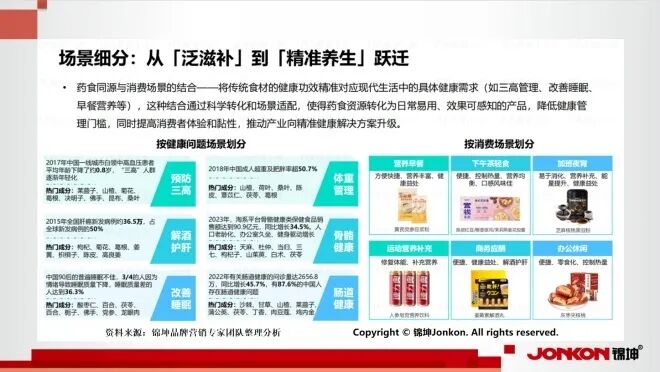
The catering channel is a good example.
Have you ever wondered why Jiangzhong Dietary Therapy made Jianwei Xiaoshi tablets into hot pot base? This is not a prank, but a precise scenario - based marketing strategy.
The catering channel is the best carrier for "natural health - preservation".
When consumers are eating hot pot, they actually have concerns in their hearts, worrying about the greasiness and getting inflamed. At this time, if the hot pot base contains ingredients such as tangerine peel and hawthorn, or the restaurant provides beverages containing these ingredients, it will become a necessity for consumers.
The product does not need to educate consumers. It only needs to penetrate into consumers' existing life scenarios and can be naturally accepted.
For example, some hot pot restaurants now provide herbal tea. After eating hot pot, drinking a cup of it makes people feel much more comfortable in the stomach. This kind of experience will make consumers remember this brand.
The office and gift channels are also changing.
A survey by Beijing News shows that in the Chinese New Year gift market in 2026, homologous medicine and food gift boxes have replaced some tobacco and alcohol gifts and become one of the new three major categories.
When young white - collar workers give American ginseng and dendrobium gift boxes to their elders, what they are actually buying is "convenience" and "decency".
They hope that the gifts they give can not only show their sincerity but also not make their elders feel too embarrassed to accept them because of the high value.
At this time, the core of channel adaptation is that the packaging should be personified. That is, it should not only retain the persuasiveness of traditional efficacy, such as clearly indicating the origin and efficacy on the packaging, but also design a sense of modern aesthetic high - end, making it presentable for young people and giving elders a sense of face when they receive it.
(4) Cultural and tourism fairs and private - domain communities: The next wave of channel dividends is hidden here
Finally, let's take a look at which potential channels in the future are worth pre - laying out.
The next direction should be to penetrate into the capillaries of the market.
The integration of cultural and tourism fairs and health - preservation stations is a good example.
For example, Yuexi County, Anqing City, organized enterprises to participate in the traditional Chinese medicine health - preservation fair, and it received more than 8,000 person - times in two days. Although the single - time sales volume may not be very high, the value of intention orders and brand exposure is very large. This "market - fair" model is a way to reach high - net - worth retired people and cultural and tourism consumers.
Imagine that in a scenic area with beautiful scenery, tourists can enjoy the beauty of the scenery while experiencing the charm of traditional Chinese medicine culture and can also buy some health - preservation products on the spot. This kind of experience cannot be provided by traditional pharmacies.
For enterprises, this kind of channel is not only a sales channel but also a window for brand promotion.
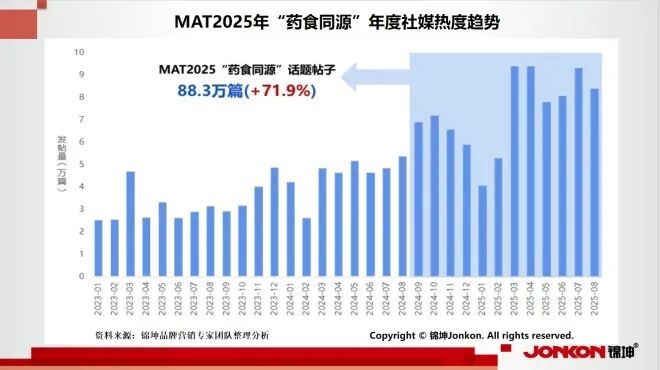
Vertical private - domain and community health - management centers are also a direction worthy of attention.
Taking the morel mushroom industry as an example, some brands have signed a target of annual sales of tens of millions through health - experience centers like "Baizitang", following the path of "experience + private - domain". For categories that require in - depth education, such as specific mushrooms and rare medicinal materials, establishing a community channel centered on content and service is a high - ground to avoid price wars.
In these communities, brands can continuously output professional knowledge, answer consumers' questions, and establish a deep - seated trust relationship, thus achieving long - term repurchase.
Three successful players who "exploded" the channels: What did they do right?
Successful cases tell us that we should not sell "medicinal materials" in the channels but sell "solutions".
Case 1: Dong'e Ejiao - A scenario revolution from an "antique in the cabinet" to "one cup per person"
Everyone is familiar with the brand Dong'e Ejiao. In the past, it was regarded as a high - end tonic that needed to be boiled in a pharmacy, with a high price, and the consumer group was mainly middle - aged and elderly people.
But in recent years, Dong'e Ejiao has changed. It has become younger and more accessible.
What did it do? It transformed Ejiao into Ejiao bird's nest, Ejiao milk tea, and Ejiao dark chocolate. Through cross - border co - branding channels, such as cooperating with tea shops to launch Ejiao milk tea, putting ready - to - eat Ejiao products on the shelves of boutique supermarkets, and initiating topic discussions on online social platforms, it has brought this traditional tonic into the lives of young people.
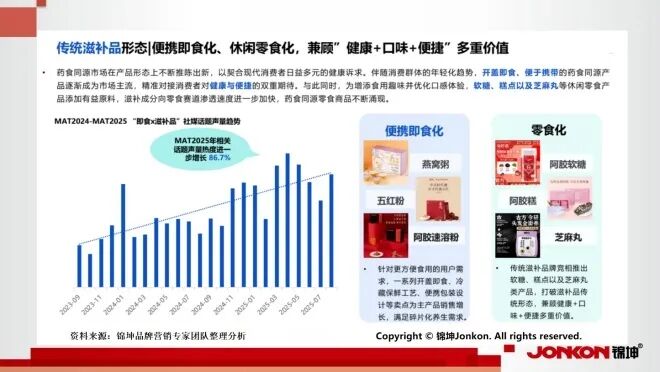
The first thing Dong'e Ejiao did right was to reconstruct the product form.
It no longer only sells Ejiao blocks that need to be boiled. Instead, by co - branding with Dove to make chocolates and with tea shops to make beverages, it has turned Ejiao into snacks that can be eaten at any time.
This "de - medicinal" product form has greatly reduced the threshold for young people to try.
In the past, young people might think that Ejiao was something for their mothers' generation, but now it has become a daily snack like chocolate and milk tea, so they are naturally willing to try it.
