Spending 100,000 yuan on a "crippled" FSD, Elon Musk can't quell public anger, do new energy vehicles become outdated the moment they hit the road?
FSD V14 Lite, which is compatible with the AI3 (HW3) platform, has arrived, but Tesla owners aren't convinced.
Recently, Tesla CEO Elon Musk announced on the X platform that the FSD V14 Lite version is being pushed to models equipped with the AI3 platform. This push is for early access customers, and it's expected that more owners will receive the update in a few weeks.
Since the full - version FSD V14 was pushed to models with the AI4 (HW4) platform last October, owners of cars with the AI3 platform have been looking forward to upgrading their vehicles to the more powerful FSD V14.
However, the arrival of FSD V14 Lite isn't welcomed by all Tesla owners. Even under Musk's tweet, many netizens are attacking him and Tesla.
Is a 100,000 - yuan price only worthy of a weakened FSD? Model distillation can't appease public anger
According to Tesla's official introduction, FSD V14 Lite incorporates reinforcement learning (RL) and offline models, improving active and passive response capabilities. It covers navigation processing, merging and branching, pedestrian interaction, traffic lights, and vehicle cut - in scenarios; reduces unnecessary deceleration, makes steering smoother, and stabilizes the lane - centering function; introduces a complete automatic parking and reversing function; and supports the selection of parking locations, such as in parking lots, on streets, in driveways, or by the roadside.
In addition, FSD V14 Lite also adds a custom driving style function, becoming more like an experienced driver with more use.
In simple terms, FSD V14 Lite uses model distillation to enable AI3 platform models to use the core capabilities of V14 on the AI4 platform. It fills in the gaps in parking, arrival options, and speed configuration, and comprehensively improves response and comfort, making the experience of old cars close to that of new cars. The basic functions are exactly the same, but the neural network is compressed without deleting functional modules.
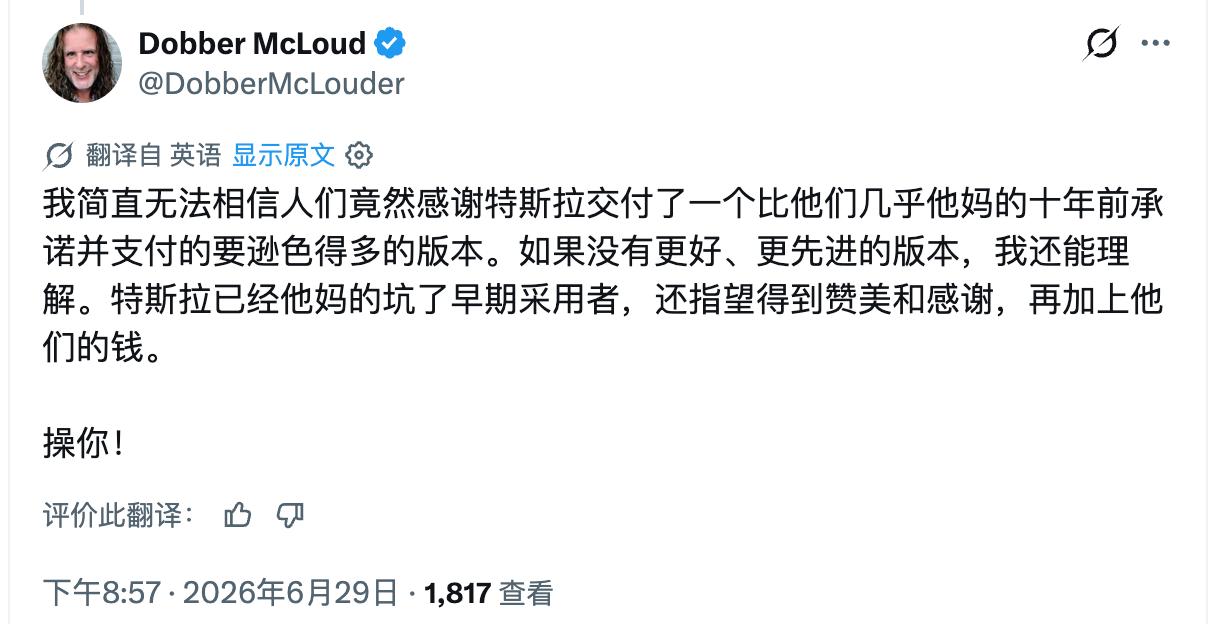
However, a netizen was very excited. He posted multiple comments under Musk's tweet, complaining that he spent so much money but only got a version far inferior to the promise made ten years ago, and even used foul language against Musk.
(Source: Screenshot from the X platform)
This person said that if there was no full - version FSD V14, he could accept the gap between FSD V14 Lite and the promotion ten years ago. But spending a large amount of money but not being able to use the same version is unacceptable to him. This netizen's intense remarks naturally sparked an argument, and many of Musk's fans had a fierce debate with him.
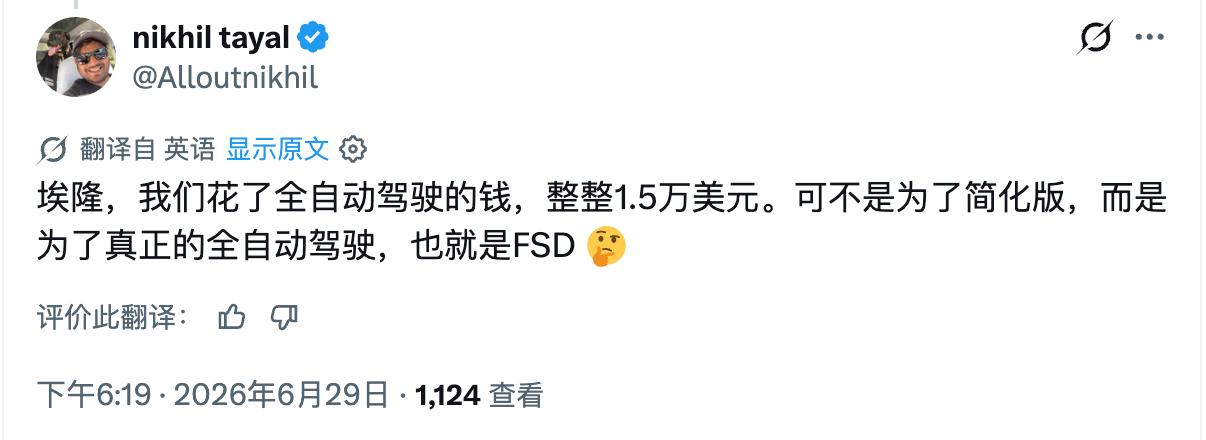
Another netizen expressed himself more calmly. He said that consumers spent $15,000 (about 102,000 yuan) not to buy a weakened FSD, but for real autonomous driving, that is, FSD. Like the previous netizen, he was also refuted by Musk's fans. One of Musk's fans replied to him, saying that if one buys a model with AI4 hardware, can they get lifetime upgrade rights? These are simply impossible to achieve.
(Source: Screenshot from the X platform)
In the view of Dianchetong (ID: dianchetong233), a netizen on the X platform had an objective view. He said, When buying a Tesla car back then, it was based on Tesla's promise to achieve full - scale autonomous driving. Consumers need Tesla to fulfill its promise, not renege on it due to insufficient hardware capabilities.
Different from the intelligent driving solutions launched by domestic car companies, Tesla's FSD is expensive, and its price has been adjusted multiple times between $5,000 and $15,000. The problem is that many early supporters of Tesla who bought FSD still haven't experienced the "full - scale autonomous driving" promised by Tesla.
Tesla's AI5 chip has completed tape - out, and it may be commercially available next year. There will also be platforms like AI6 and AI7 in the future. If we accept Tesla's failure to fulfill its promise today, who will guarantee the users of AI4 platform models? Which generation of platform will we finally be able to truly use the full - scale autonomous driving promised by Tesla and Musk?
Computing power anxiety is devouring old - model hardware
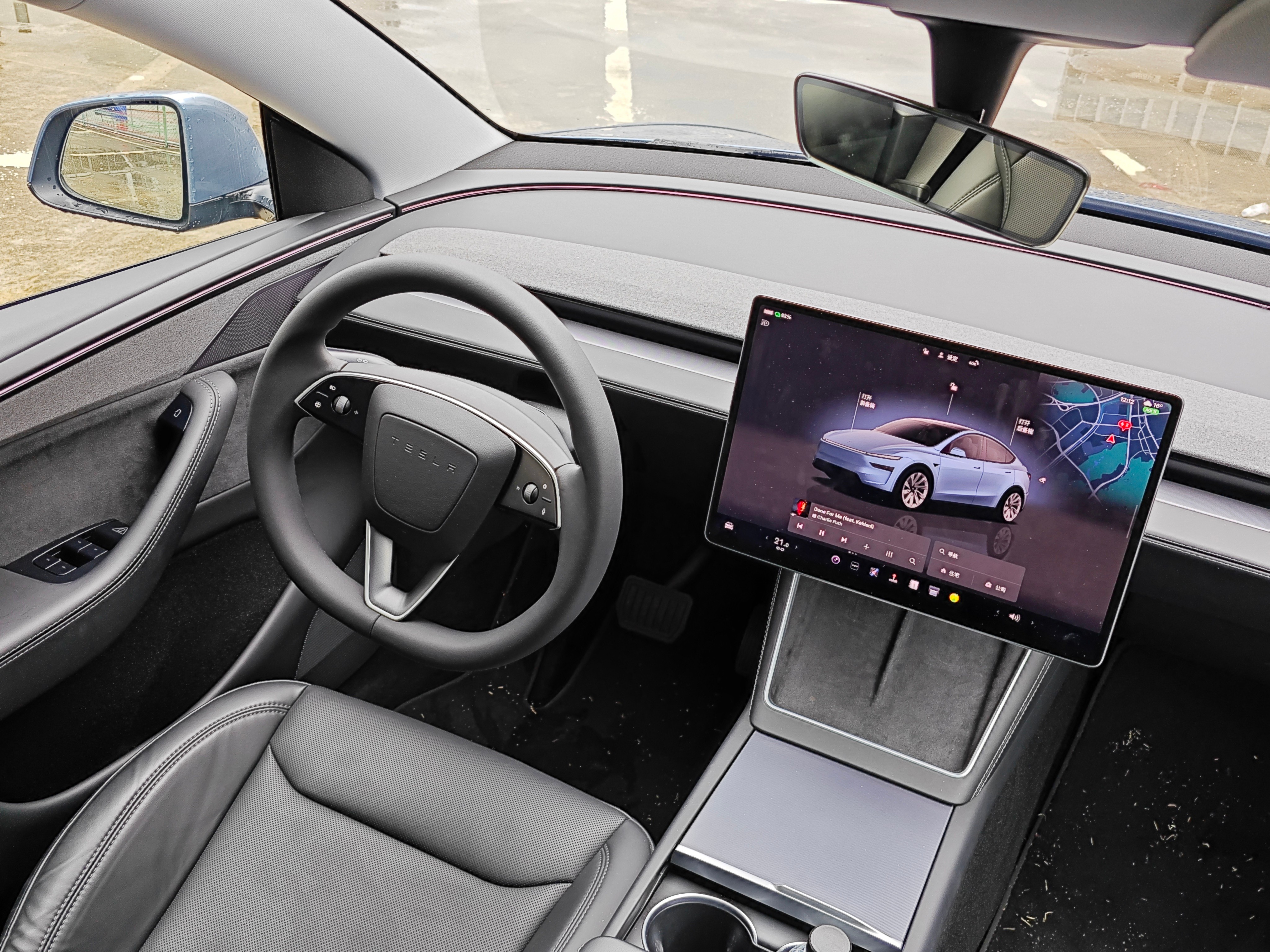
It's not that Tesla doesn't want to adapt the full - version FSD V14 for the AI3 platform, but that the AI3 platform can no longer meet the increasing hardware requirements of the intelligent driving system.
The AI3 platform has a computing power of only 144 TOPS, a memory of only 8GB, and a bandwidth of only 48GB/s. Facing the massive data throughput of the full - version FSD V14's end - to - end large model + reinforcement learning + offline prediction, problems such as being unable to feed data, the model not running properly, and excessive latency may occur. Moreover, the performance of the sensors on the AI4 platform has also been improved. Higher resolution and a larger dynamic range are the foundation for the comprehensive leap in the capabilities of FSD V14.
Out of safety considerations, Tesla decided to abandon pushing the full - version FSD V14 to the AI3 platform. Even for the weakened version, although the AI3 platform can be upgraded to FSD V14 Lite, it's still unknown whether it can be upgraded to a more advanced version and add other new functions in the future.
(Source: Filmed by Dianchetong)
There is a similar situation in China. When XPeng Motors launched the second - generation VLA, it stated that only models equipped with dual Turing chips could be upgraded to the full - version, while models with single Turing chips and dual Orin - X chips could only be upgraded to the distilled version of the second - generation VLA.
It's worth mentioning that some retail versions of XPeng models also offer a triple - Turing chip version with a computing power of up to 2250 TOPS, reserving sufficient computing power redundancy for future upgrades. The Robotaxi version of XPeng GX is even equipped with 4 Turing chips, with a computing power of up to 3000 TOPS.
At present, many domestic car companies have different levels of intelligent driving versions, such as BYD's Tian Shen Zhi Yan A/B/C, Qian Kun Zhi Jia ADS SE/Pro/Max/Ultra, etc. These versions have differences in capabilities. The Ultra SE and Ultra versions of XPeng are both compatible with the second - generation VLA, and the difference lies not in the present but in the future.
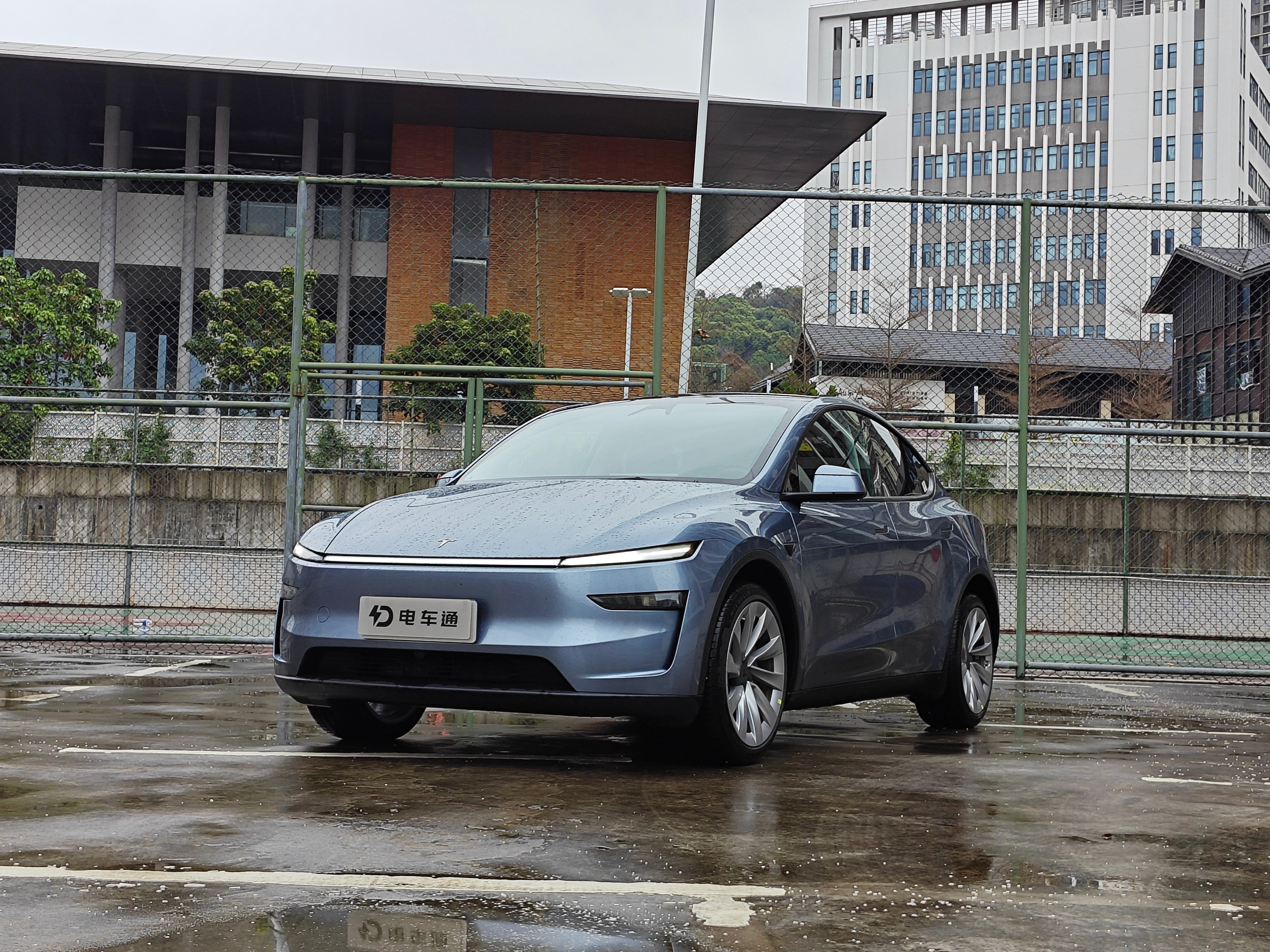
In essence, as intelligent driving shifts from "rule - driven" to "end - to - end large - model - driven", the demand for computing power is increasing exponentially. L2+ only requires a few hundred TOPS of computing power, while L4 requires thousands of TOPS. The computing power ceiling of existing old - model hardware has long been left behind by the intelligent driving algorithms of the new era.
(Source: Filmed by Dianchetong)
Whether to pay more for higher computing power and future upgrade potential is a question that consumers need to consider at present.
Dianchetong (ID: dianchetong233) believes that when buying a car, we should comprehensively consider our budget and car - replacement cycle. The longer the car - replacement cycle, the more we need to prepare for upgrade space. Today's "full - scale computing power" may become the "basic configuration" in 3 years. When the budget is sufficient, choosing higher computing power can significantly extend the intelligent driving life cycle of the vehicle and avoid the situation of "becoming obsolete as soon as it's bought".
Consumers with a shorter car - replacement cycle can make a judgment based on their budget. In addition, computing power itself also affects the vehicle's resale value. When the L3 era arrives, models that cannot be upgraded to L3 will inevitably face a sharp drop in residual value.
The anxiety about computing power may even affect the car - buying choices of non - essential consumers, making them abandon buying a car in the short term and wait for car companies to launch products with higher computing power and greater upgrade potential.
In order to fulfill his promise and let users buy cars with confidence, in April this year, Musk said that he would build a number of mini - factories in the United States to upgrade AI3 platform vehicles to the AI4 or higher - version platforms. This upgrade plan will not only modify the chips and bandwidth but also upgrade the cameras.
For models with a price of over 200,000 yuan, if they can pay a few tens of thousands of yuan to upgrade the hardware and get stronger intelligent driving functions, and don't need to change the car due to backward intelligent driving experience in the short term, it's obviously worth it. However, it's still a question whether consumers who have already paid between $5,000 and $15,000 are willing to pay tens of thousands of yuan more to upgrade the hardware.
How to break the curse of "becoming obsolete as soon as it's launched"?
Compared with post - installation modification, pre - embedding high computing power is undoubtedly a lower - cost and more consumer - acceptable solution. In the past, the biggest difficulty in implementing this solution was actually the high - cost computing power chips. For this reason, domestic and foreign enterprises have launched self - developed intelligent driving chip projects in recent years.
In the overseas market, Tesla's AI3, AI4, and AI5 chips are continuously iterating. In the domestic market, XPeng has launched its self - developed Turing chip, NIO has launched its self - developed Shenji NX9031 chip, and Li Auto has come up with the Mahe 100 chip. Not long ago, BYD, the world's best - selling new - energy vehicle brand, officially released China's first self - developed 4nm intelligent driving chip, Xuanji A3, which is expected to be first installed in high - end sub - brand Denza next year.
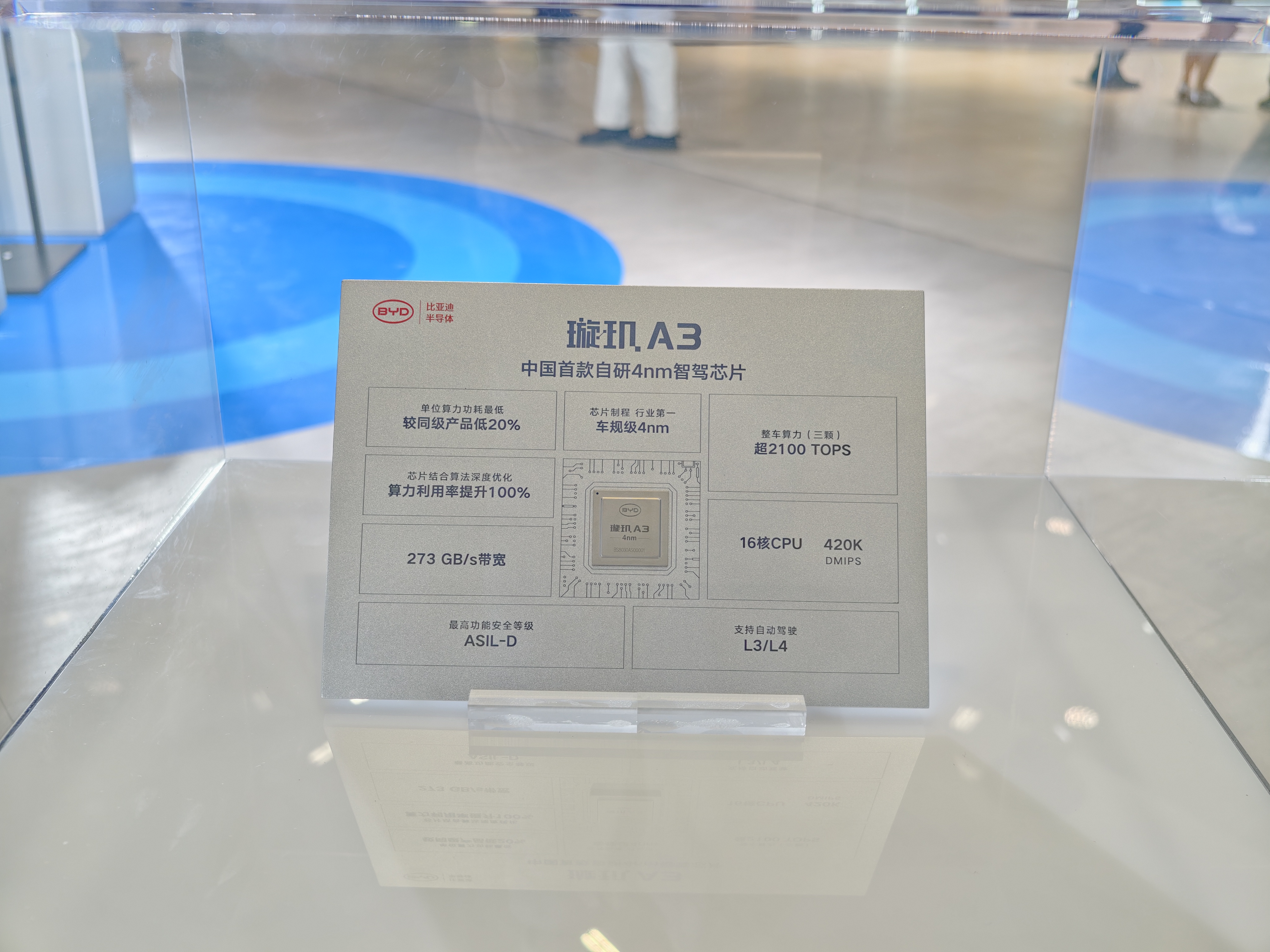
(Source: Filmed by Dianchetong)
Through self - developed chips, car companies can effectively reduce the procurement cost of intelligent driving chips, thus achieving "computing power freedom", pre - embedding high computing power in vehicles, and increasing the vehicle's upgrade space.
The push of FSD V14 Lite for the AI3 platform, which seems to be a trust dispute between Tesla's old owners and the brand, is actually an inevitable contradiction between unlimited OTA of software and the limited hardware life cycle under the rapid iteration of the intelligent vehicle industry. The once - promised full - scale autonomous driving has been completely split by the hardware generation gap in the face of the exponentially increasing demand for large - model computing power, which is also the core reason why countless old owners are dissatisfied and feel betrayed.
The computing power anxiety triggered by FSD V14 Lite also rings an alarm bell for all consumers when buying a car. Intelligent driving vehicles are no longer traditional industrial products that can be used immediately after purchase but intelligent terminals with continuous iteration capabilities. Car companies' focus on self - developed intelligent driving chips and iterative high - order hardware platforms is essentially to break the cost constraints of external chips, gradually popularize high - computing - power hardware, and solve the pain point of users' "cars becoming obsolete as soon as they're bought".
Only by pre - embedding hardware in advance and reserving sufficient iteration redundancy can car companies fulfill their long - term OTA upgrade promises; and consumers also need to abandon the car - buying mindset of "emphasizing software and neglecting hardware", stop blindly paying for the over - marketed "full - scale autonomous driving" concept, and instead use hardware computing power, iteration potential, and long - term adaptability as the core purchase criteria.