Understanding Physical AI: The Second Half of the AI Industry Goes Beyond Conceptual Hype
In 2026, the narrative of the AI industry is undergoing a complete iteration. The generative digital AI, which was extremely popular in the past two years, has now entered a stock phase characterized by a slowdown in growth, homogenized involution, and shrinking profits. On the other hand, Physical AI, which has been continuously bet on by Jensen Huang of NVIDIA and listed as the top technology trend of the year at the Summer Davos Forum, has officially taken over the baton in the industry and become the core layout direction for global capital and technology giants.
All of a sudden, world models, embodied intelligence, and physical deduction have become hot buzzwords in the industry. Various technology companies have flocked to the Physical AI track, trying to seize the valuation dividends. Recently, Momenta, which is sprinting to list on the Hong Kong Stock Exchange, has been crowned the title of "the first Physical AI stock" by the market, sparking extensive discussions. However, looking beyond the conceptual packaging in the capital market, we need to clarify the most core questions first: What exactly is Physical AI? What are the core logic and the real implementation rhythm of this industrial revolution?
Rather than getting entangled in the label attribution of a single enterprise, understanding the underlying definition, development context, and commercial essence of Physical AI is the key to understanding the second half of the AI industry. Returning to the origin of the industry, it's not hard to find that the core value of autonomous driving has always been anchored in the large - scale implementation in vertical scenarios and the real revenue - generating ability, rather than the generalized Physical AI concept narrative.
Physical AI: The Ultimate Evolution Direction of the AI Industry
To understand Physical AI, the most intuitive way is to compare it with the well - known digital AI. Technologies such as ChatGPT, text - to - image generation, and AI office, which have been extremely popular in the past three years, all belong to digital AI. Its core is limited to the virtual screen world, dealing with digital information such as text, images, and codes, and outputting virtual content such as words and pictures. It solves the efficiency problems of information interaction and content production.
On the other hand, Physical AI (Physical AI) is a new generation of artificial intelligence that completely breaks out of the digital virtual scenario and is rooted in the real physical world. Combining Jensen Huang's definition with the industry's unified standard, its core essence is: An AI system that can perceive the three - dimensional physical space, understand real physical laws such as gravity, friction, collision, and motion, deduce environmental changes through the world model, and autonomously complete the full - closed - loop of perception, reasoning, decision - making, and physical execution, ultimately enabling AI to transform and empower the real physical world.

Put simply, digital AI enables machines to "think and express", while Physical AI enables machines to "observe, act, and adapt to the real world". The core difference between the two determines that Physical AI has a far larger industrial space than digital AI. Digital AI serves online virtual scenarios, and its market ceiling is gradually becoming apparent. In contrast, Physical AI covers physical tracks such as autonomous driving, humanoid robots, industrial automation, low - altitude equipment, and intelligent terminals, and penetrates into the core scenarios of the real economy such as industrial production, transportation, and household services. It is a trillion - level track that can truly reconstruct the physical industry.
From Concept to Implementation: The Rise and One - Year Industrial Iteration of Physical AI
The concept of Physical AI was first systematically proposed by Jensen Huang, the CEO of NVIDIA. He has publicly stated on multiple occasions that digital AI is only the first half of the AI industry, and Physical AI is the core growth wave of the technology industry in the next few decades. It is also the key inflection point for artificial intelligence to move from "intelligent interaction" to "intelligent creation".

In the early days of the industry, Physical AI was more of a cutting - edge technology concept. Limited by hardware costs, data accumulation, and model capabilities, it remained in the laboratory stage for a long time. It was not until the past year that with the iteration of large - model technology, the decline in computing power costs, and the explosion of data in physical scenarios, Physical AI officially reached the inflection point for large - scale implementation. The year 2026 is also widely recognized in the industry as the Year of Physical AI.
In terms of technological iteration, the maturity of the world model is the core cornerstone for the implementation of Physical AI. Different from the text prediction logic of traditional large - language models, the core of the world model is to predict the dynamic changes in the physical world, deduce the movement trajectories of objects and the evolution laws of the environment, and solve the core pain points that AI cannot understand complex real - world scenarios and cannot predict unknown risks. Currently, domestic and foreign enterprises such as Tesla, Google, NVIDIA, and Momenta have all completed the technological layout of the world model, promoting Physical AI from theory to mass production.
In terms of industrial implementation, the Physical AI track has shown an all - round explosion in the past year. On the capital side, in the first quarter of 2026, the global Physical AI startups raised more than $6.4 billion in financing, and in China, the financing exceeded 46 billion yuan in half a year. The funds are highly concentrated in core technology fields such as world models, general simulation, and embodied intelligence. On the application side, Physical AI has begun to be implemented in multiple scenarios. The large - scale popularization of urban NOA in autonomous driving, the intelligent upgrade of industrial robots, the trial of humanoid robots in the B - end market, and the rapid penetration of end - side intelligent terminals such as AI glasses have continuously improved the industrial ecosystem.
In terms of industry consensus, global technology giants have reached a strategic consensus. NVIDIA has built the Omniverse simulation platform and the Cosmos world model, creating the underlying computing power and simulation base for Physical AI. Tesla has used autonomous driving as an entry point to layout general embodied intelligence. Domestic enterprises have also focused on the core technologies of Physical AI, promoting the deep integration of AI technology and the real economy. The industry has officially entered a high - speed cycle of technological implementation and commercialization.
The Core Thresholds of Physical AI: General Capabilities and Cross - Scenario Value
After one year of industrial iteration, the market has formed a clear consensus on the criteria for judging Physical AI enterprises. They mainly have two core characteristics, which are also the key to distinguishing "true Physical AI" from "concept - chasing for popularity".
First, general physical modeling capabilities. The core of real Physical AI technology is to master general physical laws. A set of underlying models can be adapted to multiple types of physical carriers such as cars, robots, industrial equipment, and low - altitude aircraft, enabling cross - industry and cross - scenario reuse. It has strong technological generalization capabilities rather than customized optimization for a single scenario.
Second, a complete physical interaction closed - loop. The core of Physical AI is "controllable and executable". AI can autonomously complete the entire process closed - loop of environmental perception, risk deduction, decision - making output, and hardware control without the secondary intervention, review, and calibration of a third - party entity, truly achieving autonomous control of physical entities.
Third, diversified commercial scenarios. Relying on general underlying technologies, it can horizontally expand business in multiple tracks such as transportation, industry, household, and logistics, forming a cross - industry and sustainable revenue system, getting rid of the cycle constraints of a single industry.
Based on this set of industry standards, there are certain problems of concept generalization in the Physical AI narratives of many current enterprises. Momenta, which has been extremely popular recently, is a typical example.
The "First Physical AI Stock" Is a Concept Premium, Not an Industrial Positioning
Thanks to its mass - production scale, market share advantage, and R7 world model technology, Momenta has been crowned the title of "the first Physical AI stock" by the market, giving its IPO a higher track valuation. However, objectively speaking, this label is more of a marketing packaging in the capital market and not a strict industrial positioning. There is no need to over - magnify the controversy; we only need to clarify the boundaries.
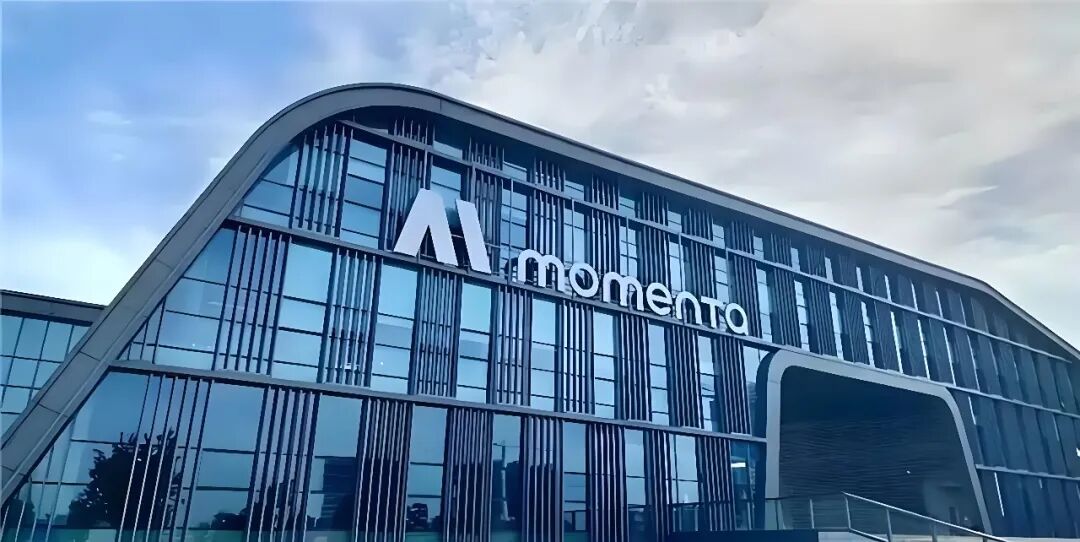
From a technical perspective, Momenta's R7 world model is a specially optimized model for the passenger - car scenario, focusing on urban and highway driving scenarios. It only makes physical trajectory predictions for vehicles, pedestrians, and road obstacles. The technology cannot be transferred to core Physical AI scenarios such as industrial robots, low - altitude equipment, and general simulation, and it does not have general physical modeling capabilities. At the same time, its algorithm solution relies on the hardware carriers of automobile manufacturers, and the instructions need to be secondarily calibrated by the OEMs, so it cannot form a complete physical autonomous interaction closed - loop.
From a business perspective, all of Momenta's revenue and business layout are focused on the passenger - car track. Long - term plans such as Robotaxi and driverless trucks also do not go beyond the ground transportation scenario. It is always a technology service provider in the vertical transportation track and does not have the cross - scenario and cross - industry expansion capabilities necessary for a Physical AI enterprise. Its impressive revenue growth and high - margin license income all come from the mass - production and delivery of in - vehicle software, which is the commercialization result of the vertical autonomous - driving scenario, rather than the value realization of general Physical AI.
In short, Momenta is an excellent intelligent - driving solution provider and has mastered some technical features of Physical AI, but it does not have the complete industrial attributes of Physical AI. The title of "the first stock" is more of a concept premium given by the capital, rather than an accurate industry positioning.
The Core of Autonomous Driving Is Always Implementation and Revenue
The grand track narrative of Physical AI essentially provides long - term technological imagination for the autonomous - driving industry, but it cannot change the short - term valuation logic of enterprises.
Whether it is leading players such as Momenta, WeRide, and Pony.ai, or a number of new entrants in the industry, the core competitiveness of autonomous - driving enterprises has never relied on cutting - edge concepts but is rooted in the large - scale implementation ability in vertical scenarios and the real revenue - generating and self - sustaining ability.
The long - term development of Physical AI is still in the early layout stage in the industry. Core technologies such as general world models, embodied intelligence, and cross - scenario simulation are still being iterated, and the implementation of multiple types of physical entities and cross - industry commercialization still require long - term precipitation. For autonomous - driving enterprises, the most practical development path at present is not to tie in with the grand Physical AI concept to boost the valuation, but to continue to deeply cultivate the vertical transportation scenario, expand the mass - production scale, optimize the income structure, and prove the industrial value with real revenue and profit.
Physical AI is the long - term industrial end - game, while autonomous driving is a practical vertical track at present. The case of Momenta also confirms a simple industrial truth: All technological narratives must ultimately serve commercial implementation. The concept premium in the capital market is fleeting. Only the large - scale application in vertical scenarios and the sustainable revenue - generating ability are the core moats of technology enterprises. In the future, as Physical AI technology continues to mature, the boundaries between autonomous driving and general Physical AI may gradually be blurred. However, at present, adhering to commercial implementation and maintaining self - sustaining ability remains the only standard answer for the intelligent - driving industry.