Changsha, Nearing the Trillion Club, No Longer Wants to Be "Lopsided"
On June 26, the Changsha Service Industry Conference was held.
Changsha has a solid foundation for developing the service industry. In the "General Plan for 2035" approved by the State Council, Changsha is clearly positioned as the "Central China Center for Modern Service Industries". In 2025, the added - value of Changsha's service industry reached 974.124 billion yuan, accounting for over 60% of the GDP and nearly one - third of the total service industry volume in Hunan Province.
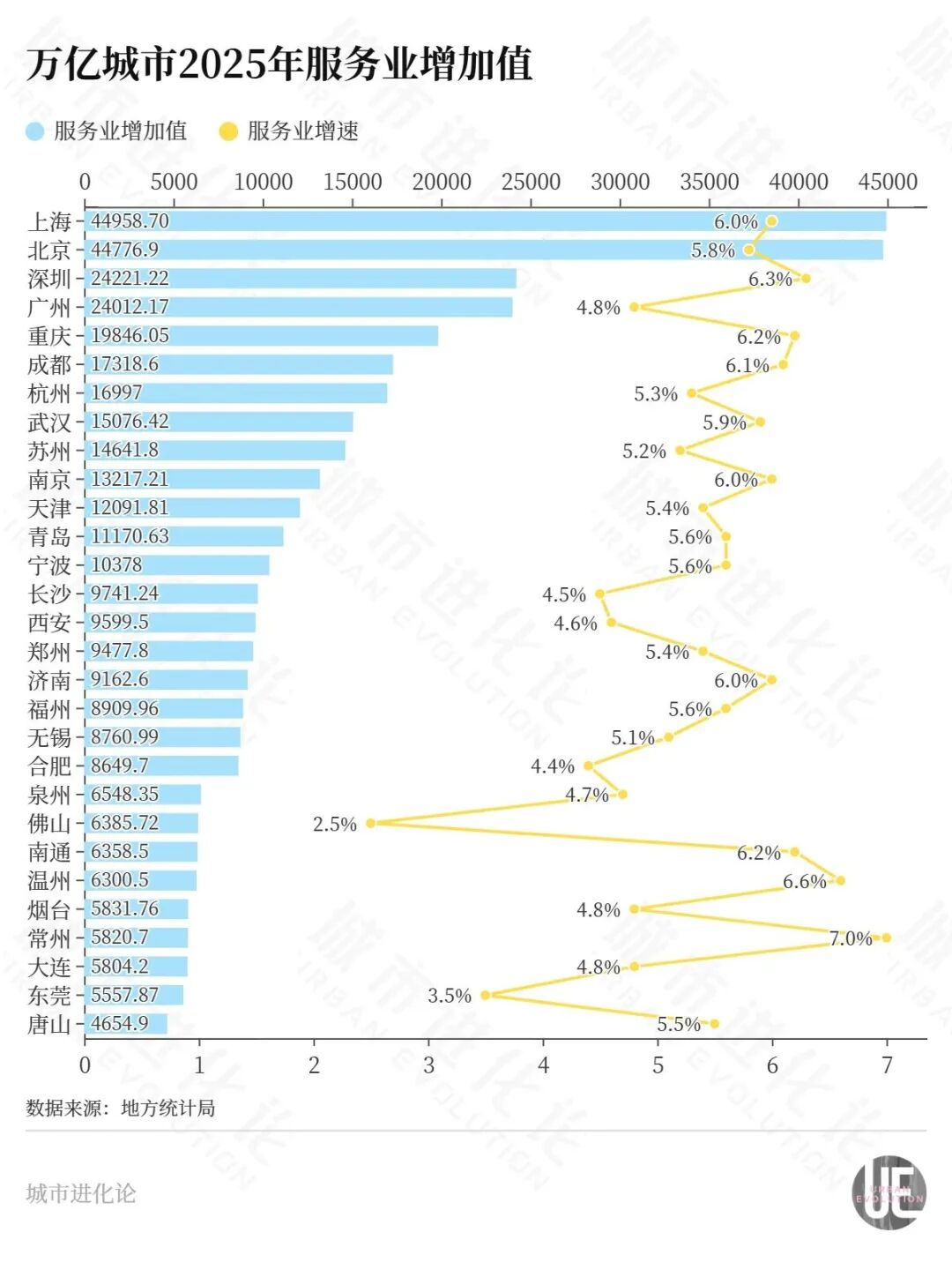
However, the growth rate has been slowing down. In 2025, the growth rate of the added - value of Changsha's service industry was 4.5%, only higher than that of Hefei, Dongguan, and Foshan among the trillion - level cities in China. In the first quarter of this year, the growth rate of Changsha's service industry was only 2.5%.
To boost the service industry, the key to accelerating Changsha's development lies in the producer service industry. In recent years, Changsha has been striving to build itself as the "Capital of New Consumption", and the consumer service industry is its strength, but the producer service industry has not yet gained momentum. How to address this imbalance is not only a must - answer question for Changsha but also a crucial step in paving the way for the whole province.
On a broader scale, among the 29 trillion - level GDP cities in China, 14 have already seen their service industry volume exceed one trillion yuan. How can Changsha, which is still striving to reach this milestone, shoulder the responsibility of being the "Central China Center for Modern Service Industries"?
Is it slowing down?
The service industry is becoming increasingly important.
In April this year, the National Service Industry Conference was held in Beijing. This was the first conference held in the name of the "National Service Industry Conference" with the highest - ever specification, propelling the national service industry into a new stage of development.
In the overall situation of the national service industry, Hunan is typical. At this year's National Service Industry Conference, Hunan shared its experience as a local representative. As Changsha accounts for nearly one - third of the total service industry volume in Hunan Province, it is even more eager to find its "coordinates" in the national context.
In the latest national positioning, the "General Plan for 2035" approved by the State Council also clearly designates Changsha as the "Central China Center for Modern Service Industries".
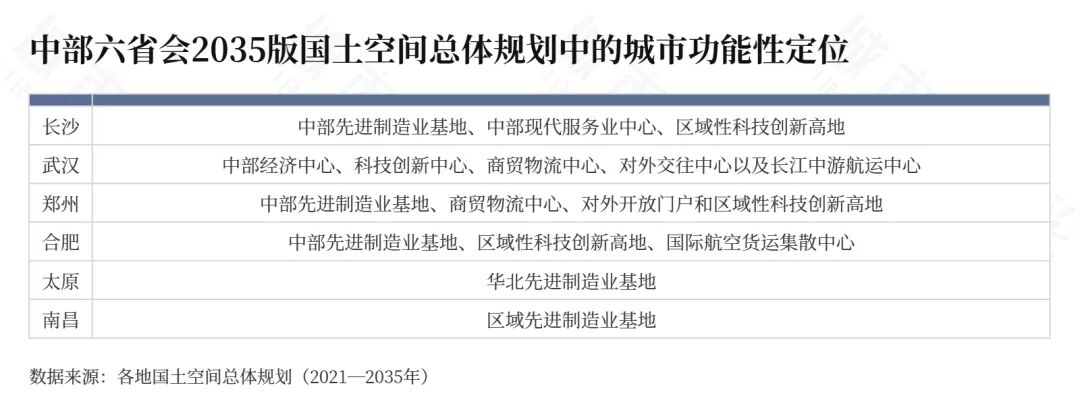
Actually, Changsha has long had a systematic plan for the development of the service industry.
In 2021, Changsha released the "Changsha 14th Five - Year Plan for the Development of Modern Service Industries" (hereinafter referred to as the "Plan"), aiming to build Changsha into a "regional modern service industry center city that is first - class in Central China, leading in China, and well - known internationally" during the 14th Five - Year Plan period.
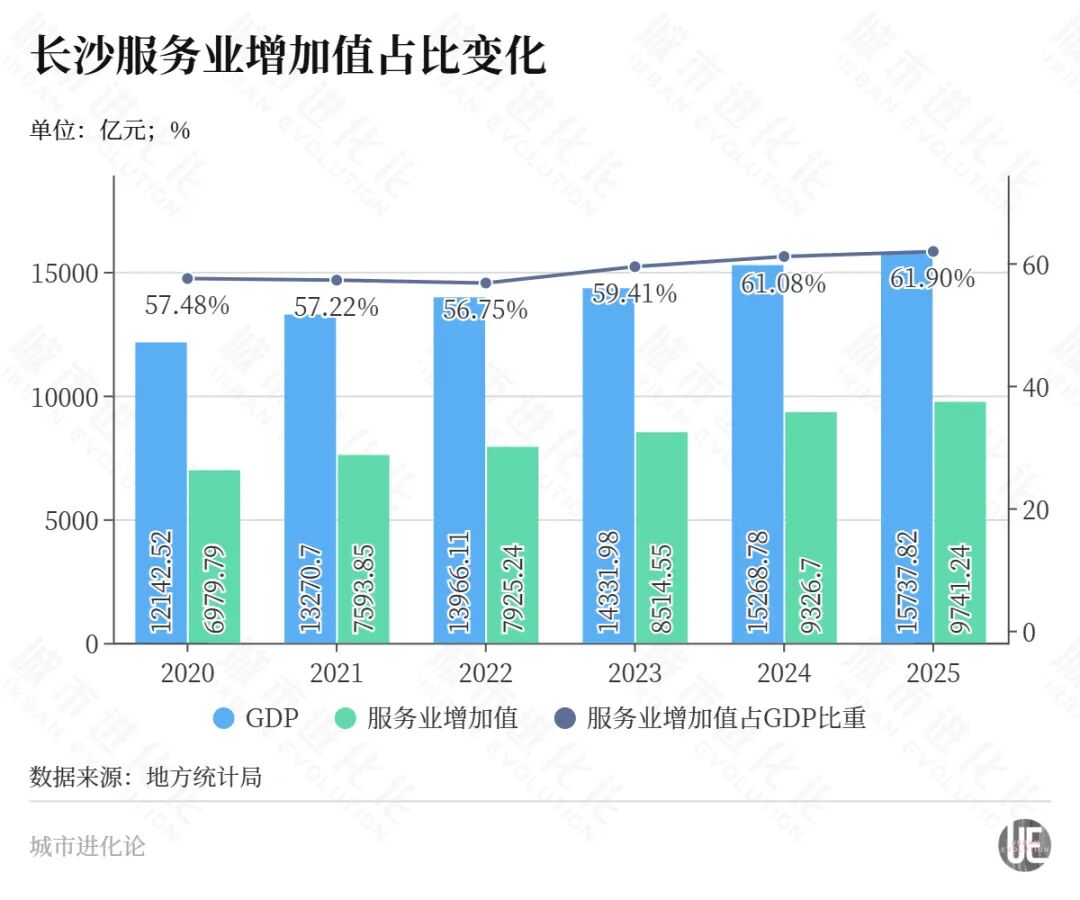
In terms of key indicators, the "Plan" proposed that by 2025, the added - value of the service industry should account for about 58% of the city's GDP.
Guided by the "Plan", the scale of Changsha's service industry continued to grow during the 14th Five - Year Plan period. In 2025, it reached 974.124 billion yuan, just one step away from the one - trillion - yuan mark, a 39.6% increase compared to 2020, 10 percentage points higher than the GDP growth rate during the same period.
While the scale was steadily increasing, the proportion of the added - value of Changsha's service industry in GDP rose from 57.5% at the end of 2020 to 61.9% at the end of 2025, an increase of 4.4 percentage points, exceeding the requirements of the "Plan".
However, despite the achievements in scale expansion, there are still obvious shortcomings in Changsha's service industry.
Firstly, the scale is not large enough. Among the 29 trillion - level GDP cities in 2025, including Wuhan, the capital city of Central China's Hubei Province, 14 cities have seen their service industry volume exceed one trillion yuan, and Changsha ranks 15th.
From the perspective of development, the "slowdown" of Changsha's service industry cannot be ignored.
In 2025, the growth rate of the added - value of Changsha's service industry was only 4.5%, only higher than that of manufacturing - heavy cities such as Hefei, Dongguan, and Foshan among the trillion - level cities in China.
For Changsha, known for its vibrant nightlife, a slowdown in the service industry means economic pressure. In 2025, Changsha's GDP growth rate was only 4%, ranking among the lower positions among the trillion - level cities in China.
More importantly, in the first quarter of this year, the growth rate of Changsha's service industry was only 2.5%, and the low - growth trend has not been reversed. Changsha's service industry urgently needs a boost.
The key breakthrough may lie in the optimization of the structure.
Local media admitted that the shortcoming of Changsha's service industry is that the producer service industry has not yet gained momentum. There is a shortage of high - end service sectors such as R & D design, technology services, and modern finance, and there is still a lack of leading and platform - type local enterprises, which is still a gap compared with the positioning of the "Central China Center for Modern Service Industries".
Making up for the shortfalls
The producer service industry, vividly described as the "2.5 - industry", has become a key part of the modern economic system. More than half of the value of high - value - added terminal equipment globally is generated by services.
Therefore, "promoting the specialization and high - end extension of the producer service industry in the value chain" will strongly support the extension of the manufacturing industry to both ends of the "smile curve".
As the capital city of a major manufacturing province, Changsha has long planned to upgrade the producer service industry.
In 2023, Changsha released the "Three - Year Action Plan for the High - quality Development of the Producer Service Industry (2023 - 2025)" (hereinafter referred to as the "Plan"), aiming to become the "leading demonstration benchmark for the producer service industry in Central China" and clearly stating that the proportion of the added - value of the producer service industry should reach 65%.
From the perspective of basic conditions, Cai Jingqing, the deputy director and professor of the Economics Teaching and Research Department of the Party School of the Hunan Provincial Committee of the Communist Party of China, once said in an interview that Changsha has a solid foundation in the producer service industry and can rely on the advantages of manufacturing industries such as construction machinery for high - end extension. However, there are also problems such as the overall low level of the producer service industry, a small number of local leading service - type enterprises, and weak professional and international service capabilities.
For example, recently, the 2026 "Outbound Service Providers' Visit to Changsha" event was held. A group of leading service enterprises from the Greater Bay Area, such as KPMG Enterprise Consulting (China) and Citibank, came to Changsha to provide outbound services for advanced manufacturing enterprises in Changsha, such as Hunan Zhongwei New Energy and Hunan Daisi Optoelectronics.
Ding Changfa, an associate professor at the School of Economics of Xiamen University, analyzed for Urban Evolution that the development of Changsha's producer service industry is restricted by the industrial chain.
Specifically, due to the under - development of producer service industry sectors such as industrial design, high - end finance, and professional consulting in Changsha, a large number of service links in local advantageous manufacturing industries such as construction machinery have overflowed to cities like Shenzhen. The absence of high - end service sectors further restricts the introduction and cultivation of high - end talents, hindering the improvement of service industry levels and industrial upgrading.
In Ding Changfa's view, the opportunity for the integration of the manufacturing and service industries may be the key breakthrough for Changsha to make up for the shortfall in the producer service industry.
Ding Changfa believes that Changsha has been building itself as a global R & D center city for a long time, and R & D design is one of the most profitable links in the industrial value chain. Changsha can focus on the industrial R & D design link, making local innovation platforms become the "powerful external brains" of the manufacturing industry, and then transforming the manufacturing foundation into the competitiveness of the service industry.
This has also been reflected in Changsha's actions.
Chen Bozhang, the deputy secretary of the Changsha Municipal Party Committee and the mayor of Changsha, emphasized at the Changsha Service Industry Conference that it is necessary to focus on innovation - driven development, comprehensively deepen the integration of the two industries, promote the two - way empowerment of "manufacturing + service", vigorously develop technology services, and create a "Changsha model" for the in - depth integration of advanced manufacturing and modern service industries.
From the perspective of top - level design, the building economy and headquarters economy may be the focus of Changsha.
The building economy is a model of intensive space utilization. Previously, Changsha implemented the "Building Quality Improvement Project" and planned to add 10 "billion - yuan buildings". The Xiangjiang Fund Town and Lugu Fund Plaza are typical examples. Private equity funds are concentrated here, alleviating the trouble of enterprises traveling to Beijing, Shanghai, and Shenzhen for roadshows.
The Changsha Government Work Report in 2026 mentioned that it is necessary to innovatively develop the headquarters economy and building economy, and promote the specialization and high - end extension of the producer service industry in the value chain.
Competition
Since the National Service Industry Conference was held, a competition around the modern service industry in the central region has officially begun. Currently, central provinces such as Anhui, Henan, Jiangxi, and Hubei have successively held conferences themed on the "service industry".
Among them, Henan held a provincial - level service industry conference in Zhengzhou on May 12, emphasizing seizing key areas, promoting them in a classified and efficient manner, and helping to integrate into the construction of a unified national service market.
Anhui, Jiangxi, and Hubei held meetings in the form of standing committee meetings of the provincial party committees to study the medium - and long - term paths for promoting the expansion and quality improvement of the service industry.
The provincial capital cities are further placed in a prominent position. For example, Hubei mentioned that it is necessary to vigorously cultivate and develop producer service industries such as science and technology and finance, especially knowledge - intensive service industries, and accelerate the construction of Wuhan as an international R & D center city and an international convention center city.
When the central region collectively steps up efforts in the service industry, how can Changsha, positioned as the "Central China Center for Modern Service Industries", break through?
Comparing the service industry scales of the provincial capitals in Central China at the end of 2025, Wuhan ranked first with a volume of 1507.642 billion yuan, and Zhengzhou also exceeded 900 billion yuan, posing a chasing threat to Changsha.
In Ding Changfa's view, Changsha is facing a "three - sided attack" among the central cities. Wuhan has a leading advantage in the overall scale of the service industry and the strength of science, education, culture, and health; Zhengzhou has a solid manufacturing foundation, and its basis for developing the producer service industry is comparable to that of Changsha; the "Hefei Model" is a model of the multi - dimensional integration of industry, technology, finance, and policies. Under multiple competitions, the urgency for Changsha to make up for the shortfalls in the service industry is further highlighted.
To break the deadlock, Changsha's primary task is to strengthen personnel training, relying on local leading universities such as Central South University and Hunan University to specifically strengthen the layout of professional disciplines such as R & D design, high - end finance, and digital economy, and alleviate the shortage of high - end service talents. At the same time, it should "benchmark" against Hefei and vigorously develop venture capital sectors such as VC, PE, and angel funds.
On this basis, Changsha should expand and strengthen the "stock" scale of advantageous manufacturing industries such as construction machinery to better introduce and cultivate the "increment" of the producer service industry.
From a broader perspective, Zeng Gang, the dean of the Urban Development Research Institute of East China Normal University, believes that the development level of service trade in central provinces is lower than that in the eastern coastal areas, and the influence of the service industry is limited. Even among the provincial capitals in Central China, Changsha's comprehensive development level of the service industry is not as good as that of Wuhan and is comparable to that of Zhengzhou, still some distance from the goal of being the "Central China Center for Modern Service Industries".
"To promote the leap - forward development of the service industry, Changsha should focus on promoting the'servitization' of manufacturing enterprises," Zeng Gang suggested. Changsha should integrate digital and intelligent technologies into the entire manufacturing process and develop new business models such as digital twins. In particular, it should support leading enterprises such as Sany Heavy Industry, Zoomlion, and CRCC Heavy Industry to output their service capabilities such as full - life - cycle operation and maintenance and solution provision to the outside world.
Zeng Gang particularly mentioned that the producer service industry highly depends on the agglomeration effect to release value. Based on this idea, Changsha can also build a series of producer service industry clusters and professional parks based on the construction of a global R & D center city and relying on high - level scientific and technological innovation platforms such as the Yuelu Mountain Laboratory to form a multi - level industrial carrier.
The curtain of the competition in the service industry in Central China has already been drawn. For Changsha, this is not only an urgent test of "falling behind if not moving forward", but also a rare opportunity to "overtake on a curve".
This article is from the WeChat official account "Urban Evolution", author: Liu Xuqiang, published by 36Kr with authorization.