Why an American company chooses 100% access to DeepSeek
A company pays more to an AI vendor each month than it pays its employees in salaries. The CEO's solution was simple and straightforward: replace all Claude instances.
The screenshot posted by Flo Crivello on X records this decision. There was no sentimentality, no grand declarations, just a cold statement: "Pulled the trigger today and switched 100% of Lindy traffic to DeepSeek v4." Below it, there was an additional note: "Saves us millions of dollars and we're actually seeing an increase in performance on many core use cases."
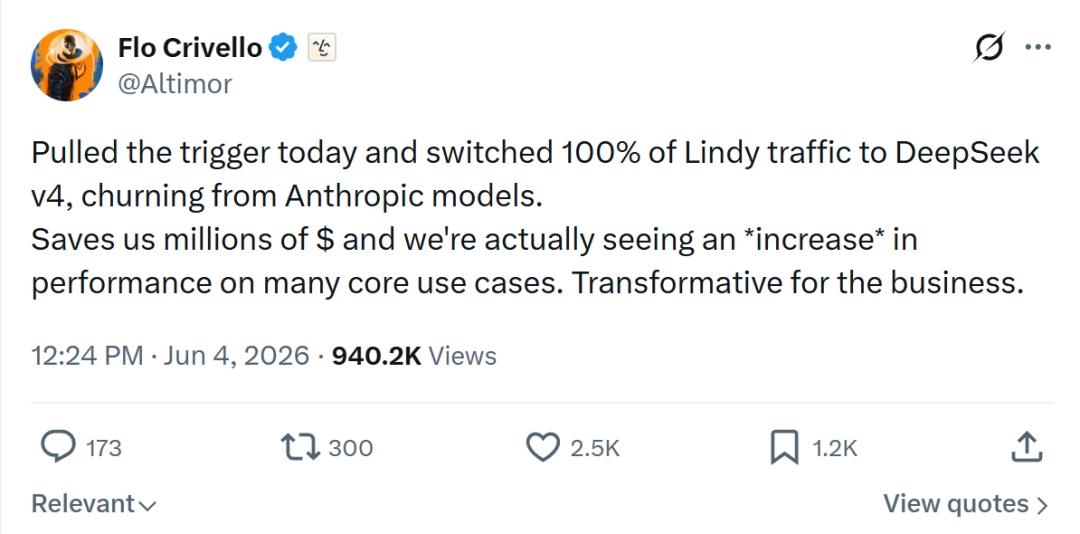
A San Francisco company with dozens of employees switched all its operations from Claude to DeepSeek. The reason was that the bill was higher than the total salaries of all employees.
This incident happened nearly a month ago, and its impact didn't become apparent until the end of June. On June 27th, DeepSeek open - sourced the DSpark speculative decoding framework, which increased the generation speed by 60% to 85%. Then, there was also an update to the Wayfinder Router, a completely offline model routing tool that can decide between local and cloud in microseconds.
Lindy took the lead, and the tools followed. Enterprises can't afford the premium for the "brain" and need the "muscle" to do the work.
The Bill Exceeds Salaries
Lindy didn't make the switch impulsively. Crivello publicly stated in April that the company's inference costs had exceeded the payroll. The team spent six to nine months evaluating, also looking at Kimi K2.5 and GLM - 5.1 in the process, and finally chose DeepSeek v4.
The migration workload far exceeded expectations. Crivello's exact words were: "100x more work than we thought." There was a large amount of online and offline evaluation, a gradual gray - scale roll - out to see the impact on retention, and then adaptation of prompts. Just the migration itself required a huge investment. What really made Crivello make up his mind was the test results.
In Lindy's core scenarios such as email classification and pre - writing replies according to user tone, DeepSeek performed better than expected. However, Crivello didn't overstate: for complex automation processes, Claude was still stronger.
After the switch, the cost curve "plummeted." Crivello's exact words were: "You should see our AI cost curve right now. It's a cliff."
Many people will ask: Claude is a recognized first - tier model. Why did the performance improve when switching to the cheaper DeepSeek? The answer is not complicated. For enterprise daily scenarios such as email classification, schedule management, and high - frequency automation, excessive model parameters only increase latency and cost. DeepSeek optimized speed and practicality for these specific tasks without simply piling on parameters, thus achieving "cheaper, faster, and more stable" in a large number of actual business operations.
Can Lindy's case represent the entire industry? To be honest, it's hard to say. It is an AI - native application, and its cost structure is completely different from that of large companies. However, the problem is that the Wayfinder Router updated at the end of June does exactly the same thing: it helps enterprises automatically choose the cheapest route between local models and hosted APIs, making decisions in microseconds and completely offline. If it were just Lindy's pain point, such a tool wouldn't have emerged at this time.
60% Speed Increase
The DSpark open - sourced by DeepSeek didn't release a new model. It added a draft module to the existing weights of V4, achieving lossless acceleration through semi - autoregressive generation. In the production environment, the per - user generation speed of V4 - Flash and V4 - Pro increased by 60% to 85% and 57% to 78% respectively. In offline tests, the acceptance length was 26% to 31% higher than that of Eagle3.
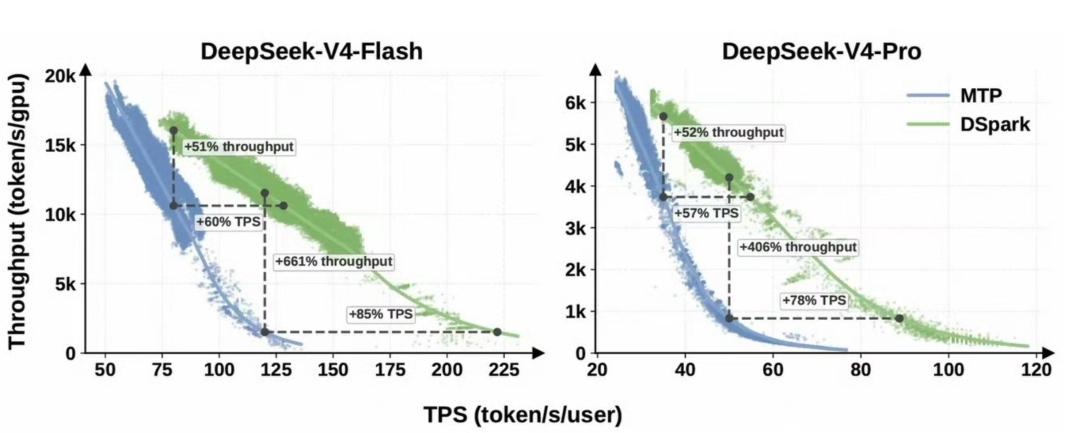
To put it simply, it didn't make the model smarter; it just made the same model run faster and more efficiently. For enterprises, this means that the same hardware can handle more business volume. This is what cost - sensitive companies need.
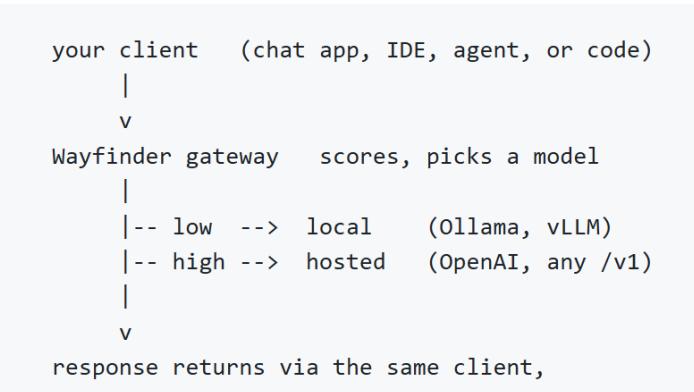
The logic of the Wayfinder Router is more straightforward. By analyzing the structural features of the prompt, such as length, title, and code block, it decides between the local model and the cloud API in microseconds, without the need to call other models for judgment. Previously, enterprises had to rely on manual labor or external services to "select models," but now an offline tool can handle it.
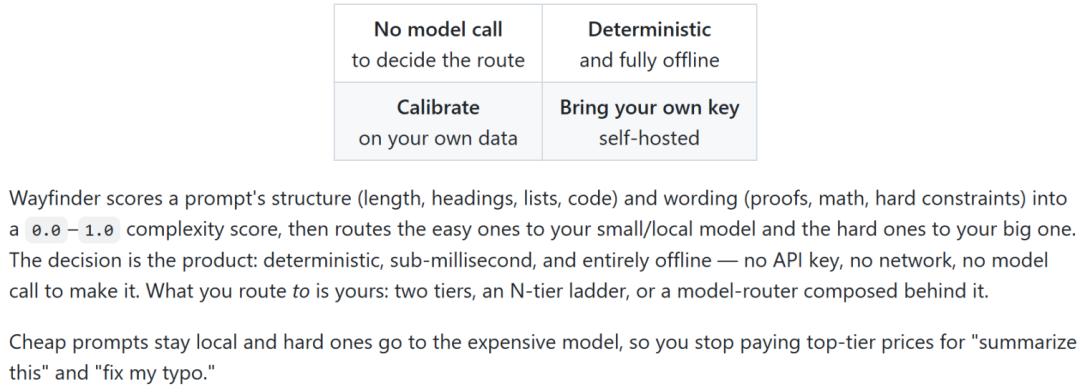
These two tools emerged at the end of June. One is responsible for "running faster," and the other is responsible for "spending less." They don't pursue "the highest intelligence," only "sufficient and cheap."
When the industry stops collectively celebrating "doubling parameters" and starts cheering for "60% speed increase" and "halving costs," AI truly moves from the laboratory to the business field.
Each Does Its Own Job
Claude from Anthropic is, of course, very powerful. Its code ability, reasoning depth, and security are all in the first tier. Lindy itself also admits that Sonnet is still better for complex workflow automation.
However, for enterprises like Lindy that use Claude for writing emails, managing schedules, and automating workflows, part of the bill is for "unused capabilities."
In May, data from Vercel's AI Gateway showed that the token traffic share of DeepSeek jumped from less than 1% to 17%, but the revenue share hardly changed. This indicates that it undertakes all low - cost, high - frequency "manual labor." Enterprises haven't abandoned Claude for the most difficult reasoning tasks; they just delegate "lower - level tasks" to the cheaper model.
After calculating the costs, enterprises start using models in a hierarchical manner: for high - difficulty reasoning, complex automation, and compliance - sensitive scenarios, they continue to use Claude; for high - frequency, low - complexity, latency - sensitive, and cost - pressured tasks, they hand them over to DeepSeek. The two models each do their own jobs, and neither replaces the other.
Behind this hierarchical use is the divergence of two paths. American companies continue to pursue "greater intelligence," with Claude and GPT continuously investing in top - level reasoning. Chinese companies are doing something else: they are driving down prices to make it affordable for small and medium - sized enterprises. DeepSeek's path is clear: it doesn't compete head - on in the "brain" but excels in the "muscle." Lindy was able to make the switch thanks to the infrastructure laid by China.
The emergence of DeepSeek shows one thing: not all enterprises need top - level models for all tasks. When Lindy found that the performance in core scenarios improved and the cost plummeted after the switch, enterprises that only need "sufficient" performance will recalculate their costs.
Conclusion
In the past, enterprises often chose DeepSeek out of the helplessness of a "downgraded alternative." Now, Lindy's active switch announces a new reality: when the speed of open - source models catches up with that of closed - source models, but the price is only a fraction of it, "cost - effectiveness" itself is the most core competitiveness.
The plummeting cost curve in Lindy's backend records not only the change of suppliers but also the real choice of an American company for Chinese infrastructure after calculating the costs.
The AI world is splitting into two tracks: the United States is moving upwards, refining the "brains" of Claude and GPT, and pursuing the ultimate intellectual limit; China is digging downwards, paving the "road" for DeepSeek, and leveling the global access threshold. There is no winner or loser on these two paths, only division of labor. For enterprises, in this second half of the journey from fanaticism to rationality, it is more important to make every unit of computing power count than to have the smartest model.