Der Grund, warum ein amerikanisches Unternehmen sich für eine 100 %ige Integration von DeepSeek entscheidet
A company pays a more money to an AI provider per month than it pays its employees as salary. The CEO's solution was simple and brutal: All Claude instances were replaced.
The screenshot posted by Flo Crivello on X documents this decision. No moving words, no explanations, just a cold announcement: "Pulled the trigger today and switched 100% of Lindy traffic to DeepSeek v4." Below it follows another sentence: "Saves us millions of $ and we're actually seeing an increase in performance on many core use cases."
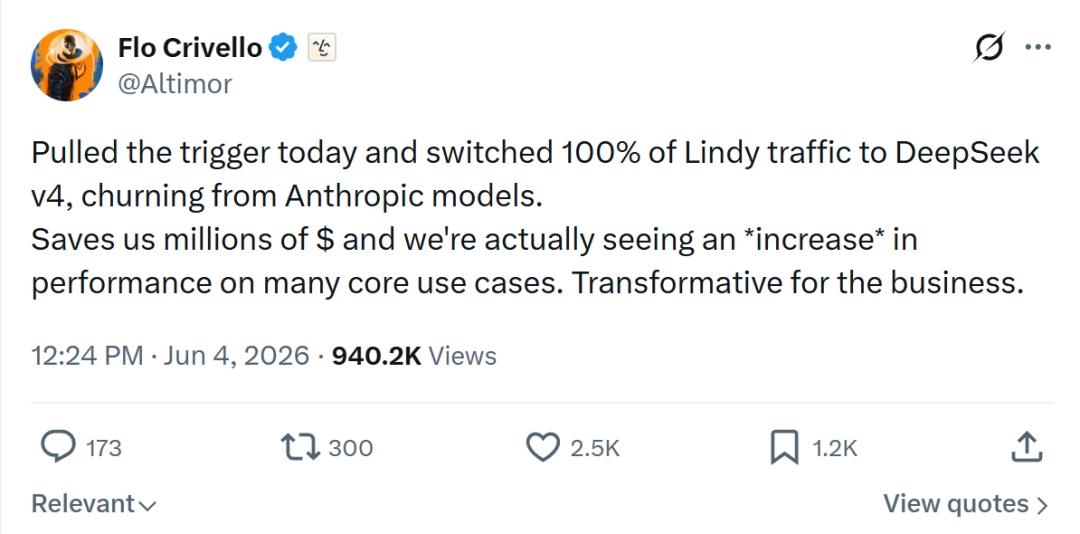
A San Francisco company with a few dozen employees has switched all its business running on Claude to DeepSeek. The reason was that the bills were higher than the total salary of the employees.
This incident happened almost a month ago, and its effect only became noticeable at the end of June. On June 27th, DeepSeek open - sourced the DSpark speculative decoding framework, which increased the generation speed by 60% to 85%. Then came the update of Wayfinder Router, a fully offline model - routing tool that can decide in microseconds whether to work locally or in the cloud.
Lindy was the first, and the tools followed. Companies can no longer afford the high prices for "intelligence" and need "muscle power" for the work.
Bills higher than salaries
Lindy didn't switch impulsively. Crivello publicly said in April that the company's inference costs were already higher than the salary costs. The team evaluated for six to nine months, considering among others Kimi K2.5 and GLM - 5.1, and finally decided on DeepSeek v4.
The workload for the migration was much higher than expected. Crivello's exact words were: "100x more work than we thought." There were numerous online and offline evaluations, a gradual introduction into the gray area to test the impact on customer retention, and the adjustment of prompts. This process alone requires huge costs. What actually prompted Crivello to make the decision were the test results.
In Lindy's core applications such as email classification and pre - writing responses depending on the user's mood, DeepSeek performed beyond expectations. But Crivello didn't exaggerate too much: In complex automation processes, Claude is still stronger.
After the switch, the cost curve "fell like a cliff". Crivello's exact words were: "You should see our AI cost curve right now. It's a cliff."
Many people wonder: Claude is a recognized top - model. Why does the performance improve when switching to the cheaper DeepSeek? The answer is simple. For daily corporate tasks such as email classification, calendar management, and frequent automations, the excessive redundancy of model parameters only increases latency and costs. DeepSeek has optimized the speed and practicality in these specific tasks without simply increasing parameters, and thus achieved "cheaper, faster, and more stable" performance in many real - world businesses.
Can Lindy's case represent the entire market? To be honest, it's hard to say. Lindy develops AI - native applications, and the cost structure is completely different from that of large companies. But the problem is that the Wayfinder Router updated at the end of June does exactly the same thing: It helps companies choose the cheapest way between the local model and the managed API in microseconds and offline. If it were only Lindy's problem, such a tool wouldn't appear at this time.
Sixty - percent speed increase
The DSpark open - sourced by DeepSeek didn't release a new model. It adds a design module to an existing V4 weight and enables lossless acceleration through semi - autoregressive generation. In the production environment, the generation speed per user of V4 - Flash and V4 - Pro increased by 60% to 85% and 57% to 78% respectively. In offline tests, the accepted length was 26% to 31% higher than that of Eagle3.
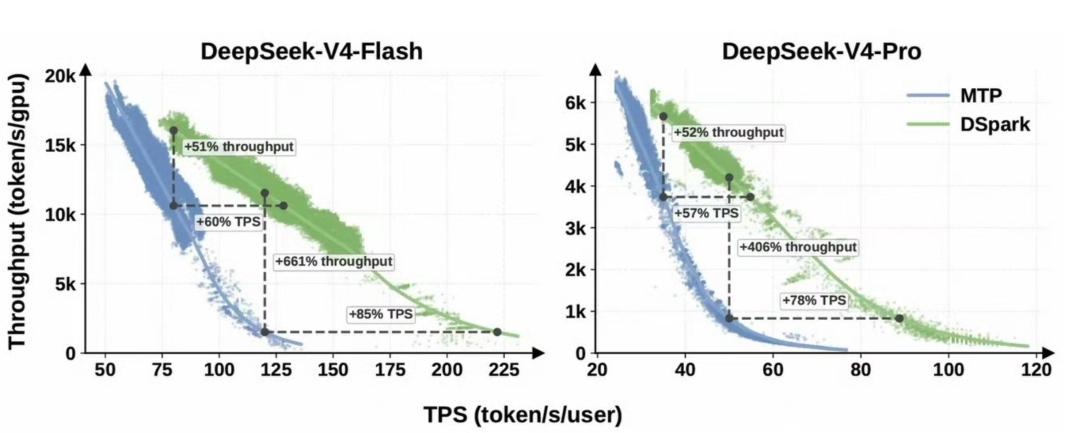
Simply put, it doesn't make the model smarter, but makes the same model run faster and more cost - effectively. For companies, this means they can handle more business with the same hardware. Cost - conscious companies want exactly this.
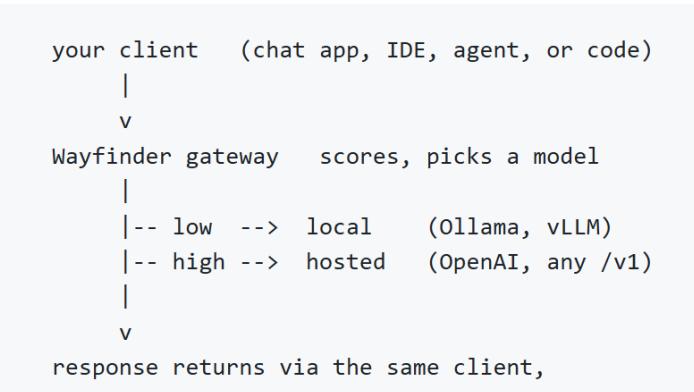
The logic of Wayfinder Router is even more straightforward. It analyzes the structural features of the prompt, such as length, title, and code blocks, and decides in microseconds whether to use the local model or the cloud API without having to involve other models in the decision - making. Previously, companies had to manually or with external services select the "right model". Now an offline tool can solve the problem.
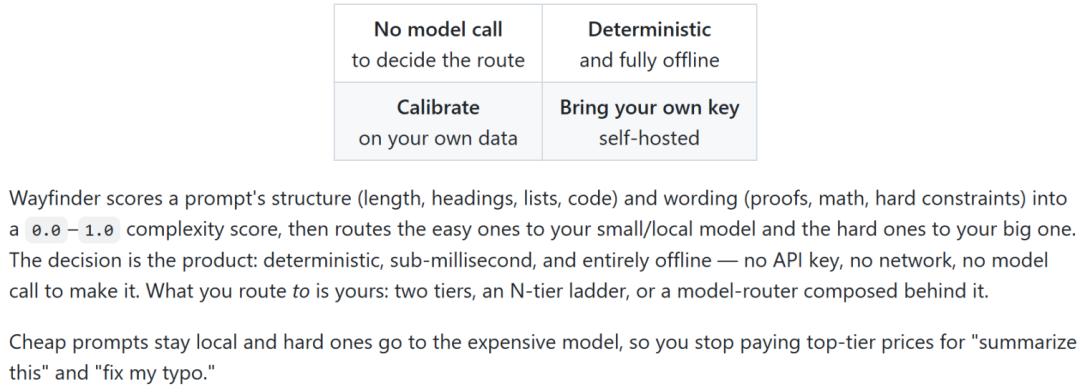
The two tools appeared at the end of June, one for "running faster", the other for "spending less". They don't strive for "highest intelligence", but only for "sufficient and cheap".
If the industry no longer celebrates for "doubled parameters" but for "60% higher speed" and "halved costs", AI has really made the transition from the laboratory to the business operation.
Each model its task
Claude from Anthropic is of course very powerful. In terms of code - abilities, inference depth, and security, it belongs to the top group. Lindy itself admits that Sonnet is still better in complex workflow automations.
But companies like Lindy, which use Claude for email writing, calendar management, and automation processes, also pay in their bills for "unused abilities".
In May, the data from Vercel's AI Gateway showed that the token - traffic share of DeepSeek increased from less than 1% to 17%, but the revenue share hardly changed. This shows that it only takes on cheap and frequent "manual labor". Companies haven't abandoned Claude for the most difficult inference tasks, but only transferred the "easier tasks" to the cheaper model.
After companies have added up the numbers, they start to segment the models: For highly difficult inferences, complex automations, and compliance - sensitive scenarios, Claude is still used; for frequent, simpler tasks that are sensitive to latency and under high cost pressure, DeepSeek is used. The two models have their own tasks, and neither replaces the other.
Behind this segmentation lies the differentiation of two strategies. US companies still go in the direction of "smarter", and Claude and GPT continuously invest in top - level inferences. Chinese companies do something different: They lower the prices so that small and medium - sized enterprises can use AI. DeepSeek's strategy is clear: It doesn't want to directly compete with "intelligence", but maximize the "power". Lindy could switch because China has created the infrastructure.
The emergence of DeepSeek shows that not all companies need a top - model for all tasks. If Lindy finds that the performance in the core applications improves after the switch and the costs drop significantly, other companies that only need "sufficient" performance will also add up the numbers again.
Conclusion
In the past, companies often chose DeepSeek with a "last - resort mentality". Today, Lindy's active switch announces a new reality: When the speed of open - source models reaches that of closed - source models, but the prices are only a fraction, "cost - benefit ratio" is the most important competitiveness.
The sharply falling cost curve in Lindy's background documents not only the switch of the provider, but also the actual decision of a US company for the Chinese infrastructure after cost - calculation.
The world of AI splits into two paths: The US goes upwards to improve the "intelligence" of Claude and GPT and reach the maximum intelligence limit; China goes downwards to pave the "roads" for DeepSeek and lower the access threshold worldwide. These two paths have no winners or losers, but only a division of labor. For companies, in the second part, which is transitioning from enthusiasm to rationality, it is more important to effectively use every computing power than to own the smartest model.