Qiu Sheng | Behind Haiguang Core's Ongoing IPO, Why Is the "Selling Shovels" Business Incurring Increasing Losses?
This article is approximately 2,500 words long. It is recommended that you spend 5 minutes reading it.
Author | Peng Xiaoqiu
Editor's note: In the era of the AI explosion, more and more companies are entering the capital market. Every turn of a prospectus holds all that a company wants to say and what it has left unsaid.
In view of this, Yingke has launched the "Autumn Sounds" column. "Autumn Sounds" is taken from Ouyang Xiu's "Ode to the Sounds of Autumn". By borrowing the meaning of "listening to the sounds of autumn", we aim to sense the industry's trends, evaluate the quality of companies, and record the truths that are written and hidden during a company's sprint towards an IPO. This is our fourth issue, focusing on Haiguang Xinzheng.
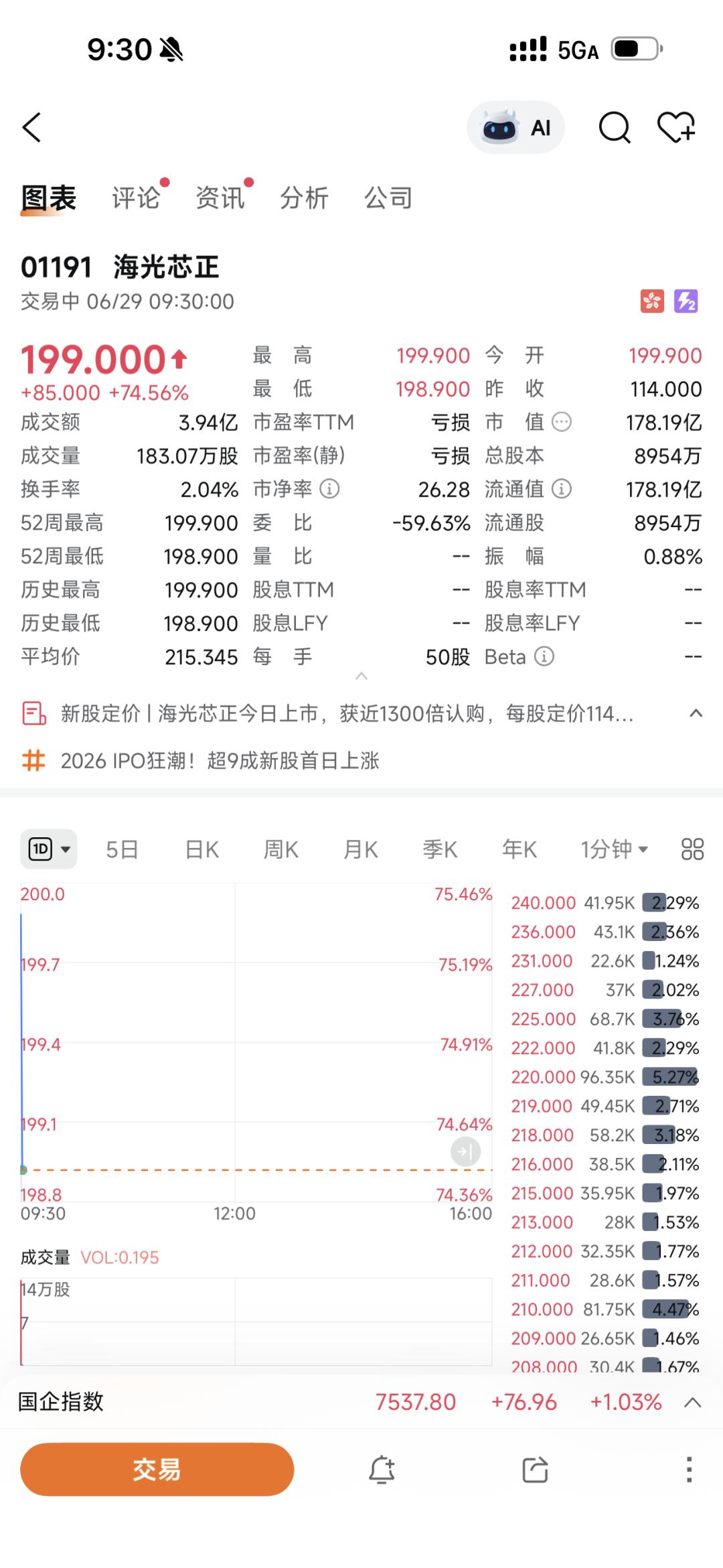
On June 29, Beijing Haiguang Xinzheng (01191.HK) officially rang the bell on the Hong Kong Stock Exchange. The IPO offer price was HK$114 per share. Each lot consisted of 50 shares, and the entry fee was HK$5,757.48. Based on the offer price, the company's market capitalization was approximately HK$10.208 billion, and the net proceeds from the offering were approximately HK$1.415 billion.
At the opening, the stock price rose by 74.56% to HK$199, with a market capitalization of HK$17.8 billion.
Haiguang Xinzheng is a provider of optoelectronic interconnection products, mainly offering optical modules, AOC (Active Optical Cables), and AEC (Active Electrical Cables). Its products are widely used in AI data centers to support high-speed, high-density, and energy-efficient data transmission. In this round of the AI computing power arms race, optical modules are a lucrative business, similar to selling shovels. The so - called "Yi Zhongtian" of the A - share market (Zhongji Innolight, New Photon, and Tianfu Communication) have seen their combined market capitalization increase by nearly 2 trillion yuan in two years and are the leaders in this market trend.
Haiguang Xinzheng's "silicon photonics" technology, which integrates optical devices and electronics on a single silicon chip, is regarded by the industry as the next - generation optical interconnection direction. Its prospectus also claims to have end - to - end capabilities "from chip design to optical module manufacturing". On the surface, Haiguang Xinzheng seems to be a high - tech target with a golden spoon in its mouth.
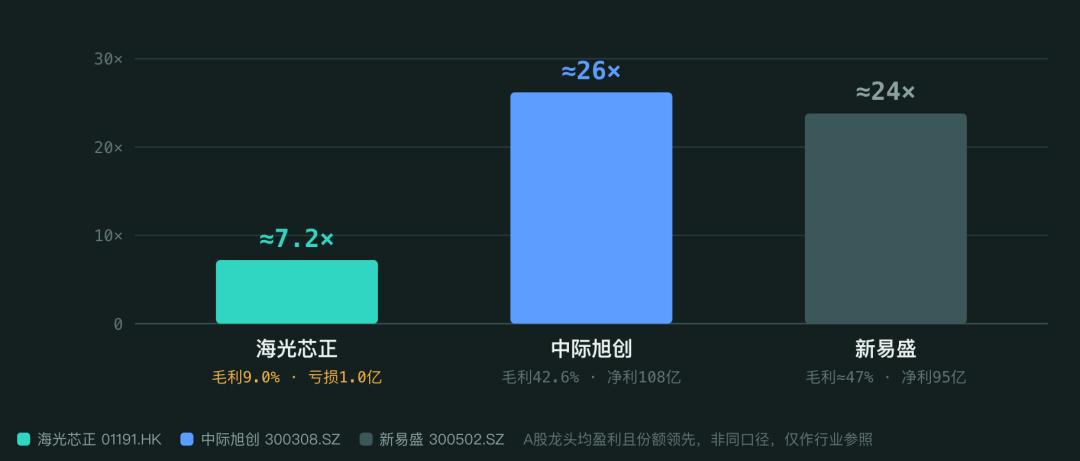
However, after reading the 421 - page prospectus, Yingke found that Haiguang Xinzheng's story is far more complex than just being the "first silicon photonics stock". Its revenue has nearly quadrupled in two years, but its gross profit margin is only 9%, and it has burned through 700 million yuan in operating cash in two years.
(Source: Compiled by Yingke)

A laborious business with a gross profit margin of only 9%, increasing revenue but not profit
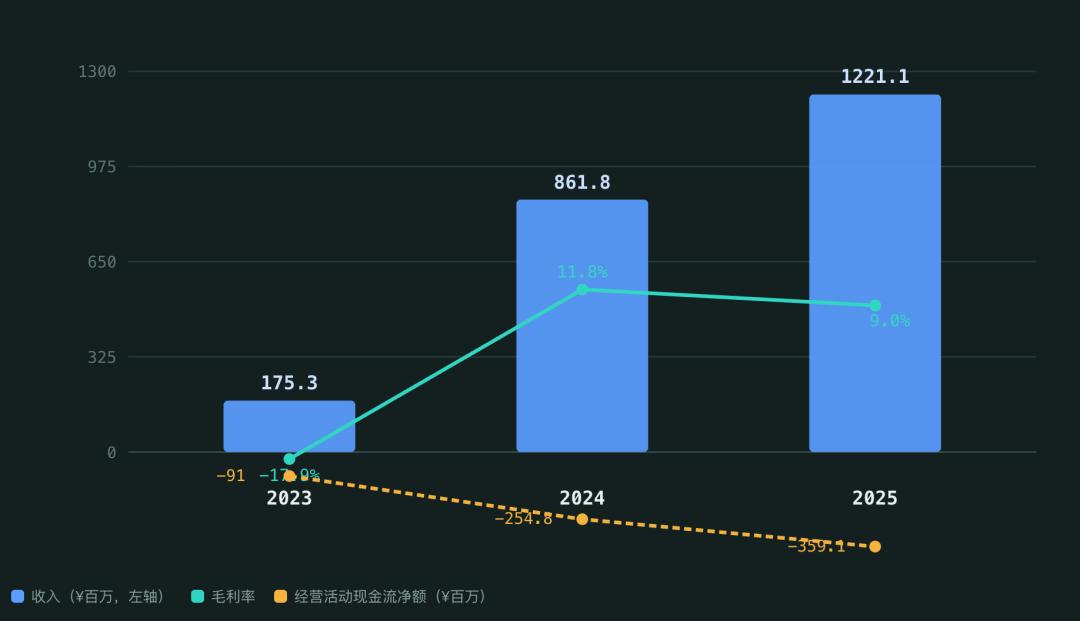
From 2023 to 2025, Haiguang Xinzheng's revenues were 175 million, 862 million, and 1.221 billion yuan respectively, with a three - year compound growth rate of 163.9% and a two - year growth of approximately 597%. Judging from revenue alone, Haiguang Xinzheng's performance is in an explosive state. However, on the other side of the growth, profits have not kept up:
Gross profit margin: It was - 17.9% in 2023, turned positive to 11.8% in 2024, and dropped back to 9% in 2025. As revenue doubled, the gross profit margin decreased instead of increasing.
Net loss: It lost 109 million yuan in 2023, the loss narrowed to 17.895 million yuan in 2024, and then widened to 100 million yuan in 2025.
In other words, the near - break - even situation in 2024 was just an illusion. After all, one year later, although revenue increased by 42%, the net loss expanded from 17.895 million yuan to 100 million yuan. Why does a company with a revenue of 1.2 billion yuan lose more as it grows? The reason lies in the fact that it is engaged in a laborious business with a single - digit gross profit margin.
In terms of revenue composition, Haiguang Xinzheng mainly has three types: JDM mode (Joint Design and Manufacturing), where customers authorize the use of its designs and patents, and Haiguang is responsible for customized development and mass production. In 2025, the revenue from this mode was 552 million yuan, accounting for 45.3%, but the gross profit margin was only 3.1% (it was 11.9% in 2024); ODM (Original Design Manufacturing), where products are made according to customer specifications and sold overseas under the customer's brand. In 2025, the revenue from this mode was 49 million yuan, accounting for 4%, and the gross profit margin was as high as 48.7%; Own brand (PL): Products are sold under its own brand. In 2025, the revenue from this mode was 619 million yuan, accounting for 50.7%, with a gross profit margin of 11.1%.
From this, we can see that the main sources of Haiguang Xinzheng's revenue are the JDM mode with a 3.1% gross profit margin and its own brand with an 11.1% gross profit margin. The only business with a nearly 50% gross profit margin, ODM, saw its revenue almost halved, shrinking from 94 million yuan in 2024 to 49 million yuan in 2025.
Why is the gross profit margin of the JDM mode so thin? The prospectus states that the JDM mode mainly serves large domestic downstream customers, and this mode generally involves lower pricing. In other words, it custom - makes optical modules for large domestic Internet companies, with large volumes, low prices, and thin profit margins. Haiguang Xinzheng has gained scale and a list of large customers through a contract manufacturing business with a 3% gross profit margin, but it has also limited its overall gross profit margin to a single - digit level.
The same logic can be seen in the product line: In 2025, the revenue from optical modules was 924 million yuan, accounting for 75.7%, but the gross profit margin was only 6.7% (it was 12.4% in 2024). It contributes the most to revenue but has the thinnest profit margin. The revenue from AOC was 248 million yuan, accounting for 20.3%, with a gross profit margin of 17.4%.
In addition to the thin profit margins, there is also a risk of concentration. In 2025, the top five customers contributed 78.7% of the revenue, and the largest single customer accounted for 21.0%. Although the proportion of the largest customer has decreased from 48.3% in 2023, the top five customers have always accounted for more than 70% of the revenue. In addition, in 2025, the top five suppliers accounted for 56.6% of the procurement, and the largest single supplier accounted for 28.4%. Haiguang Xinzheng's manufacturing highly depends on external core materials such as optical chips and electrical chips, which are still mainly supplied from overseas and are in short supply in the industry. This is also one of the reasons for its high inventory and increased prepayments. At the same time, the prospectus states that since 2022, a globally leading interconnection solution provider has been one of the top five customers and one of the top five suppliers.
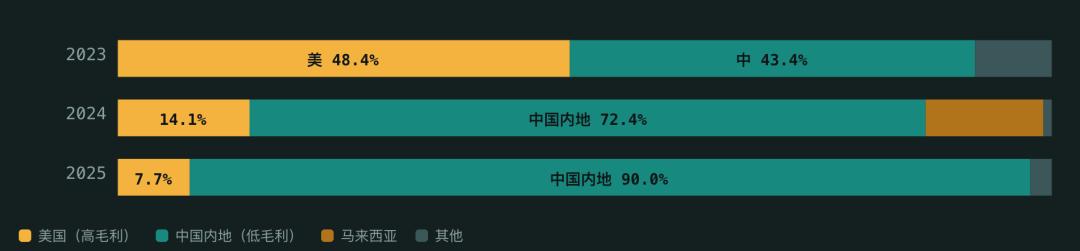
Another overlooked detail is that Haiguang Xinzheng's revenue is shifting from overseas to the domestic market. The proportion of revenue from the United States has dropped from 48.4% in 2023 to 7.7% in 2025, while the proportion from the Chinese mainland has increased from 43.4% to 90%. The problem is that the gross profit margin of overseas business is much higher than that of the domestic market. In 2025, the overseas gross profit margin was 28%, while the domestic gross profit margin was only 6.9%. As the high - profit overseas business is retreating and the low - profit domestic business is increasing, the gross profit margin is constantly under pressure.
(Source: Compiled by Yingke)
If the income statement is just a starting point, then the cash flow statement is the most real reflection of Haiguang Xinzheng's performance. From 2023 to 2025, the net cash flows from operating activities were - 91 million, - 255 million, and - 359 million yuan respectively. For three consecutive years, the cash flows were negative and the outflows were increasing. The cumulative net outflow in three years was approximately 705 million yuan. Interestingly, while the revenue is soaring, the operating cash is flowing out rapidly. Where has the money gone? Yingke found that it is hidden in inventory and accounts receivable.
(Source: Compiled by Yingke)
In 2025, the inventory turnover days were 180.8 days (141.3 days in 2024); in 2025, the accounts receivable turnover days were 82.6 days (51 days in 2024); last year, the accounts payable days were also extended to 82 days. The cash conversion cycle is close to half a year, and the situation worsened in 2025. The debt - to - equity ratio once reached 247% in 2024, which means that the cash is tightly tied up by working capital and expansion.
So how does Haiguang Xinzheng survive? Through financing. From 2023 to 2025, the cash inflows from financing activities were 72 million, 411 million, and 733 million yuan respectively. The cash and cash equivalents at the end of the year increased from 33 million yuan to 334 million yuan.

After 9 rounds of financing in 15 years, Suzhou state - owned assets have become the biggest winner
Haiguang Xinzheng completed its first angel - round financing in the second year after its establishment, and the last F+ - round financing before its listing was completed in 2025.
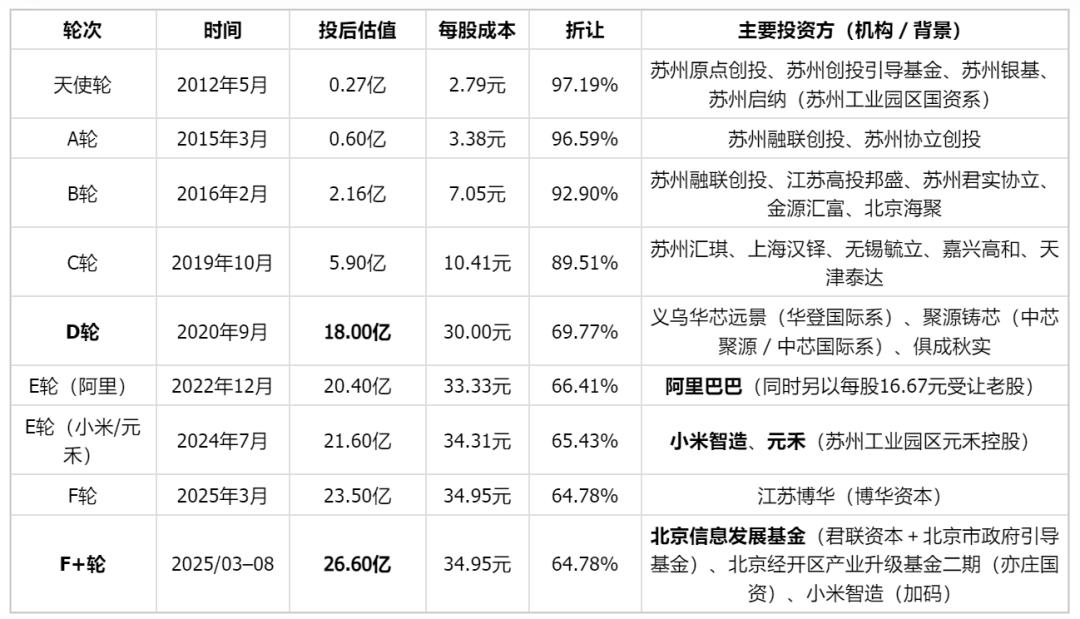
Note: Suzhou Ronglian Venture Capital, Jusheng Venture Capital, Jingu Yuanxin, and Suzhou Huiqi belong to Suzhou Jinhesheng (state - owned assets of Suzhou Huqiu District Government); Suzhou Xieli Venture Capital, Suzhou Junshi Xieli, and Junding Xieli belong to Yunshan Capital (wholly - owned state - owned assets of Jiangsu Communications Holding); Jiangsu Gaotou Bangsheng, Bangsheng Juyuan, and Suzhou Bangsheng Yingxin belong to the Bangsheng Investment Management system.
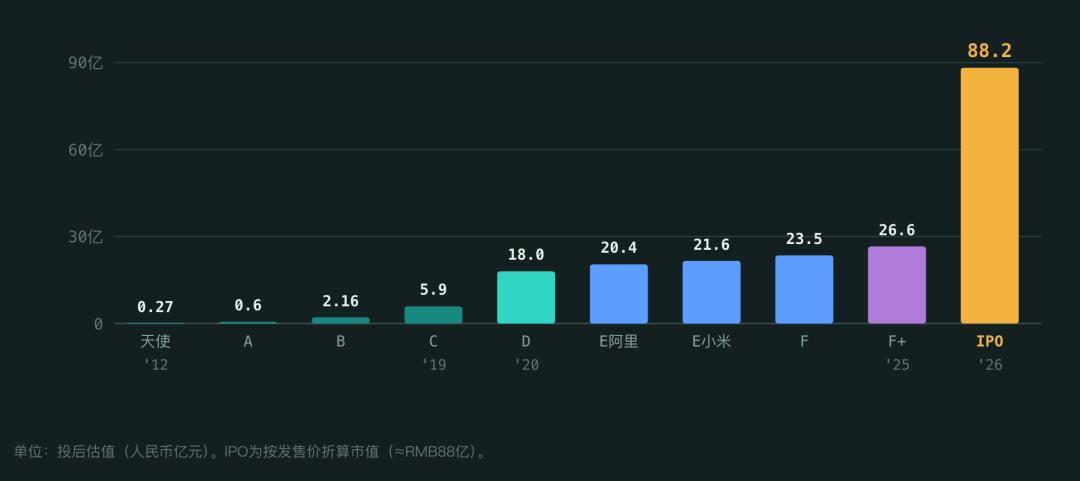
There are two contrasts hidden in this financing table. The first contrast is that the valuation in the D - round was boosted by the story of A - share listing, and it has remained almost stagnant in the following five years. Specifically, after completing the D - round in September 2020, Haiguang Xinzheng's valuation soared from 590 million yuan in the C - round to 1.8 billion yuan (HK$30 per share). This significant increase in valuation was partly due to Haiguang Xinzheng's preparation for an A - share listing. However, the A - share listing plan did not succeed after nearly five years, and the guidance was terminated in August 2025, after which the company switched to Hong Kong. Unfortunately, from the D - round in 2020 to the F+ - round in 2025, its valuation only slightly increased to 2.66 billion yuan, corresponding to HK$34.95 per share. This means that in five years, the cost per share only increased by about 16.5%, while the revenue soared by nearly 7 times during the same period.
(Source: Compiled by Yingke)
The second contrast is that the biggest winner is not Alibaba or Xiaomi, but the state - owned assets that entered earlier. Jud