Qiu Sheng | Energy Storage Giant Dyna's Hong Kong IPO Push: The Bitter Story of Hoarding Supplies at the Peak of 500,000 Yuan/Ton Lithium Price, Taking Three Loss-Making Years to Clear Inventory
This article is approximately 2,500 words long. It is recommended to read it for 5 minutes.
Author | Peng Xiaoqiu
Editor's note: Amid the AI boom, more and more companies are entering the capital market. Every flip of a prospectus hides all that a company wants to say and what it has left unsaid.
In view of this, 36Kr has launched the "Autumn Sounds" column. "Autumn Sounds" is taken from Ouyang Xiu's "Ode to the Sounds of Autumn". By "listening to the sounds of autumn", we observe the ups and downs of the industry, distinguish the quality of companies, and record the truths written and hidden during enterprises' sprints towards IPOs. This is our third issue, focusing on Daqin Digital Energy.
On June 26th, energy storage company Daqin Digital Energy submitted a listing application to the Hong Kong Stock Exchange.
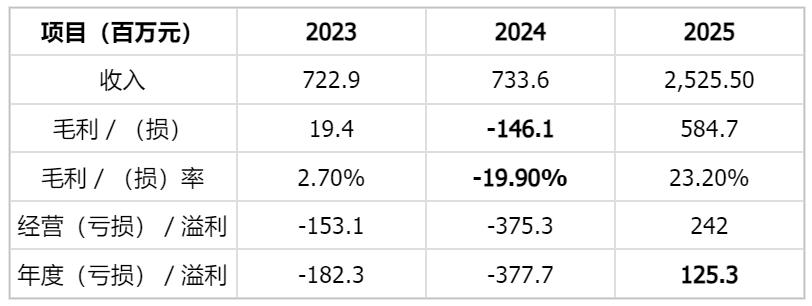
In 2025, Daqin Digital Energy's revenue reached 2.525 billion yuan, a year-on-year increase of 244.3%; its gross profit margin rebounded from -19.9% in 2024 to 23.2%; and its net profit turned from a loss of 378 million yuan in 2024 to a profit of 125 million. A company that has just emerged from "losses" is now knocking on the door of the Hong Kong Stock Exchange.
How did Daqin Digital Energy achieve a gross profit margin of -19.9% in 2024? 36Kr dissected it from the 368-page prospectus.

Failed bet on lithium prices: Hoarding at the peak led to huge losses
The story starts in 2022. At that time, the price of lithium carbonate was at a historical high - according to public data, the price of battery-grade lithium carbonate was still around 500,000 yuan per ton at the beginning of 2023. Daqin purchased a large number of battery cells at this price and used these high-priced cells to produce 284,000 household ESS batteries between 2022 and 2025. The prospectus refers to these as "old inventory".
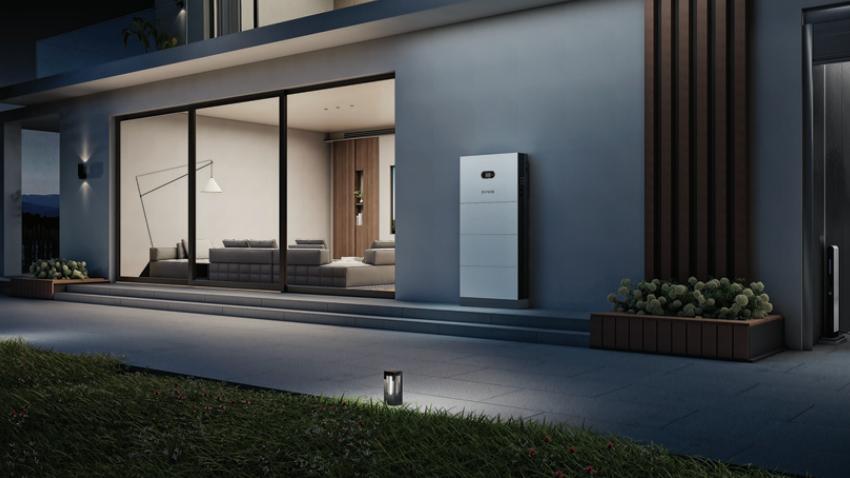
After placing the bet, the market changed. On the one hand, the orders given by European distributors based on overly optimistic forecasts were far lower than expected when actually fulfilled, resulting in an oversupply of household energy storage in the entire European market. On the other hand, the price of lithium carbonate plummeted from 500,000 yuan per ton in 2023 to 100,000 yuan per ton by the end of the year, a year-on-year decline of over 80%. In 2024, the average annual price of lithium carbonate was 91,000 yuan per ton, a further decline of about 65% compared to 2023. The prospectus also disclosed that the market price of LFP battery cells decreased by about 40% to 50% year-on-year for two consecutive years in 2023 and 2024.
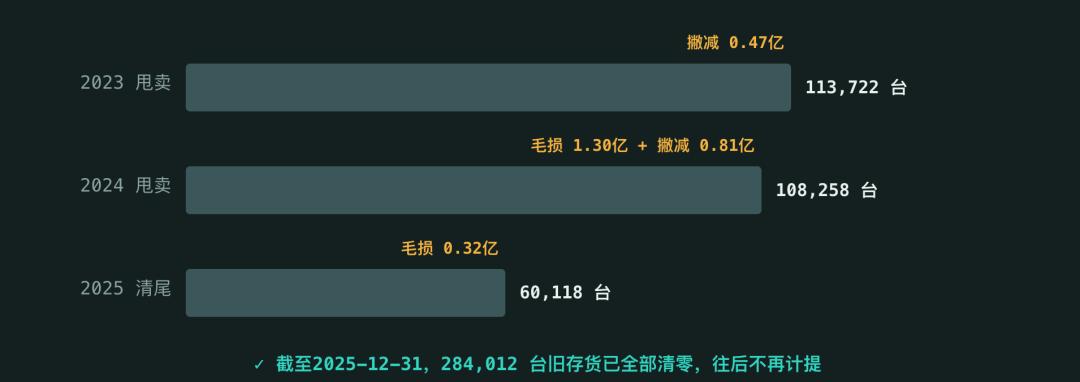
As a result, Daqin had to sell those batteries made at the peak price at a low price in the European market. In 2023, 113,700 units of old inventory were sold at a low price, and an inventory write-down of 47 million yuan was made for the unsold 153,000 units. In 2024, another 108,200 units were sold, and a gross loss of 130 million yuan was recorded for this part alone. An additional write-down of 81.4 million yuan was made for the remaining 60,000 units. Coupled with the price discounts given to distributors, the annual gross profit margin finally reached -19.9%, with the gross profit margin of high-voltage batteries even reaching as high as -80.6%.
In 2025, Daqin cleared the last 60,000 units of old inventory, recording a gross loss of 31.6 million yuan. By the end of 2025, all old inventory had been cleared, and no further impairment was recorded for this batch of inventory.
(Image source/Compiled by 36Kr)
From this, we can see that the "loss black hole" of Daqin from 2023 to 2024 was not essentially a problem of operational ability, but a misjudgment of the lithium price cycle. At the peak of raw material prices, the company hoarded goods crazily and was extremely optimistic. Daqin itself also admitted that "we were insufficient in prediction, inventory planning, and pricing."
Then, what led to the sharp increase and turnaround in 2025? It was mainly due to the clearance of old inventory, the stabilization of lithium prices, and the recovery of European demand, all happening simultaneously. Only then could the gross profit margin rebound to 23.2%. In other words, Daqin's outstanding performance in 2025 was half due to the recovery of operations and half due to getting rid of the historical burden that was holding it back.
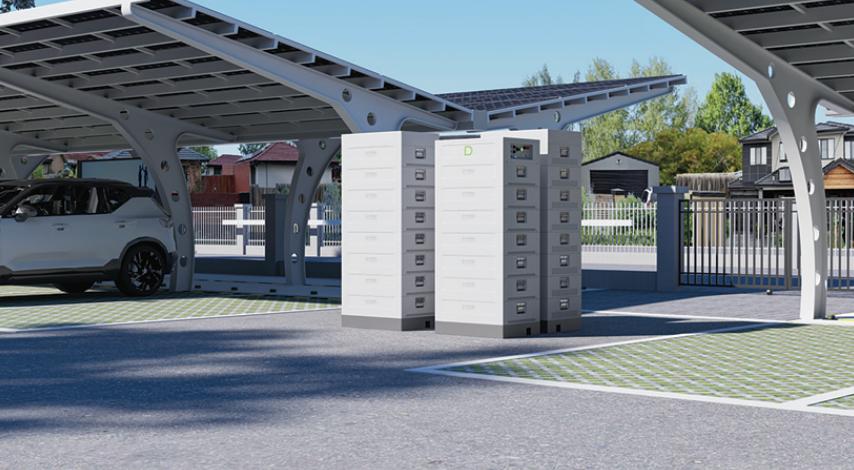
In addition to the overall performance, 36Kr also noticed two significant shifts in Daqin's revenue structure. The first was in the product line. Household ESS has always been the foundation, but commercial and industrial ESS has risen rapidly. Household ESS accounted for 99.3% of the revenue in 2023 and dropped to 75.7% in 2025. The absolute amount increased from 718 million to 1.911 billion. Commercial and industrial ESS accounted for only 0.2% in 2023 and soared to 23.9%, or 603 million yuan in 2025, with a gross profit margin of 33.2%, higher than the 20.1% of household ESS.
The second was in the proportion of domestic and overseas markets. In 2023, Daqin was still a company with 60% of its business in the Chinese mainland. By 2025, 95.1% of its revenue came from overseas, and the European market alone accounted for 61%. Daqin positions itself as "one of the first Chinese enterprises to focus on the overseas ESS market." Based on the shipment volume in 2025, it is the fifth-largest household ESS provider globally. This also means that Daqin's fate is firmly linked to the energy storage needs of European households, European electricity prices, and grid policies.
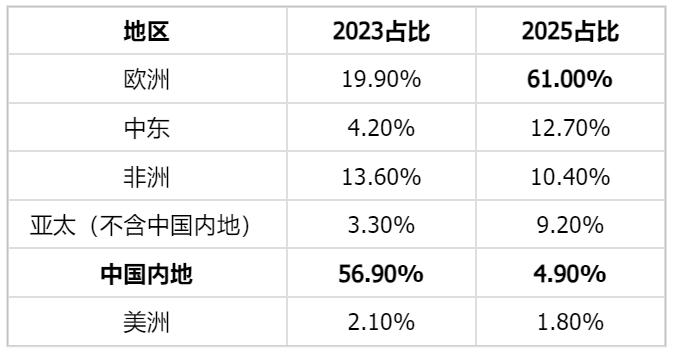
In addition to regional dependence, Daqin also has a strong channel dependence. It almost entirely relies on distributors to sell its products. The proportion of sales through distributors in 2023, 2024, and 2025 was 86.4%, 92.5%, and 98.2% respectively. As of the end of 2025, Daqin had a total of 503 distributors, but the churn rate was high. In 2024 and 2025, 141 and 278 distributors were terminated respectively. The proportion of revenue from the top five customers has dropped from 71.3% in 2023 (the largest single customer once accounted for 46.4%) to 24.1% in 2025.
