G7 E-Flow Launches the Freight Industry's First Wearable AI Hardware "Pai Pai Dou", Bridging the "Last Two Meters" of Logistics Delivery | Frontline
Author | Huang Nan
Editor | Yuan Silai
On June 25th, G7 Eflow released "PaiPaiDou", the first wearable AI hardware in the freight industry. This product weighs only 30 grams and adopts a magnetic design. After the vehicle is turned off and parked stably, the driver can directly remove the device from the windshield base and wear it on the chest, and the recording will start automatically. The moment it is put back on the base, the recorded files will be automatically synchronized and uploaded to the cloud for storage.
From "seeing inside the vehicle" to "seeing outside the vehicle", the application scenarios of logistics AI are making a crucial leap.
The AI - driven process in the logistics industry is accelerating. According to statistics from institutions such as the China Federation of Logistics and Purchasing, the global AI market size for logistics and supply chain management exceeded $34 billion in 2025, and it is expected to grow to $47.92 billion in 2026, with a compound annual growth rate of up to 40.8%. In China, the penetration rate of AI in the logistics and supply chain field has exceeded 37%.
In the past few years, the industry has spent a lot of effort on "seeing" what happens inside the vehicle. The digitalization of aspects such as location, temperature, driving behavior, and cargo status is relatively mature. Among them, the AI host "Purple Treasure Box" released by G7 Eflow in 2025 is one of the products of this stage. Currently, it has served more than 150 customers in total, with over 10,000 units installed on vehicles.
However, Zhai Xuehun, the founder and CEO of G7 Eflow, said bluntly at the press conference for the wearable AI hardware PaiPaiDou: "If the goods are still on the vehicle, the matter is not over. The truly most valuable thing is to deliver the goods to the customer - and to do that, one must get off the vehicle."

Zhai Xuehun, founder and CEO of G7 Eflow (Source: the enterprise)
The difficulty in digitizing the off - vehicle scenario lies in its natural "unstructured" characteristics. The on - vehicle scenario is relatively controllable, with a fixed cockpit space, predictable behavior patterns, and clear sensor deployment positions. In contrast, off - vehicle operations are an open - ended dynamic scenario, with many uncontrollable variables throughout the process. Key links such as whether the chassis inspection before departure is implemented, the details of cargo handover, and the causes of cargo damage during loading and unloading all rely on manual execution. Once a customer complaint occurs, there is often a lack of a complete and objective traceability certificate.
These problems have existed for a long time, but there has never been a good solution. PaiPaiDou is precisely launched to address these pain points.
Specifically in terms of product functions. Firstly, there is abnormal warning and pre - intervention. In the traditional model, cargo damage is often discovered after a dispute occurs, and compensation is already a foregone conclusion. However, PaiPaiDou allows managers to intervene as soon as an abnormality occurs. Through AI, it can identify risks such as damage and quantity anomalies in real - time, and stop losses before they occur.
Secondly, it provides full - process evidence retention and responsibility clarification. In the urban distribution scenario, drivers hand over goods at dozens of points on a daily basis. PaiPaiDou records the whole process at each handover point and automatically archives the videos. In case of a dispute, the video can be retrieved in 30 seconds. Compared with the previous recording devices that require manual power - on and power - off and manual export and upload, which would additionally increase the driver's operational burden, PaiPaiDou uses a fully automatic interaction logic. When the driver gets off the vehicle, they can simply take it off and wear it on the chest, and the recording will start automatically. When they get back in the vehicle and put it back on the base, it will be automatically uploaded to the cloud, without any manual operation required throughout the process. If there is a need to retain key nodes, the driver can orally say keywords such as "unloading", "signing for receipt", and "cargo damage", and the AI will automatically label the videos for classification, with almost no learning cost.
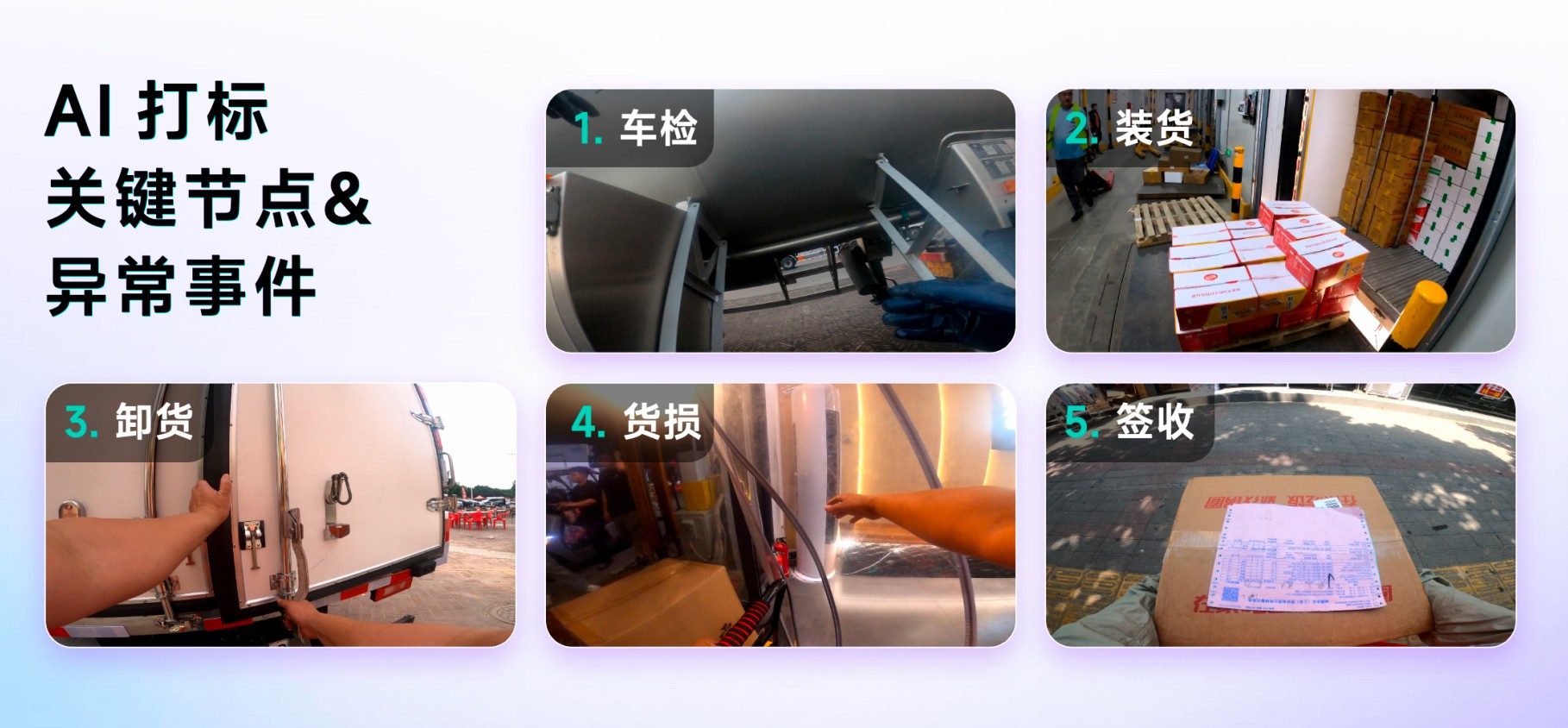
G7 Eflow's wearable AI hardware "PaiPaiDou" (Source: the enterprise)
Thirdly, it enables full - link visibility and transparent management. The goods can be traced throughout the transfer process. This system closes the loop from "seeing data" to "automatic decision - making". When the system detects that the temperature deviates from the threshold, it not only gives an alarm but also automatically triggers an AI form to be sent to the mobile phone of the relevant responsible person, without any manual intervention required throughout the process.
Combining these three dimensions, PaiPaiDou is no longer just a recording device. It is pushing the matter of "quality delivery" from "post - event traceability" to "real - time controllability", and pushing logistics management from "human - to - human management" to "data - driven management".
In terms of system integration, G7 Eflow announced that it will open API interfaces and Skill capabilities, allowing the enterprise's technical team to embed the capabilities of PaiPaiDou into their own systems, as well as work - flows such as Feishu and DingTalk. This means that PaiPaiDou is not just a function on the G7 Eflow platform, but a basic capability that can be integrated by any enterprise.
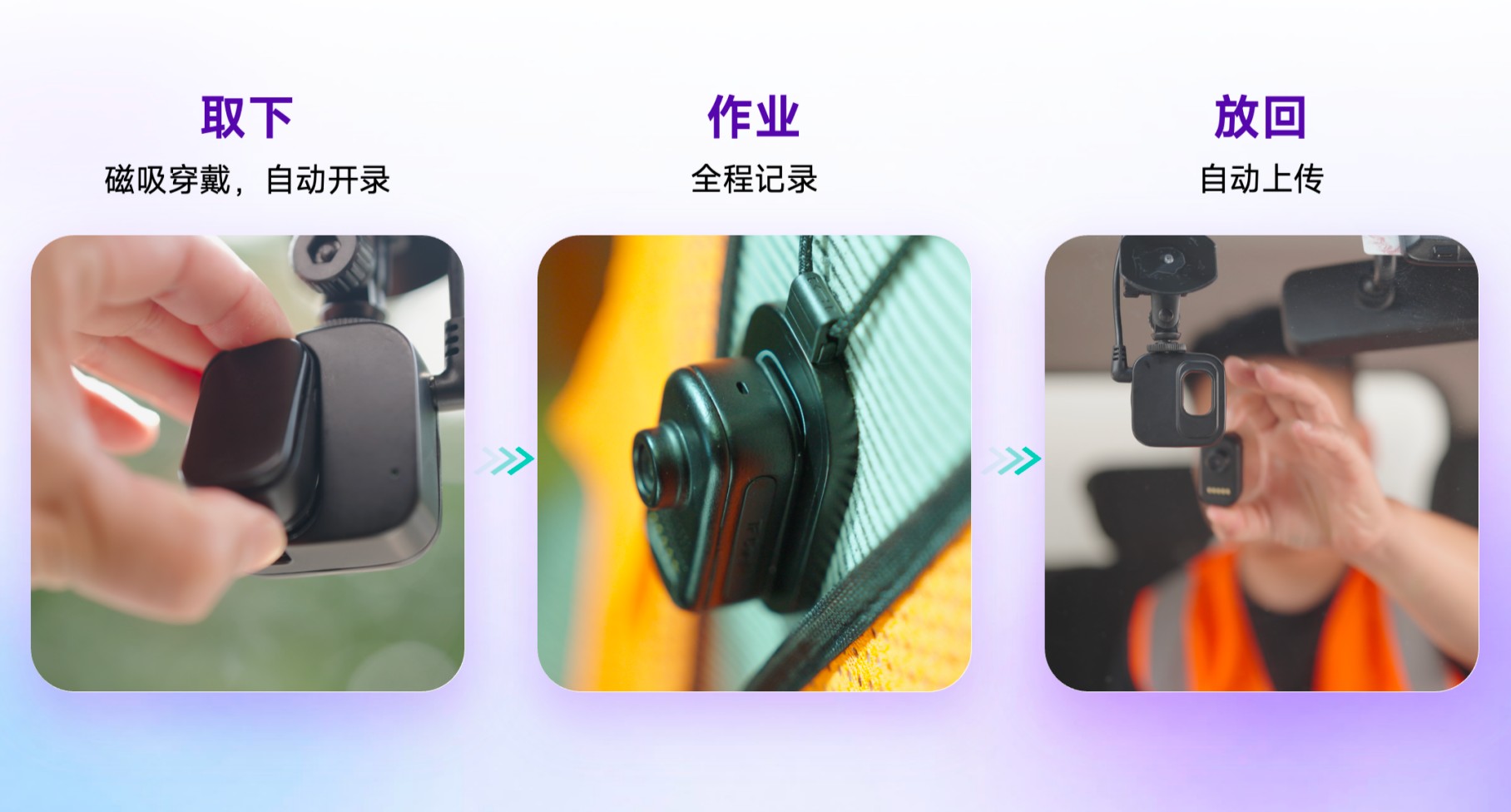
G7 Eflow's wearable AI hardware "PaiPaiDou" (Source: the enterprise)
From the Purple Treasure Box to PaiPaiDou, G7 Eflow has completed the extension from "seeing inside the vehicle" to "seeing outside the vehicle" in two years. The combination of the two fills in the long - missing piece in the freight chain. AI manages the driving process, and AI also manages the loading, unloading, and handover. Once this "driving + on - site" closed - loop is formed, the transparency and traceability of the entire transportation chain are elevated to a new level.
For the logistics industry, the value of AI is evolving from "assisting humans" to "replacing humans in making records and judgments". When every stop, every handover, and every inspection are automatically recorded and structured for archiving, management no longer relies on manual spot - checks and post - event traceability. When the full - process data inside and outside the vehicle is automatically collected and intelligently analyzed, the boundaries of digital management in the logistics industry will also be broadened.