The 15th Five-Year energy plan is released. How to get through the three key points: the electricity market, the transition of coal-fired power, and 50% of power generation?
The "15th Five-Year Plan" for the New Energy System sets targets, and three questions await solutions.
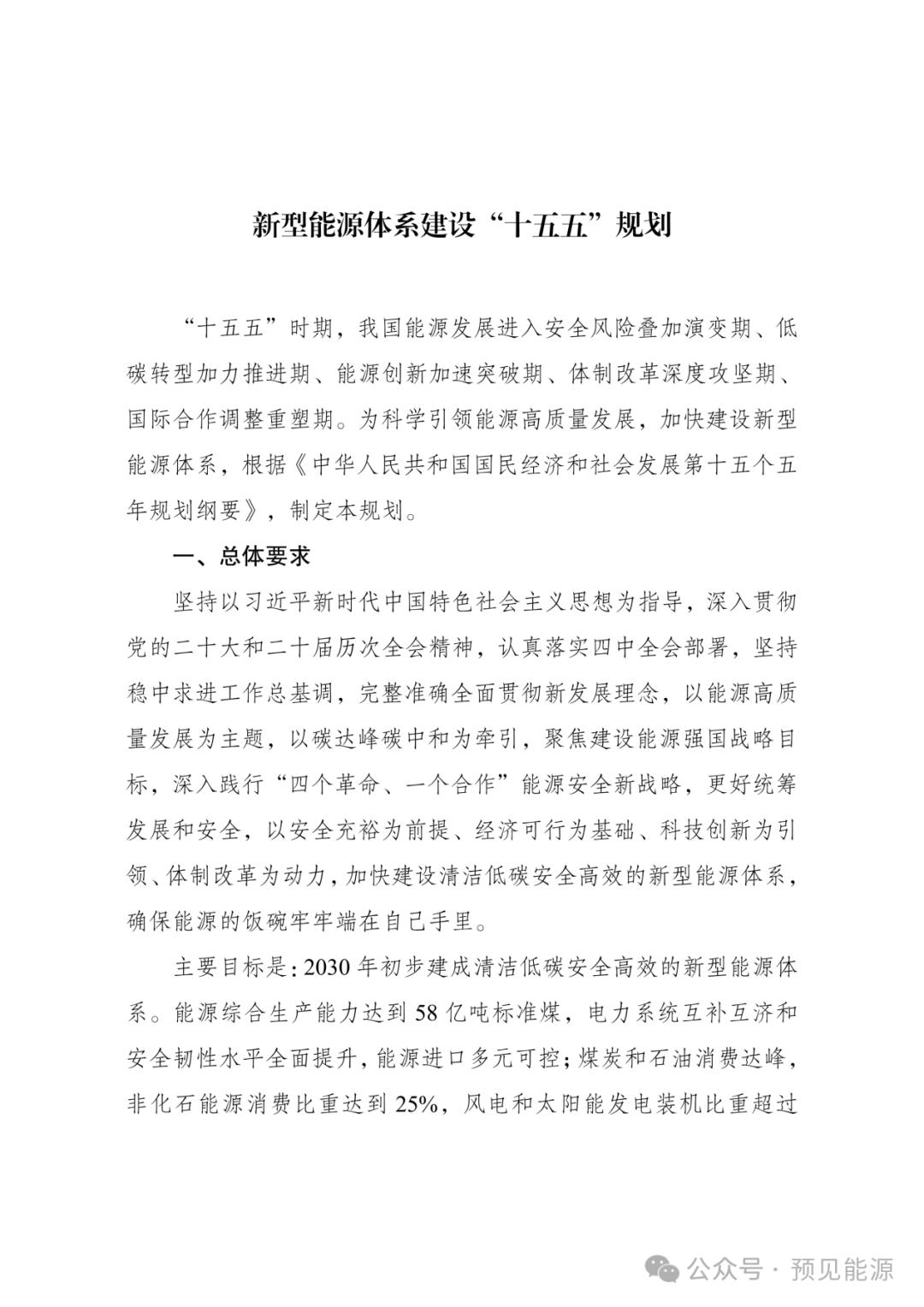
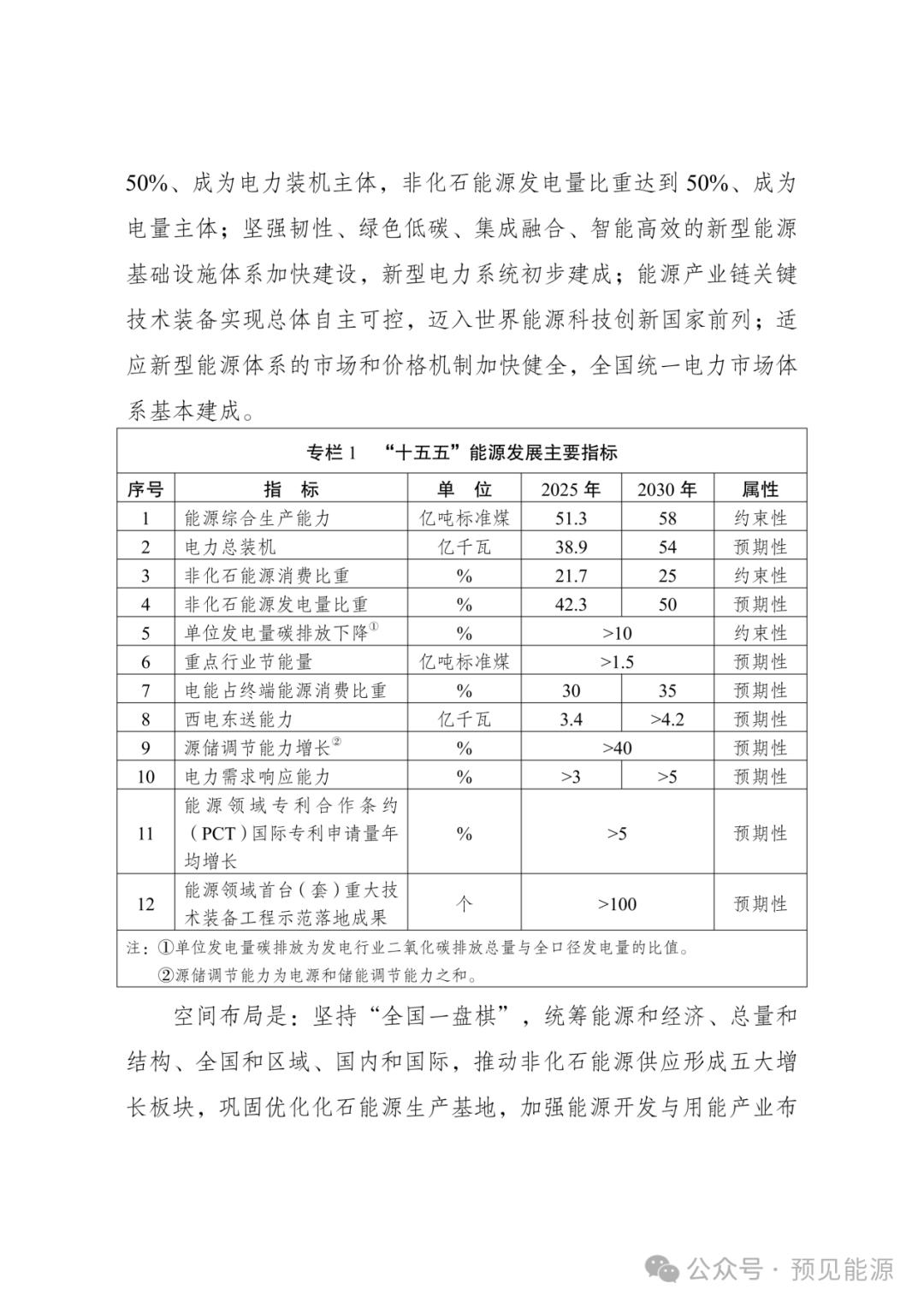
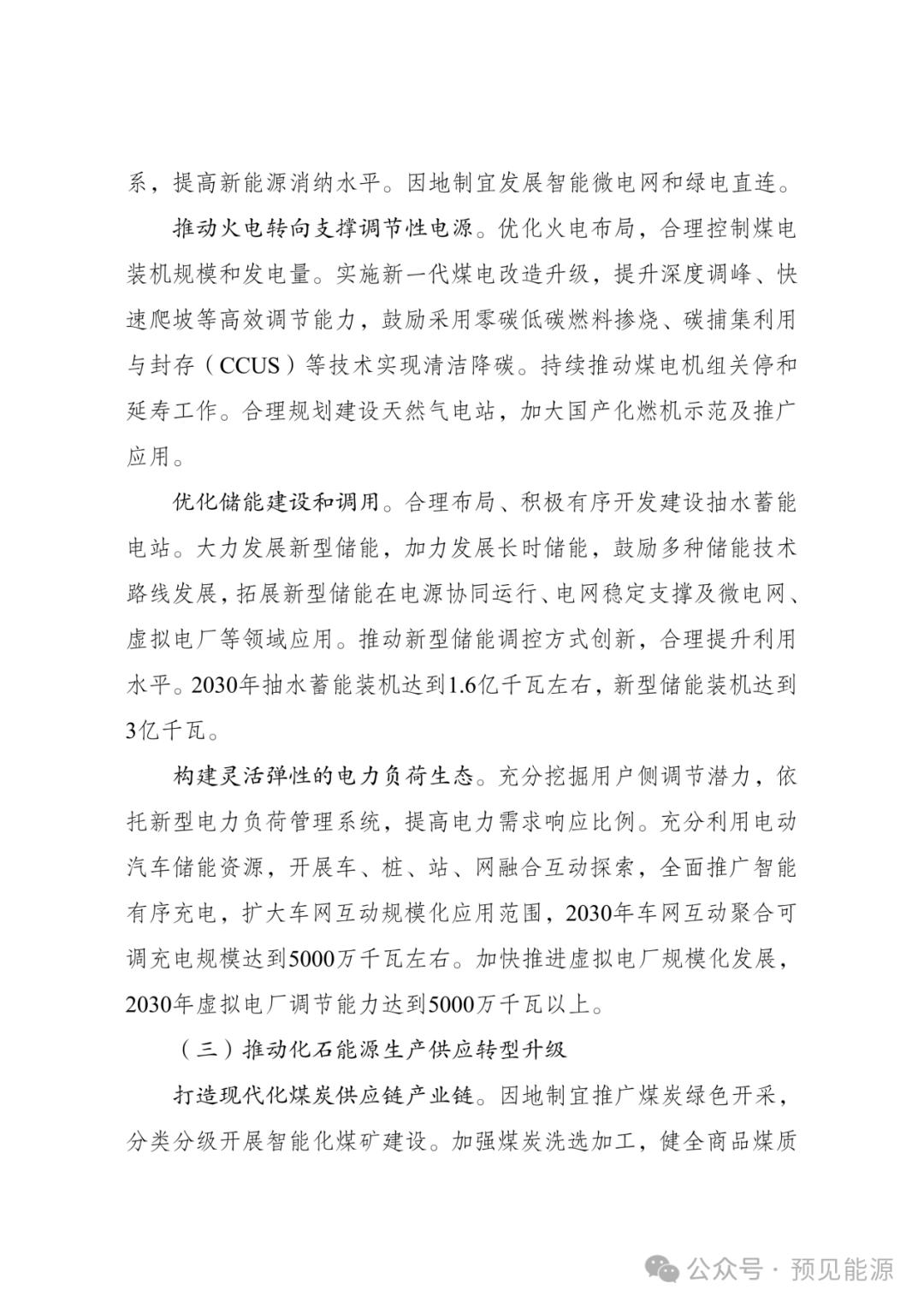
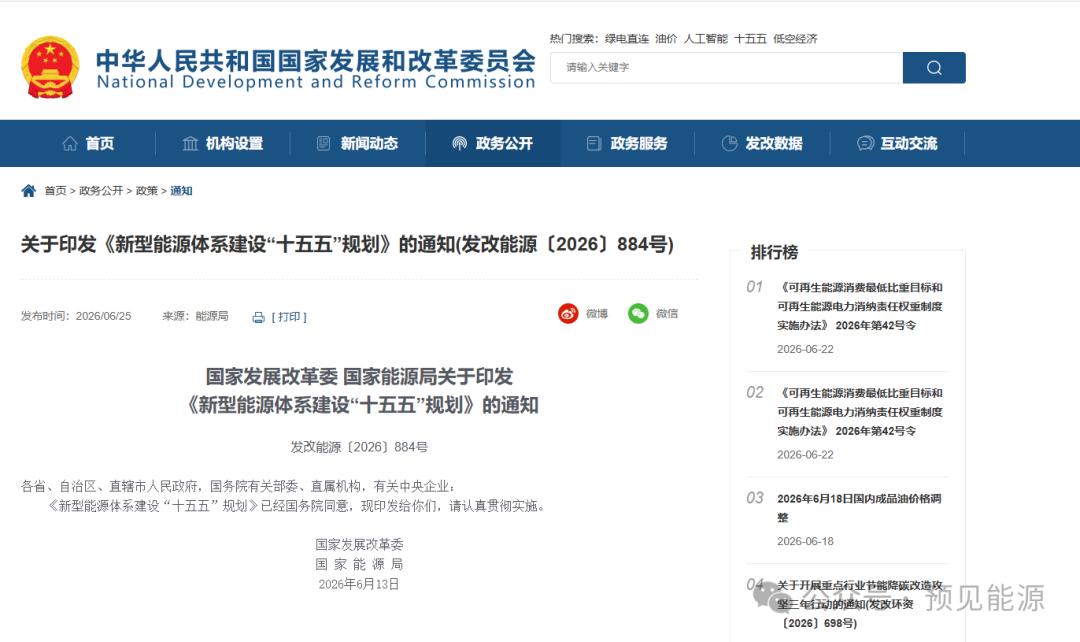
Yujian Energy learned that on June 25th, the National Development and Reform Commission and the National Energy Administration issued the "15th Five-Year Plan for the Construction of a New Energy System". The document sets the following hard targets for 2030: The proportion of non-fossil energy consumption will reach 25%, the proportion of installed capacity of wind and solar power generation will exceed 50%, and the proportion of non-fossil energy power generation will reach 50%. The role of coal-fired power will be adjusted synchronously, shifting from a "basic and guaranteed power source" to a "supporting and regulating power source". The national unified power market system will move from being "initially established" in 2025 to being "basically established".
The three goals point in the same direction - In the next five years, the power source structure, power grid configuration, and market mechanism will all undergo systematic reconstruction. However, there are specific questions on each path. Only by solving these questions can we move forward.
The first question
What problems need to be addressed in the power market in the next five years?
The national unified power market system was "initially established" in 2025. The proportion of market-based trading electricity increased from less than 15% to 64%, and the number of operating entities increased from 40,000 to over 1 million. The regular trading mechanism across operating regions was established, and the provincial spot markets basically covered the whole country. After a decade of power reform, a framework has been established.
However, Yujian Energy believes that the gap between the "initial establishment" and the "basic establishment" of the national unified power market system lies not in time but in depth, specifically in the lack of "three synergies".
The first is the synergy between different levels of the market structure. The inter-provincial market and the intra-provincial market still operate under different logics. Sending provinces want to sell electricity, while receiving provinces need to consider the interests of local power plants. There are frictions between the cross-provincial and cross-regional trading rules and the intra-provincial rules.
Yujian Energy believes that the word "unified" in the national unified power market first means the consistency of rules. However, the rules vary in different regions.
The second is the synergy between different trading varieties. Electricity is not a single commodity. It has the value of electricity energy, the value of peak-valley regulation, the capacity value for ensuring system security, and the green environmental value.
These values should be priced separately and send unified signals in a complete market system. However, the medium - and long - term, spot, and auxiliary service markets in most provinces have not been truly integrated. Each market operates independently, and a unified signal system has not been formed.
The third is the synergy between the government and the market. With the full entry of new energy into the market, the era of "guaranteed quantity and price" has ended. However, administrative pricing and market - competitive pricing still coexist in some provinces. The distortion of price signals directly leads to the distortion of investment decisions - no one invests in the necessary energy storage, and the cost - benefit analysis of coal - fired power plant transformation does not make sense.
The "Implementation Opinions on Improving the National Unified Power Market System" issued by the State Council in February 2026 set a timetable: By 2030, market - based trading electricity will account for about 70% of the total social electricity consumption. All types of power sources and power users except for guaranteed users will directly participate in the power market.
Increasing the proportion from 64% to 70%, a six - percentage - point increase, each percentage point means a re - division of the interest pattern. The game between inter - provincial and intra - provincial markets, the boundary between planning and the market, and the tension between local protection and national coordination are all difficult to resolve.
The second question
As coal - fired power shifts from a "money - making machine" to a "service provider", who will foot the bill?
The plan states that "coal - fired power should be transformed from a basic and guaranteed power source to a supporting and regulating power source".
This short statement overturns the business logic of coal - fired power in the past two decades. In the past, when there was a power shortage, coal - fired power plants were built. Once built, they could generate electricity and make money. However, this logic no longer works. The installed capacity of new energy is increasing year by year. However, wind and solar power generation depend on weather conditions. The electricity price may drop to zero when photovoltaic power generation peaks at noon. When the sun sets in the evening and the electricity consumption peak arrives, someone needs to step in. Who? Coal - fired power.
However, coal - fired power plants may only operate at full capacity for dozens of hours a year. For the rest of the time, they either operate at low loads or remain on standby. The equipment is there, depreciation continues, and staff need to be paid. Where does the income come from?
Yang Kun, the executive deputy chairman of the China Electricity Council, previously said that "a power price mechanism that reflects multiple values such as electricity quantity, capacity, and environment should be established", which reflects the current construction direction of China's power price mechanism. However, Yujian Energy believes that in reality, the capacity compensation mechanism is still in the pilot stage, the scale of the auxiliary service market is limited, and price signals have not fully reflected the real value of regulating resources.
In January 2026, the National Development and Reform Commission and the National Energy Administration jointly issued the "Notice on Improving the Capacity Price Mechanism on the Generation Side", which for the first time clearly supported the capacity price policy for independent new - type energy storage at the national level.
The direction is clear, but the mechanism is still being explored. If the pricing is not appropriate, coal - fired power enterprises may not be willing to standby at a loss. Who will ensure power supply during extreme weather?
During the "15th Five - Year Plan" period, the industry expects the total new installed capacity of coal - fired power to be close to 200 million kilowatts. By 2030, the national installed capacity of coal - fired power will be about 1.42 to 1.54 billion kilowatts. The installed capacity will continue to increase, but the utilization hours will continue to decline.
It is more appropriate to say that coal - fired power is being re - defined rather than being replaced - from "making money based on the amount of electricity generated" to "getting paid according to the amount of regulatory services provided". However, how to calculate this "payment" is the most difficult pricing problem to solve next.
The most eye - catching goals in the plan are "the proportion of installed capacity of wind and solar power generation will exceed 50%" and "the proportion of non - fossil energy power generation will reach 50%". However, the plan also gives another figure: By 2030, the proportion of new energy power generation will reach 30%.
There is a "30%" gap between the two "50%".
By the end of 2025, the cumulative installed capacity of wind and solar power generation nationwide reached 1.84 billion kilowatts, accounting for 47.3%, which historically exceeded that of thermal power. The installed capacity is approaching 50%, but what about the power generation? In 2025, the total power generation of wind and solar power was 2.3 trillion kilowatt - hours, accounting for 22.1% of the total power generation. It is easier to increase the installed capacity than the power generation - This is the first arithmetic problem faced by new energy.
The root cause of the gap lies in the utilization hours. For the same 1 - kilowatt installed capacity, the annual power generation of coal - fired power is more than three times that of photovoltaic power. The plan shows that the total installed capacity of power will increase from 3.89 billion kilowatts in 2025 to 5.4 billion kilowatts in 2030. During the "15th Five - Year Plan" period, the industry expects about 300 million kilowatts of new energy installed capacity to be added each year. By 2030, the total installed capacity of wind and solar power will probably exceed 3 billion kilowatts, but the power generation contribution will only be 30%.
On the other hand, as the installed capacity expands, the electricity price continues to decline. The prospectus of China Resources New Energy shows that from 2023 to 2025, the installed capacity of wind and photovoltaic power increased by 64%, but the net profit attributable to the parent company decreased from 8.28 billion yuan to 6.102 billion yuan. The average on - grid electricity price of wind power decreased from 0.45 yuan per kilowatt - hour to 0.35 yuan per kilowatt - hour, and that of photovoltaic power decreased from 0.37 yuan to 0.28 yuan per kilowatt - hour. The total profit of China Three Gorges Corporation in 2025 decreased by about 41.55% year - on - year. The more electricity is generated, the lower the price - This is not a problem of a single enterprise but a systematic dilemma of the entire industry after the full entry of new energy into the market.
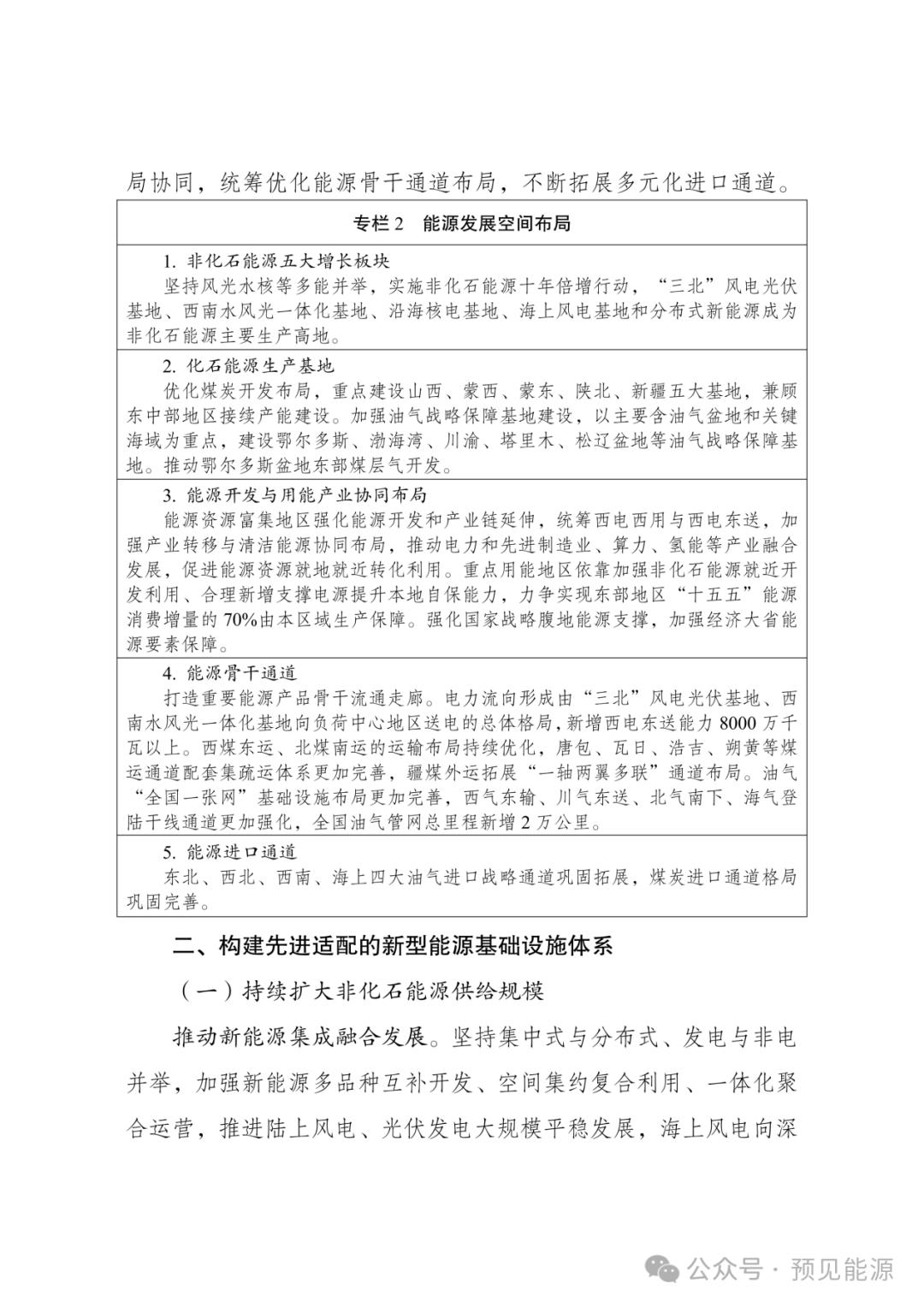
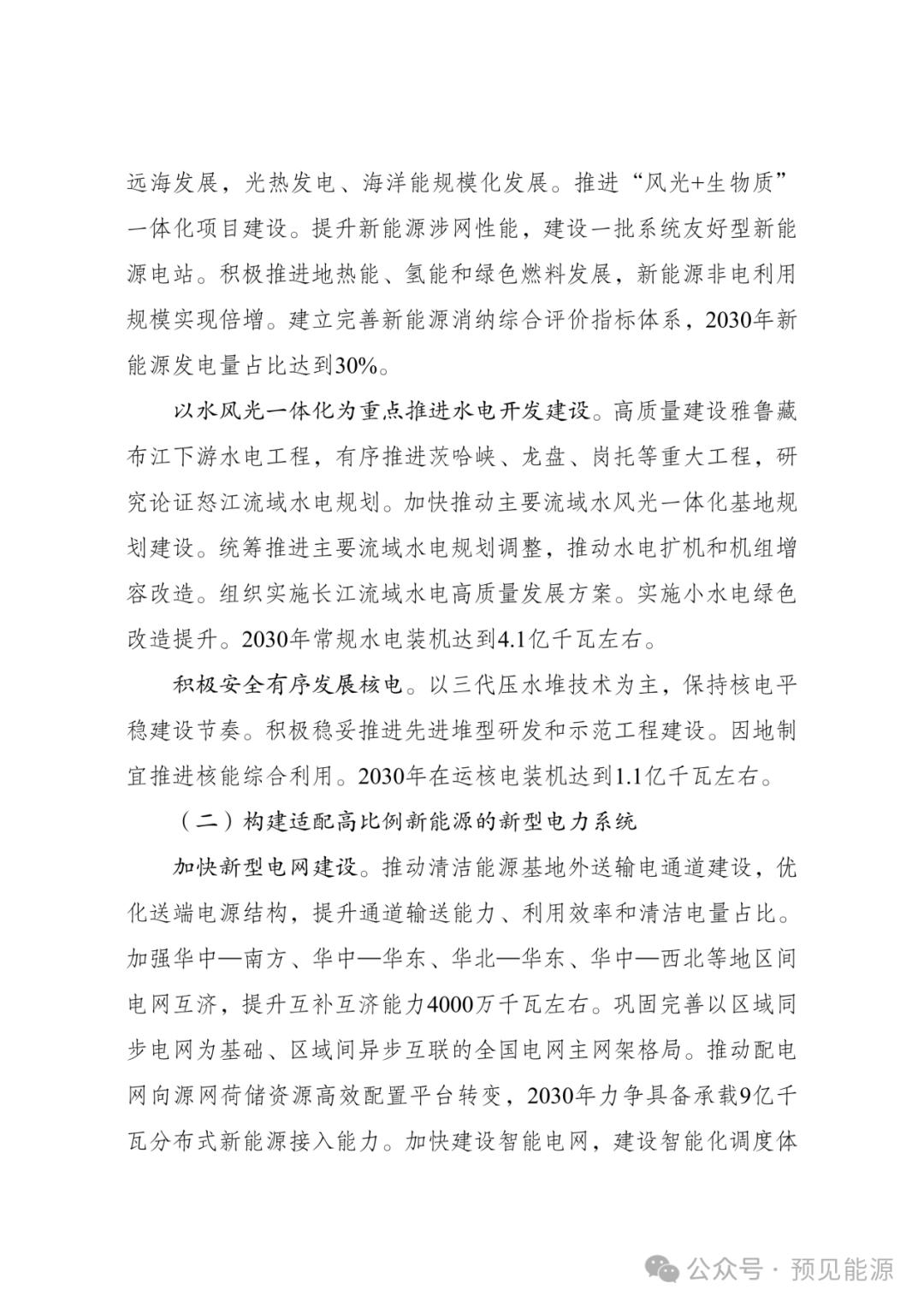
Generating electricity is one thing, and transmitting it is another. In 2025, the national wind curtailment rate was 5.7%, and the solar curtailment rate was 5.2%. The total amount of curtailed wind and solar power throughout the year reached 251.8 billion kilowatt - hours. The plan proposes the following solutions: Increase the west - to - east power transmission capacity by more than 80 million kilowatts, and the total west - to - east power transmission capacity will exceed 420 million kilowatts by 2030; The installed capacity of pumped - storage power will reach about 160 million kilowatts, and the installed capacity of new - type energy storage will reach 300 million kilowatts by 2030; The distribution network will strive to have the capacity to connect 900 million kilowatts of distributed new energy by 2030. The investment in the new - type power grid during the "15th Five - Year Plan" period is expected to exceed 5 trillion yuan, with an average annual investment approaching 1 trillion yuan.
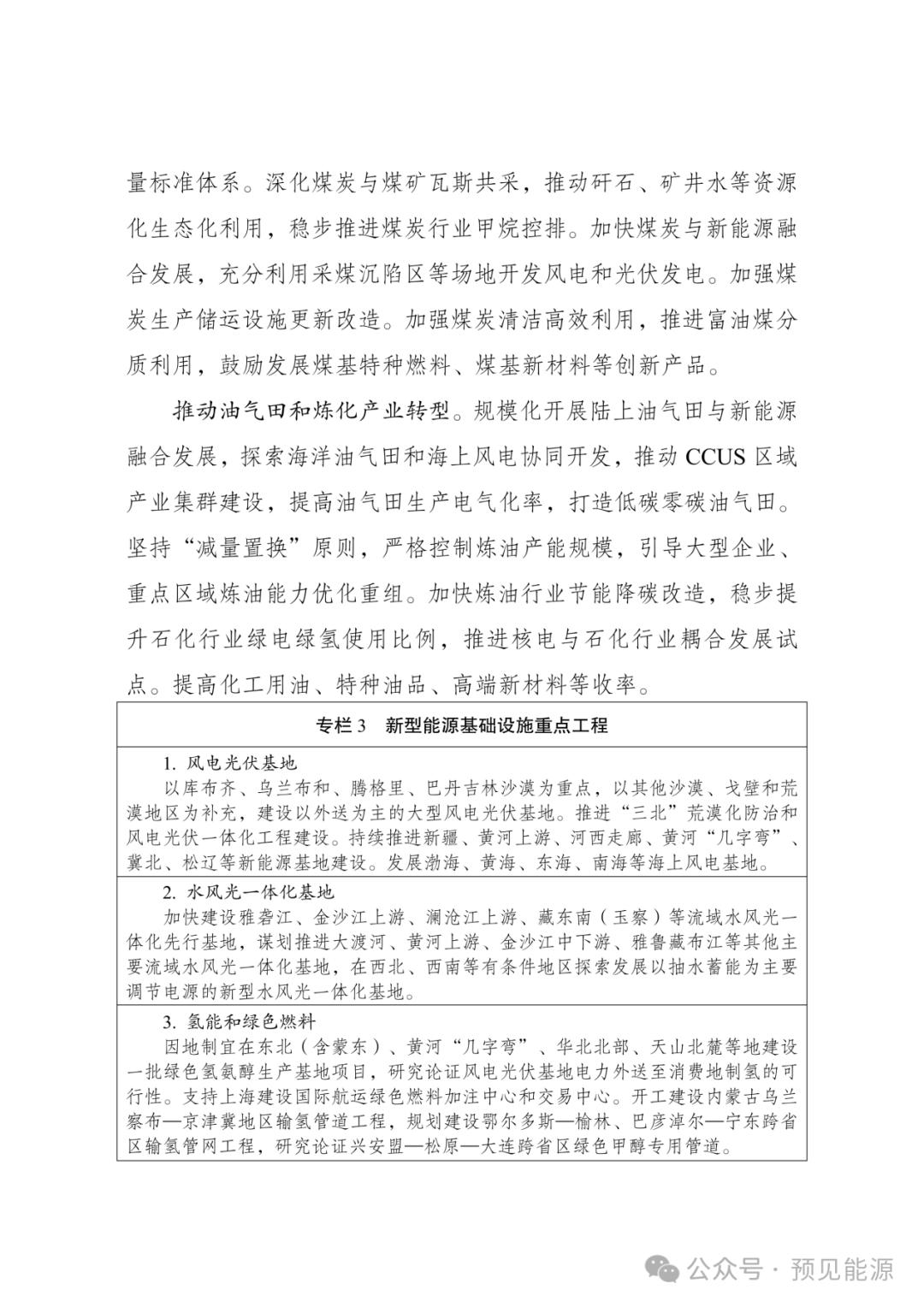
The plan also proposes to establish and improve a comprehensive evaluation index system for new energy consumption, with the proportion of new energy power generation reaching 30% by 2030. Actively promote the development of geothermal energy, hydrogen energy, and green fuels, and double the non - power utilization scale of new energy. This means that new energy can be used not only for power generation but also directly for the production of high - value products such as green hydrogen and green ammonia.
However, the construction of consumption capacity is always lagging behind the growth of installed capacity. If the power stations are built but the power grid and energy storage facilities are not ready, wind and solar curtailment will continue. With the continuous decline of electricity prices and the bottleneck of consumption, the problem faced by new energy enterprises is not "whether they can generate electricity" but "whether they can sell the generated electricity at a good price".
However, the plan and supporting policies are trying to find new ways for the revenue of new energy.
The plan proposes to develop intelligent micro - grids and direct green power connections according to local conditions. Promote emerging industries such as computing power centers, key energy - consuming industries with requirements for the proportion of green power consumption, and export enterprises with the need for green power traceability to build direct green power connection projects. Encourage industrial parks, zero - carbon parks, and incremental distribution networks to expand multi - user direct green power connection scenarios. The power supply mode of zero - carbon parks will present multiple models such as direct green power connection, nearby green power connection to the incremental distribution network of the park, and self - generation and self - use of distributed green power.
Meanwhile, with the expansion of the national carbon market and the implementation of international carbon tariffs, the "zero - carbon" attribute of new energy is being transformed into economic benefits. By selling green certificates or carbon quotas, new energy enterprises are expected to obtain a composite income of "power generation + green environmental value".
The plan provides a direction, but there are specific difficulties on each path. The three synergies in the power market, the pricing mechanism of coal - fired power, and the consumption and revenue of new energy - these three questions are all related to the substantial adjustment of the interest pattern. Five years is neither long nor short. The blueprint is drawn, but the implementation process will never be smooth.
The following is the full text of the "15th Five - Year Plan" for the construction of a new energy system: