DJI Pocket 4P is going viral and being snapped up across all platforms
The battle between DJI and Insta360 has been going on for a year. During this period, the two companies have clashed fiercely in verbal battles, channel wars, patent wars, and supply - chain wars. It's hard to say who the winner is in this business war, as both sides have gained and lost. Recently, with the release of new gimbal camera products, the competition between the two has escalated to a new level.
01
Both Companies' Gimbal Cameras Sold Out
On June 23, the DJI Osmo Pocket 4P, priced at 3,799 yuan, was officially launched. It was quickly sold out on multiple channels, and its price on the second - hand trading platform has soared to over 4,000 yuan.
"Who can help me get a DJI Pocket 4P? I'll definitely reward you handsomely. I just can't grab one no matter what," Liu Min, who had been waiting punctually that day, helplessly posted a message on her WeChat Moments asking for help. On social platforms, a large number of netizens complained, "It's impossible to grab one," "It's sold out as soon as I enter at 0 seconds," "I invited several friends to grab it together, but still couldn't get one."
The situation was the same in offline channels. On the day of the release, some netizens rushed to the store after work to buy one, but their wishes were still dashed. A staff member at a DJI authorized experience store in Beijing told Caixin: "The production capacity of the Pocket 4P is extremely tight. If you place an order now, you'll have to wait until August or September to get the product."
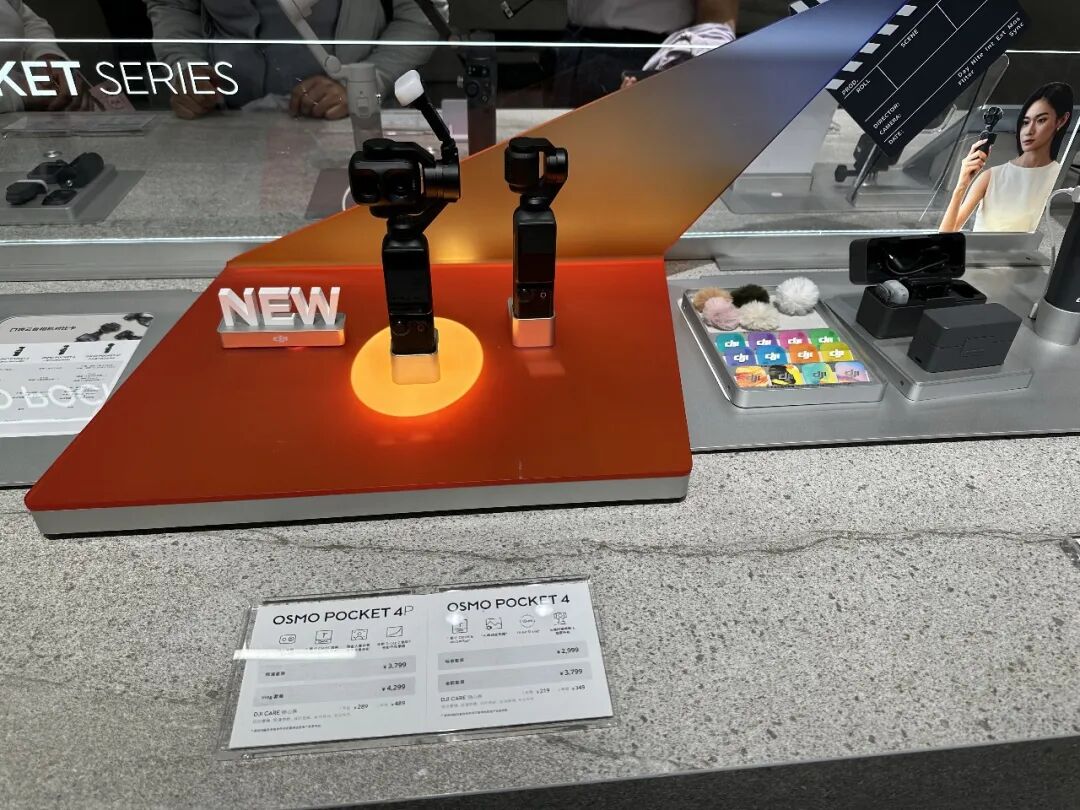
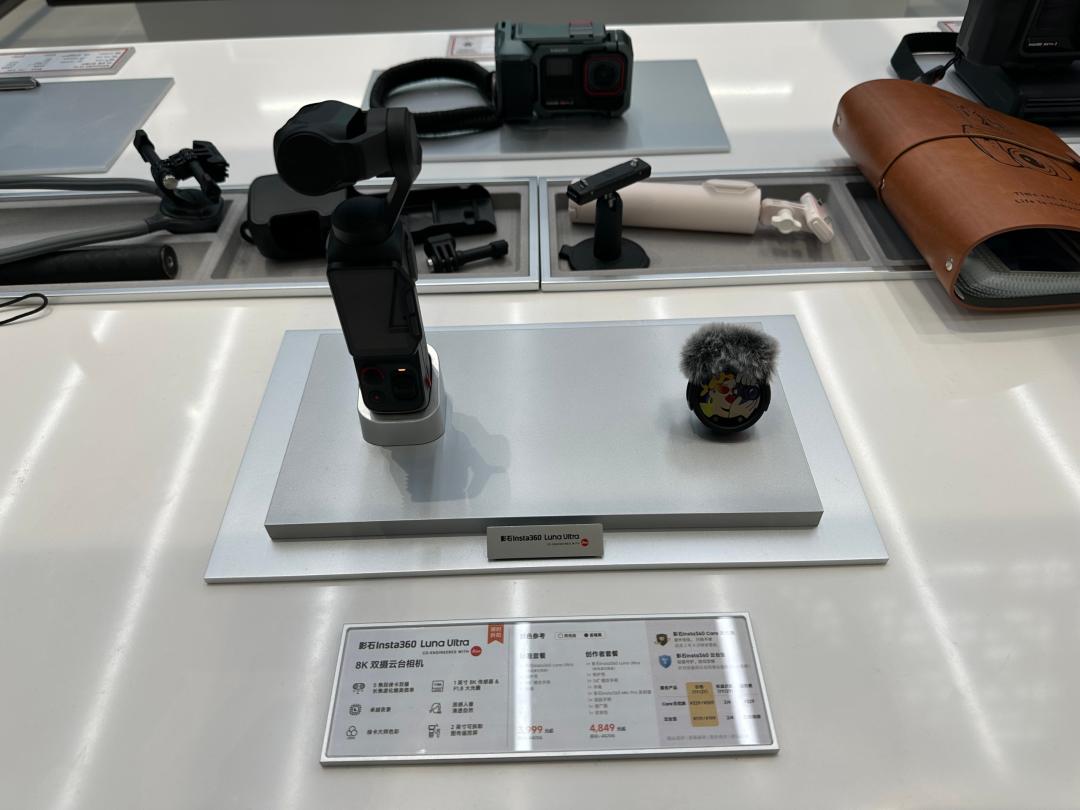
Some people who couldn't buy the DJI Pocket 4P turned their attention to the Insta360 Luna Ultra, but it was also hard to get. It was sold out five minutes after it went on sale. Some salespeople from the Insta360 Luna Ultra's channels revealed that not all the blind - pre - order orders have been delivered yet, and new orders still need to be reserved. The product is in a state of continuous restocking.
A Zhe, a photography enthusiast living in Hangzhou, managed to grab a Luna Ultra. He said, "The detachable screen is very attractive to me. After taking it off, it can be used as a monitor and also for remote control, which means I don't need an extra person." Compared with the parameters themselves, he values the freedom of the Luna Ultra in single - person shooting scenarios more.
Judging from the initial market feedback, DJI's first - mover advantage and brand influence are still obvious. The pre - order volume of the Pocket 4P temporarily leads that of the Luna Ultra. However, Insta360 should not be underestimated, as the Luna Ultra has found a relatively clear target user group.
In the competition between DJI and Insta360's gimbal cameras, there are subtle differences in their stances: Insta360 hopes to gain a share in this category, while DJI aims to defend its long - established market position.
The foreshadowing for this confrontation was laid as early as April this year. On April 16, DJI announced the launch of the Pocket 4 standard version and simultaneously previewed the higher - end Pocket 4P on the day of the release. Just one week later, the Insta360 Luna series products made their global debut at the NAB Show. This series was originally scheduled to be launched in May.
In May, the public opinion battle between the two sides heated up simultaneously. On May 14, DJI brought the yet - to - be - launched Pocket 4P to the Cannes Film Festival and held a special tasting event for global filmmakers. Four days later, Insta360 officially announced that Li Xian would serve as its global brand ambassador and started the blind pre - order for the Luna Ultra.
However, an accident disrupted Insta360's schedule. At the end of May, Liu Jingkang, the founder of Insta360, publicly apologized on social media and announced that the entire Luna series would be postponed to June. The reason was that during a travel shooting, he found that he was constantly staring at the screen to prevent the subject from going out of the frame and couldn't really enjoy the moment. So, the team decided to add a head - tracking kit temporarily to further optimize the shooting experience.
Around the time when Insta360's new product was postponed, the still - on - sale Pocket 3 had a significant price cut. DJI tried to stabilize its existing users while waiting for its opponent to show its cards first.
Compared with the behind - the - scenes rivalry, the more attention - grabbing aspect is the direct confrontation at the product level. On June 10, Insta360 took the lead in launching the Luna Ultra, innovatively adding a detachable image - transmission remote - control screen - a 2 - inch OLED touch screen that can be used as a wireless monitor and remote control after being detached; in terms of imaging specifications, it features an 8K Leica dual - camera system.
Five days later, DJI announced the pre - sale of the Pocket 4P. This product also comes with a dual - main - camera system, supports a 17 - stop dynamic range and 4K 240fps slow - motion, and is priced 200 yuan lower than Insta360's product.
In comparison, the orientations of the two products are very clear: the Luna Ultra emphasizes "creative freedom", reducing the threshold for single - person shooting through the detachable screen and head - tracking module; the Pocket 4P emphasizes "professional certainty", providing users with a stable and predictable creative experience.
Regarding the performance improvement, an insider at DJI told Caixin: "Normally, reusing the previous - generation module and making some minor adjustments is a safer choice. However, DJI's internal mechanism constantly breaks the path dependence and uses the best solutions it can think of to provide a cross - generation experience beyond expectations. In the case of the 4P, for example, increasing the main camera's dynamic range to 17 stops is the most obvious manifestation."
However, on the day of Insta360's new product launch, DJI quickly launched a round of intensive counterattacks. After suing Insta360 over the ownership of drone patents in March this year, on June 10, DJI filed a lawsuit in the Eastern District Court of Texas, USA, accusing the Insta360 Luna Ultra of infringing six of its patents in terms of appearance design.
In this lawsuit, DJI used strong language, accusing Insta360's related products of infringing its appearance - design patents and applying to the court for a permanent injunction and triple - damages compensation. Forty - eight hours later, Insta360 immediately filed a counter - lawsuit, claiming that DJI had infringed five of its patents.
If the patent lawsuit on the day of the new product launch was a close - quarters battle in this direct confrontation of gimbal cameras, then looking at the long - term timeline, it is not an isolated incident but a concentrated outbreak after more than a year of escalating competition between the two sides.
02
A One - Year - Long War of Attrition
The competition between Insta360 and DJI in the gimbal camera market is not an accidental collision but another escalation of their cross - border competition in the past year. Since Insta360 announced its entry into the drone market in July 2025, the disputes between the two companies have gradually extended from products to the supply chain, channels, and patent courts.
For many years, although Insta360 and DJI both belong to the imaging hardware field, their core battlefields have been different: the former started with panoramic cameras, while the latter has long been deeply involved in drones and handheld imaging devices.
As the well - known "two giants in imaging" in Shenzhen, the two companies have maintained a tacit understanding for many years. Both Insta360 and DJI are headquartered in Nanshan District, Shenzhen, less than ten kilometers apart. It only takes about 20 minutes to drive from DJI's Sky City to Insta360's headquarters in the Software Industry Base when there is no traffic jam.
The smart hardware circle in Nanshan District is not large. Many employees of the two companies even know each other, and some have worked at both DJI and Insta360.
Until 2025, the situation began to change. That year, Insta360 was successfully listed, and Liu Jingkang became one of the youngest founders in the history of the STAR Market. After that, Insta360 began to expand its business boundaries, and its intersection with DJI increased accordingly.
In July 2025, Insta360 announced the launch of its drone brand, InstaFly A1, officially entering the field where DJI has long held an advantage. Only three days later, DJI released its first panoramic camera, the Osmo 360, entering Insta360's core category.
Since then, the two sides have started to enter each other's territory. Facing Insta360's offensive, DJI began to consolidate its market advantage by reducing prices. At the same time, Insta360 described the competition as having extended to the supply - chain level.
Liu Jingkang once revealed in an internal letter that six months before the launch of Insta360's first panoramic drone, the "InstaFly A1", more than 30 core suppliers suddenly faced "exclusive pressure" from industry giants. Insta360 was forced to rebuild an independent and controllable supply - chain network from scratch.
Beyond the panoramic camera and drone fields, the recently heating - up gimbal camera market has turned this offensive - defensive battle into a comprehensive competition, and the gimbal camera has always been DJI's area of strength.
Public data statistics show that just the Pocket 3 alone brought DJI more than 20 billion yuan in revenue. In the entire handheld smart - camera market, DJI ranks first with a 62% share of the shipment volume.
It can be said that in the field of handheld imaging devices, DJI still holds an obvious advantage at present. However, for Insta360, staying in the advantageous category of panoramic cameras alone is difficult to support greater growth potential. It needs to gain space with speed, prove itself in terms of product strength as soon as possible, and break into its opponent's existing market.
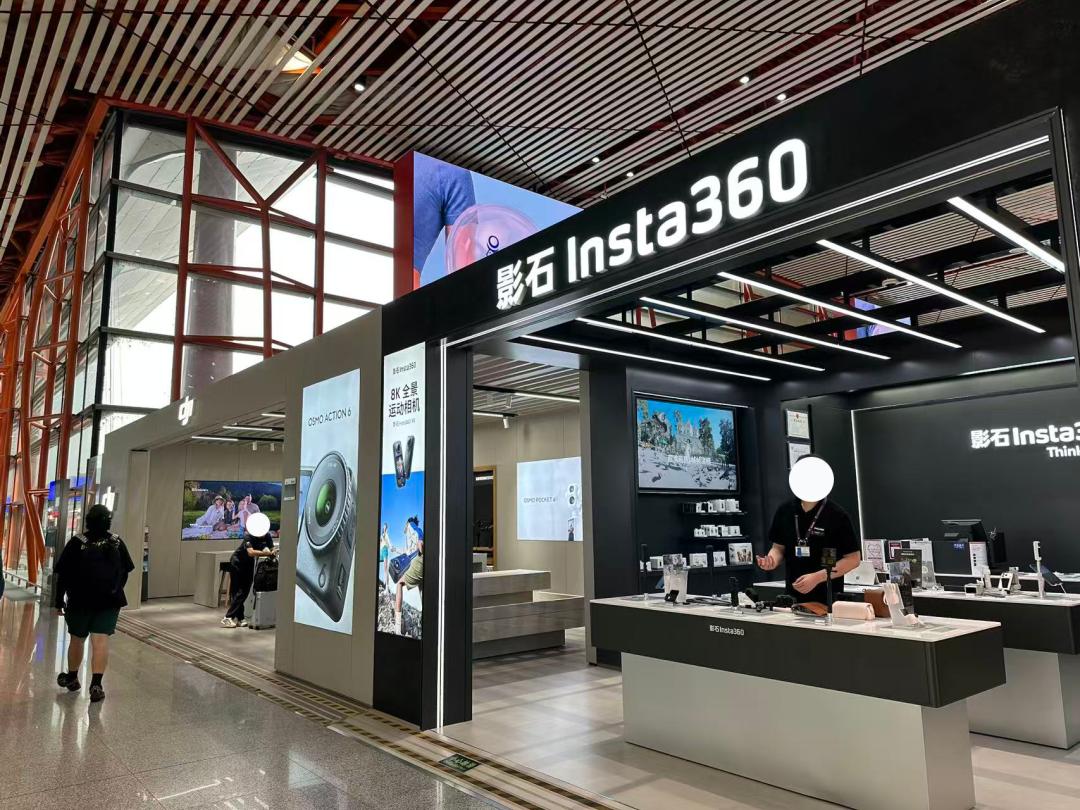
Facing DJI's first - mover advantage, Insta360 is accelerating its pursuit. At the beginning of 2025, Insta360 only had 36 stores across the country, but by the end of the year, the number had expanded to nearly 300. Its offline presence is catching up with DJI at a visible pace.
Data shows that Insta360's R & D investment in 2025 reached 1.53 billion yuan, a year - on - year increase of 97%, exceeding the total R & D investment of the previous three years. However, on the other hand, Insta360's net profit attributable to shareholders in 2025 was 929 million yuan, a year - on - year decline of 6.62%.
On the other hand, although DJI's position in the handheld - camera field remains stable, in the face of the "latecomer" Insta360, it has also started to make product stratification and adjustments of "sacrificing profit for market space".
Previously, from the Pocket 1 in 2018, to the Pocket 2 in 2020, and then to the Pocket 3 in 2023, DJI only launched three products in a relatively long period, and there was basically only one main model for each generation. But this time, DJI made a stratification of a standard version plus a Pro version for the first time within the same generation of products. First, it launched the Pocket 4 in April, and two months later, it launched the Pocket 4P, further raising the creative ceiling for professional users.
The most direct change is reflected in the price. The recently launched DJI Pocket 4 standard version is priced 500 yuan lower than the initial price of the previous - generation Pocket 3, at 2,999 yuan. It is quite rare in the Pocket series to lower the starting price while continuing to upgrade the imaging specifications and functions.
The starting price of the higher - end Pocket 4P is 3,799 yuan. At first glance, it is 300 yuan more expensive than the initial price of the Pocket 3. However, considering the addition of the dual - camera system, 17 - stop dynamic range, and LOFIC technology, its cost - performance ratio is obviously higher.
03
The Era of Multi - Party Scramble Is Coming
The direct confrontation between DJI and Insta360 is pushing the gimbal - camera category into a larger market. As the market scale of handheld gimbal cameras expands, this battle no longer belongs only to DJI and Insta360. The market capacity and competition pattern are being rewritten.
Multiple media reports say that OPPO launched a gimbal - camera project codenamed "Fuyao" in April 2026 and will cooperate with Hasselblad for image tuning. It is expected to be launched in the fourth quarter; Vivo's similar product was also initiated at the end of 2025, will be tuned in cooperation with Zeiss, and will be manufactured by Luxshare Precision.
When mobile - phone manufacturers enter this market, they don't start from scratch. In the past few years, manufacturers such as OPPO and Vivo have continuously increased their investment in mobile - phone imaging and have accumulated a lot of capabilities in sensor selection, lens modules, imaging chips, and computational photography.
Compared with traditional imaging companies, mobile - phone manufacturers also have a large number of existing users and many offline stores, which allows them to complete channel construction and user education more quickly.
However, for imaging companies, the first to bear the pressure may not be the high - end and professional markets, but the entry - level market, which is more price - sensitive. When mobile - phone manufacturers start to explore new categories, price is likely to be the first lever they use to pry open the market.
Relying on their purchasing scale and supply - chain bargaining power, mobile - phone manufacturers have the opportunity to further push the price of gimbal cameras into the range of one or two thousand yuan. This means that ordinary users who have been on the sidelines due to price may also become new consumers of this category.
However, mobile - phone imaging capabilities cannot be directly equated with gimbal - camera capabilities. Although the mobile - phone manufacturers' accumulation in sensors, lenses, and computational photography can be transferred, they still need to make up a lot of ground in gimbal control and software - hardware collaboration.
Gao Chengyuan, the chairman of Tiaoyuan Marketing Consulting, told Caixin that the advantages of mobile - phone manufacturers lie in the imaging supply chain, channels, and user base, while their weaknesses are the precise control of the three - axis gimbal and the collaboration between the imaging algorithm and the gimbal.
"If these aspects are not well - coordinated, the final result may be problems such as unstable tracking, interrupted target tracking, degraded low - light image quality, or overheating during long - term