Breaking: Apple raises prices sharply late at night, scalpers frantically stock up, and the iPhone 18 is in jeopardy
Late at night on June 25th Beijing time, Apple suddenly announced price hikes for Mac, iPad, and home devices in the global market. According to Apple's official data, the starting price of the MacBook Neo has risen from $599 to $699, the MacBook Air from $1099 to $1299, the entry - level 14 - inch MacBook Pro from $1699 to $1999, the 11 - inch iPad Pro from $999 to $1199, and the iPad Air from $599 to $749. The above price adjustments are global price increases, and the price of the iPhone remains unchanged for now.
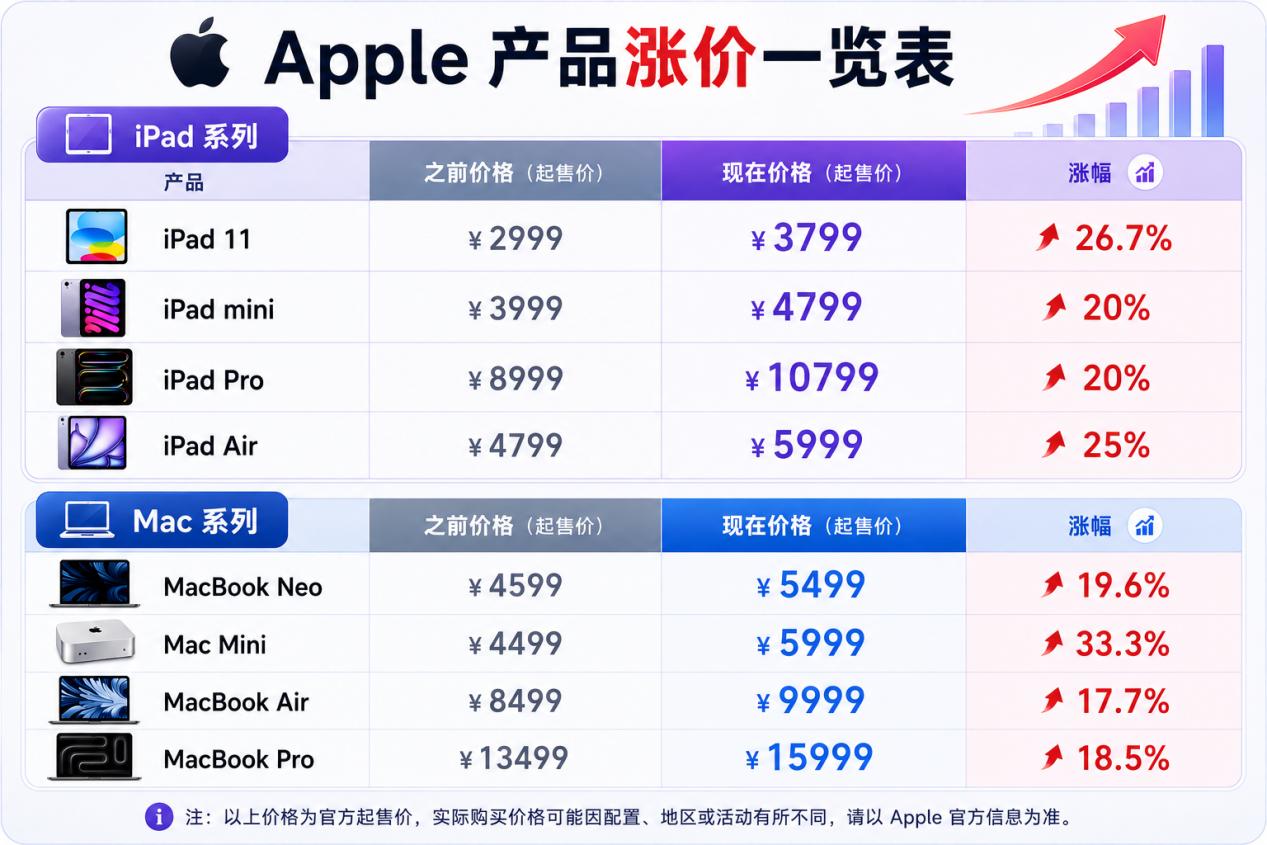
(Image source: Leitech's graphic design)
Leitech (ID: leitech) noticed that at the same time as Apple officially announced the price increase, the low - memory versions of Mac and iPad on e - commerce platforms were already completely sold out. As of the time of writing, the lowest - positioned MacBook Neo has been completely removed from the shelves on the three e - commerce platforms of JD.com, Taobao, and Pinduoduo, leaving only a few stores selling at a premium or second - hand products. This double blow of "price increase + out of stock" caught users off guard.
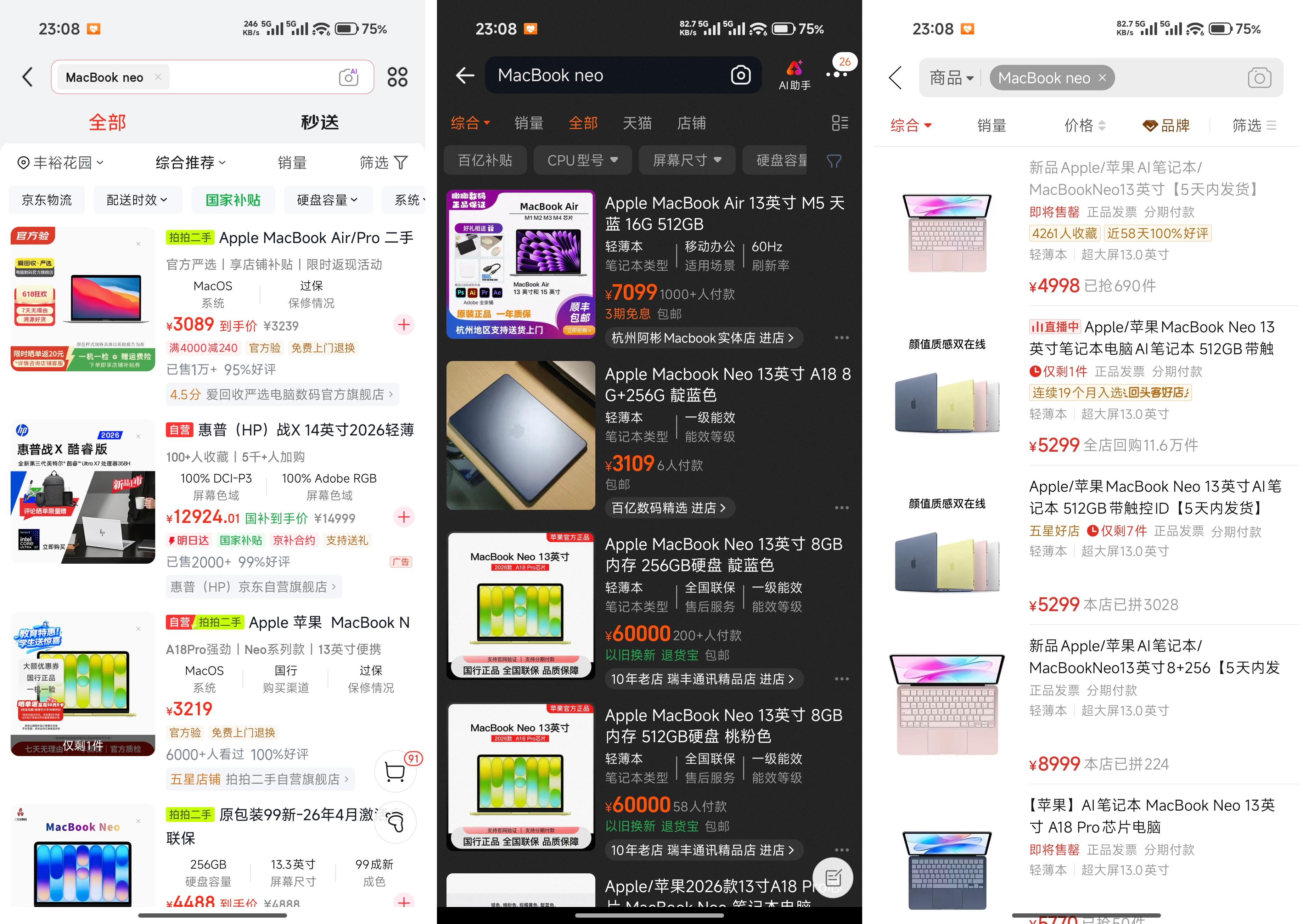
(Image source: Leitech's graphic design)
Why did Apple raise prices? Will the price of the iPhone 18 series in September increase? What impact will Apple's latest price adjustment have on the consumer electronics industry? Leitech (ID: leitech) sorted out its views immediately.
AI has caused a 300% surge in storage costs, and Apple has become a victim of AI
Not only did Apple fail to do well in AI, but it has also become a "victim of AI". You read that right, Apple has been harmed by AI.
Apple provided an answer in its official statement: "The consumer electronics industry is facing unprecedented challenges. The rapid expansion of AI data centers has led to a sharp increase in storage demand. We have never seen component prices rise by such a large margin and at such a speed."
This is not Apple making excuses; it is a storm that the entire industry is experiencing.
Since AI became extremely popular in 2025, the demand for AI computing power has grown exponentially. According to the latest financial report of Micron Technology, the gross profit margin of its mobile business has reached as high as 86%, while this figure was only 15% a year ago. Taking DDR5 memory as an example, the price at the beginning of 2025 was around $3 per GB, but by June 2026, this figure had soared to $8 per GB, a increase of more than 160%. The situation of NAND flash memory is even more severe, with the price increase of some models exceeding 200%.
Storage manufacturers are making huge profits, and these profits are taken from the pockets of these terminal brands.
Taking a MacBook Air equipped with 16GB of memory and 512GB of storage as an example, the cost of memory and storage alone has increased by approximately 1000 RMB. This does not include the price increases of other components.
Apple CEO Tim Cook signaled this at the beginning of this month. In an exclusive interview with The Wall Street Journal, he described the current imbalance between supply and demand of storage as a "once - in - a - century flood" and clearly stated that Apple's price system was becoming difficult to maintain.
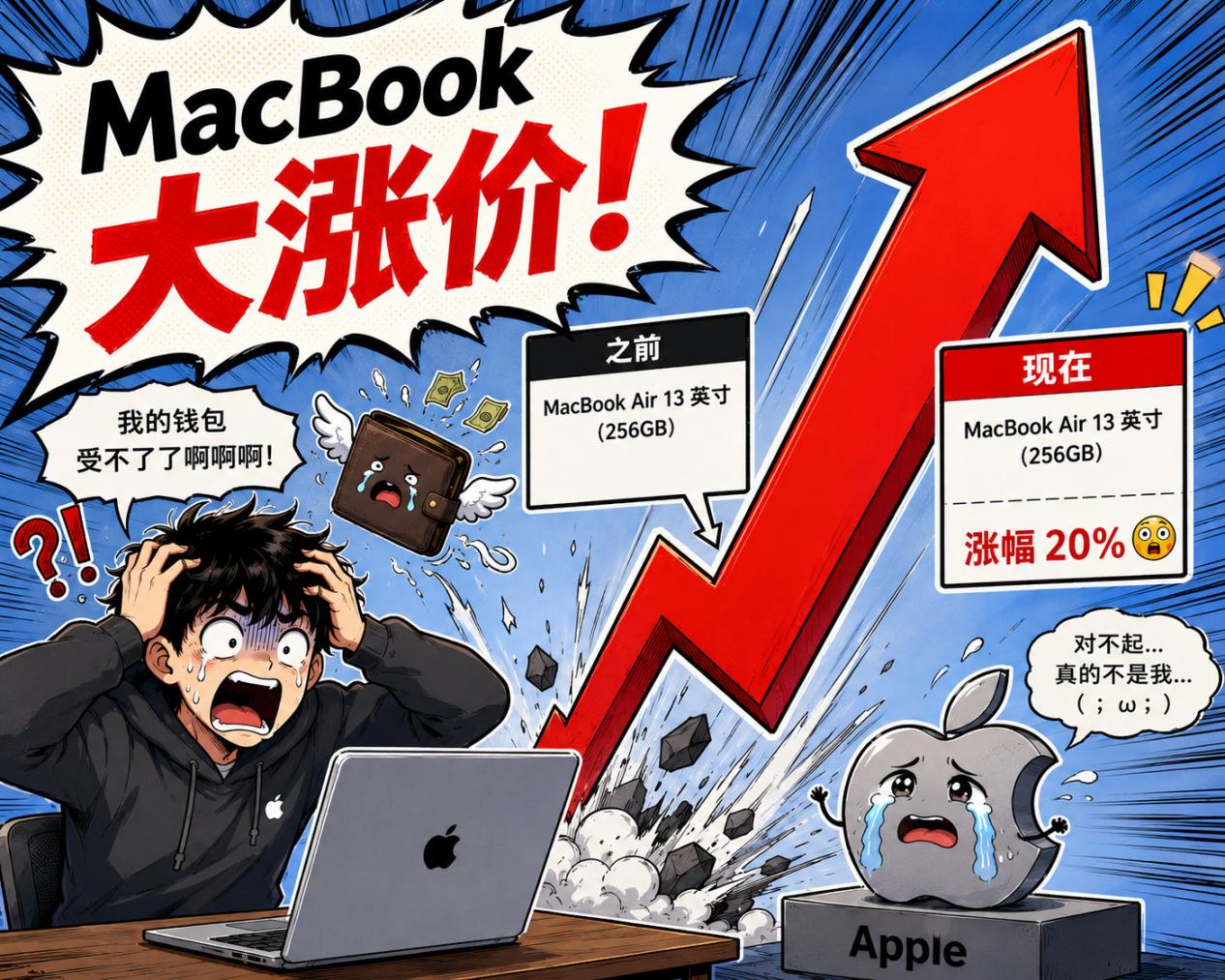
(Image source: AI - generated)
In other words, this wave of AI has led to a shortage of storage and a subsequent sharp price increase, and even a powerful company like Apple can't bear it.
In fact, other consumer electronics brands started raising prices long ago. In the mobile phone sector, OPPO, OnePlus, and vivo started price adjustments for their entire product lines as early as March this year. Many popular models under Xiaomi and Honor have also successively increased in price, and the cost of changing phones has generally increased by 300 - 2000 RMB. Even worse, Meizu directly announced the cancellation of the launch plan for the Meizu 22 Air. The reason is simple: The price of storage chips has increased too sharply, making it impossible to set a price for new models, and even if they were made, no one would buy them.
The situation in the PC market is even more exaggerated. Dell has comprehensively increased the prices of its computers since last year, with an increase of 10% - 30%. The price of the Lenovo Legion R9000PAI Yuanqi (RTX5070Ti 16G + 1T) model has soared from the initial 13,699 RMB to 17,499 RMB, an increase of 3800 RMB in four months. According to statistics from Sina Geek Frontline, the average price of consumer - grade laptops has increased by 12.7% compared to the beginning of the year and by a staggering 21.3% compared to the same period last year. In some extreme cases, the price of certain models has even skyrocketed by 1100 RMB in a single day.
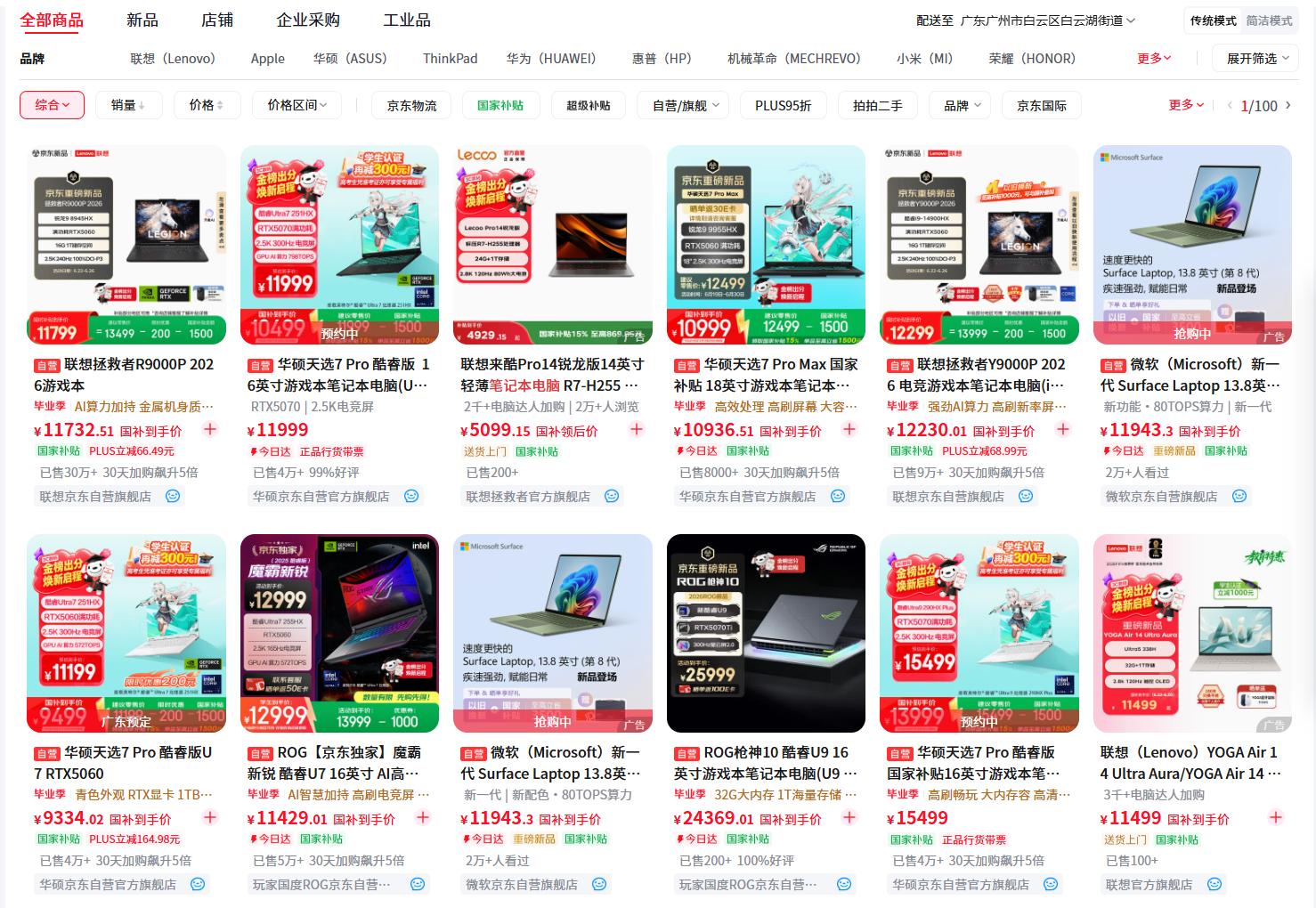
(Image source: Leitech's graphic design)
As an industry benchmark, Apple has always tried to maintain price stability. However, in the face of such huge cost pressure, it finally had to "follow the trend".
Now that Apple has increased prices by 20%, other brands will be even more unscrupulous. The reason is simple: In the past, Apple, with its powerful supply - chain bargaining power system, barely kept prices stable, and other brands didn't dare to raise prices too much for fear that users would switch to Apple if their product prices were too high. In fact, this has indeed been happening, which is why you can always see the iPhone easily topping the sales charts. It's not just because of its strong product features; in the Chinese market, the presence or absence of AI doesn't matter much. The more other Android products increase in price, the more attractive the iPhone becomes.
Now, since Apple itself has raised prices, what else do other brands have to worry about? So in the future, you'll find it increasingly difficult to buy an "affordable" laptop or mobile phone.
Consumers are backstabbed, and Apple's "scalpers" are back
For ordinary consumers, the impact of this price - increase wave is real.
Firstly, the cost of purchasing a device has increased significantly. Taking the Macbook Air as an example, the starting price has risen from 8499 RMB to 9999 RMB after the price increase, an increase of 17.6%. For users with limited budgets, this may mean having to lower their configuration requirements or choose other brands.
Want to find a bargain on Xianyu? Don't worry, the prices in the second - hand market will also increase, and even faster and more sharply... Due to the price increase of new products, a large number of scalpers have flooded into the market and snapped up all the inventory. In this situation, the prices of Mac and iPad products in the second - hand market will naturally rise. Leitech found on Xianyu that for a MacBook Air M5, the price in the second - hand market was about 6000 RMB before Apple's official price increase, and now a nearly new one has risen to 6800 RMB. Even more exaggerated, some second - hand merchants have started hoarding goods, waiting for the prices to continue rising.

(Image source: Leitech's graphic design)
This has put users in an awkward situation of whether to buy now or wait. Some people think "the earlier you buy, the earlier you enjoy" and quickly make a purchase; others think "let's wait and see" and hope that the prices will drop. But the reality is that consumers who want to switch to the Windows camp find that other brands are also raising prices, and some are increasing more sharply than Apple.
This wave of price increases is industry - wide, and no one can escape.
Different groups are affected differently. For students, who already have limited budgets, they now have to spend an extra one or two thousand yuan to buy a laptop, which is equivalent to a month's living expenses. For content creators, who need large - capacity memory and high - performance configurations for video editing and 3D rendering, the production cost is constantly rising. And enterprise users are the most troubled, as the procurement cost is increasing exponentially, and some companies may even consider postponing their device - replacement plans.
For users with urgent needs, it may still be the most cost - effective to buy now. Because the price of storage chips is still rising, it will increase by 40% - 50% in the third quarter and another 30% - 40% in the fourth quarter. Waiting will only make it more expensive. For non - urgent users, they can wait and see. But they should be mentally prepared: the possibility of the price dropping is small, and at most, the rate of increase will slow down. If the budget is really tight, they can consider buying the previous - generation products or choosing a version with slightly lower configuration.
To put it simply, users now have a simple choice: either accept the price increase or give up the purchase. There is no third way.
AI is changing the consumer electronics industry chain, and Apple is going to show its "pricing strategy"
It can be said that this storage crisis triggered by AI will change the rules of the entire industry chain.
Since storage manufacturers are currently allocating most of their production capacity to AI, the consumer electronics market is getting fewer and fewer products, and price increases have become a common phenomenon.
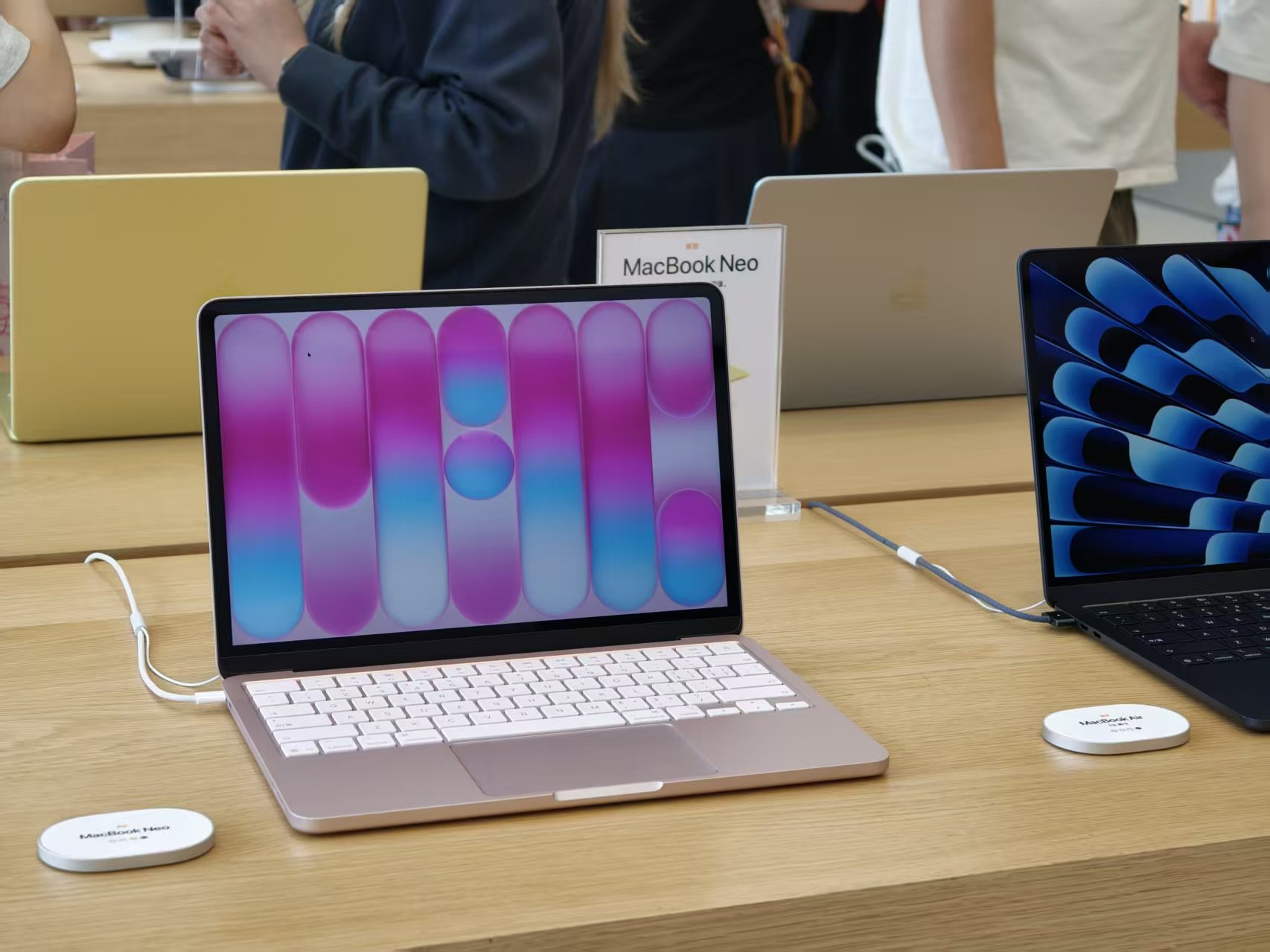
(Image source: Leitech's shooting)
According to the prediction of market research company Sigmaintell, the demand for artificial intelligence infrastructure is expected to drive the share of AI servers in global DRAM consumption to reach 50% - 55% in 2028, including DDR, LPDDR, and high - bandwidth memory (HBM). In contrast, this proportion was 24% in 2025, more than doubling. This means that the consumer electronics field will get fewer and fewer storage chips.
In the past, the price of storage chips fluctuated due to the relationship between supply and demand, but overall, it was still "healthy". But now, the demand from AI data centers is almost unlimited, and storage manufacturers have replaced consumer electronics manufacturers in controlling the industry's pricing power.
This change in the situation is also affecting the entire industry chain. Taking Apple as an example, its gross profit margin has dropped from 43% in 2024 to 40% in 2025 and is expected to further drop to 38% in 2026.
According to a research report released by Jefferies Investment Bank, the AI demand will continue to drive up the global storage chip market price. The global storage chip price will increase by about 40% - 50% quarter - on - quarter in the third quarter of 2026 and may increase by another 30% - 40% quarter - on - quarter in the fourth quarter. This situation may continue until the end of 2027.
Therefore, in the face of cost pressure, Apple may adjust the configuration and show its "pricing strategy". For example, the future base - model MacBook Air may have its memory increased from 16GB to 24GB. This can not only improve the user experience but also make consumers more accepting of the higher price. After all, "more quantity at a higher price" is easier to accept than "a direct price increase".
In addition, Apple has also made major adjustments to its chip strategy. According to Bloomberg, Apple will unprecedentedly skip the high - end versions of the M6 chip (i.e., cancel the Pro and Max versions) and plans to directly launch the M7 Pro and Max versions in 2027.
The reason is simple: Against the backdrop of the sky - rocketing price of storage chips, it is simply impossible to bear the cost of continuing to iterate the high - end chips step by step. Instead of spending a large amount of money on the M6 Pro/Max, it's better to directly jump to the M7 and integrate AI capabilities all at once, which can not only save costs but also increase its competitiveness.
It's just a pity for those users who want to replace their MacBook Pro this year; they may not be able to get the product they want.
Of course, other manufacturers are also finding ways. Huawei is developing its own storage chips to reduce its dependence on external suppliers, and Apple is also considering investing in storage chip manufacturers to ensure the stability of the supply chain. This storage crisis may accelerate the integration of the entire industry.
The iPhone has withstood the pressure for now, but a significant price increase for the iPhone 18 is inevitable
Although Apple only raised the prices of Mac and iPad this time, the iPhone has "escaped" for the moment. However, Leitech (ID: leitech) speculates that the prices of new products such as the iPhone may be comprehensively increased in the second half of the year, and users may have to pay for the development of AI.
Judging from the current situation, it is almost inevitable for the iPhone to increase in price. Apple only raised the prices of Mac and iPad this time and left the iPhone untouched, which was obviously a well - considered decision. The iPhone is Apple's main revenue generator, accounting for more than half of its total revenue. In a highly competitive market, a hasty price increase may affect overall sales.
However, Apple's sudden move tonight has laid the groundwork for the iPhone price increase: first test the market reaction on a small scale, and if users are more accepting, then consider raising the prices of core products such as the iPhone. This strategy can