With an annual revenue of 2.7 billion, a Chinese candy has mastered the "American flavor"
Author | Xie Yunzi
Editor | Zhang Fan
On the international version of TikTok, a review video about the juice - peeling gummy Peelerz has received a total of 2.58 million likes. Peelerz is the flagship brand under Amos.
When you enter Costco or Sam's Club in the United States, Amos is almost the only Chinese candy on the shelves. The reputation of product selection in European and American membership stores has "flowed back" to China.
Open the Chinese Sam's Club APP, and two products under Amos, Peelerz and "Biobor Active Probiotic Gummies", rank first and second on the "Hot Candy List", with monthly sales exceeding 200,000 and 100,000 pieces respectively.
The accumulation of brand potential has exploded in the capital market.
Not long ago, Amos submitted a prospectus to the Hong Kong Stock Exchange. According to the data from Frost & Sullivan cited by it, in terms of retail sales in 2025, Amos is the largest candy company in China. If it passes the review smoothly, Amos will also win the title of "the first share of Chinese candy".
However, a closer look at the prospectus reveals a more complex story: For this Chinese candy giant with an annual revenue of 2.7 billion yuan, more than half of its revenue comes from North America, and the contribution of the domestic market is less than a quarter. The problem is that the global consumption environment has changed. The more successful Amos is in the overseas market, the more it seems like a stranger in the Chinese market.
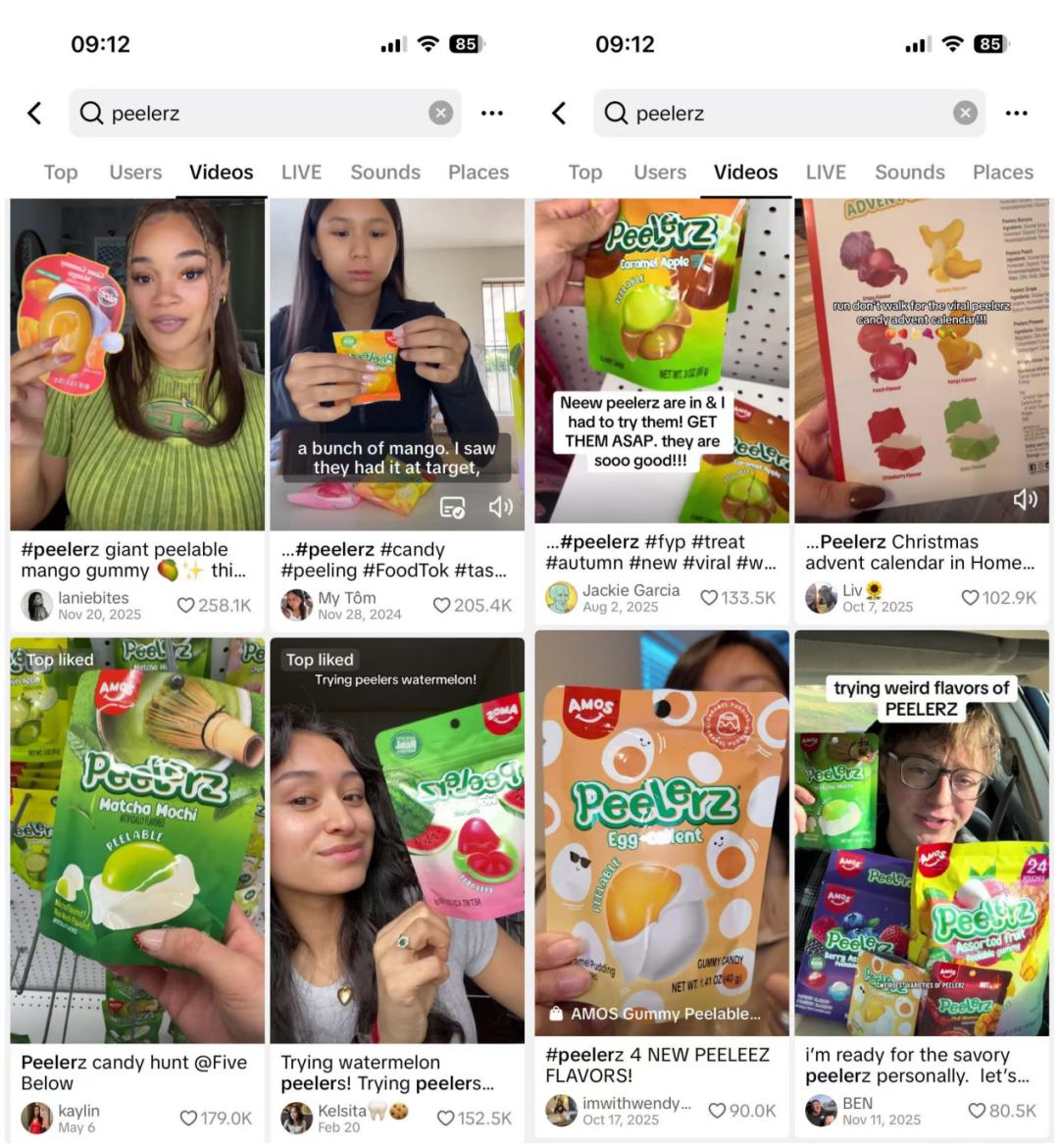
The picture is from a TikTok screenshot
Born for American Shelves
In the first few years after China officially joined the WTO, the air in the Pearl River Delta was filled with the smell of orders.
In 2004, Jinduoduo Food Co., Ltd. was established in Shenzhen. Like countless foreign - trade factories at that time, Jinduoduo initially engaged in OEM manufacturing and completed its initial accumulation through candy orders from the Middle East and African markets. Two years later, the factory built by Ma Enduo, the founder of the company, in accordance with European and American food production standards was completed, laying the foundation for the company's production capacity.
The turning point came in the 2008 financial crisis.
In this year, the prices of raw materials and domestic labor costs soared; international chain retailers could not accept price increases from suppliers due to the sluggish market. For a while, a large number of OEM factories with already thin profits went bankrupt.
On the eve of Halloween when everyone thought there was no hope for the future, Ma Enduo, who was seeking transformation and developing his own brand, took a flight to Arkansas, USA, with samples. With high - quality products, he knocked on the door of Walmart's headquarters. Thus, he put Chinese candy in the true sense on the mainstream shelves of the North American market.
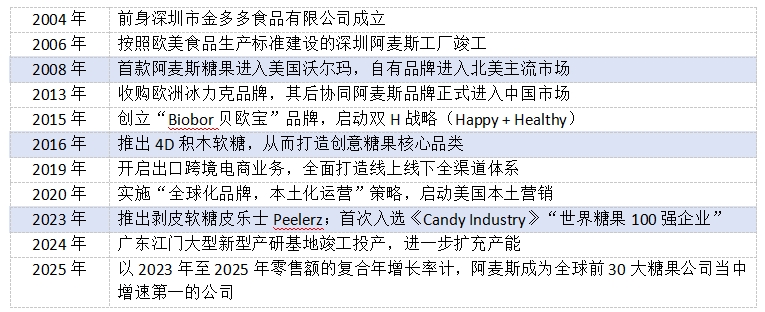
The picture is from the prospectus
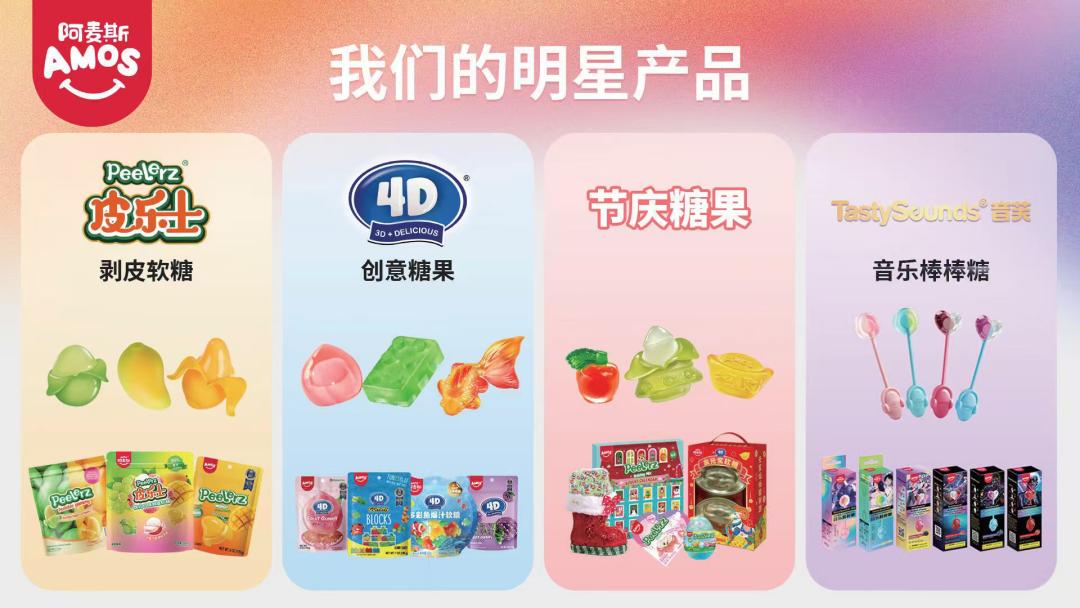
The picture is from the prospectus
However, what really helped Amos gain a firm foothold was its subsequent innovation and refinement of products over more than a decade.
From a market strategy perspective, Amos strives to make candies into "toys". Whether it was the "4D building - block gummies" launched in the early stage or Peelerz, which later simulated the real fruit - peeling effect, the "eat - while - play" consumption experience hit the spot with North American consumers.
In 2025, Amos cooperated with local KOLs in the United States, and the traffic of Peelerz on TikTok exploded instantly. The company's revenue also soared.
The prospectus shows that from 2023 to 2025, Amos' revenues were 1.07 billion yuan, 1.571 billion yuan, and 2.782 billion yuan respectively, with a compound annual growth rate of up to 61.9%. During the same period, the net profit increased from 137 million yuan to 600 million yuan, with a compound annual growth rate of about 109%.
Along with the revenue growth, there were profound changes in the business structure. The revenue share of the self - owned brand with a higher gross profit margin increased from 62.8% in 2023 to 77.9% in 2025; the revenue share of the ODM OEM business shrank from 37.2% to 22.1%, although its absolute value still increased from 398 million yuan to 614 million yuan.
From this perspective, Amos has successfully transformed from an OEM factory in the early years into a candy enterprise driven by its own brand.
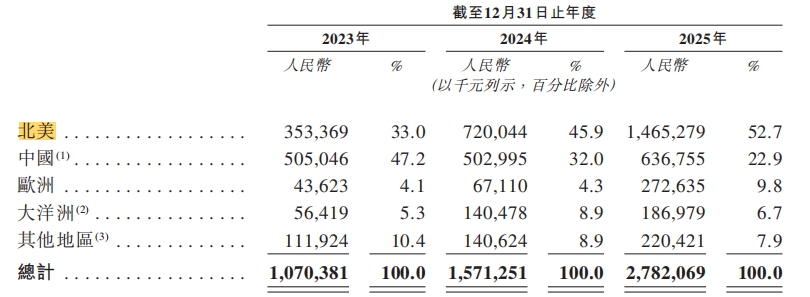
In 2025, Peelerz became the peeling gummy with the largest global retail sales, and Amos' overseas revenue increased from 565 million yuan in 2023 to 2.145 billion yuan, with its share soaring from 52.8% to 77.1%. Among them, the contribution of the single North American market reached 1.465 billion yuan, accounting for 52.7% of the total revenue.
When a company's growth engine, profit source, and brand potential are all based in North America, the title of "the largest candy company in China" seems more like an empty name rather than a reflection of consumer reality.
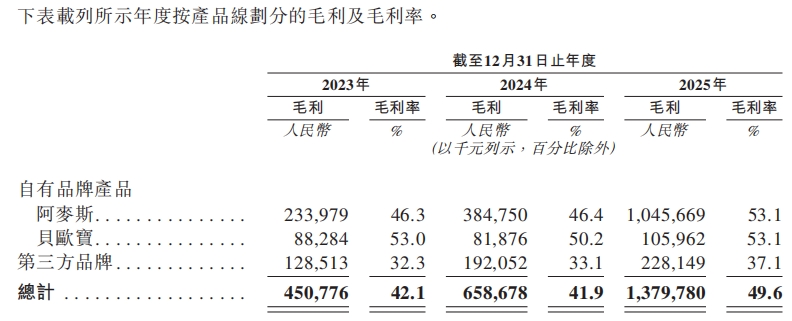
The picture is from the prospectus
The picture is from the prospectus
Concerns about Tariffs, Large - scale Dividends, and Liabilities
In the second half of 2025, the risks of the "North American dependency syndrome" gradually emerged.
In November last year, to relieve inflation pressure, the United States announced a waiver list for "reciprocal tariffs" but explicitly excluded retail candies. To cope with the risks, Amos set up a factory in Vietnam, but Vietnam is also a sensitive area for the adjustment of US trade policies.
From 2023 to 2025, Amos' tariff expenditures were 6 million yuan, 31.7 million yuan, and 108 million yuan respectively, an increase of about 17 times in two years, and the year - on - year increase in 2025 was as high as 240%.
The company admitted that the increase in tariffs in 2025 was mainly due to the levies by the US government. In 2025, Amos' net profit was 600 million yuan, and the tariff expenditure reached 108 million yuan - which means that for every 6 yuan earned, nearly 1 yuan had to be handed over to the US government.
The increase in tariffs is just a cost pressure. What really makes people uneasy is the loosening of the consumer end.
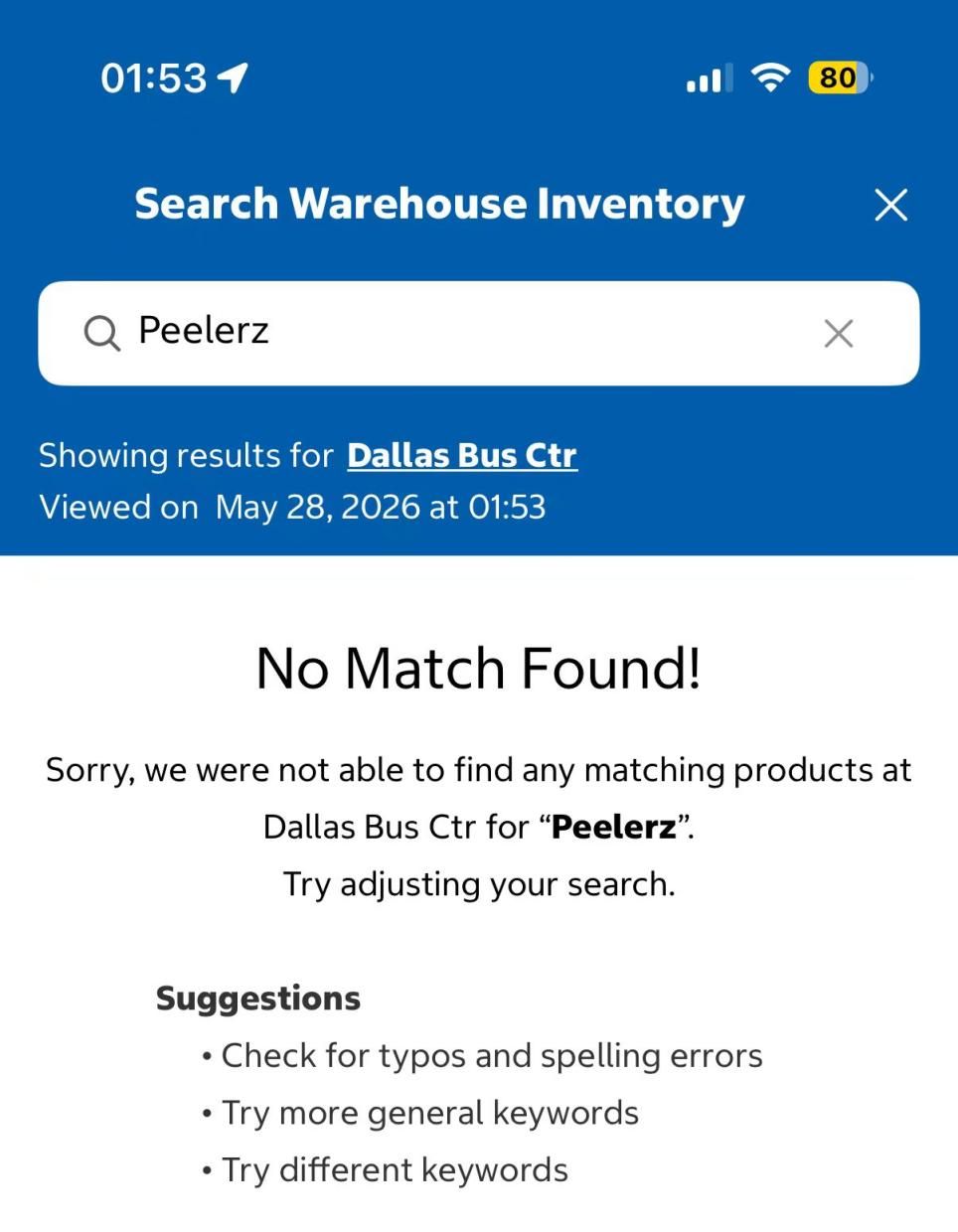
After entering 2026, the popularity of Peelerz on TikTok has significantly declined. Offline, a consumer in Dallas, Texas, told 36Kr that Peelerz had been removed from the local Costco near his home, and he could only go to some small shops to repurchase it.
According to a supplier of Costco, Costco operates independently in each region in the United States and adjusts products every 6 - 7 months based on sales. The decline in the sales of Peelerz in a certain region may be the key reason for Costco to remove it from the shelves.
The picture is provided by the interviewee
Actually, Amos itself has also warned about the uncertainty at the channel end. The prospectus states: "We rely on a small number of customers who account for a large proportion of our revenue. The loss or significant reduction of sales from major customers may have an adverse impact on our operating performance."
What is more worthy of inquiry than external risks is where the money has gone? The company's financial operations are also worthy of attention.
From 2023 to 2025, Amos paid dividends of 32.3 million yuan, 42.1 million yuan, and 456 million yuan respectively. Just in 2025 alone, the dividend amount accounted for 76% of the net profit of that year.
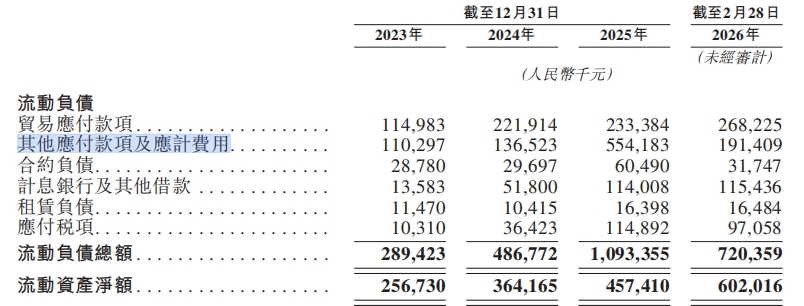
The consequence of large - scale dividends is directly reflected in the balance sheet. As of the end of 2025, Amos' total liabilities reached 1.416 billion yuan, a year - on - year increase of 79.7%.
Among them, the current liabilities were 1.093 billion yuan, a sharp increase of 277.2% compared with 289 million yuan in 2023; the "other payables and accrued expenses" in the current liabilities were as high as 554 million yuan. Amos admitted that this amount was mainly for dividends payable; from the perspective of equity distribution, just from the dividend in 2025, Ma Enduo, who holds 59.09% of the shares, directly received 269 million yuan.
However, during the same period, the company's cash and cash equivalents on the books were only 318 million yuan. Amos' asset - liability ratio has also been pushed to 62.5%, exceeding the generally recognized reasonable range of 40% - 60% in the food and beverage industry. This "distribute - first - then - raise - funds" operation makes it hard not to suspect whether this company's IPO is for market expansion or for the major shareholder to "secure the profits".
The picture is taken from the prospectus
Can't Return to the Domestic Market: "Consumers Don't Eat Candy Anymore"
An undeniable fact is that Amos is a sample of Chinese traditional manufacturing going global.
This enterprise has proved the presence of Chinese brands on the global shelves with a gummy, but has exposed the structural costs of the "globalization - first" path with a prospectus.
As a domestic enterprise, Amos "wants to come home", but the situation at home has changed. Although Amos is popular in Sam's Club, it cannot transfer the brand awareness to the mass market. The minds of Chinese consumers have already been occupied by brands such as Hsu Fu Chi, Want Want, and White Rabbit.
In terms of retail sales in 2025, Amos ranks first in the Chinese candy industry with a market share of 1.1%, leading China Want Want's 0.8% and Bright Food's 0.2%.
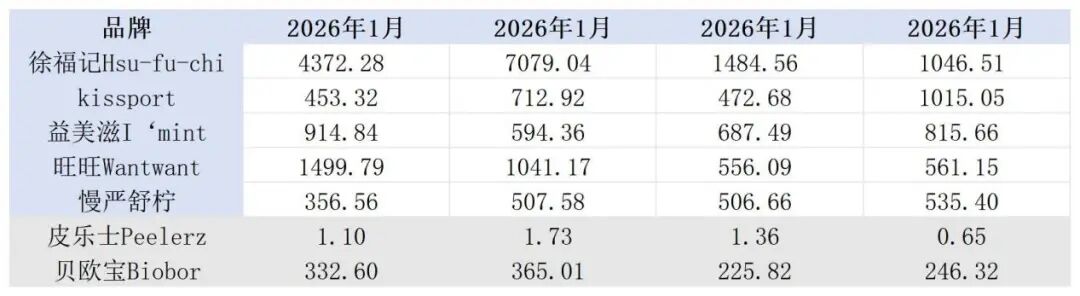
However, the overall pattern of the domestic candy market is highly fragmented, and such a share is difficult to form an absolute monopoly. At the online level, data provided by Jiuqian also shows that on Tmall, JD.com, and Douyin, the sales of Amos' two main brands are far lower than those of Hsu Fu Chi and Want Want.
The data is from Jiuqian Middle Platform; Unit: 10,000 yuan
The more crucial problem comes from the misalignment of market demand.
Compared with the "super - sweet" and "strong - scented" tastes preferred by American consumers, the highest praise from Chinese consumers for desserts is "not sweet". Under the health trend of zero - addition, low - sugar, and even sugar - free, sugar has also been labeled as a "calorie bomb", "skin aging accelerator", and "cause of children's hyperactivity".
The data comparison from Frost & Sullivan is even more striking: the annual per - capita sugar consumption in China is about 11 kilograms, less than half of the global average.
Meanwhile, there is no "technical barrier" in traditional industries like the candy industry.
Actually, the new category of peeling gummies was first developed by the Chinese R & D team of Orion. Xiong Boshi under Hsu Fu Chi has also launched peeling gummies with 100% fruit juice content, which seems healthier than Amos' Peelerz.
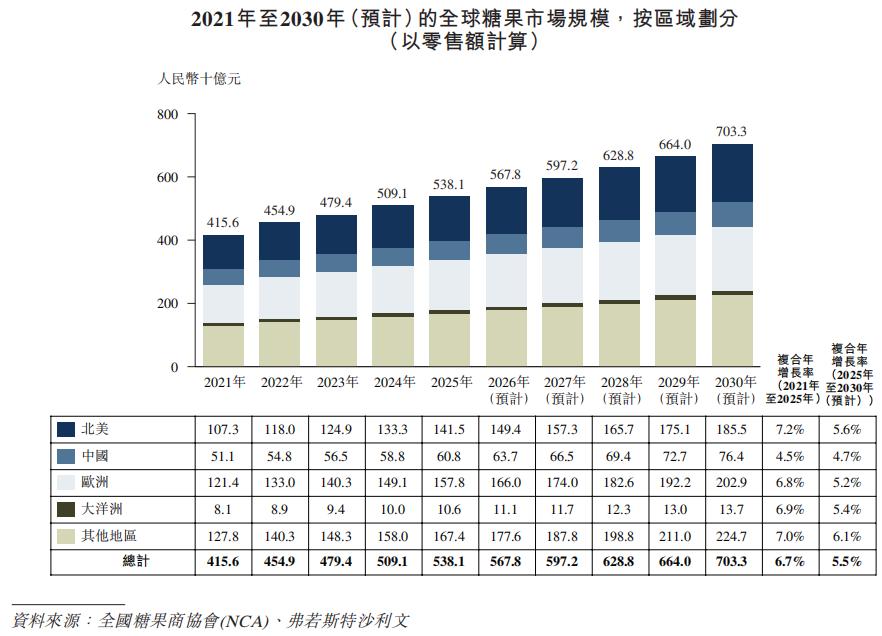
The picture is from the prospectus
Of course,