Sales plummeted and the government stepped in to rescue the market. What has China's auto market experienced in the past six months?
The state has finally decided to step in personally.
Using a recent popular meme, it's really "showing its face."
After restarting the campaign to promote automobile sales in rural areas, nine departments including the Ministry of Commerce have recently issued a series of new policies in quick succession, aiming to boost automobile consumption across the entire supply chain.
Behind this series of favorable policies is a rather unoptimistic performance in the automobile market.
Data shows that domestic automobile sales have declined year-on-year for eight consecutive months. From January to May, the cumulative sales of passenger cars in China reached 7.099 million units, a year-on-year decrease of 19.5%.
Professional institutions are also revising their forecasts for the whole year. At the beginning of the year, the China Passenger Car Association predicted a slight 1% decline in domestic passenger car sales this year, but it has recently adjusted this figure to 11%.
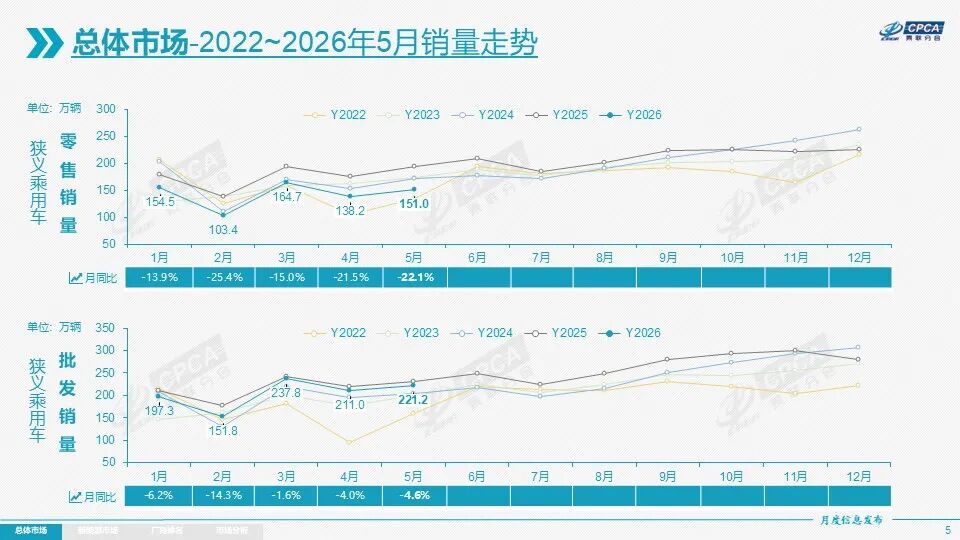
Trend of passenger car sales
China's automobile market, which has achieved year-on-year positive growth for five consecutive years, may experience a sudden slowdown this year.
NO.1
Plunge of fuel-powered cars, slump of small cars
Trading price for volume no longer works
The sluggishness of the automobile market seems to be a "general decline" on the surface, but a breakdown by price range reveals a stark contrast.
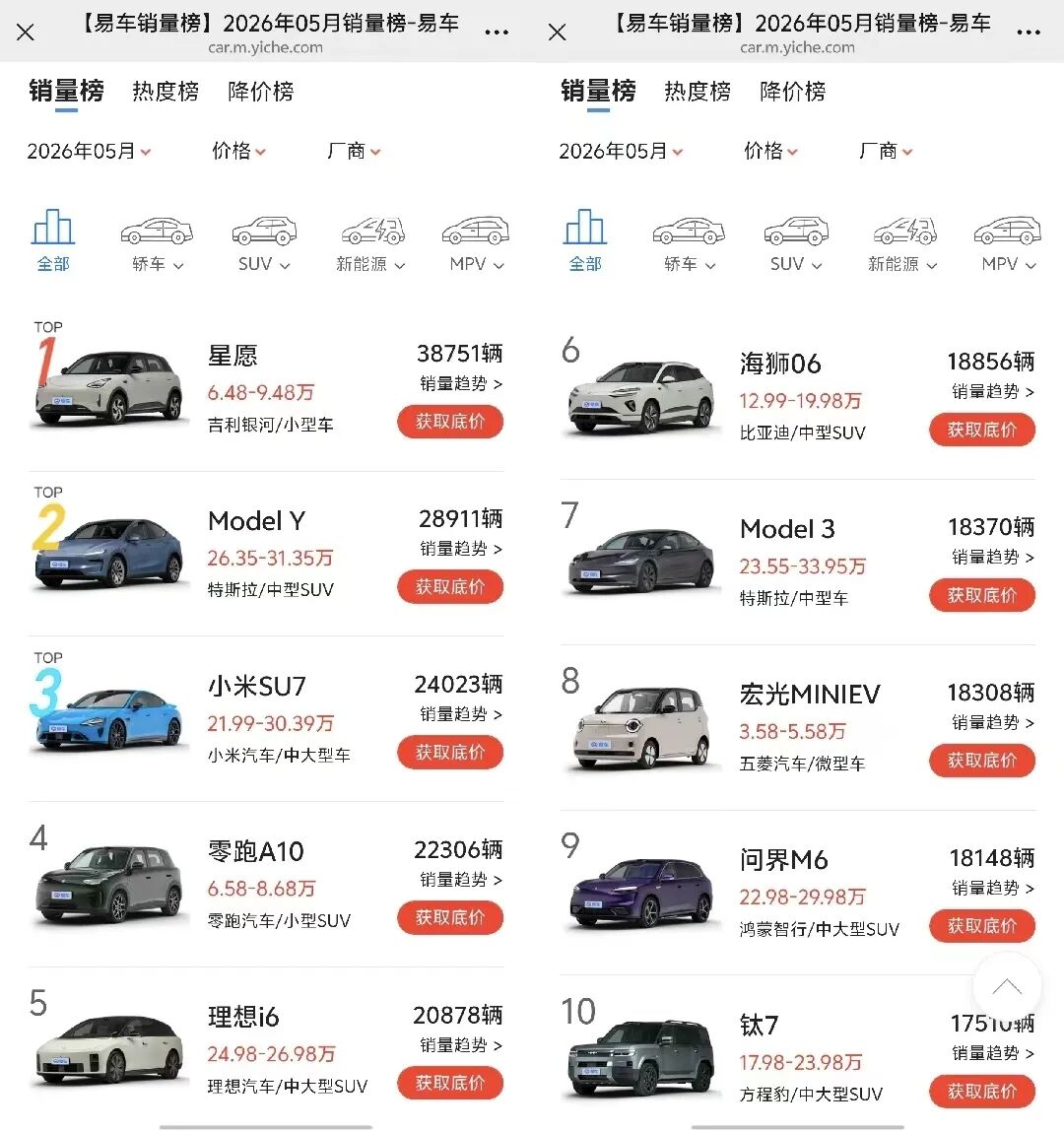
Top 10 best-selling car models in May
Mid - to high - end models can still hold up, while economy models continue to weaken.
From the price structure of the top 10 best-selling car models in May, it's clear that only 2 models are priced below 100,000 yuan, while 6 are mid - to high - end models priced above 200,000 yuan.
The retreat of policy dividends hits price - sensitive consumers hard.
Before 2025, consumers who scrapped their old cars and bought new energy vehicles could directly get a subsidy of 20,000 yuan. Coupled with the full exemption of purchase tax, and combined with local subsidies and corporate discounts, an A00 - class small car priced at over 30,000 yuan could cost less than 10,000 yuan after all the deductions.
In 2026, not only is the purchase tax halved, but the subsidies are no longer uniformly applied. For the same car, the price difference at the time of purchase has increased by 10,000 to 20,000 yuan in less than a year, directly discouraging consumers.
Data shows that only 87,000 A00 - class mini - cars were sold in May, a year-on-year plunge of 44%. It only took one year for this once - popular segment to become a niche market.
On one hand, cars can't be sold due to the rising purchase price. On the other hand, sales remain stagnant even with price cuts.
The news of "Buying a Land Rover Range Rover Evoque L for 160,000 yuan" has recently gone viral in the automobile circle. Compared with the nearly 900,000 - yuan purchase price in the past, the price drop is astonishing. It's not just Land Rover. The prices of luxury cars, which were known for their stable prices in the past, have also plummeted. Mercedes - Benz C - Class, BMW 3 Series, Audi A4L, etc. have all dropped to the 200,000 - yuan range.
According to the statistics of the China Passenger Car Association, 32 fuel - powered cars officially announced price cuts in the first five months of 2026, an increase of 13 compared with the same period last year.
However, the result is that fuel - powered cars have disappeared from the top 10 best - selling lists, and their market share has shrunk to 37.1%.
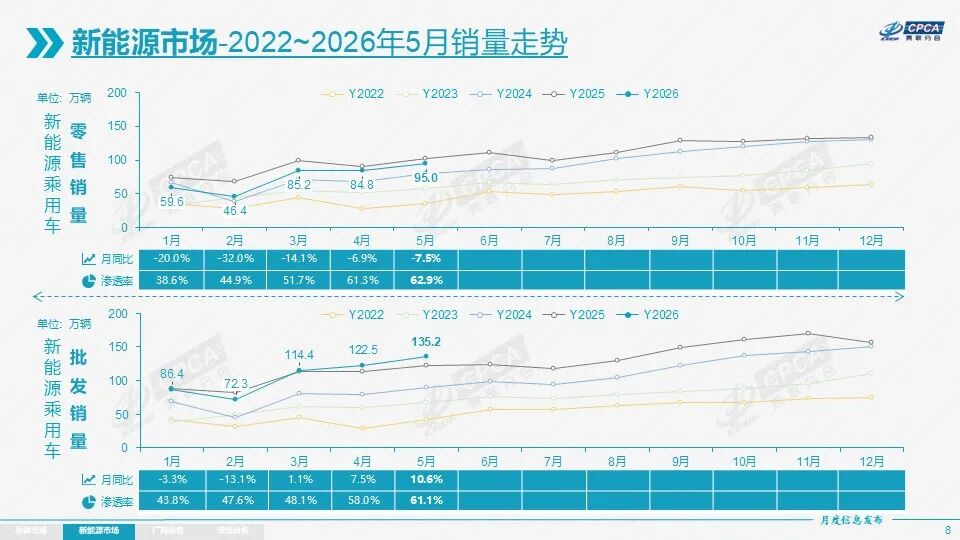
Continuous increase in the penetration rate of new energy vehicles
However, new energy vehicles have not been able to fully take over the market share vacated by fuel - powered cars. At first glance, the relevant data seems good. The penetration rate of new energy vehicles has remained above 60% for two consecutive months, hitting a new high. However, the cumulative retail sales from January to May were 3.697 million units, a year - on - year decline of 15.1%.
The most embarrassing situation is for extended - range vehicles. Only 85,000 units were sold in May, a year - on - year decline of 28%, the largest single - month decline in the past five years.
The most terrifying thing is not that cars can't be sold, but that they are sold at a loss. That's really frustrating.
In the first quarter, the profit margin of the automobile industry continued to decline to 3.2%, significantly lower than the average of 4.9% for industrial enterprises above the designated size in the country. There are no winners in the entire industry.
As Zhao Fei, the general manager of Changan Automobile Group, once said, "Now, enterprises can no longer make a profit just by selling cars."
NO.2
From "passing off inferior products as good ones" to "passing off good products as inferior ones"
New tricks in the price war
As the market continues to shrink, "survival" has become the primary goal of automobile enterprises. The price war, which used to be a short - term marketing strategy, has evolved into a regular survival competition.
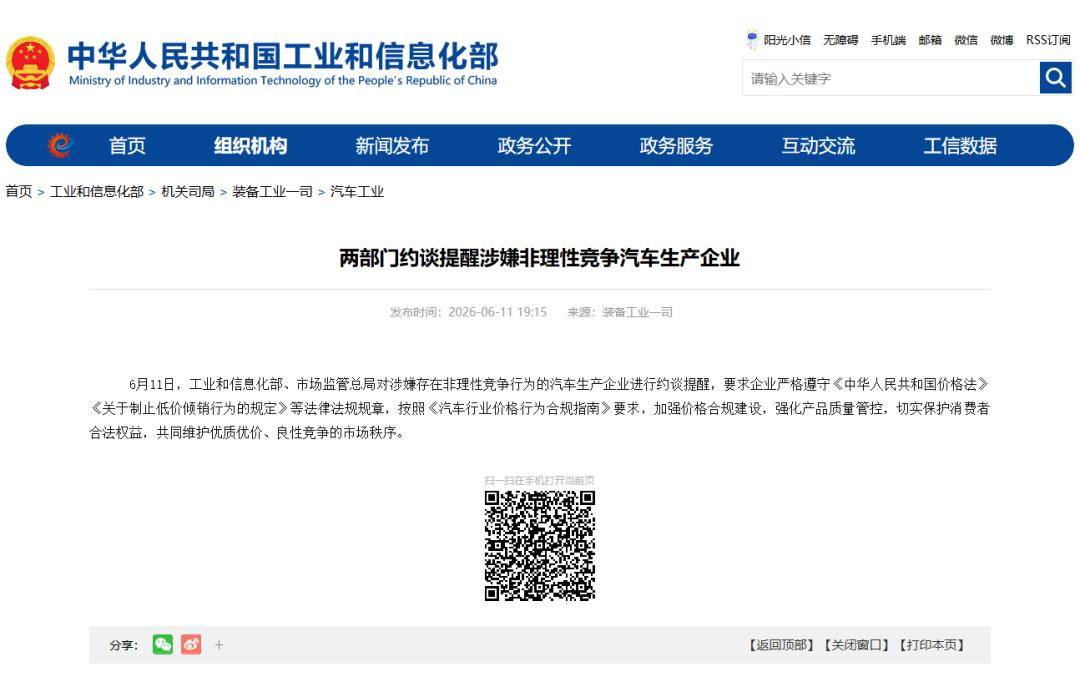
Two departments interviewed and reminded automobile production enterprises suspected of irrational competition
On June 11, the Ministry of Industry and Information Technology and the State Administration for Market Regulation jointly interviewed and reminded automobile enterprises suspected of irrational competition, requiring them to strengthen price compliance, enhance product quality control, and jointly maintain a market order of high - quality products at reasonable prices and healthy competition.
It's worth noting that the two departments did not directly name specific enterprises in the interview. However, this "nameless" warning precisely shows the universality and complexity of the price war.
Industry insiders point out that although price cuts seem beneficial to consumers, they actually hide the risk of cost reduction.
To offset the profit gap caused by price cuts, some automobile enterprises are quietly reducing costs in terms of hardware, software, and supporting service rights.
"The first - generation model in 2021 uses much more solid materials than the current new models," sighed a maintenance technician at a 4S store, revealing a lot of information.
In recent years, car owners have frequently complained about implicit simplification of production processes and material downgrades. In addition to problems with the vehicles themselves, complaints such as "the charging piles promised at the time of purchase are significantly under - equipped during actual installation," "the battery range and power are significantly reduced after OTA upgrades," and "4S stores refuse to honor the promised insurance renewal rebates" have also remained high for a long time.
Data from a third - party platform shows that in May alone, more than 27,000 valid complaints were received, a year - on - year increase of 93%. Nearly 80% of these complaints were about quality issues.
Wei Jianjun, the chairman of Great Wall Motors, said, "If I keep reducing costs, I can't guarantee the quality of the cars. We will try not to sell products involved in price wars anymore."
In addition to sacrificing product and service quality to gain a price advantage, selling below cost is also a typical irrational competition behavior.
It is understood that some automobile enterprises, in order to beautify their financial reports in the short term and boost sales, are willing to sell high - configuration models at the price of low - configuration models through the method of "passing off good products as inferior ones." However, in financial accounting, they still recognize revenue according to the high - configuration models, resulting in a seemingly compliant selling price on the books and a falsely high gross profit margin. This not only avoids supervision but also attracts capital.
Or they may beautify the financial reports of the whole vehicle by lengthening the payment period to suppliers and transferring the profits of the parts and components sector; there are also more hidden "accounting - style" price cuts, such as over - shipping and under - invoicing, non - equivalent material exchanges, and debt settlement with goods, which actually drive the terminal transaction price below the production cost.
These practices seem to bring back the memories of the "hundred - group war" and the "burning - money competition of shared bicycles" in the past, where "beating competitors is victory."
The negative effects of the price war are also becoming increasingly apparent.
In the first five months of this year, more than a hundred new car models were launched in China, but the sales of passenger cars decreased instead of increasing, a year - on - year decline of 19.5%. More than half of the automobile dealers are in a loss - making state.
For consumers, the frequently fluctuating prices also make more people adopt a wait - and - see attitude.
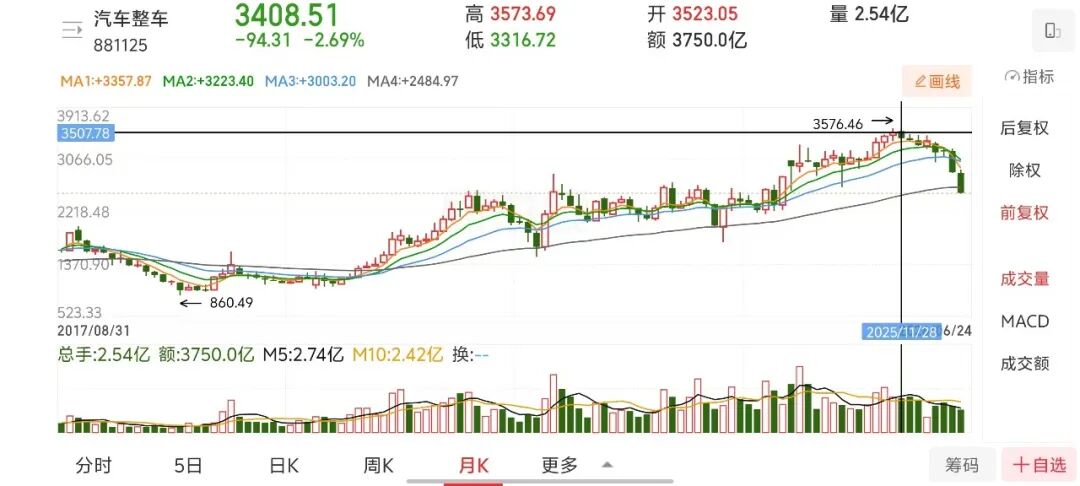
Decline of the automobile manufacturing sector
The capital market is also sluggish.
Under the profit gap caused by "rising costs and falling prices," the stock prices of automobile - related companies continue to decline.
At the BYD shareholders' meeting in June, in response to shareholders' doubts, Chairman Wang Chuanfu said that the overall pessimistic sentiment of the capital market towards the industry is difficult to reverse in the short term, and the stock prices do not match the real value of the enterprises.
Wang Xia, the president of the Automobile Industry Committee of the China Council for the Promotion of International Trade, said bluntly that current automobile enterprises are under pressure in terms of sales, revenue, and profit. The marginal effect of the price war is accelerating its decline. The price war in recent years has not only seriously damaged the enterprises but also made consumers tired of it.
"Sales without profit support are just an empty number game."
NO.3
Can't sell in the cities
Can they breathe in the sinking and overseas markets?
Facing the obvious deviation in the market's self - regulation, the "visible hand" has begun to take action.
On June 18, the National Development and Reform Commission announced that it would allocate the third batch of 62.5 billion yuan for the trade - in program of consumer goods. This is what people usually call the "national subsidy." The first two batches of funds for the trade - in program of consumer goods this year totaled 125 billion yuan, and the three batches combined reached 187.5 billion yuan.
The "national subsidy" has been in place for more than two years. According to the statistics of the Ministry of Commerce, as of June 22, the trade - in program of consumer goods has cumulatively driven the sales of relevant goods to reach 5 trillion yuan, benefiting 630 million people. Among them, the sales of automobiles through the trade - in program accounted for 63%. More than 21 million people have been supported to purchase new cars, with an average subsidy of 14,000 yuan per car.
On the same day, five departments including the Ministry of Industry and Information Technology and the Ministry of Commerce jointly launched the 2026 new energy vehicle campaign in rural areas. 155 car models were included in the first - batch list, covering a price range from 30,000 to 300,000 yuan. Popular models such as Tesla Model 3, Xiaomi SU7, and LeDao L60 are all on the list.
It's worth noting that this campaign is 17 years after the first - round automobile campaign in rural areas in 2009. That campaign drove the sales of rural automobiles to exceed 1.3 million units and stimulated consumption of more than 80 billion yuan.
The significance of this campaign far exceeds that of the past. In the past, it was about activating the incremental market. Now, it's about competing for the existing market. It's no longer about "selling unsalable cars in rural areas," but about rural areas coming to "save the day."
China GT
On June 23, the Ministry of Commerce, together with multiple departments, issued two important policies to support automobile consumption, aiming to smooth the consumption of automobiles throughout their life cycle from the two major aspects of the circulation link and the after - sales market.
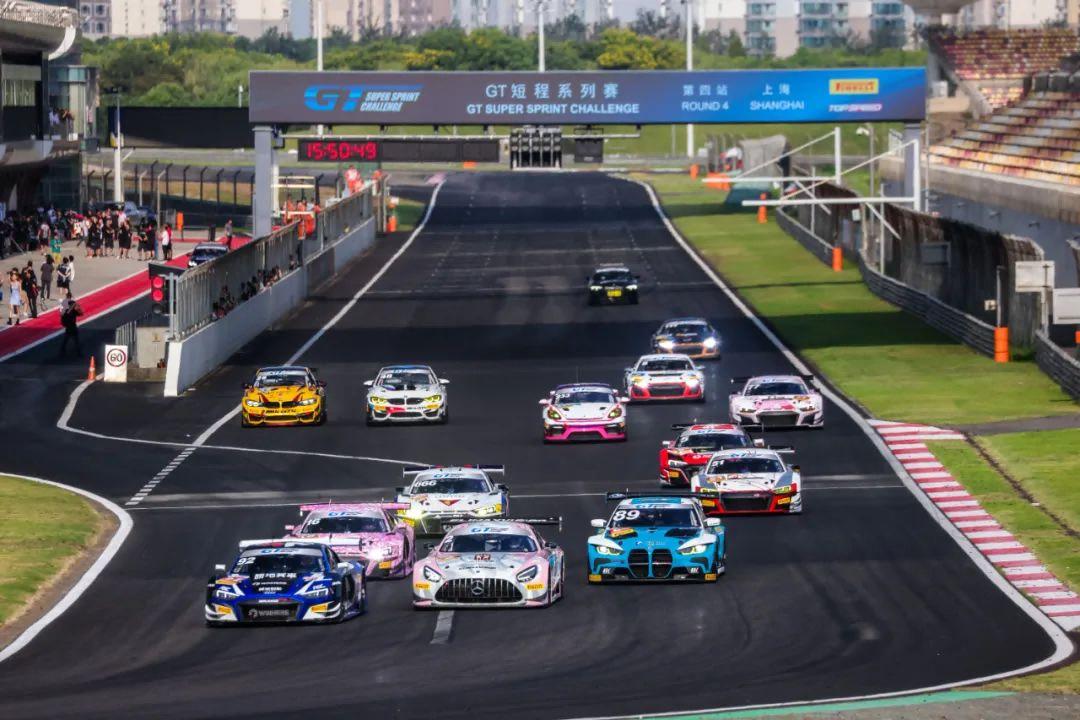
For example, the new policies propose to regulate the development of automobile modification, support the RV camping industry, cultivate new business models for classic cars, optimize maintenance and insurance services, develop automobile racing, and innovate the automobile rental model.
At the same time, new policies to facilitate car purchases have also been implemented.
On the same day, the General Office of the Ministry of Industry and Information Technology and the General Office of the Ministry of Public Security jointly issued a notice. From now on, the information of motor vehicle certificates can be shared in real - time. Domestic small passenger cars can be "purchased, taxed, and licensed on the same day."
This new model not only significantly shortens the car - buying process and reduces the time cost for consumers but also helps to further stimulate consumers' willingness to buy cars.
