On July 1, the new national standard strictly locked the safety bottom line for electric vehicles, while the booming unauthorised battery modification business is hiding huge risks, and automakers should step in to regulate this sector.
Starting from July 1st, two mandatory national standards - GB 38031 - 2025 "Safety Requirements for Traction Batteries for Electric Vehicles" and GB 18384 - 2025 "Safety Requirements for Electric Vehicles" will be officially implemented.
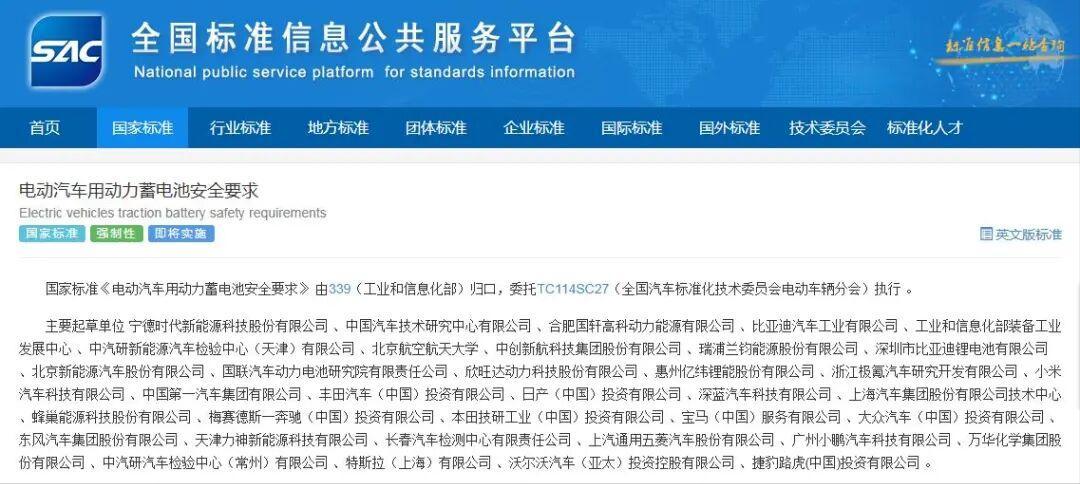
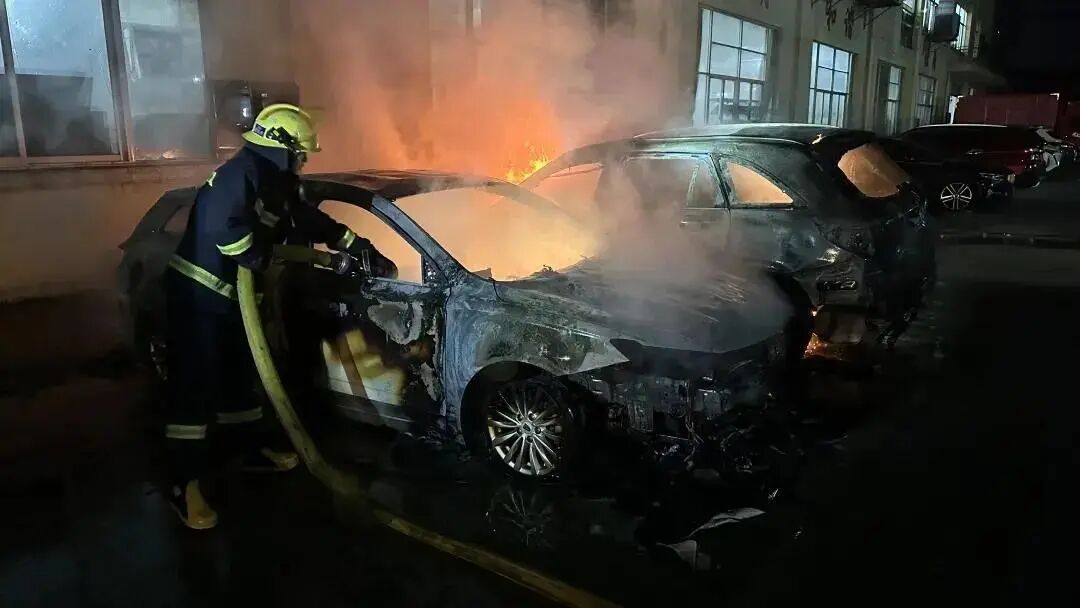
The new national standards have drawn a new line of life and death for the new - energy vehicle industry.
Safety is no longer an added bonus, but an entry ticket. The elimination round is coming.
Previously, the industry standard was "alarm within 5 minutes after thermal runaway", which means that when the battery catches fire, you have five minutes to escape.
The new national standards have raised the bottom - line to a new height: After the thermal runaway of a single battery, the entire battery pack must not catch fire or explode. A thermal event alarm signal must be provided no later than 5 minutes after the occurrence of thermal runaway, and the smoke must not cause danger to the passenger compartment within 5 minutes before and after the alarm signal.
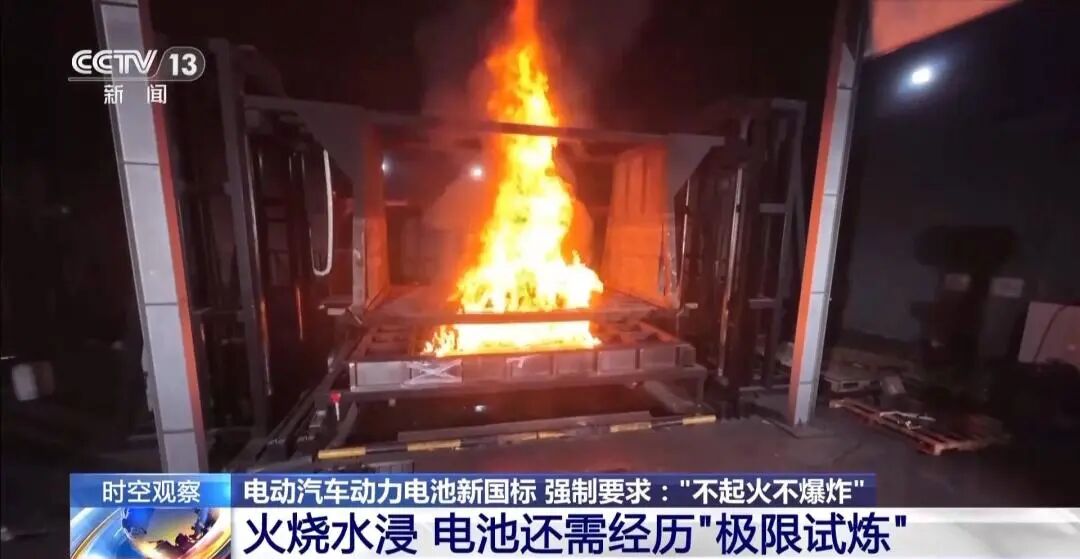
To ensure the achievement of this hard - and - fast indicator, the new national standards have also added two key tests:
One is to withstand three impacts at the bottom with an energy of 150 joules without leakage, rupture, fire or explosion. Moreover, the new national standards have included it in the mandatory unified test system for the first time.
Secondly, it is required that the short - circuit test after 300 fast - charging cycles is still safe.
For a single battery that can complete a fast charge from 20% to 80% of the power within 15 minutes, after 300 fast - charging cycles under fast - charging conditions, an external short - circuit test is required, and there must be no fire or explosion throughout the process.
In addition, the "one - key power - off" device is defined as a physical power - off device for the first time and cannot be controlled by software. When the vehicle is stationary and not in the charging or discharging state, the driver can cut off the power of the drive system through a single action (touching or long - pressing).
For consumers, it is more reassuring to buy a car. For car manufacturers, the past approach of piling up battery cells, competing for battery life and cutting costs will no longer work, because the bottom - impact test targets real - life scenarios such as daily under - body scraping and being pierced by flying stones.
The fast - charging cycle test directly targets the current crazy promotion of "400 - kilometer range with 10 - minute charging" by various companies, turning all the selling points into mandatory passing lines.
Safety is no longer an added bonus, but an entry ticket.
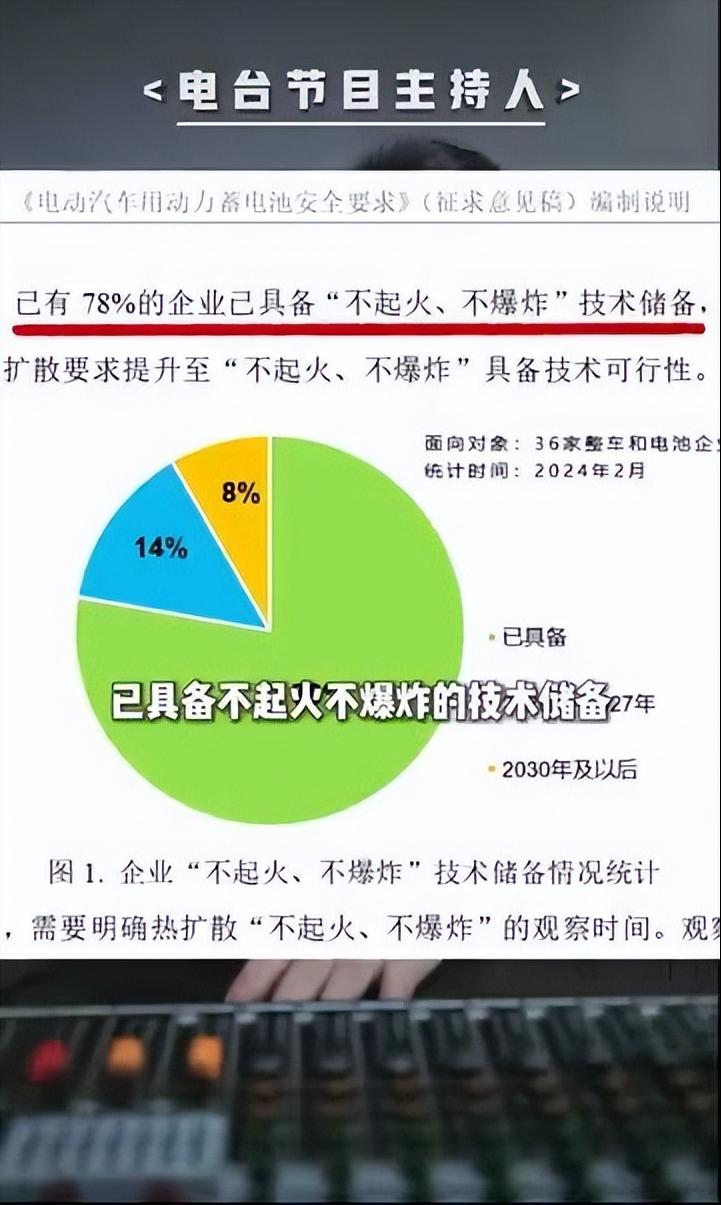
Previously, the research data of the Ministry of Industry and Information Technology showed that 78% of enterprises have the technical reserves to keep up, 14% can barely meet the standards within one or two years, and the remaining 8% of enterprises are basically destined to be directly eliminated.
This threshold is not only difficult in terms of cost, but also in underlying technology.
To prevent fire during thermal runaway is not as simple as pasting a layer of heat - insulating cotton. It is necessary to upgrade the entire chain from the battery cell formula, module structure, thermal management system to PACK protection.
According to industry estimates, the cost of the battery system per vehicle will increase by 15% to 20%. In terms of the selling price, it means an increase of four or five thousand yuan.
For leading car manufacturers with annual sales of hundreds of thousands of vehicles, this cost can be absorbed through economies of scale.
For small and medium - sized brands with annual sales of less than 50,000 vehicles, an additional cost of several thousand yuan per vehicle may mean either raising the price and losing the market or selling at a loss and breaking the cash flow.
The real hidden danger for car manufacturers lies in the market for modifying existing batteries
For car manufacturers, the real pressure does not come from newly - produced cars, but from the business of privately modifying the batteries of tens of millions of existing cars on the road.
According to incomplete statistics, the first batch of new - energy vehicles launched around 2016 have gradually passed the "8 - year or 120,000 - kilometer" warranty threshold for the three - electric system.
In the past two years, the number of new - energy vehicles with expired battery warranties has exceeded 19.5 million, and the total number of out - of - warranty vehicles will reach 41.6 million in the next eight years.
The operating electric vehicles that hit the road in 2018 and 2019 have now entered a period of concentrated battery degradation.
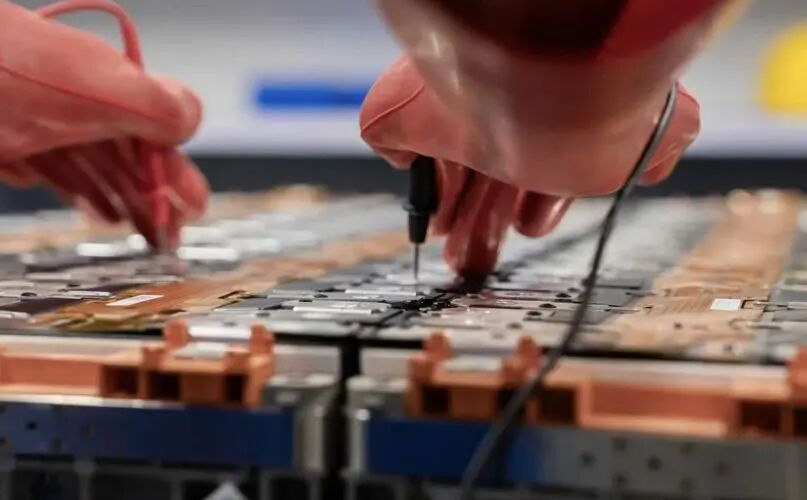
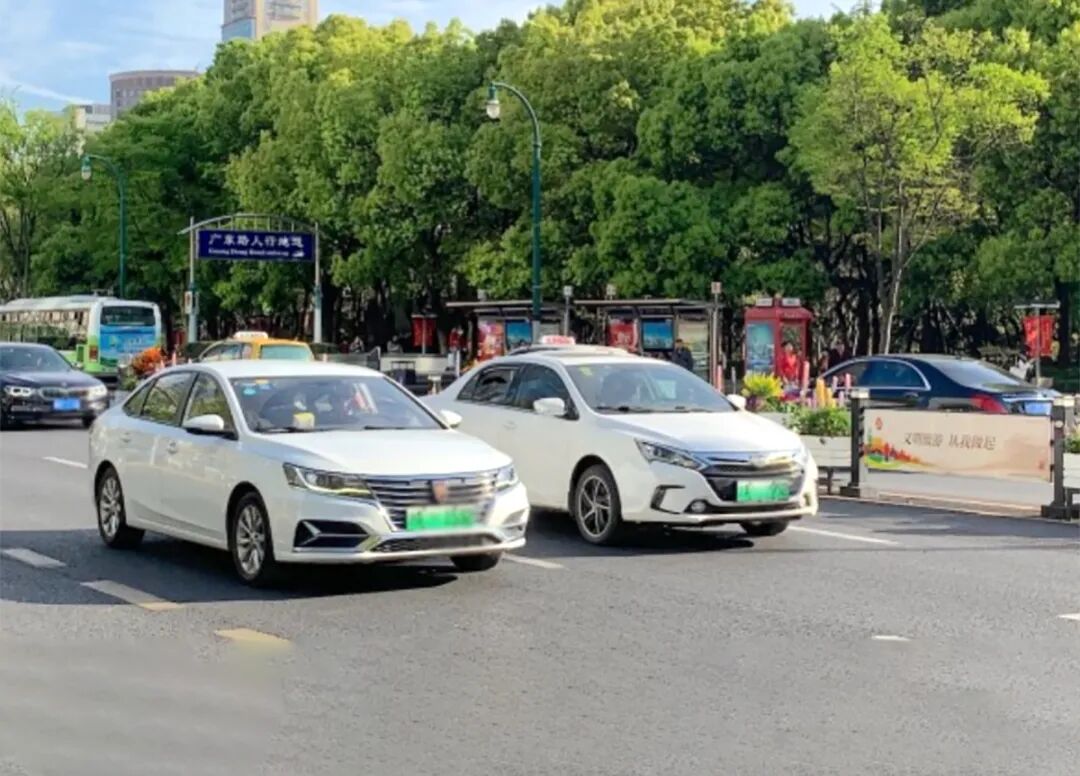
A family car runs 10,000 - 20,000 kilometers a year, and the battery degradation is about 10% - 15% after six years. A ride - hailing car runs at least 100,000 kilometers a year, and the battery health can drop by 30% - 40% after three or four years, and in severe cases, it can drop below 60%.
Some car owners' vehicles still have good hardware, but the battery degradation has a very obvious impact on vehicle use. After the warranty period has expired, the residual value of the vehicle is only four or five thousand yuan, and the official price for replacing the battery is even higher than the price of the car.
If calculated based on the replacement cost of 60,000 yuan per battery, this is a potential market worth 2.5 trillion yuan.
Even if only 10% of the demand is for privately adding batteries, it is enough to attract many shop owners to enter the market.
For car owners who are anxious about battery range, they are very excited about the information of "range - extender packs" and "battery upgrade" services appearing on social platforms, which can increase the range by 100 - 200 kilometers for more than 10,000 yuan. Compared with the official price of five or six thousand yuan for battery replacement, it means a net saving of tens of thousands of yuan.
However, there are huge risks and hidden dangers behind this.
On the one hand, modifying new - energy batteries, especially adding storage batteries or replacing storage batteries with a rated voltage that does not meet the original factory settings, is a clear illegal act. There are still fresh memories of cases where auto repair workers were sentenced for tampering with battery data.
On the other hand, many added batteries are placed in the trunk. Once a rear - end collision causes damage and leads to a fire, or a fire breaks out due to construction, it will inevitably lead to disputes over compensation liability.
Now, the new battery regulations have firmly established the safety bottom - line. The design logic of the entire battery system has been completely changed, and battery problems are problems where "major accidents are not allowed".
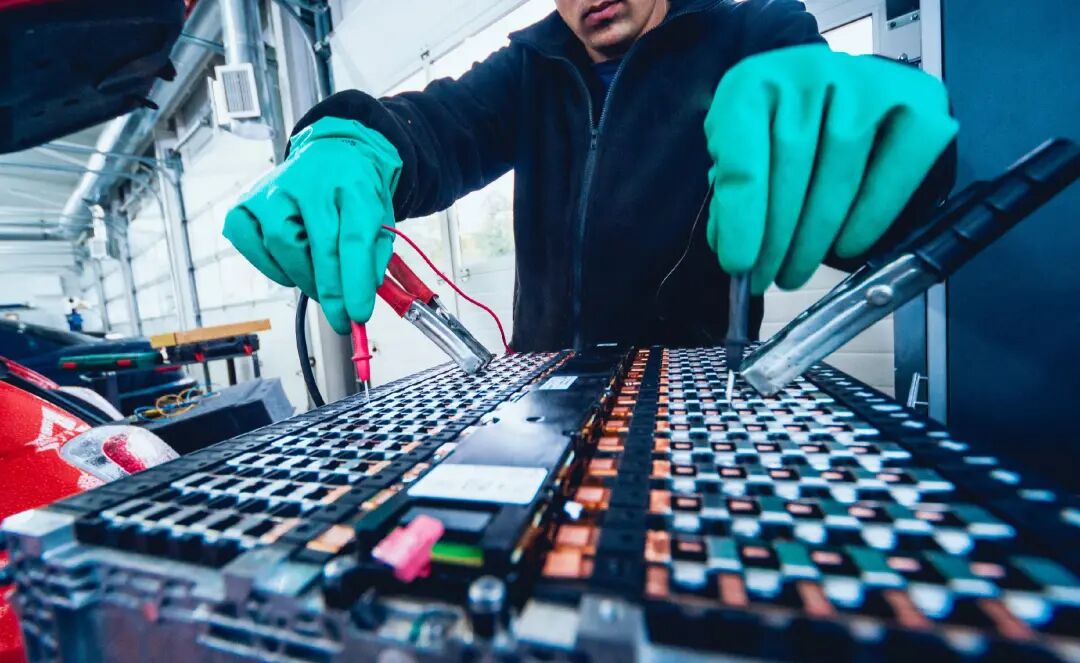
The battery cell design, thermal management system, battery pack structure and software monitoring system all need to be upgraded. It is easy to manage new cars, but once problems occur with existing cars, it will cause great harm to car manufacturers.
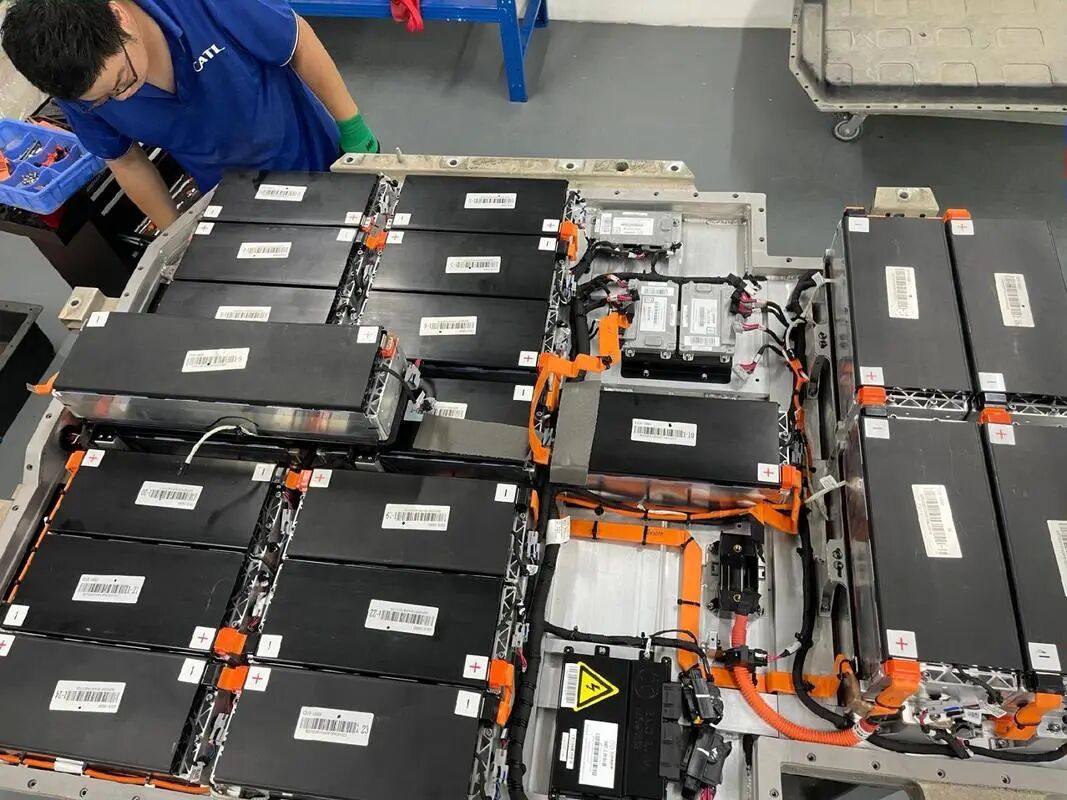
People in the industry know very well that most of the modified batteries are second - hand dismantled battery cells, echelon utilization batteries, or even sub - standard B - grade battery cells, and the cost is less than one - third of that of genuine products.
Without the original thermal management system and the matching BMS battery management system, simply find a workshop to assemble the battery cells and connect them to the original high - voltage circuit, and the work is considered finished.
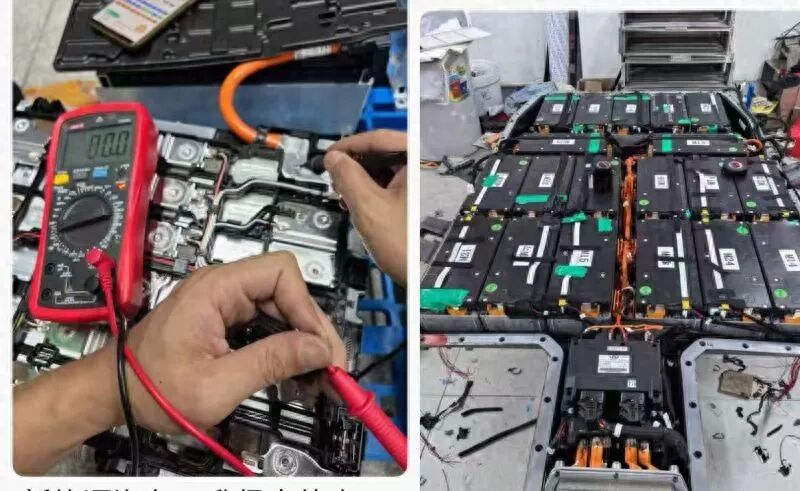
The risks are obvious.
If the voltages of two batteries are inconsistent, there is a lack of temperature control, or the wiring is not standardized, any problem in these links will lead to thermal runaway.
Data from the fire department shows that in the electric vehicle fires in the past few years, more than 60% involved illegally modified batteries, and the combustion speed is five times faster than that of original batteries. There have been accidents of self - ignition of modified batteries in Jinan and Changzhou. In the mildest cases, the car is burned, and in the most serious cases, surrounding vehicles are ignited. Car owners not only cannot get insurance compensation but also have to pay hundreds of thousands of yuan in compensation.
Don't let the business of privately modifying batteries ruin the future. Car manufacturers have to step in even if they don't want to.
In the past, car manufacturers didn't want to manage, thinking that problems with modified batteries had nothing to do with them, as it was the car owners who found workshops to make the modifications. They were also reluctant to open up modification, because the premise of the original three - electric system warranty is to use all original parts. Once modification is opened up, the entire warranty system will be in chaos.
However, after the new regulations came out, the public is more sensitive to car - burning incidents. Once a fire breaks out, the public's first reaction is always "Another electric vehicle of a certain brand has self - ignited", and the reputation of car manufacturers will be damaged.
Moreover, many modifications are very concealed. After an accident, the car is burned beyond recognition. The identification period is long and the cost is high. Car manufacturers have to spend a lot of energy to prove their innocence. Even if they win the lawsuit in the end, the loss of brand image cannot be made up.
In the past, the responses of car manufacturers mostly remained at the level of "blocking": for example, adding a unique identity code to battery components, monitoring battery data in real - time on the cloud, and pushing warnings when abnormalities are found. These are only temporary solutions, not fundamental ones.
Car manufacturers have encrypted BMS, while there are experts in the private sector who can crack the protocol; you have component identity verification, and modification factories have solutions to bypass monitoring. The evil always grows faster than the good.
Therefore, car manufacturers have to step in even if they don't want to.
Since April 1st this year, the "Interim Measures for the Recycling and Comprehensive Utilization of Waste Power Batteries of New - Energy Vehicles" have been officially implemented, clearly requiring car manufacturers to open up battery technology information to compliant third - parties, breaking the monopoly of car manufacturers on maintenance technology.
In the future, qualified third - party repair shops can also carry out regular battery maintenance and replacement, and the cost will naturally come down.
There is also a traceability system of "one battery, one code". Each new battery has a unique code, and it will be more and more difficult for inferior battery cells to pretend to be genuine products and enter the market.
For car manufacturers, doing well in the existing market is actually an opportunity to build the lifelong value of users. There are many capable people in the market, and it is impossible to ban everything.
Car manufacturers might as well step in and do the certification themselves. On the one hand, they can develop "official echelon batteries". Use recycled batteries with a health degree of 80%. After certification and warranty, the price is half of that of a brand - new battery, only a little more expensive than roadside shops, but car owners can buy with confidence.
In addition, they can also create a "Tuhu Car Maintenance in the battery service field" - provide standards, training, accessories and a traceability system for roadside shops. You hang my brand, use my accessories, work according to my process, and I'll take responsibility if something goes wrong, turning roadside shops that operate in an unregulated way into "regular troops".
The service experience of car owners will be improved, car manufacturers will be able to manage the responsibility chain, and roadside mechanics will