Farewell to the past decade of hardware going global, the former CMO of Anker has launched a Memory product for the AI era | Hard-K Interview
Author | Huang Nan
Editor | Yuan Silai
In 2024, when Wang Shiyuan resigned from Anker after working there for nine years, he found himself facing a brand - new world.
Wang Shiyuan witnessed the golden decade of hardware going global. He was among the first group of people in China to build overseas marketing systems and establish rules. He joined Anker in 2015. He first worked on overseas markets and then on the domestic market. He served as Anker's CMO and later as the President of the China region. At most, he led a team of four to five hundred people.
In 2025, when he left Anker to start his own business, there was already a mature process for hardware startups going global: making samples, launching crowdfunding campaigns, using the crowdfunding results to raise funds, and finally mass - producing the products. However, Wang Shiyuan noticed that the ROI of this path was getting lower and lower. There were more and more crowdfunding projects, but most of them ended up losing money for the sake of popularity. The overseas marketing channels have changed from being dominated by Meta and Google in the past to being scattered among podcasts, social media KOLs, etc. "What Meta could achieve ten years ago, neither Meta nor Kickstarter can achieve today." Wang Shiyuan told Hard Krypton.
The extensive product thinking is obviously no longer suitable for this era. AI hardware is becoming a clear trend. However, in Wang Shiyuan's view, no one has truly defined what an AI - native product is and what an AI - native hardware should look like.
This is precisely the most precious time window for startups. Those who can run fast enough have the opportunity to write the answers. Therefore, Wang Shiyuan chose to enter a niche market and develop AI Memory hardware.
Recently, the first product of Suisheng Technology, Memoket, officially started pre - sales overseas. It is an AI Memory wearable hardware, weighing only 11 grams. It comes in two forms: a watchband version and a bracelet version. It has a standby time of over 30 days and a continuous recording battery life of 20 hours. It can structure the information heard in the physical world and transfer it to the Agent when needed, achieving cross - time aggregation and Context (context) connection.
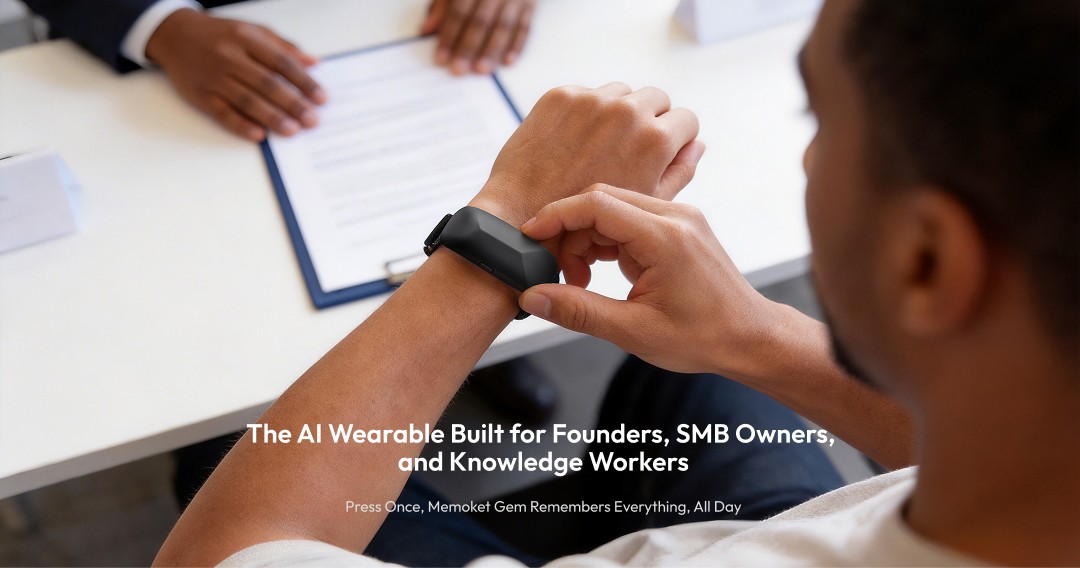
The first product of Suisheng Technology, Memoket Gem (Source/Enterprise)
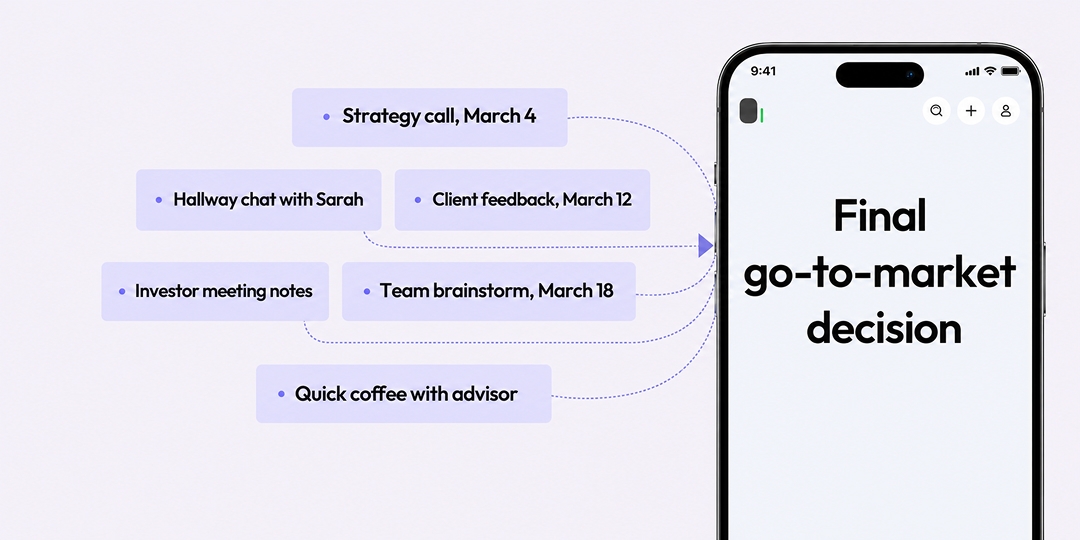
It can be seen that Memoket is a typical software - hardware integrated product. Before this, there were not a few AI recording products on the market. However, Wang Shiyuan believes that most of them only focus on meeting minutes and voice - to - text conversion. In essence, they are still upgraded versions of "recording pens". What Suisheng wants to do is something more fundamental - not just recording a conversation, but managing all of a person's offline information flows, enabling memories to be retrieved, connected, and called up with the help of an AI Agent.
This is the new consensus in hardware startups: hardware is the data entry point, and the subsequent AI capabilities are the moat. "Today, 90% of the information in the physical world has not been deeply digitized and structured. It requires practice, scenarios, and a large amount of engineering efforts. In this process, factors such as cost, efficiency, compliance, security and privacy, and communication with downstream Agents need to be taken into account." Wang Shiyuan said.
The following is a transcript of the conversation between Hard Krypton and Wang Shiyuan, the founder and CEO of Suisheng Technology. The content has been edited:
What Meta Could Do in the Past, Kickstarter Can't Do Now
Hard Krypton: Your early experiences were all related to marketing and sales. I'm quite surprised that you said you're an introvert.
Wang Shiyuan: My work often requires me to express myself. In the past, I used the word "perform". I needed to fit into the professional role and show my state, which was a kind of external performance in the workplace. But in private, I'm relatively quiet.
Hard Krypton: How do you understand this "expression"?
Wang Shiyuan: Recently, a colleague of mine said something that inspired me a lot. He said, "To make a living in the world, the first step is to step out." I had never heard this saying before. In the past, people often said, "You'll have to pay back sooner or later if you make a living in the world," which implies a sense of responsibility. But "the first step is to step out" was said so casually, and it really resonated with me.
If starting a business is "making a living in the world", then "stepping out" first means expressing what you're doing to your target users.
As a product - making company, the key to our decision - making is whether it can serve the target users. From a business perspective, it's about how accurately you find your PMF, which is very important. From a personal value perspective, if what we do every day is just for self - satisfaction and doesn't really solve users' needs, it's a waste of our time. That's the meaning of "stepping out".
Hard Krypton: What changes have you experienced in your personal mindset after starting a business?
Wang Shiyuan: I've had many pleasant surprises in the past six months. One of them is that I found I sleep very well.
Sleep is very important to me. In the past, when I was working, I would have three or four episodes of anxiety - induced insomnia every month. But during this period of starting a business, I can usually sleep for seven or eight hours a day. Even though the current work intensity and scope are definitely greater than before, my mental state is very different, and I still have a lot of energy.
Hard Krypton: This is different from most entrepreneurs we've met.
Wang Shiyuan: I think it's due to my personality. I'm a basketball fan and a Kobe fan. I like competition. I don't just "not fear competition", but I actually enjoy it and treat it like a competitive sport.
Although I may not be very tall, I was always the main player on the school basketball team during my student days. I once made two game - winning shots in the last three seconds. So I'm eager to be the one who makes the decisive shot to overtake and win the game.
Hard Krypton: Let's talk about your experience at Anker.
Wang Shiyuan: I joined Anker in 2015 and stayed there for nine years. In the first five years, I was mainly responsible for brand and marketing work in overseas markets such as the United States, Europe, and Japan. Before that, I had never worked in the consumer electronics industry and was very unfamiliar with overseas markets. I had never experienced what it was like to build a brand from scratch. At that time, except for the main brand, I was involved in the process of building each product category from 0 to 1 and achieved certain results.
Later, I took over the China - region business. In 2020, not many domestic users knew about the Anker brand, and the company's product foundation in China was also very weak. The HR who worked with me on the Chinese market even asked me, 'Brother T, do you want to find a place to retire?' Because more than 90% of Anker's revenue came from overseas, the Chinese market seemed so small and didn't fit into the whole system. I definitely replied that I didn't plan to retire. If I wanted to retire, I would just retire directly instead of finding a position to retire.
In the 3C consumer electronics industry, China is recognized to be a more difficult and competitive market, even more so than the United States. But I'm the kind of person who likes challenges. Choosing to return to the Chinese market is meaningful for Anker and also a very fresh experience for me.
Hard Krypton: At its peak, how many people did you lead at Anker? What's the current size of Suisheng?
Wang Shiyuan: At most, I led a total of four to five hundred people. Suisheng currently has a team of about 20 people.
I feel very lucky. Our co - founders in this startup cover R & D, product, supply chain, and marketing, which is quite comprehensive. Three of them have experienced the entire process of Anker from its early startup stage to its listing and have held key positions in important departments. This is valuable experience for our current startup from 0 to 1 and from 1 to 100.
Hard Krypton: The difference in the number of people between the two is more than ten times. Is management easier?
Wang Shiyuan: It can be divided into two stages. When I first joined Anker, the team had 30 people. Later, it expanded to 200 people, and one - fourth of them were foreigners, based in the United States, the United Kingdom, Germany, and the Middle East.
I've experienced a stage where I thought it was very difficult to manage 40 people, and managing more people was almost unimaginable. But at different stages, the things to learn are also different. From a few people to a dozen or so, and then to truly establishing clear processes, rules, and systems, this process can't just follow the company. Each department has its own business attributes and needs corresponding adjustments and adaptations.
Looking back at the current team, the real feeling is that the difficulty is relatively low. But a more interesting challenge lies in how to organize the team with more AI tools and processes instead of more people.
A classic example of an AI hardware startup is that before the product is officially launched, the number of employees is controlled at around 30. Usually, it takes about 12 to 18 months to develop a product with a certain level of difficulty. So I asked myself at that time, can we achieve this? Can we do it with 50% fewer people?
Since embracing AI is an inevitable thing, we tried to implement it at the organizational level as well. In terms of organizational structures such as R & D, software, marketing, design, and HR administration, we follow the AI - first principle.
For example, one thing that makes me very happy is that although I can't write code at all, with the help of AI, I can independently complete the entire closed - loop of a product: from concept to demo, from marketing design to launch, then to A/B testing, data collection, iterative optimization, and even entrust my personal daily to - do management to the Agent developed by myself. This was almost unimaginable before the arrival of the AI wave, but now it has become the daily state of our company.
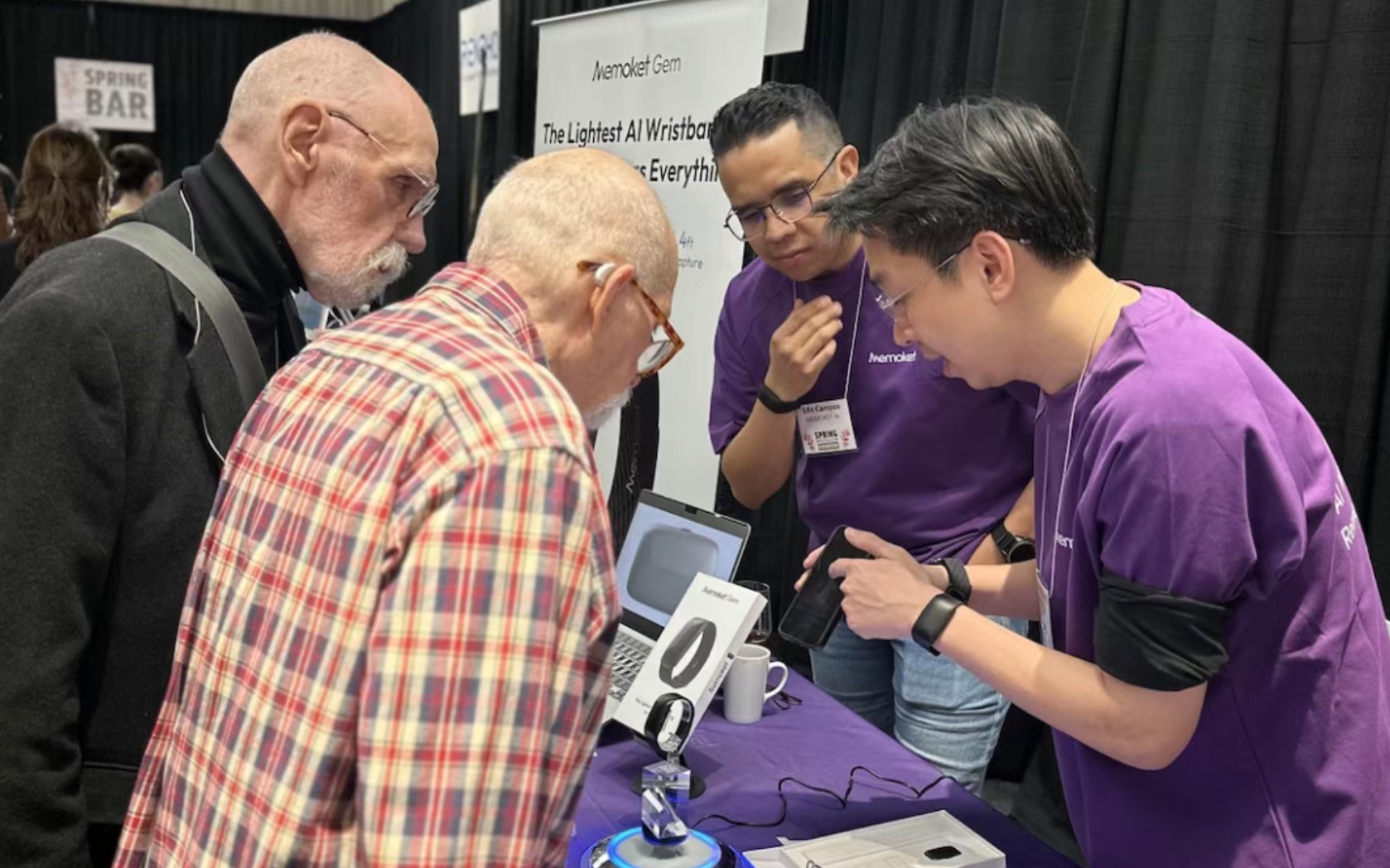
Wang Shiyuan and his team communicating with users offline overseas (Source/Enterprise)
Hard Krypton: From Anker's overseas expansion ten years ago to now, what obvious changes have taken place in the global market environment? Besides the supply chain, in which dimensions does the core competitiveness of Chinese hardware companies lie today?
Wang Shiyuan: From two dimensions, both changes and constants coexist.
Let's talk about the constants first. On the one hand, China's supply - chain advantages and engineer dividends in the hardware industry still exist. The United States has had a gap in hardware talent for twenty years. Except for Apple, there are almost no domestic companies with mature hardware self - R & D and implementation capabilities. Even giants like Google have suffered multiple setbacks in hardware attempts and can only rely on acquisitions now. I think this advantage will not change for at least five years because the migration of the industrial chain and talent takes time. Secondly, at the user level, consumers' demand for hardware products has not changed.
The changes are also obvious. First of all, Chinese faces have a stronger presence in the United States and receive more attention. I think this is good news. A Chinese face is more easily accepted in the United States today than five or ten years ago.
Secondly, the way of information dissemination has changed greatly. Channels represented by podcasts and X (formerly Twitter) are showing an increasingly obvious trend of fragmented and vertical content. I've also been thinking recently: advertising was the core in the past decade, but now there has been a significant change. Advertising may change from the main force to an auxiliary.
The essence of marketing is to deliver good products to more people. It costs a lot of money, often no less than R & D, and sometimes even more. Therefore, the efficiency of the marketing model is very important.
An obvious signal is that the traffic on the Kickstarter platform has not increased much in the past two or three years, but there are more and more projects. Many domestic teams are still trying TikTok. TikTok is advertising - driven - it is effective but inefficient. It can complete the cold start but can't lead to large - scale commercialization.
What Meta could achieve ten years ago, neither Meta nor Kickstarter can achieve today. Many crowdfunding projects with successful PR are actually losing money. I don't deny its feasibility, but it may not be such a cost - effective thing. It is effective in that it can raise funds and verify demand; it is inefficient in terms of commercialization efficiency.
Hardware companies can't afford to talk about losses for three or five years like software or internet companies. Their life cycles are different. Therefore, we must pay more attention to efficiency and make users, data, and revenue form a highly efficient flywheel.
The previous era has passed. We are working hard to adapt to the changes.
Invisible AI Memory Hardware
Hard Krypton: From the perspective of product definition, your team is one of the first in China to propose developing AI Memory hardware.
Wang Shiyuan: In May last year, we first came up with a direction - through a set of hardware, we structure the information that users hear, see, and feel in the physical world and then hand it over to the AI Agent to provide corresponding service experiences.
Many people misunderstand our product as an "AI recorder", but that's just an entry point. At the beginning, when we talked to some institutions, almost no one had a consensus. Sequoia was one of the earliest institutions to have a clear judgment on this direction. It not only invested but also invested in more than one company. It wasn't until after the Spring Festival this year that the voices around us changed, and the consensus came very quickly.
In terms of software services, teams in Silicon Valley have been working on this since the second half of 2024, a little earlier than in China. By this year, more and more large companies, large - model companies, and startup teams are talking about this trend in different ways.
Hard Krypton: Is this direction still in a state of non - consensus?
Wang Shiyuan: I think so. One of the reasons for the non - consensus is that the academic community has not yet clearly unified the technical route. Currently, the mainstream exploration directions are divided into three categories. One is Token - level memory, which incorporates memory into the context window in text form; the second is Parameter - level memory, which embeds memory into the model weights for native retention; the third is Latent - level memory, which compresses memory into high - dimensional vectors for storage.
These dimensions also differ from our product. Suisheng Technology develops To - C hardware. We are more like a user - centered intermediate layer that collects, organizes, and structures the information in the physical world. When users need to give the information to the Agent, the product will call the corresponding context through the MCP protocol.