Is it allowed to drive without wearing a seatbelt? What exactly do the national standards for autonomous driving specify?
Is it okay to drive without wearing a seatbelt? Is it not allowed for the autonomous driving system to disengage 0.1 seconds before an accident?
True autonomous driving is probably not far from us.
Not long ago, the Ministry of Industry and Information Technology made a big move by introducing the draft for approval of the "Safety Requirements for Autonomous Driving Systems of Intelligent Connected Vehicles", which is the first mandatory national standard related to autonomous driving in China.
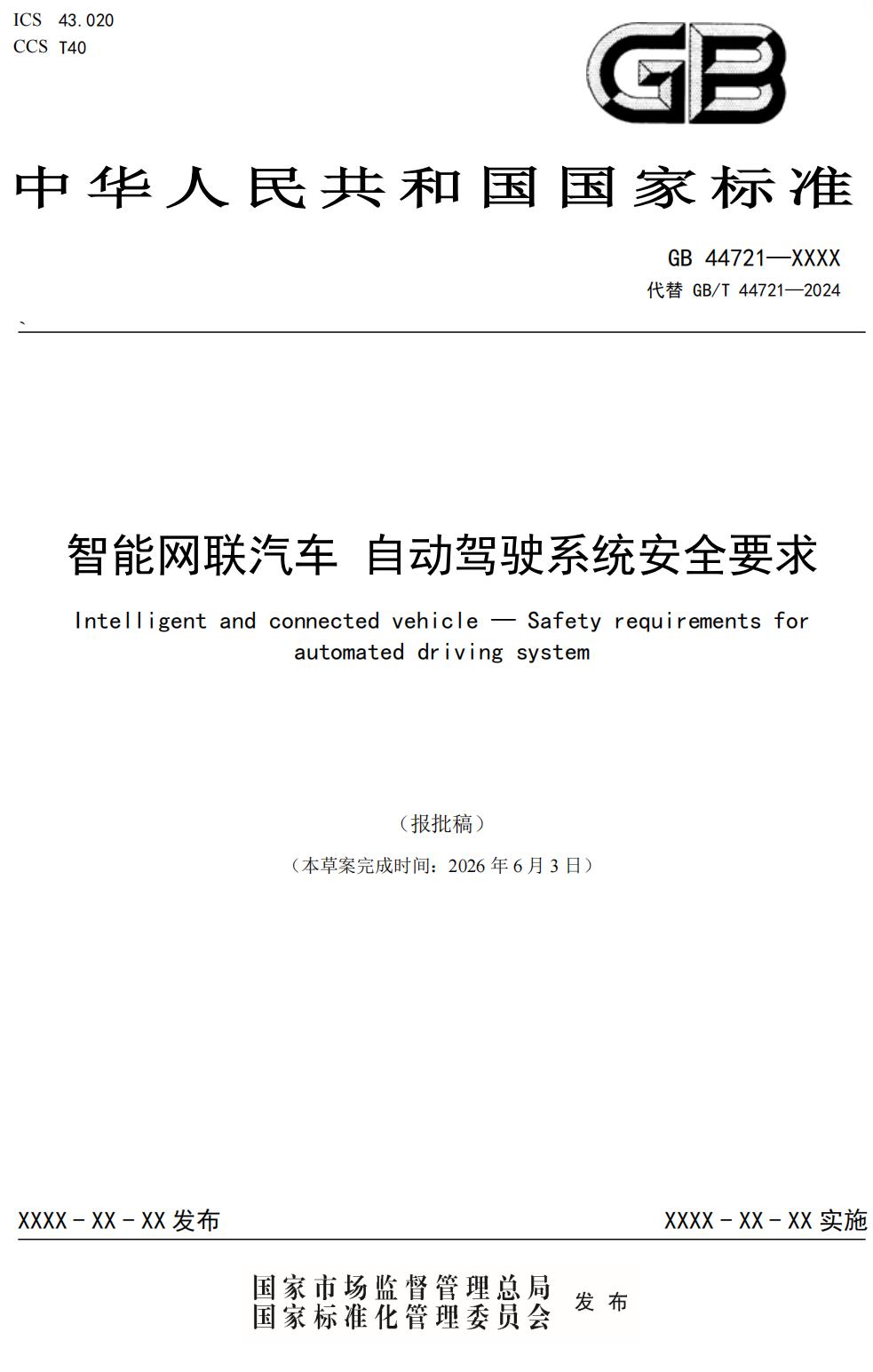
Before the new national standard came out, our standards for autonomous driving had always been very vague. In people's minds, the distinction between L1, L2, L3, and L4 was actually just "the driver is responsible for accidents in L2, and the car - maker is responsible for accidents in L3 and above."
However, there has been no conclusion on what specific capabilities L3 and L4 should have and what safety standards they should meet. So car - makers have always only been able to claim that they are at L2.999+.
Even due to the ambiguity of this explanation, when the new national standard was first introduced, there were even rumors such as "the national standard mandates the installation of lidar" and "the pure vision solution is doomed."

Now the national standard for autonomous driving has finally come out. The target is clearly aimed at L3 and L4, so let's mainly talk about these two this time.
First of all, in the definition of the new national standard, L3 is an autonomous driving function with design - scope limitations and requires user support.
While L4 only has design - scope limitations and does not require user support. Even the steering wheel and seatbelt can be dispensed with. So many of the restrictions on L3 actually do not exist for L4.
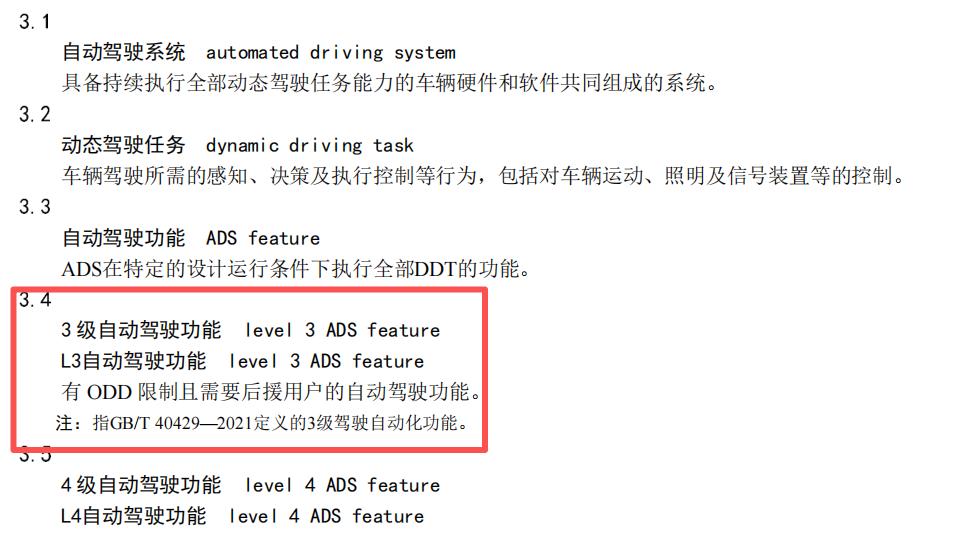
OK, with the major premise in place, let's see what capabilities autonomous driving should achieve.
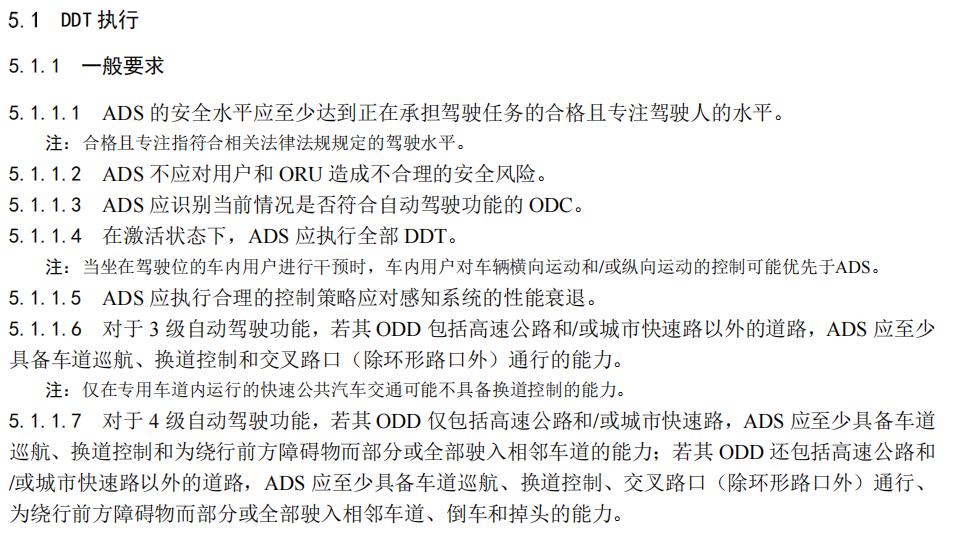
Put simply, L3 mainly handles highway and urban expressway conditions. If it is to be used for urban intelligent driving, it should at least have the capabilities of lane cruising, lane - changing, and passing through intersections.
As for L4, it adds capabilities such as lane - changing to avoid obstacles, turning around, and reversing.
Does it seem familiar? Yes, these functions can already be achieved by our current L2.9+++ assisted driving systems.
However, there are several brand - new requirements: "It should at least reach the level of a qualified and attentive driver", "The ADS should not pose unreasonable risks to users and ORU (other road users)".
You should know that in national standards and other laws and regulations, the word "should" does not mean a suggestion, but "must".
That is to say, within the design scope of the system, the ADS above L3 must have a 100% recognition rate. For example, it cannot misidentify or miss any traffic cones on the road or vehicles on road signs.
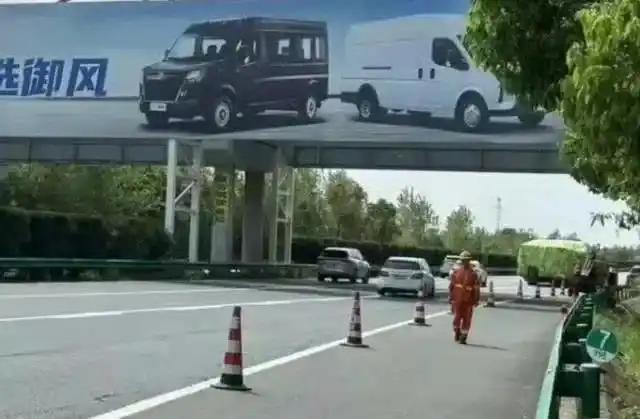
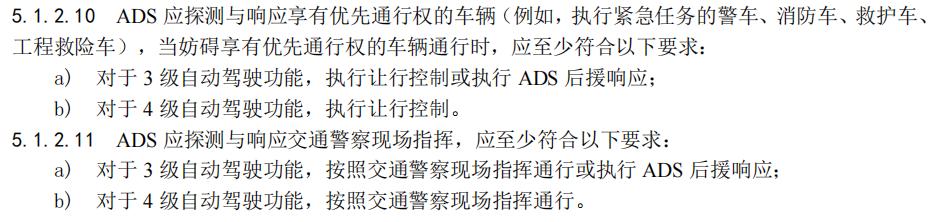
In addition, the ADS must also be able to recognize special vehicles such as police cars, fire trucks, and ambulances that are on duty, and arrange the next operation according to its own intelligent driving level.
Now that we've talked about what capabilities the ADS should have, let's take a look at the safety aspect that everyone is most concerned about.
Regarding the well - known "disengagement of intelligent driving 0.1 seconds before an accident", the national standard clearly states that if the ADS is insufficient in capability and requires the driver's intervention, the system must remind the driver more than 10 seconds in advance (through various means such as sound, optics, and touch).
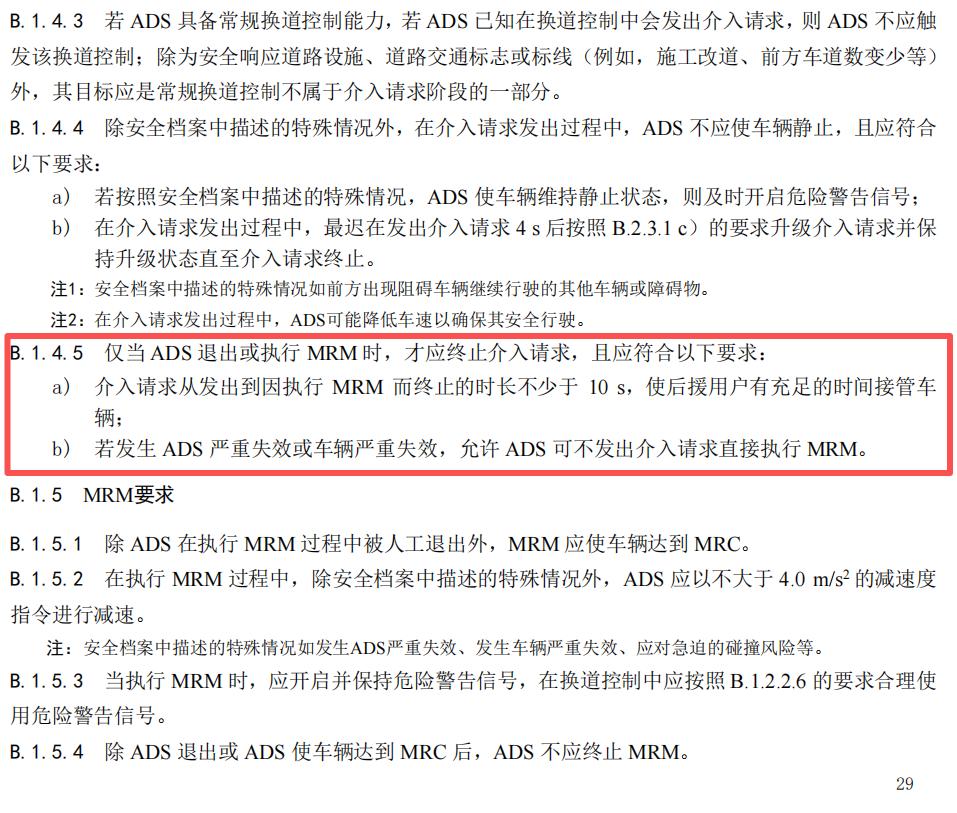
Ten seconds... Even Bolt can run 100 meters in that time. This shows the predictability required by L3 autonomous driving.
If the user still does not intervene after 10 seconds, or if the system has a serious failure and there is not enough time to give a reminder, the vehicle must execute the MRM (Minimum Risk Maneuver).
The MRM does not mean simply disengaging or downgrading. Instead, it should slow down when necessary and avoid obstacles by changing lanes. The goal is to move the vehicle to the roadside where it does not obstruct traffic and stop. If it completely fails, it must also stop safely in its own lane.
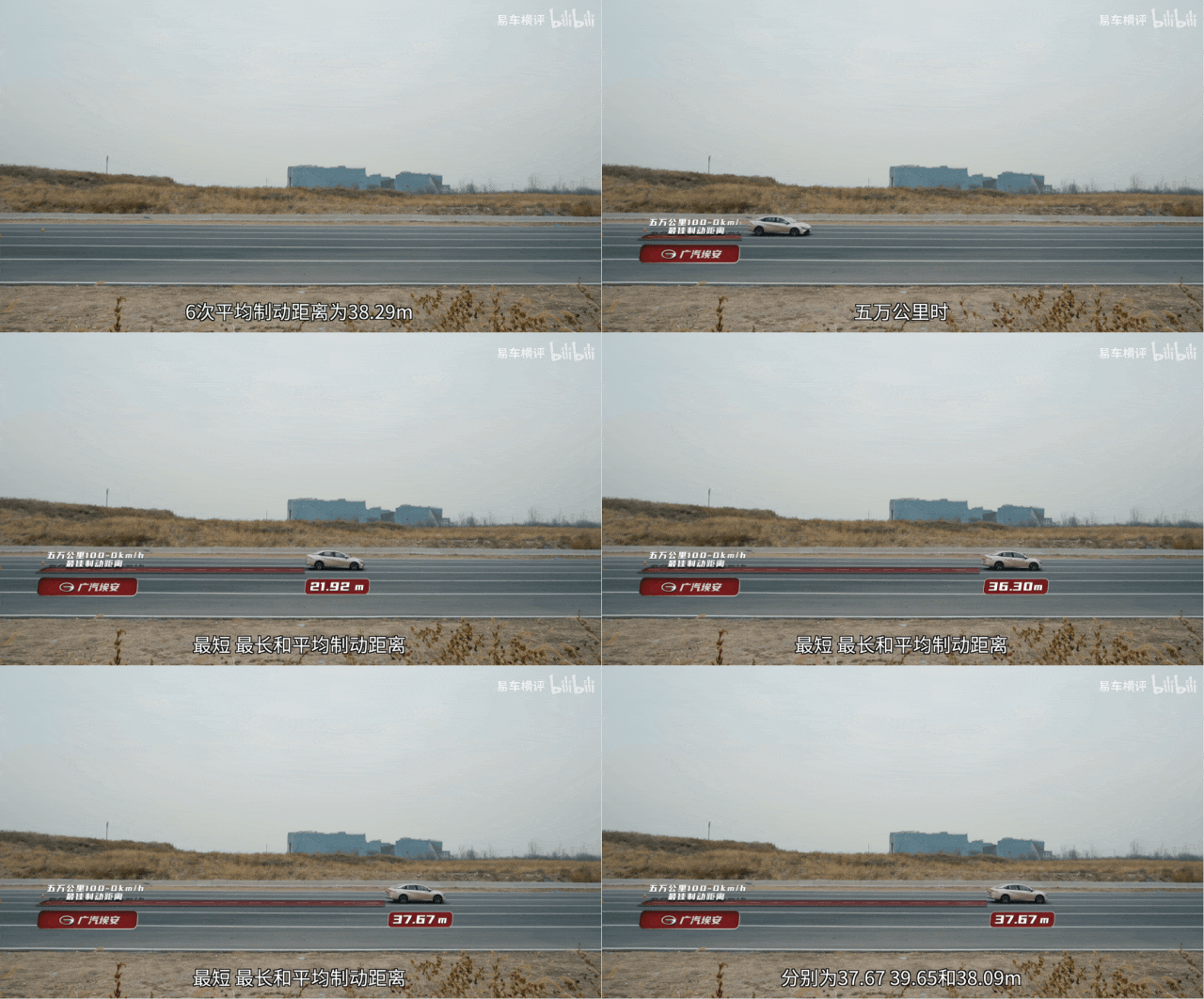
Illustration of full - force braking.
In addition to reminding you to intervene in time, the national standard also requires the L3 system to detect driver distraction, and it will probably remind the driver through various means such as seatbelt reminders and warning sounds.

If the driver still does not respond, it will directly enter the MRC (Minimum Risk Condition) and help you park the car on the roadside...

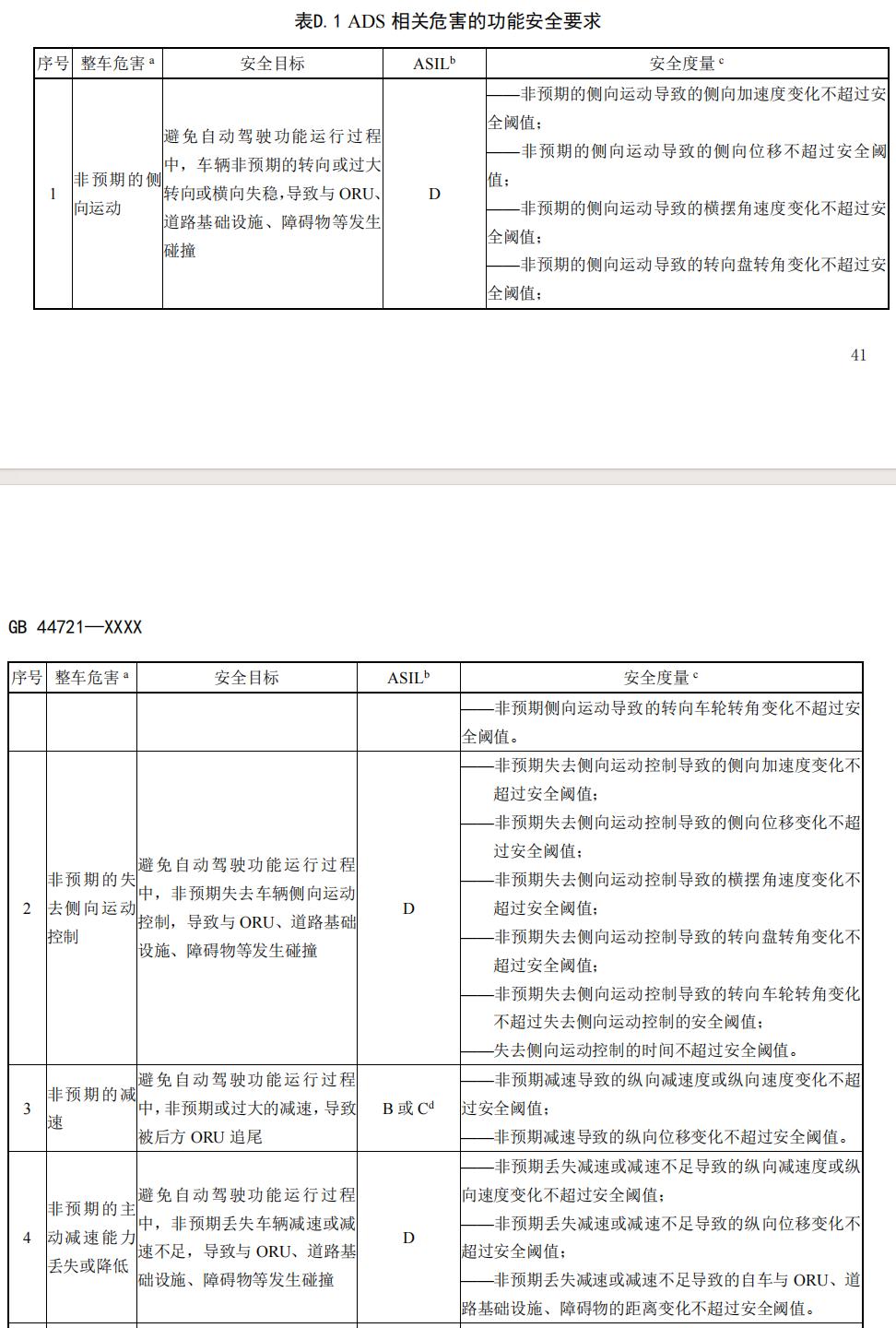
The above two requirements are for the driver. In Appendix D, the safety archive, there are also safety requirements for the vehicle itself.
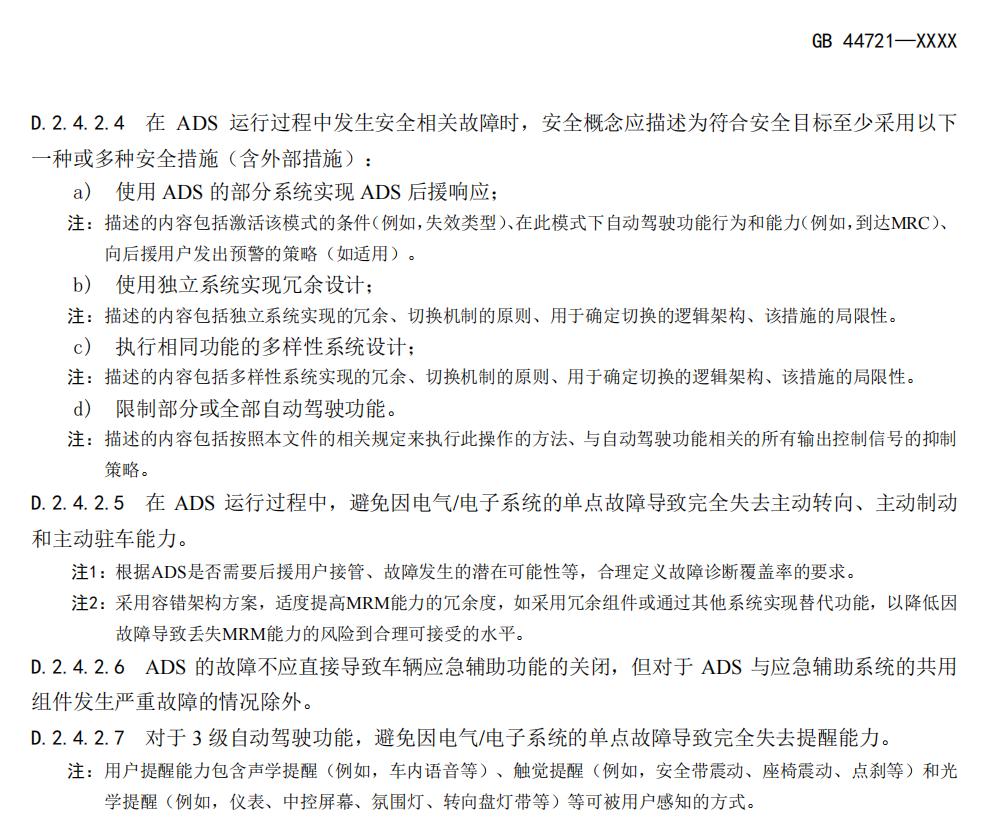
Put simply, when the ADS fails, there must be remedial measures.
It doesn't matter what means you use, as long as you have a backup plan.
For example, if the lidar breaks down, you can use two as backups, or you can use millimeter - wave radars and cameras as supplements. If the system fails, have an extra backup system.
Similar to the national standard for by - wire braking
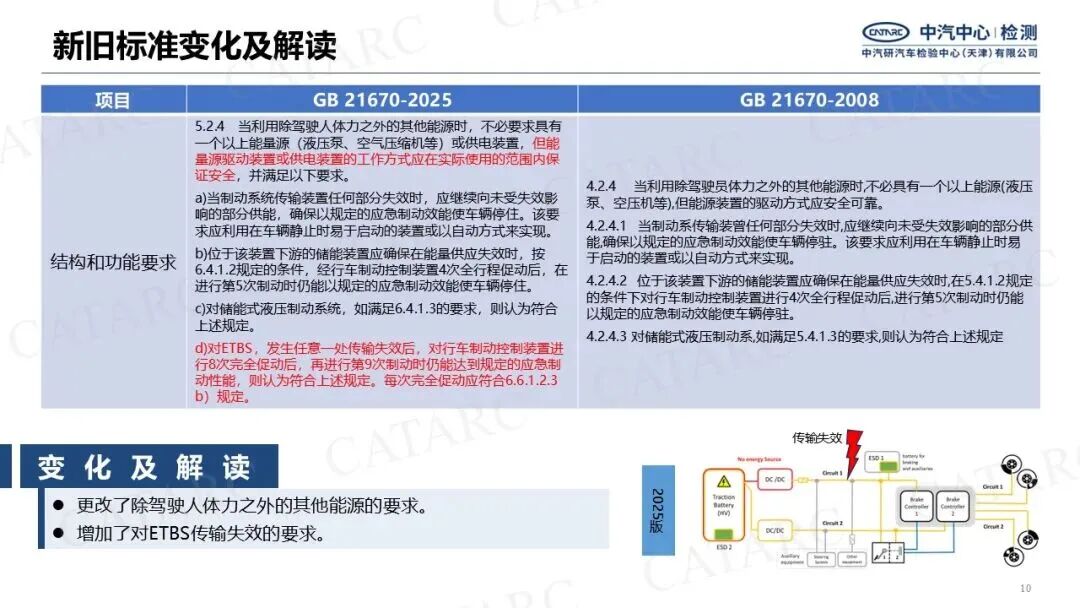
You should know that not all models with intelligent driving have these redundant means. Now that they are written into the national standard, it is equivalent to accelerating this process, which is really a good thing.

In addition to the above two requirements related to the safe operation of the ADS system, the new national standard puts forward some specific requirements for the lane - changing process of the ADS in terms of driving safety.
In the past, according to our simple understanding, the ability of intelligent driving to cut in was a manifestation of anthropomorphism, but in the national standard, this is a very serious matter.
In the more than three - page regulations, the more representative ones are:
1. When there is a vehicle coming from behind in the target lane, 1 second after the ADS completes the lane - change, it cannot cause the following vehicle to decelerate by more than 3 m/s², and it must ensure that the time interval between the two vehicles is not less than 1 second.
2. When there is no vehicle in the target lane, the ADS still needs to conduct lane - change detection according to the standard as if there is a vehicle coming from behind and the vehicle is exceeding the speed limit by 30 km/h.
There are also many other regulations. Interested readers can take a look at the following picture.
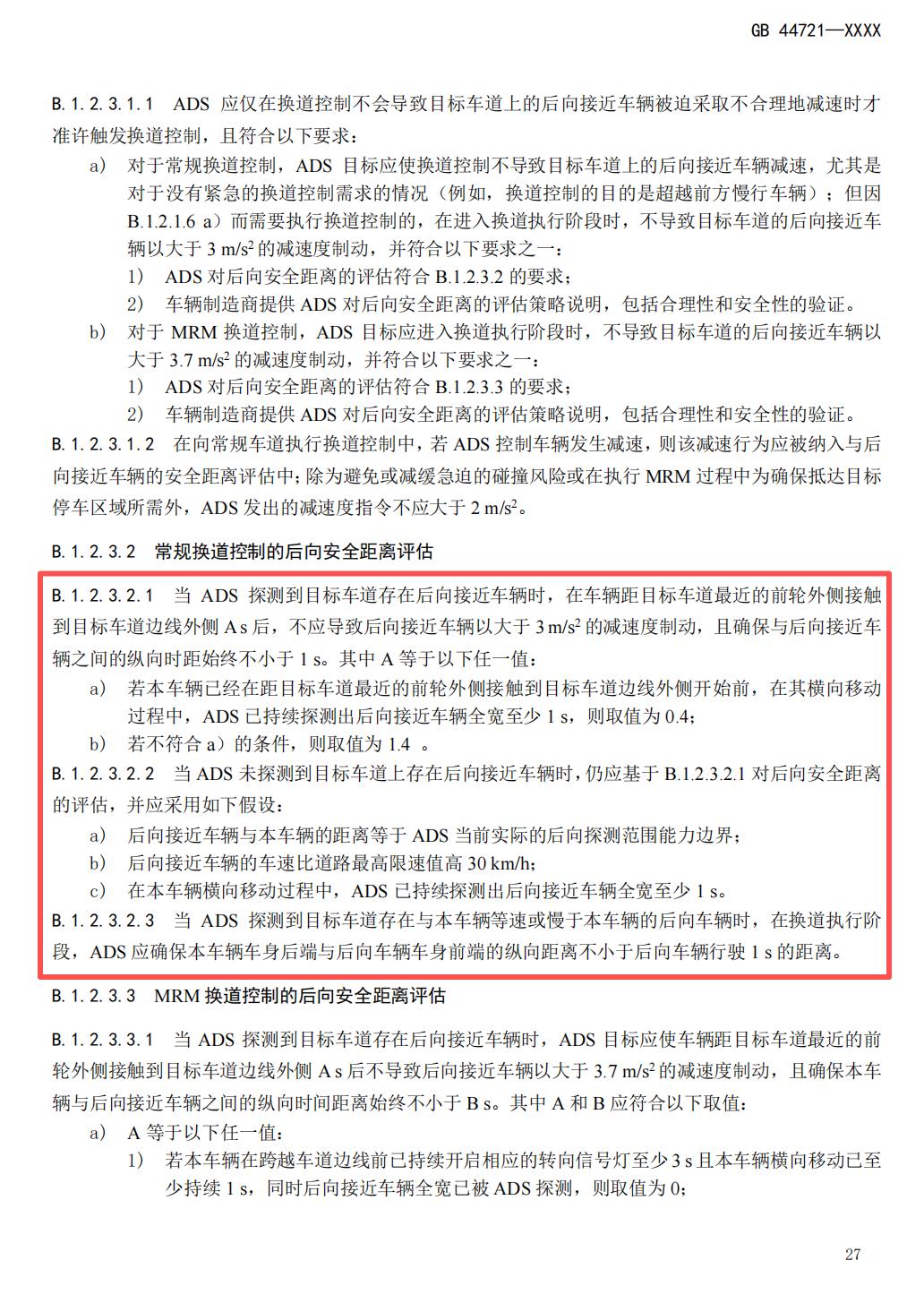
In short, it is not allowed for intelligent driving to cut in randomly. When changing lanes to overtake, it should also increase speed and add redundancy, and not obstruct others.
To be honest, this is what a truly high - quality driver should be.
However, there is also a problem here. If the ADS is both civilized and respects the right - of - way, and if the following vehicle does not give way, or even has an accident due to "distraction" or "accidentally stepping on the accelerator", how should the liability be determined legally? Who should pay for the compensation?
I think it is impossible to get an answer just by looking at this national standard. We still have to wait for the traffic management department, the court, car - makers, and the whole society to explore slowly in the subsequent implementation.
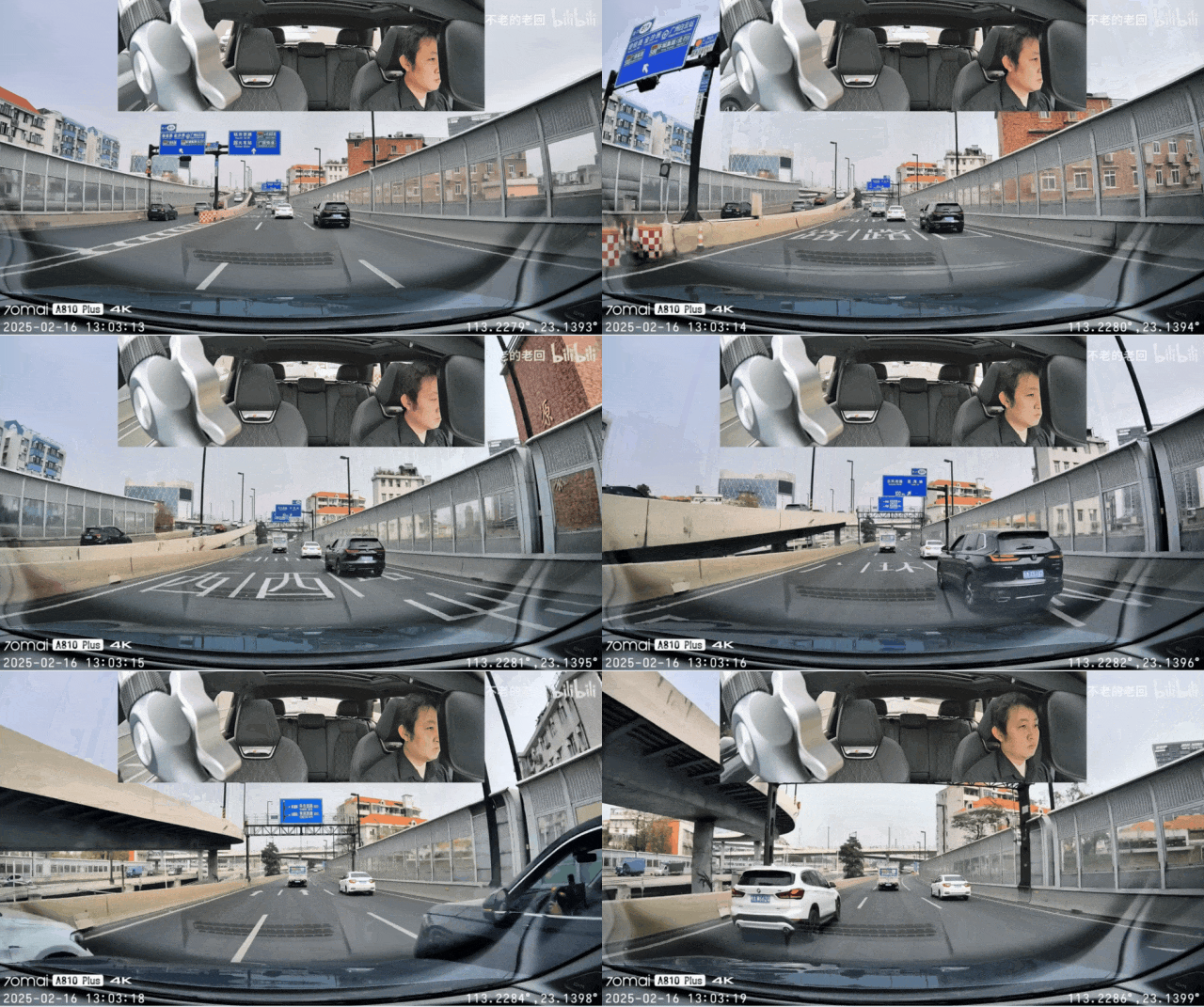
Like this?
So far, we've finished talking about safety. Finally, it's time for supervision, which is the most important part of this new national standard - car - makers need to establish a safety archive.
For this safety archive, car - makers have to provide the national regulatory authorities with the expected capabilities, execution logic of the ADS system, as well as the layout of hardware and the operating principle......
Even not only road tests and internal site tests, but also what simulation software is used and what models are built must be subject to supervision.
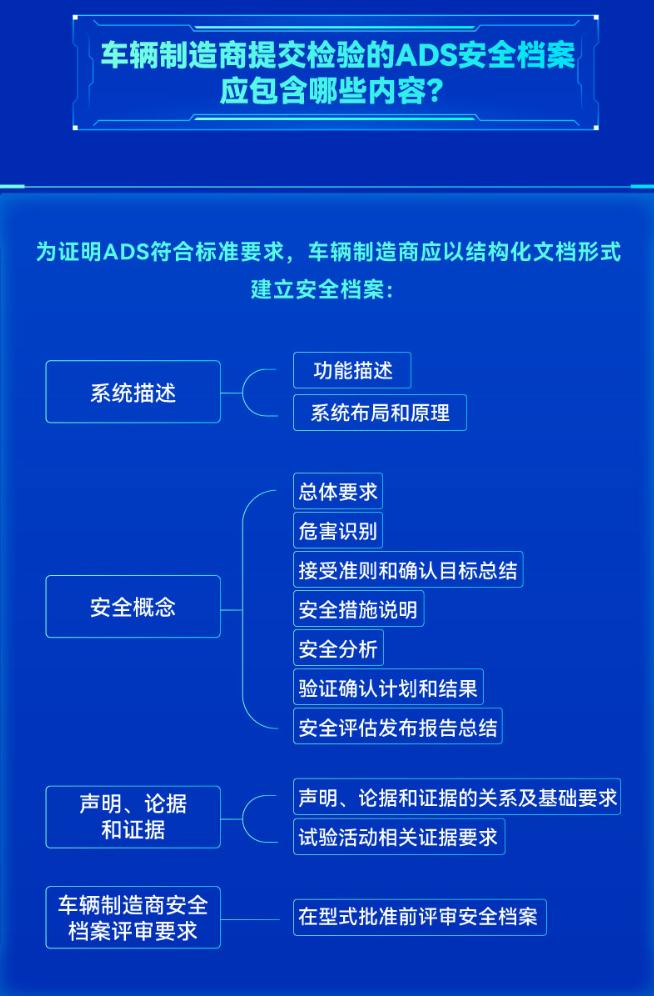
Finally, the inspectors will verify whether the car - maker's "statements, arguments, and evidence" are complete, traceable, and reproducible. The failure rate of some functions must meet the ASID - D (Automotive Safety Integrity Level D) standard, that is, no more than 10 failures in 1 billion hours.
In addition, they also have to implement the SMS (Safety Management System), establish a quality management system, conduct effective