The 7,000-yuan Steam Machine won't revolutionize the game console market
The price of the Steam Machine has finally been announced.
After a long period of stockpiling and pre - heating, this price still left many people stunned ——
The 512GB version starts at $1049, and the 2TB version starts at $1349. If you add the Steam Controller, the entry - level package price will reach $1128, and the 2TB package will be $1428.
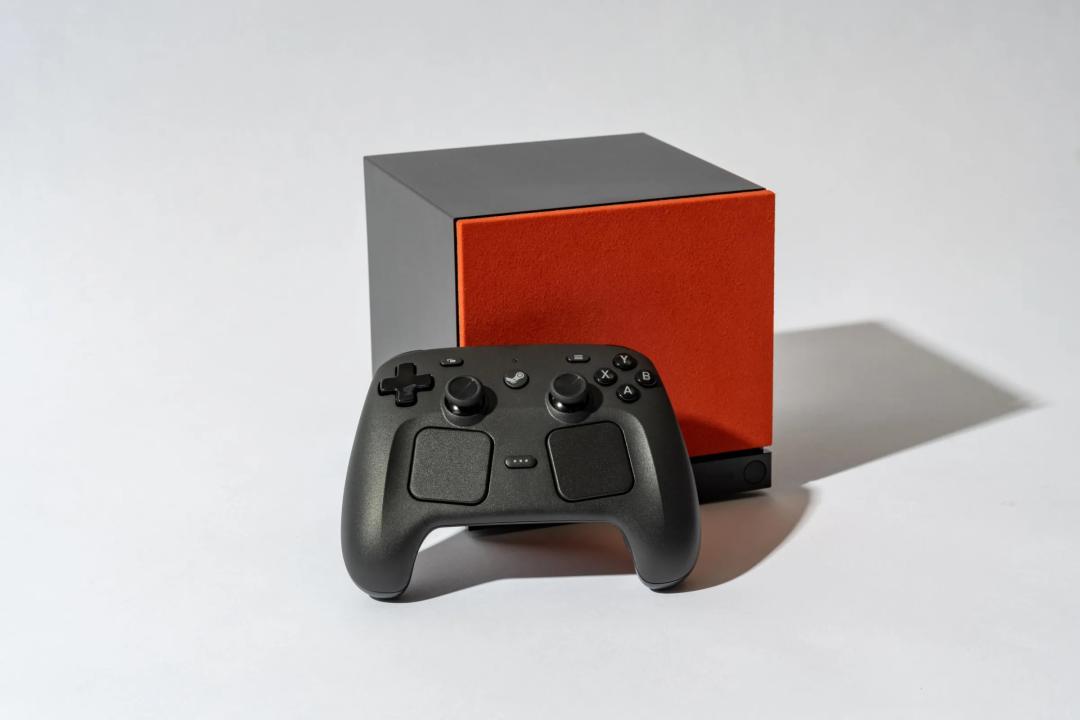
Image from The Verge
For a device placed in the living room, connected to a TV, and centered around gaming, this price far exceeds the psychological price range of traditional game consoles.
Even if we take into account all the price increases in the console industry over the past few years, the Steam Machine still stands out in terms of price.
The official price of the Switch 2 in the US is currently $449.99 and will be raised to $499.99 after September 1st. The digital version of the PS5 has risen to $599.99, the standard PS5 with a disc drive is $649.99, and the PS5 Pro is $899.99. Even so, the entry - level version of the Steam Machine with a controller is already close to the combined price of a PS5 digital version and a Switch 2.
This makes the first impression of the Steam Machine rather delicate.
Expensive, it's not just about the price
The appearance and usage scenarios of the Steam Machine are similar to those of a game console. It is placed in the TV cabinet, connected to the TV, and you can use the controller to start the Steam big - screen mode and then open your Steam game library. However, its pricing method does not fall within the range of traditional game consoles but is closer to that of a small gaming PC.
This price was not entirely unexpected.
Before the price of the Steam Machine was announced, the Steam Controller had already gone on sale, and the reviews were quite good. Although the selling price of $99 is much higher than that of ordinary controllers, the first batch of stock was quickly sold out. When Valve reopened the queue, many new users found that the estimated purchase time had been pushed back to 2027. The shortage of controllers at least shows that players have not lost interest in Valve's living - room hardware.
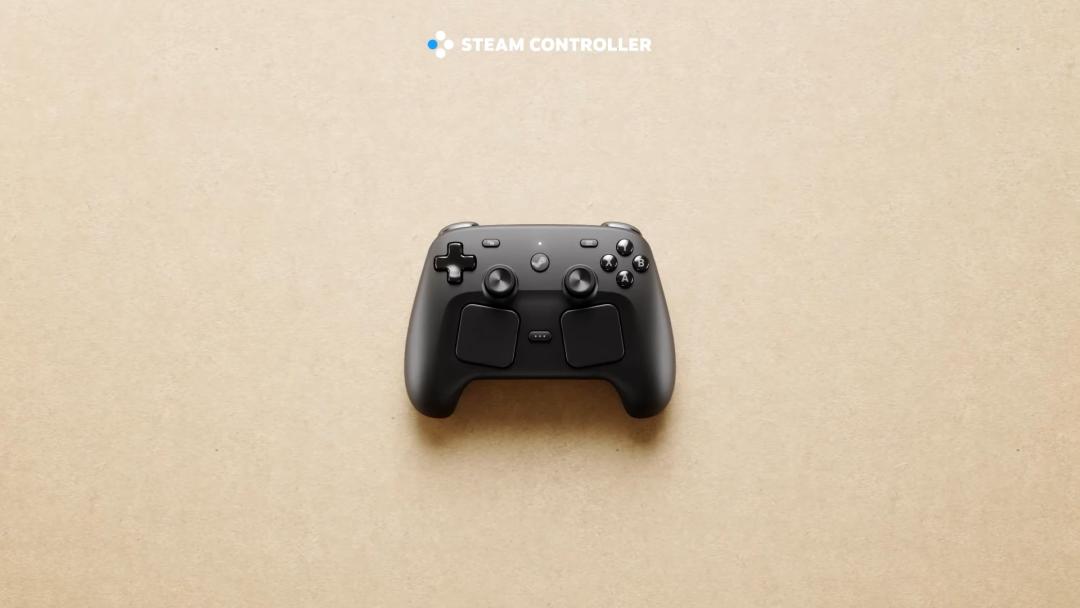
Steam Controller
The Steam Deck has proven once that Valve has the ability to redesign the way PC games are used. It didn't simply move PC games to the handheld screen but gradually developed a set of handheld experiences unique to Steam through SteamOS, the Proton compatibility layer, cloud saves, and strong community support. The popularity of the Steam Controller also shows that players are still interested in this interaction system.
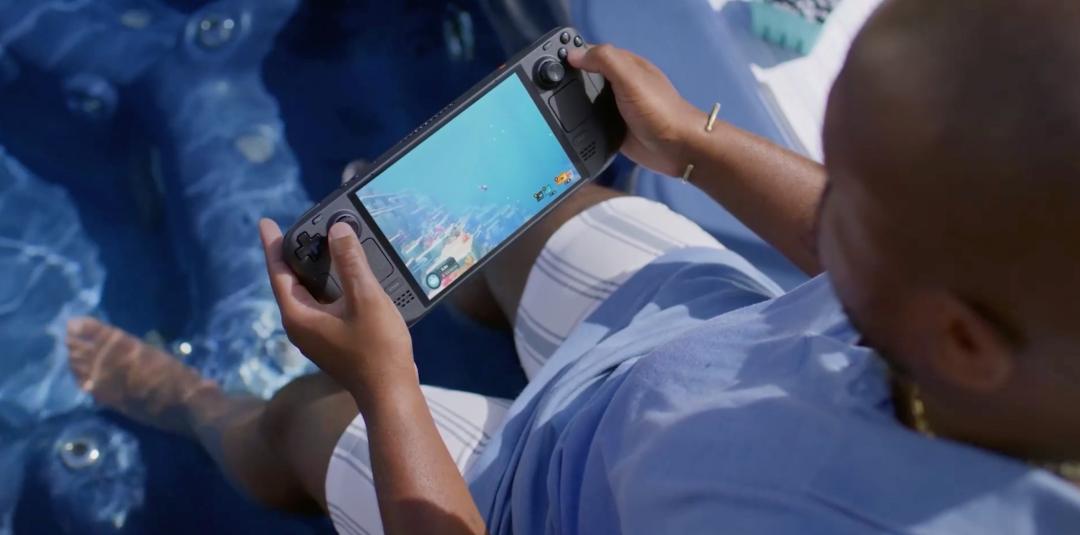
Steam Deck
Therefore, it's highly likely that the Steam Machine won't have trouble selling. Valve also mentioned in an interview with The Verge that due to component shortages and production capacity limitations, the stock they prepared this time was not as much as originally planned. For core players, as long as it's made by Valve and can bring the Steam library to the TV, there will naturally be a group of people willing to pay for it.
The real question is, who is this machine actually for?
For heavy Steam users, it's a device with a clear positioning. You've already bought hundreds of games on Steam and may already have a Steam Deck. Now, all you need is an entrance that can be placed in the living room for a long time. The Steam Machine doesn't require players to repurchase games but moves the Steam assets accumulated over the past decade or so from the study or handheld device to the living room.
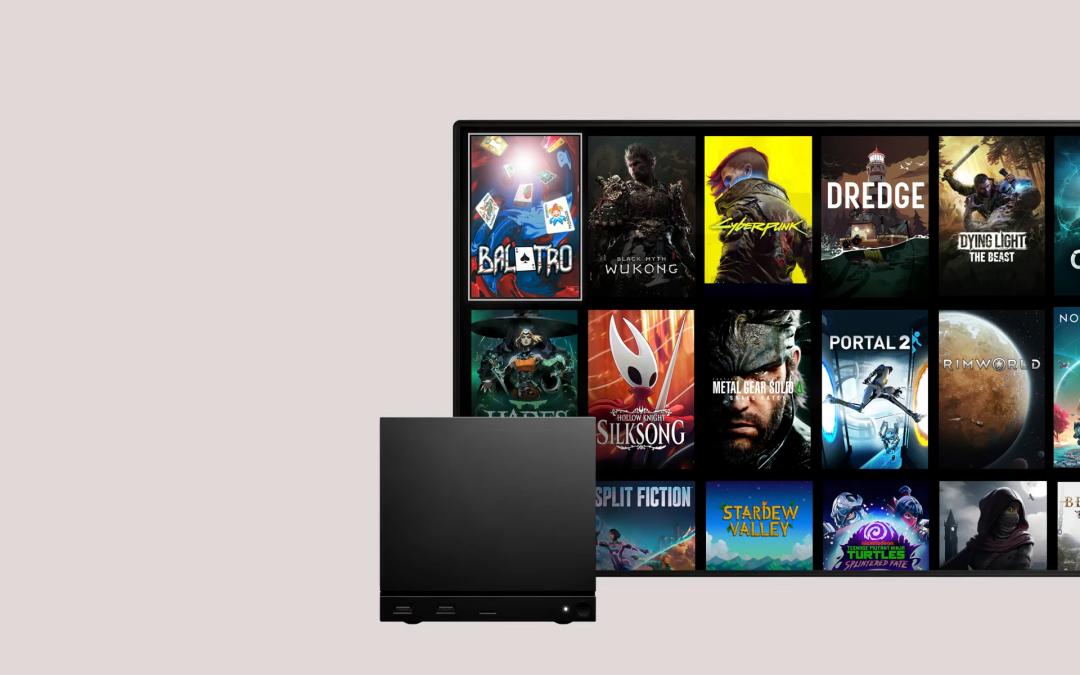
Image from Steam official
But for ordinary console players, it's not that simple. The most important value of a game console has never been its parameters but its ease of use. You buy it, plug it into the TV, connect the controller, log in to your account, download games, and then start playing. Players don't need to understand the compatibility layer, display output, HDR, VRR, FSR, or deal with system issues that are typically associated with PCs while sitting on the sofa.
This is where the biggest embarrassment of the Steam Machine lies. It already has the form of a console and has undergone a lot of living - room - oriented modifications, but it still retains quite obvious PC traces and a high price comparable to that of a PC.
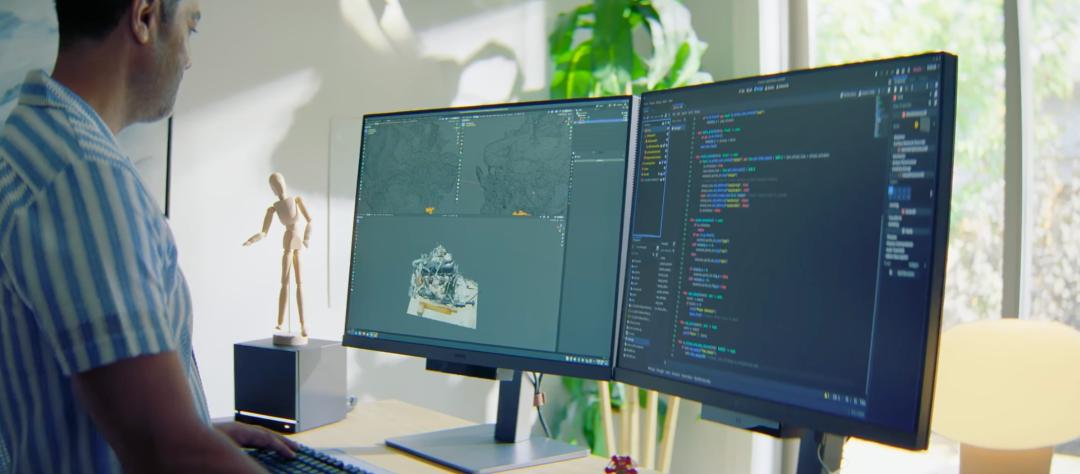
Image from Steam official
Just looking at the hardware, the Steam Machine is not weak.
It uses a semi - custom AMD Zen 4 CPU, RDNA 3 GPU, 16GB DDR5 memory, 8GB GDDR6 video memory, and is available in 512GB and 2TB versions. It runs SteamOS, can be connected to a TV, and can also be switched to the Linux desktop mode to be used as a mini PC. For a small living - room device, this configuration is not outdated.
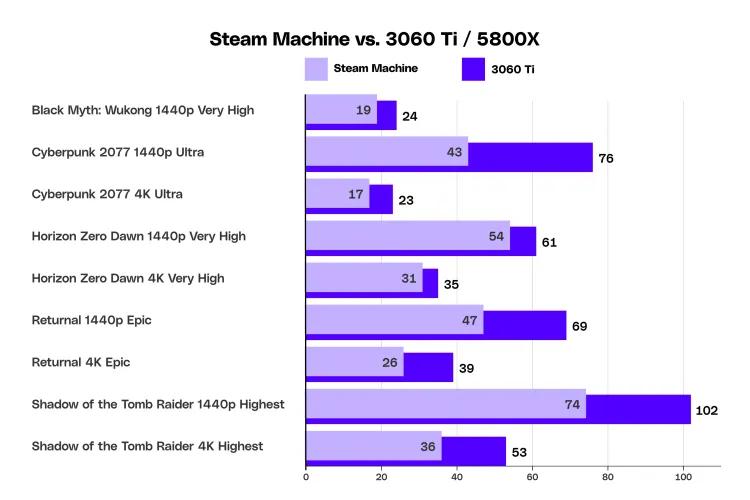
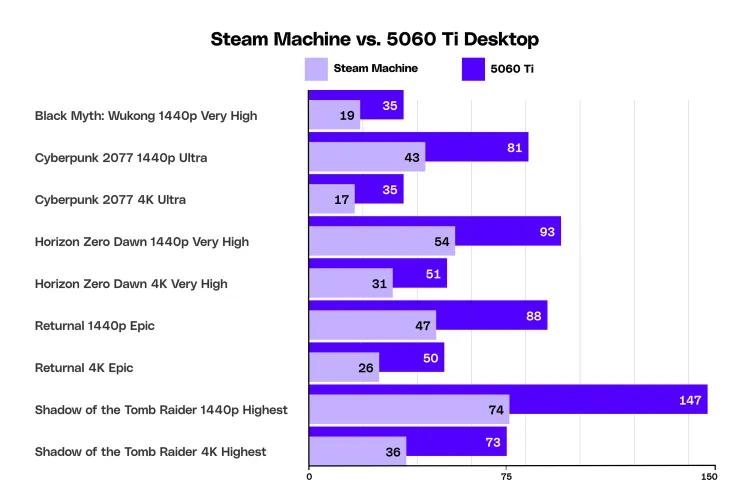
Image from The Verge
Its size is quite appealing. It doesn't take up as much space as the PS5, nor is it as difficult to integrate into the living room as a traditional gaming PC.
The Verge's review mentioned that it is slightly larger than a square tissue box, runs quietly, and has relatively moderate heat dissipation. As a device placed on the TV cabinet, its industrial design is more mature than that of most small consoles assembled by players themselves and is closer to the texture of living - room appliances.

Image from The Verge
This is also the most appealing part of the Steam Machine. It's not just a simple and crude mini PC case but a gaming system redesigned around the living - room scenario. Most system navigation can be completed with the controller, so players don't need to take out the mouse and keyboard at any time. It can also wake up the TV and audio system in the living room and even inherits the performance monitoring, controller mapping, cloud saves, community settings, and Proton compatibility layer accumulated during the Steam Deck era.
From the PC to the Steam Deck, and then to the Steam Machine and Steam Controller, Valve has indeed established a clear path. The desktop, handheld device, and living room are no longer three separate sets of devices but three entrances to the Steam game library. This is also why many players are still willing to trust Valve.
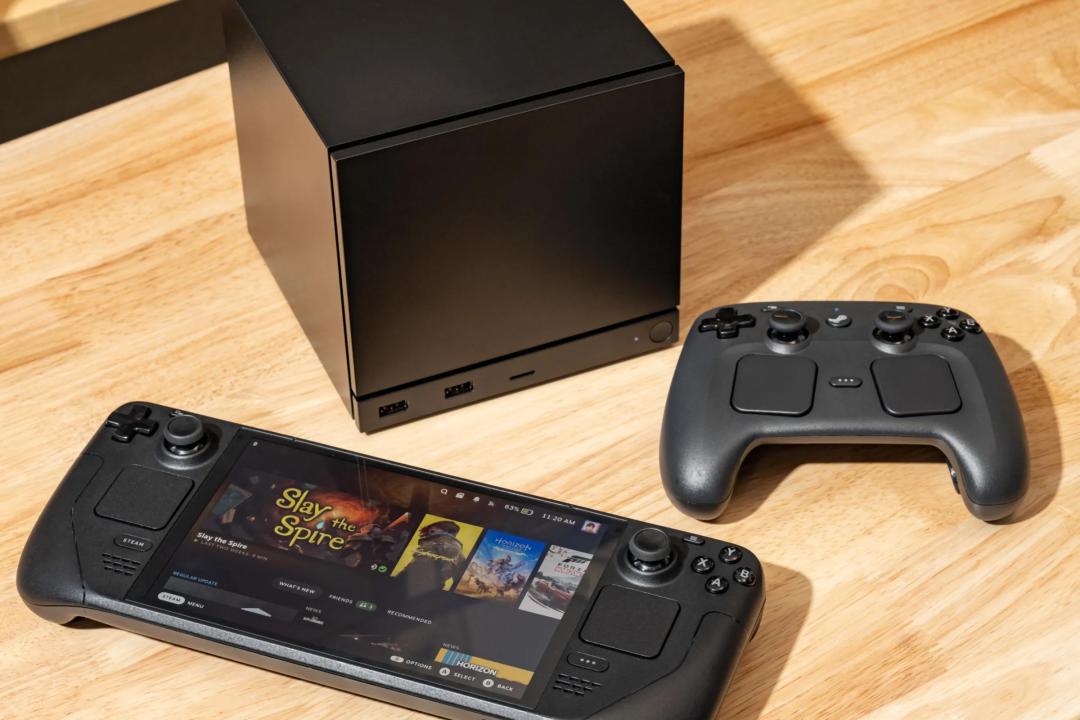
Image from The Verge
However, the smooth path to the Steam game library still lacks refinement in terms of experience.
Judging from the experiences of the first - batch of media and KOLs, the Steam Machine has not yet reached the standard of a traditional console out - of - the - box experience:
The editor of The Verge said that after connecting the device to the living - room setup and turning it on, there is still a lot to download, including drivers, compatibility layers, and various dependencies. There are also issues to deal with, such as TV recognition, HDR, VRR, surround sound, controller wake - up, and sleep stability. These issues that are common to PC players can be quite frustrating when it comes to the living - room scenario.
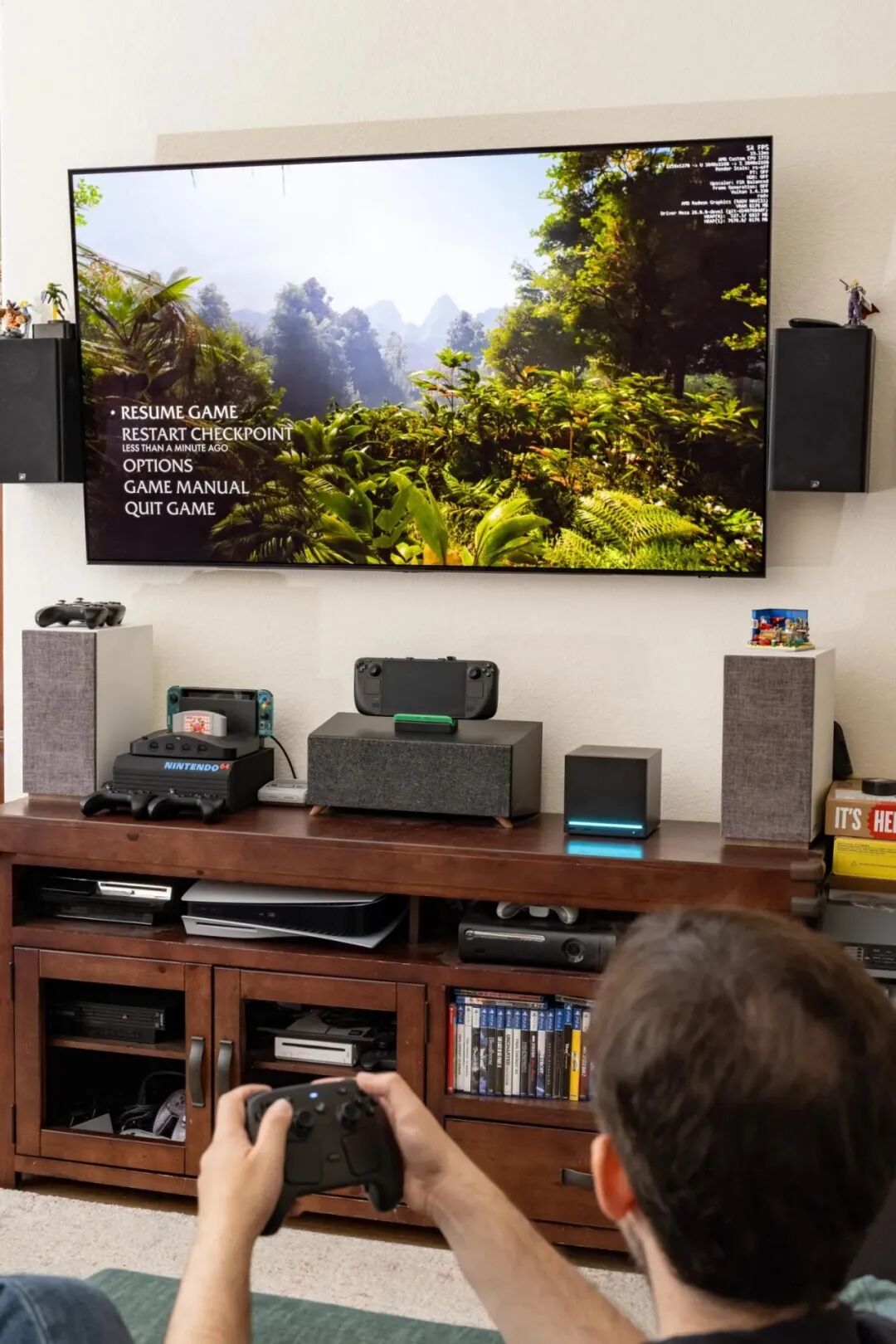
Image from The Verge
Digital Foundry, a professional performance - testing organization, found through actual testing that the performance of the Steam Machine generally falls within the output range of the Xbox Series X and PS5. It can basically meet the requirements of running games at 1440P medium - to - high graphics settings, but the gaming experience highly depends on the pre - settings of the development team. Its overall performance is roughly similar to that of the PS5, rather than being a high - end PC that significantly outperforms current consoles. Many games can achieve 60 frames per second at 1080P or approach a 4K 30 - frame living - room experience through technologies like FSR.
Under medium presets, "Cyberpunk 2077" and "Forza Horizon 6" can approach 60 frames per second, "Death Stranding 2" is around 45 frames per second, and the recently popular "007: First Blood" is slightly below 60 frames per second. For a more hardware - demanding game like "Alan Wake 2", the game's screen resolution is even less than 900P. It should be noted that the price of the Steam Machine is much higher than that of the PS5 Pro, but the actual experience not only fails to bring an overwhelming advantage but is actually quite inferior.
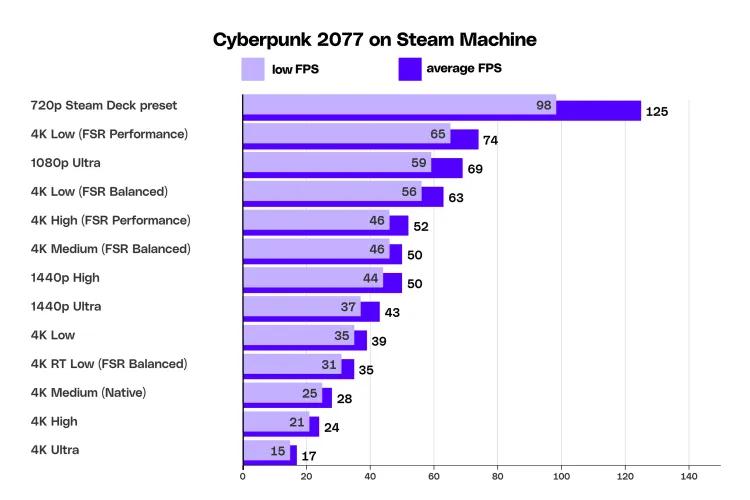
Image from The Verge
In other words, the Steam Machine can provide a graphics performance similar to that of current - generation consoles, but achieving stable and high - quality operation may require some effort.
The discussions on Reddit also mainly revolve around this contradiction ——
Some players believe that the price of over $1000 has made the Steam Machine lose its competitiveness as a console. Another group of players points out that if you were to assemble a similar PC with the same volume, heat dissipation, system completeness, and component prices, the Steam Machine's price is not unreasonable. Some people attribute the problem to the current prices of memory and components, believing that Valve may not be willing to sell this machine for over a thousand dollars, but the supply - chain costs have risen.
Image from Steam official
The strength of this console does not lie in its performance but in the Steam library, SteamOS, controller interaction, and the openness of the PC. However, players need to first understand and even be deeply involved in the Steam ecosystem to feel its value. The Steam Machine is indeed a well - developed living - room PC, but it has not yet established the stable, unified, and low - cognitive - cost experience of traditional game consoles.
The much - criticized price issue of the Steam Machine is essentially an experience issue.
Console gaming is becoming a difficult business
Many people, like me, were looking forward to the Steam Machine, hoping that Valve could become a variable to break the console market pattern, just like the Steam Deck did five years ago.
In the past, the console - gaming industry has long been dominated by the "Big Three": Nintendo, Sony, and Microsoft, each establishing their own moats in different ways.
Nintendo relies on first - party content and hardware form, Sony on high - spec consoles and exclusive blockbusters, and Xbox has been trying to redefine the game entrance with Game Pass and cross - platform services in the past few years.
The ambition of the Steam Machine is to introduce another system ——
It doesn't rely on exclusive games but backs on the large and affordable Steam library. It doesn't rely on a closed platform but is based on the PC ecosystem. It doesn't require players to start from scratch but brings existing game assets to the living room. Coupled with the Steam Deck, Steam Controller, and SteamOS, Valve has indeed formed