Wang Lin from CDH Investments: Investing in AI consumer hardware with the mindset of grafting fruit trees
In the suburbs of Changping, Beijing, Wang Lin, the founding partner of CDH Investments, has a small courtyard with a vegetable and fruit orchard. When he's not too busy or under great pressure, he often returns to this courtyard to grow vegetables, take care of fruit trees, and tend to plants. His long - term close interaction with the land and his dealings with flowers and trees have led him to draw some simple business insights from the laws of plant growth. In Wang Lin's view, the principles of field and orchard cultivation also apply to corporate management and investment work. The core logic of "grafting" is optimization and improvement, introducing excellent varieties.
In the context of corporate team building, the core is also to gather a group of partners with compatible ideas, consistent goals, and a common sense of mission, introduce top - tier talents, and absorb mature external corporate cultures to enhance the team's combat effectiveness.
For example, recruiting senior talents from outside is like transplanting a big tree. After transplantation, the big tree needs enough open space to grow, sufficient sunlight, and nutrients to re - root. The same goes for senior talents. They cannot be simply copied and reused. A complete supporting system and a suitable development environment need to be established to enable them to take root stably and create value.
Since joining CICC in 1999, Wang Lin has been in the investment industry for 27 years. In 2002, as a founding partner, he participated in the establishment of CDH Investments, just in time for the consumer boom. Later, he was in charge of projects such as Ciming Check - up, Vatti Department Store, and Sunshine Insurance, and achieved good investment returns. Gradually, his work focus shifted from single - project research and judgment to team management and institutional development.
In 2015, Wang Lin started an internal venture at CDH, establishing the CDH VGC (Innovation and Growth) Fund, which mainly explores investment opportunities in technological innovation and growth. So far, it has invested in more than 100 companies and supported more than 50 scientists in starting their businesses.
In the public's fixed perception, CDH has been deeply involved in consumer investment and merger and acquisition investment for many years. In fact, this established investment institution has long shifted its investment direction to focus on hard technology, with key layouts in areas such as chips, robotics, and artificial intelligence.
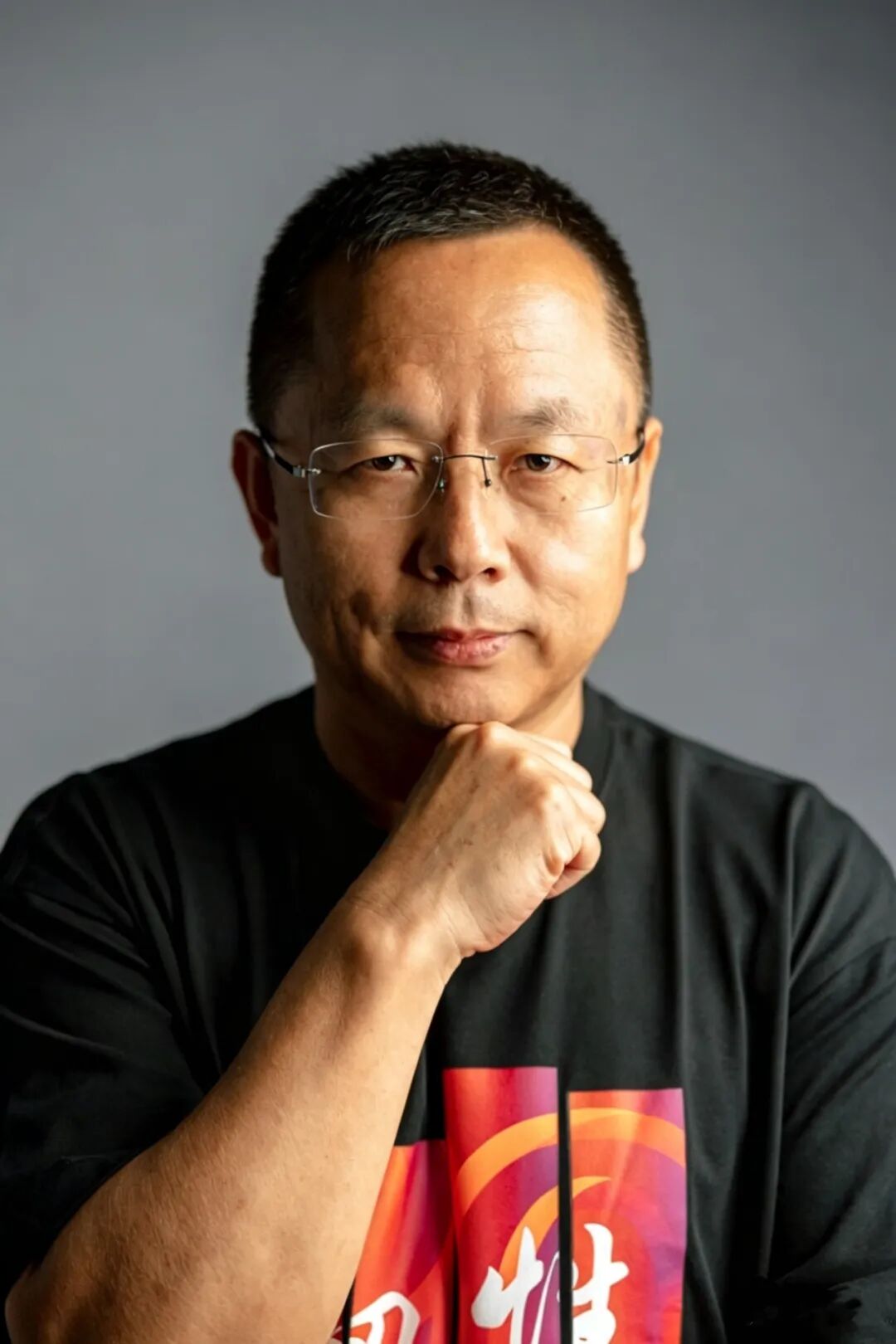
Wang Lin, the founding partner of CDH Investments and the managing partner of CDH VGC
In the field of artificial intelligence, Wang Lin and his team have maintained a practical and far - sighted investment style, investing in leading companies in the embodied intelligence track such as Zhiyuan Robotics and Xingdong Jiyuan at an early stage. At the same time, Wang Lin applied his "grafting" theory to investment, "grafting" AI with traditional consumer goods and investing in a number of "AI + consumer" hardware companies such as AI glasses, AI short - distance intelligent agents, AI earphones, AI rings, AI cameras, AR dressing mirrors, and AI home intelligent agents, promoting the application of artificial intelligence technology in mass consumer scenarios. According to him, the investment in an AI glasses company by CDH has brought dozens of times of book returns in more than two years, which is a typical case of the institution's integrated investment in "AI + consumer".
How can an established investment institution transform from consumer investment to hard - technology investment? What kind of investment methodology does CDH have in the AI era? Recently, "China Entrepreneur" interviewed Wang Lin, the founding partner of CDH Investments and the managing partner of CDH VGC, around these topics.
The following is an edited transcript of Wang Lin's oral account (with some deletions):
01
Grafting and Transplanting
I've recently grasped some principles about grafting and transplanting. Many things are different, but the underlying principles are the same. There are many similarities between grafting, transplanting, and corporate management.
When managing a company, you need to find suitable talents. But sometimes, no matter how much you train them, it doesn't work, and you have to replace them. Just like some fruit varieties are sour, and no matter how you plant them, they won't turn sweet; some varieties don't bear fruit easily or have low yields, and no matter how much fertilizer you apply, they won't bear fruit, so you have to change the variety. Corporate management is like grafting. Ultimately, you need to find people with the same goals, a common sense of career, and a sense of mission.
The same goes for transplanting. To make the yard look nice, people usually transplant a big tree directly, but it's actually very difficult. When transplanting a big tree, you have to cut off the roots and then move it in. But with insufficient roots, the tree is likely to die. If you plant a small tree in the yard, it takes time. How can you handle this problem?
The same is true for companies. When a company urgently needs a president or vice - president, you can recruit from outside, which is like transplanting a big tree. The growth of talents requires a supporting system and environment. Recruiting someone and putting them here doesn't guarantee their survival. Sometimes, it's better to train your own "small tree" slowly. As long as it adapts to the environment, it can grow quickly.
Should you transplant a big tree or plant a small tree yourself? In a company, we need to choose different methods according to different positions and the specific situation of individuals. Some positions require recruiting from outside, while others need to be filled by internal training. If the yard isn't big enough, you can't even dig a pit for a big tree, and it won't get enough nutrients to grow.
Different people also require different approaches. Some trees, like ginkgo trees, you can't prune their branches. Once you prune them, the branches won't grow again. Some fruit trees have many branches. You're reluctant to prune them, thinking that more branches mean more fruit. But too many branches will lead to insufficient nutrients for each branch, and the tree won't bear fruit. The same is true for people. Some companies or projects don't need so many people, so you need to streamline the organization; otherwise, it will become bloated and inefficient.
02
"A Solitary Wise Man Digging a Cave"
In recent years, our investments have mainly been aligned with the country's strategic plans and industrial directions. We carefully study every conference document and industrial policy issued by the country.
We have made investments and layouts in areas such as chips, industrial design, semiconductors, brain - computer interfaces, low - altitude economy, controllable nuclear fusion, quantum computing, embodied intelligence, software, AI applications, and biomedicine. Generally speaking, we mainly focus on hard technology and invest in future industries.
From consumer goods to the mobile Internet and then to technology, the investment ideas and logic have been changing, and I've been constantly reflecting. I once said that a person's past success may often become an obstacle to future development because you'll always think along the old path.
During the rise of the consumer wave in China, we invested in a number of excellent companies. Why did we invest well at that time? Because when we invested in companies, we not only looked at whether they could make money but also at their operating cash flow. We couldn't accept companies whose profits were mainly accounts receivable.
In the mobile Internet era, when we still followed this investment logic to look at Alibaba and JD, they were losing billions of yuan at that time. We thought, "Can a company that loses money every day have a future?" Later, it turned out that they were successful, and we missed the opportunity.
I reflected that a company's cash flow includes two aspects: operating cash flow and financing cash flow. Although they were losing money, their financing cash flow was always positive, and someone kept investing in them. So they could expand their platforms, and making money became a natural result. This is a model that has been proven in the mobile Internet era.

The logic has changed again from the mobile Internet era to the AI and hard - technology era. In the mobile Internet era, as long as you had a good team, got the business model right, and kept investing money, you could eventually succeed. In the hard - technology era, the logic is technological breakthrough: First, you need to see if the technology is truly leading and hard technology; second, scientists are crucial.
I made a metaphor. The Internet era was like "a million troops crossing the Yangtze River." If 10 boats couldn't break through the defense line, then send 100 or 10,000 boats. You could always cross the river. By continuously investing money in subsidies, you could cultivate consumers' consumption habits. In the era of technological innovation, it's "a solitary wise man digging a cave." The investment logic in this period is different. In the past, you needed to keep investing money. Now, you need to find the right scientists, see if the scientists and the technology are right. If you make the right choice, the project has a high chance of success.
When investing in technology - centric companies, the key is to find the most core scientists. Why? First, their technology is leading in China and even in the world, so the probability of success is high; second, resources tend to converge around the most core scientists.
It's not difficult to find scientists. The key is, do you understand? When you communicate with them, will they think you're an outsider? How can you impress them and make them willing to cooperate? Of course, there's a lot of competition, but our advantages lie in the in - depth understanding of industry technology research, rapid decision - making, and comprehensive post - investment empowerment.
As for the internal team, to shift from consumer to technology investment, first, I need to figure it out myself, and then communicate with the team to change the direction together. In addition, many people in the team originally had an MBA background and would focus more on business models when looking at projects. Now, we need to recruit information technology talents, all with science and engineering backgrounds.
03
Valuation: A Test of Human Nature
We really started to invest in AI in 2023 when we invested in Zhiyuan Robotics. At that time, Zhiyuan's valuation was still very low. We invested in two or three rounds, and the valuation increased from 300 million yuan to 1.9 billion yuan, 3.6 billion yuan... If it goes public in the future, the valuation is expected to be at least over 100 billion yuan. After investing in Zhiyuan, we started to look at more projects in the robotics field and invested in some excellent companies, seizing the wave of embodied intelligence.
Compared with the companies in the mobile Internet era, the valuation growth rate of this round of AI projects is also quite fast, showing a "terrace - like" growth pattern - suddenly rising, then pausing for a while, and then rising again.
In the robotics track, the valuation increased for a while at the beginning and then stopped when it reached 3 billion to 5 - 6 billion yuan. At the end of 2025, the valuation of Galaxy Power reached 20 billion yuan, which drove up the entire track again. I estimate that it will pause again when it reaches 10 - 20 billion yuan.
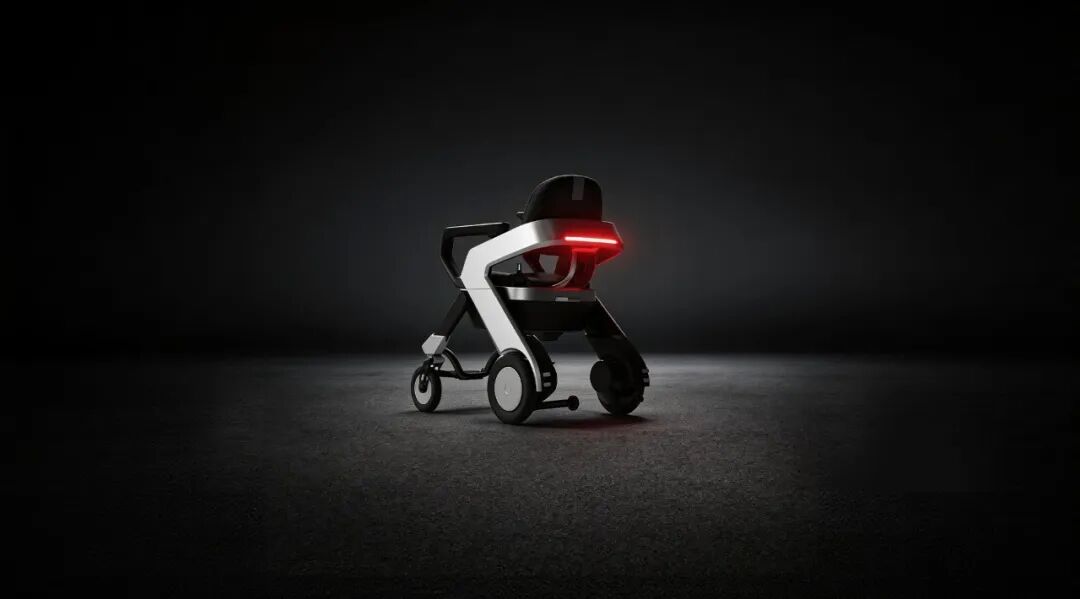
QUORRA short - distance intelligent agent.
The reason is that at the beginning, everyone saw the broad market and rushed in, driving up the valuation. After a while, when they found no new development, they became a bit more rational. When there was a sudden breakthrough at a certain point, the valuation would rise again immediately. If you miss the opportunity, you may lose out.
This is actually a very difficult thing and a great test of human nature. When the valuation keeps rising, do you dare to invest? For example, in the field of embodied intelligence, when a company's valuation has reached 10 - 20 billion yuan, do you still dare to invest? Of course, if it's a real leading company, you still have to invest.
Our investment in Xingdong Jiyuan was quite interesting. At the end of October last year, when the project team discussed additional investment in Xingdong Jiyuan at the meeting, I vetoed it. Two weeks later, we held a meeting for US - dollar investors and invited Dr. Chen, the founder of Xingdong Jiyuan, to give a speech. At the end of his speech, he played a demo of a robot stacking large cartons. It was actually quite difficult. You had to hold it down with one hand, and as soon as you let go, it would pop up again. Even a human might not be able to stack them well. I watched the robot stacking and thought, "This thing is a bit intelligent."
That afternoon, I told the project team that I wanted to make an additional investment. How much? I said 50 million yuan, but then I thought it was too little and wanted to increase it to 80 million yuan. At that time, except for me and the project leader, other partners opposed the additional investment.
Should I increase the investment or not? 80 million yuan or 50 million yuan? I struggled with these questions for several days. Finally, I decided to increase the investment by 80 million yuan. It was in November 2025, and Xingdong Jiyuan's valuation was less than 5 billion yuan. It's only been half a year, and the next - round financing is already full, and the valuation has reached 23 billion yuan.
The process of making this investment decision may not be very scientific. In fact, it follows Musk's first - principles thinking. I can't really give very convincing reasons. I just thought their technology and products were good when I saw the robot stacking cartons. So sometimes, it's really painful.
Now, AI companies are performing well in the secondary market, which also affects the prices in the primary market. The valuations are already very high. What should we do? Just be patient. Anyway, if it seems too expensive, don't invest.
04
Defining Products
Back to the consumer field, we have invested in some "AI + consumer" hardware companies. These projects essentially belong to the category of applying artificial intelligence in consumer scenarios.
Take AI glasses as an example. We invested in Yiwen Technology. Its founder, Wang Xiaoyi, used to work at Apple and was the CPO at JMGO. In 2023, when he came to our team with a box, there was no fully - developed glasses product yet. But I thought the glasses market was huge, with high profit margins, and no company had been able to bring down the prices.
The young man seemed very steady and not a person who talked big. This was also the fastest investment decision I've ever made. We invested 2 million US dollars, and to this day, we're still one of the largest external shareholders of Yiwen. What impressed me the most was that he said he wanted to make a good pair of glasses.
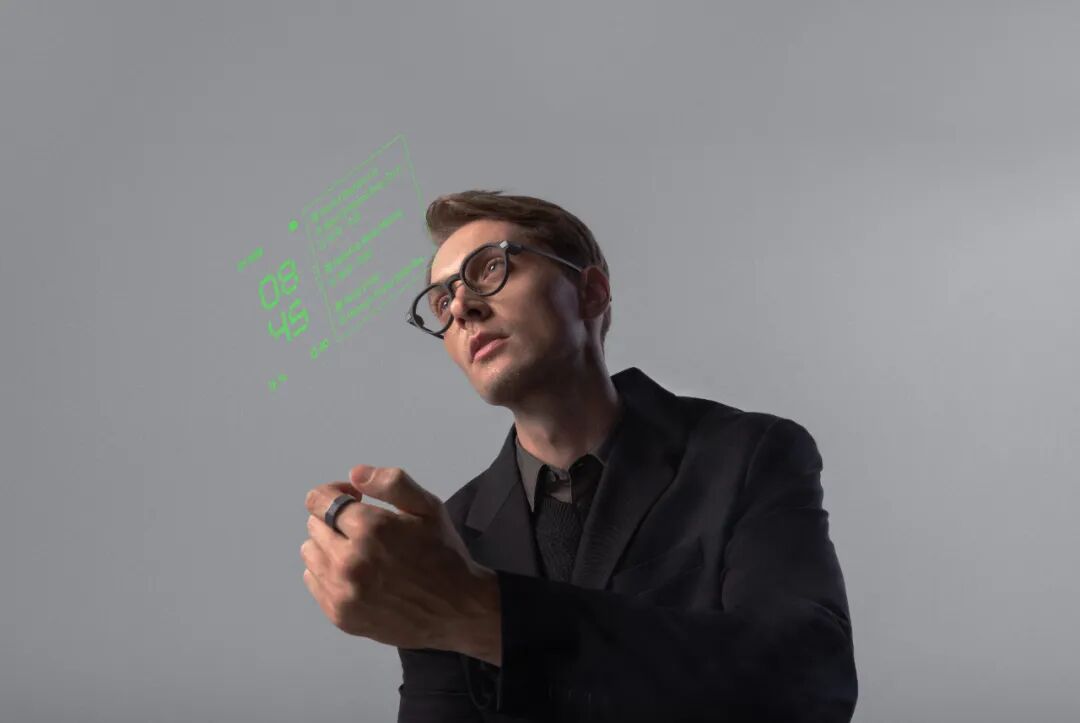
Even smart glasses and smart rings.
He really put his heart into making products and pursued perfection. Their AI glasses are different from other AI glasses on the market. First, they are light. The first - generation glasses weigh about 38 grams, which was the lightest