"The No.1 Province of New Energy Vehicles" has gained another challenger.
The newly crowned top province in the new energy vehicle industry is now facing new challengers.
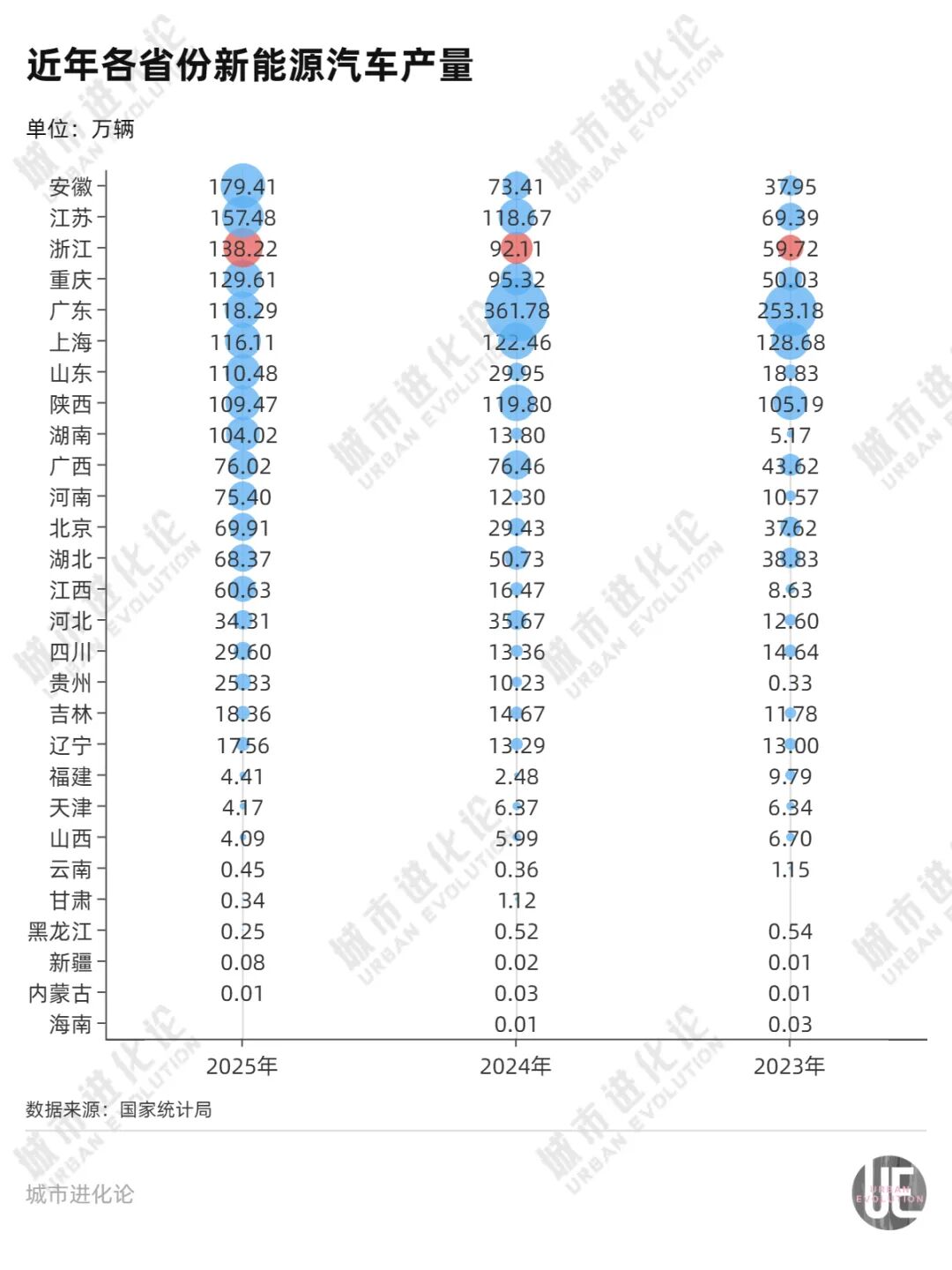
In 2025, Anhui's production of new energy vehicles reached 1.7941 million units, topping the national list for the first time. Jiangsu and Zhejiang followed closely with 1.5748 million and 1.3822 million units respectively, ranking second and third.
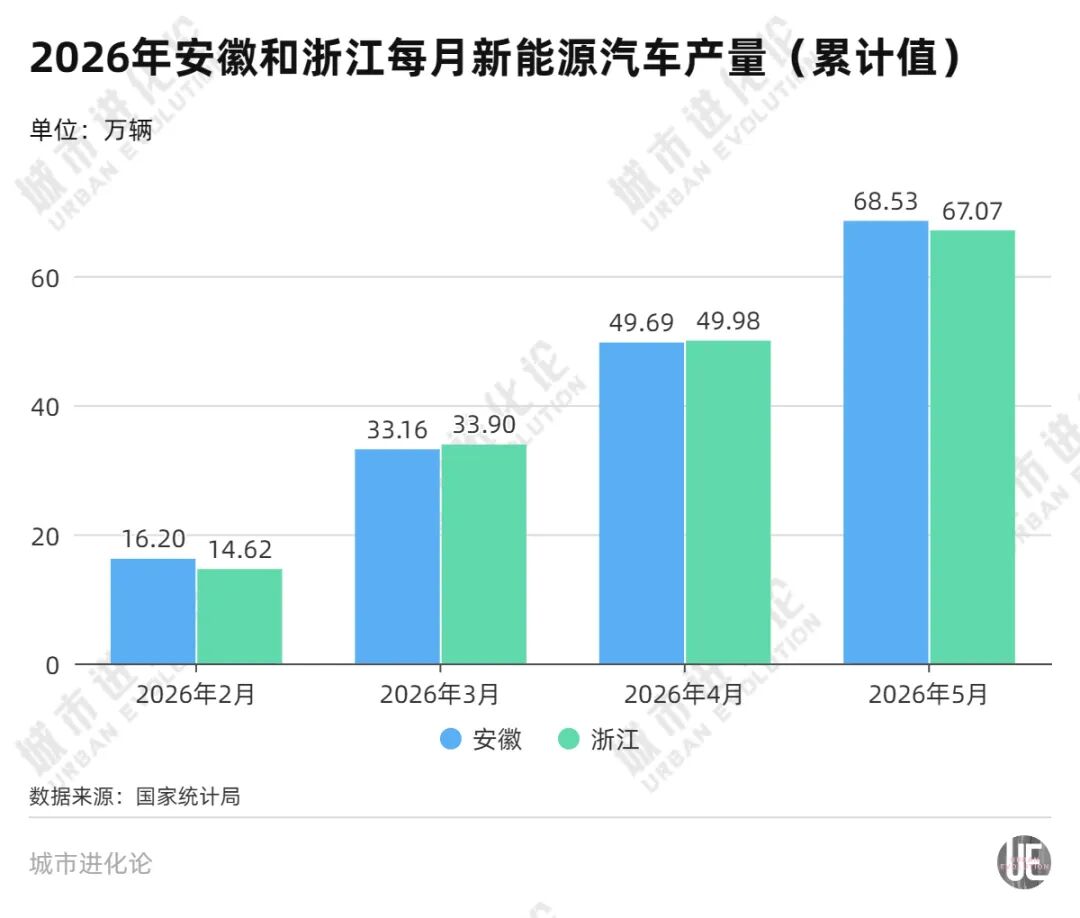
However, in 2026, Zhejiang quickly gained momentum. From January to April, its production climbed to 499,800 units, slightly surpassing Anhui's 496,900 units and taking the lead for a while.
But the top position didn't last long, and now it has changed again. On June 22, the latest data released by the National Bureau of Statistics showed that as of the end of May, Anhui's production had reached 685,300 units, exceeding Zhejiang's 670,700 units again. The competition for the "number one" spot has become increasingly intense.
Why have Zhejiang and Anhui stood out? Neither of them is a traditional automotive hub, but they have both seized the window period of industrial transformation, re - integrated and upgraded their existing manufacturing capabilities, and achieved a "leapfrog development" in a new field.
Currently, the competition between the two places is quietly shifting from the scale competition of "total vehicle production" to the chain - based competition of "parts matching rate".
More importantly, the first half of the competition focused on scale is still undecided, while the whistle for the second half, which focuses on efficiency and brand, has already sounded. Who can take the lead in building an advantage in the new stage?
01
Competition
In the fierce national competition of new energy vehicles, Zhejiang has experienced a "V - shaped reversal".
Zhejiang's last glorious moment dates back to 2015. With a first - mover advantage, its production of new energy vehicles once accounted for one - fifth of the national total. However, since then, a number of new energy vehicle projects have failed, and Zhejiang's position in the industry has declined. Before 2024, Zhejiang's production of new energy vehicles had long hovered around the sixth or seventh place in the country, accounting for less than 10% of the national total.
During this period, Zhejiang once stated that "seizing the opportunity can lead to rapid development; failing to do so may result in gradual lagging behind and even missing the new round of automotive industry transformation."
In 2023, Zhejiang issued the "Action Plan for Accelerating the Development of the New Energy Vehicle Industry in Zhejiang Province", clearly stating that by 2025, the annual production of new energy vehicles in Zhejiang would exceed 1.2 million units, accounting for more than 60% of the total vehicle production in the province, and about 10% of the national total.
The key turning point occurred in 2025. In the first four months, Zhejiang's production ranked fourth in the country, and by the end of the year, it climbed to the third place, with the annual production exceeding one million units for the first time in history. In 2026, in March and April, it exceeded Anhui for two consecutive months and ranked first in the country, achieving the best position for Zhejiang in the national new energy vehicle industry pattern in recent years.
It is worth noting that Zhejiang's industrial leap coincides with the stage when the domestic new energy vehicle market is becoming more concentrated among the top players. Data from the China Association of Automobile Manufacturers shows that in the first five months of this year, the top 15 new energy vehicle manufacturers in terms of national sales accounted for 96.7% of the market share, and the proportion has further increased.
Against the backdrop of the "strong getting stronger", Geely and Leapmotor, as the "two aces" of Zhejiang, have advanced side by side in market competitiveness.
Among them, Geely's production growth comes from its strategic transformation to new energy. In 2025, its sales of new energy vehicles reached 1.688 million units, with a new energy penetration rate of 56%. As a new player in the automotive industry, Leapmotor has shown a high - growth curve. In 2025, it topped the monthly sales list for eight consecutive months, with annual sales of nearly 600,000 units, far exceeding its annual target.
The growth momentum of these two leading enterprises has continued in 2026.
In the first five months of this year, Geely's sales of new energy vehicles reached 784,000 units, a year - on - year increase of 9.5%, accounting for 13.5% of the market, second only to BYD. Leapmotor's sales reached 263,000 units, a year - on - year increase of 51.5%, ranking first among domestic new - force automotive enterprises, 100,000 units more than the second - ranked Li Auto. One is a traditional enterprise, and the other is a new - force enterprise; one is stable, and the other is fast. They form the dual - wheel drive for Zhejiang's industrial breakthrough.
Song Ting, the director of the Industrial Policy Research Institute of the Zhejiang Provincial Institute of Industry and Information Technology, said in an interview with local media that all of Leapmotor's production capacity is in Zhejiang, and the growth rate of Geely's Zhejiang base is much higher than that of its entire national group. Both vehicle - manufacturing enterprises value the supporting facilities of Zhejiang's industrial chain, which helps them improve product quality and control prices in the fierce market competition.
Zhang Xiang, an automotive industry analyst and a researcher at the Automotive Industry Innovation Research Center of North China University of Technology, also pointed out to "Urban Evolution Theory" that Leapmotor, relying on Zhejiang's industrial chain supporting capabilities, focuses on "high - configuration and low - price" products, and has emerged in the domestic new energy vehicle market that emphasizes cost - effectiveness, surpassing new - force enterprises such as NIO and Li Auto. It is the key variable for Zhejiang to challenge Anhui.
02
Transformation
Under the halo of topping the production list, the new energy vehicle industries in Zhejiang and Anhui still face challenges.
Low profit margins are the common core bottleneck for the two provinces.
Taking Chery as an example, according to the 2025 annual report of Chery Automobile Co., Ltd., the gross profit margin of its new energy vehicles was only 8.8%, lower than that of the overall passenger vehicle and other business segments.
Zeng Gang, the dean of the Urban Development Research Institute of East China Normal University, mentioned to "Urban Evolution Theory" that during a recent on - the - spot investigation, a well - known automobile enterprise in the Yangtze River Delta "complained" that "with such a low gross profit margin for new energy vehicles, it is inevitable to suffer losses in the domestic market competition when there are any slight changes."
The pressure at the industrial chain transmission level cannot be ignored either. The "Zhejiang Daily" once reported that as a major province in automobile parts manufacturing, the other side of Zhejiang's manufacturing advantage is that when vehicle manufacturers engage in price wars, the automobile parts enterprises in the industrial chain are inevitably "hurt".
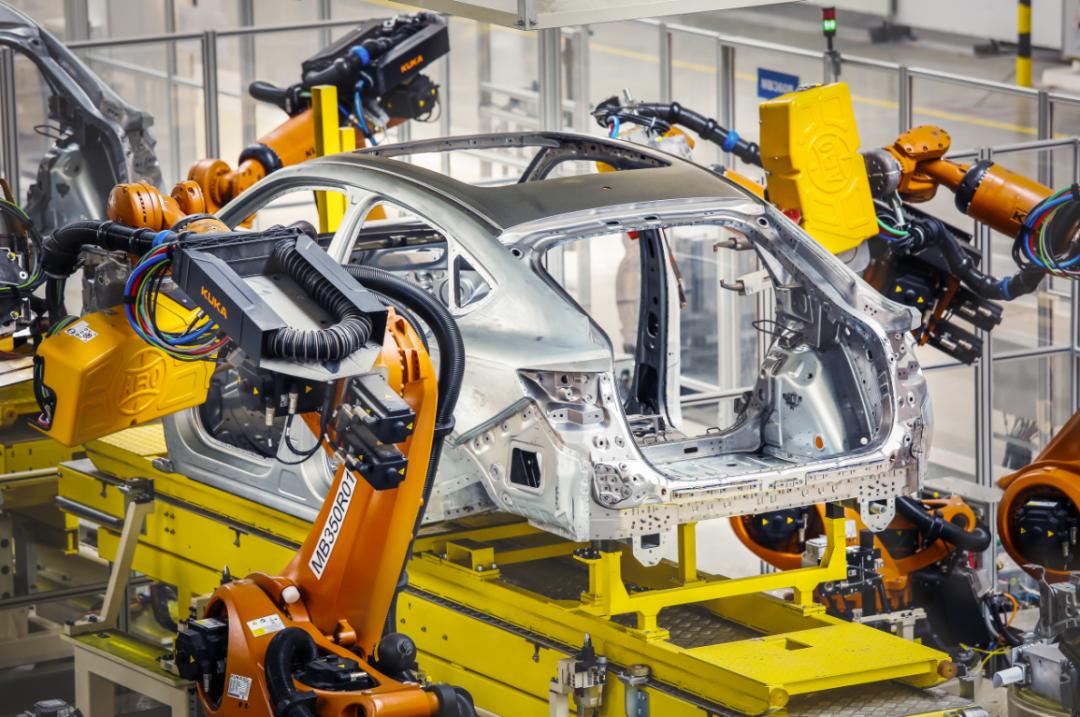
Image source: WeChat official account "Ningbo Communication"
The iteration of the industry competition logic has further forced industrial transformation. As Li Bin, the CEO of NIO, said recently, the current competition in the Chinese automotive industry has entered the stage of system - based competition from single - point competition, requiring each vehicle manufacturer to have a complete system - based competition ability.
The same is true for the development logic of the regional automotive industry. Previously, both Zhejiang and Anhui have moved beyond the "scale - only theory" and aimed at a new development direction of improving both quantity and quality.
In January this year, the executive meeting of the Anhui provincial government reviewed the "Action Plan for Promoting the High - quality Development of Anhui's Intelligent Connected New Energy Vehicle Industry with Innovation as the Driving Force and Strength as the Foundation". At the meeting, it was proposed that facing the 15th Five - Year Plan period, Anhui will vigorously promote the integrated upgrading of R & D, vehicle manufacturing, parts production, and after - sales market, and accelerate the transformation from leading in total volume to leading comprehensively in terms of quality, efficiency, technology, safety, and intelligence.
Zhejiang's key to breaking the situation focuses on the synergistic efficiency improvement of the industrial chain. Gao Yang, a senior engineer at the Industrial Research Institute of the Zhejiang Provincial Development and Planning Institute, said in an interview with the media that while increasing the quantity, Zhejiang should also pay more attention to the improvement of profit margins, promote cluster - based and large - scale development, support leading vehicle enterprises with advantages, and make full use of the existing production capacity to develop new energy vehicles.
Zeng Gang said that compared with the investment model dominated by state - owned capital in some regions, Zhejiang's market - oriented and private - owned industrial ecosystem is more flexible and efficient, better adapted to market fluctuations, and has more advantages in cost control and industrial chain operation, providing internal impetus for the sustainable development of the industry.
However, Zeng Gang particularly emphasized that the domestic new energy vehicle industry is gradually transitioning from the primary stage of cost - competition to the stage of technology - competition, and there is still a long way to go to achieve the ultimate goal of value - creation and brand - building.
Across the country, from scale expansion to value creation has become the new consensus for the development of the new energy vehicle industry in each province during the 15th Five - Year Plan period, and "intelligence" is the key means.
During the 15th Five - Year Plan period, Zhejiang has proposed to focus on key areas such as intelligent driving to build a national leading core industrial cluster. Anhui has also listed the approval of Chery and Jianghuai for the pilot of L3 - level intelligent connected vehicle access and on - road operation as one of the key tasks for the construction of the intelligent connected new energy vehicle industrial cluster in 2026.
03
Going Global
Looking outward, currently, the overseas market has become a new growth space for new energy vehicle enterprises, and a race from vehicle exports to the overseas expansion of the industrial chain has already begun.
On June 18, hundreds of Leapmotor new energy cars were exported to the EU market by sea. This year, Leapmotor's overseas orders have grown rapidly. In May, its overseas exports exceeded 20,000 units, accounting for nearly 25%, and it has continuously ranked first among new - force brands in terms of export sales. In the Italian pure - electric vehicle market, Leapmotor's market share reached 33.5%, which means that one out of every three pure - electric cars sold is a Leapmotor product.
The acceleration of vehicle enterprises going global has led to an explosive growth in the province's exports.
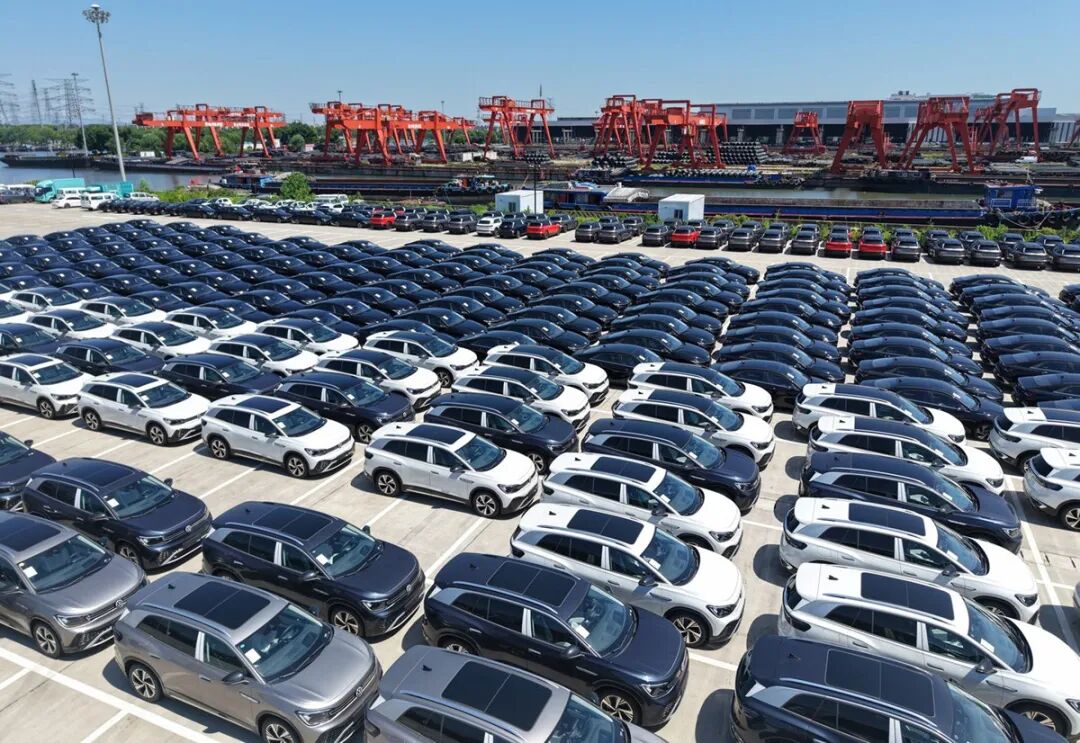
Image source: Xinhua News Agency
From January to May this year, Zhejiang's exports of new energy vehicles reached 31.3 billion yuan, a year - on - year increase of 91.8%. In May, the exports reached 8.18 billion yuan, setting a new monthly export record and increasing by 1.1 times.
During the same period, Anhui exported 800,000 vehicles, remaining the first in the country, with a year - on - year increase of 116.9%, and the value reached 82.22 billion yuan, a year - on - year increase of 110.6%.
Overseas business also provides profit growth for vehicle enterprises. Taking Geely as an example, in the first quarter of this year, its exports of new energy vehicles reached 125,000 units, a year - on - year increase of 572%, and the single - quarter export volume has exceeded the whole of last year. During the same period, the company's gross profit margin increased from 15.7% in the same period last year to 17.5%. Geely clearly stated that overseas business is becoming its second growth curve.
However, the high - speed growth of the going - global journey still faces multiple uncertainties.
The Industrial Research Institute of the Zhejiang Provincial Institute of Industry and Information Technology stated in an article that the EU's tariff - increasing policy and the US "Inflation Reduction Act" have led to increasing global trade barriers. For Zhejiang Province, the going - global model of Geely and Leapmotor, which simply relies on "vehicle exports", has relatively weak risk - resistance capabilities.
In this regard, Zeng Gang believes that Zhejiang, with a high degree of outward - orientation and rich experience in going global, has the advantage of promoting the global layout of the new energy vehicle industry. In the process, Zhejiang's experience should be brought into play to support enterprises in building overseas production bases and form a "vehicle + parts" group - going - global model.
At the same time, attention should be paid to making up for the shortcomings in the compliance link, and reversing the long - standing thinking of Chinese vehicle enterprises that "emphasize production over service", and establishing a high - quality overseas after - sales service system to maintain market share with brand value.
From the long - term development perspective of the industry, in Zhang Xiang's view, compared with international vehicle enterprises, Chinese vehicle enterprises are still relatively small in scale. Once a single project fails, the capital loss is often unbearable for the enterprises. Before actual investment, the localization experience of Japanese and American brands can be studied to avoid policy risks.
Overall, the competition is becoming increasingly fierce, and the ownership of the "top province in new energy vehicles" is still uncertain. However, what is more worthy of attention is how each region can truly transform its phased production advantage into the internal impetus for the sustainable development of the industry.
This article is from the WeChat official account "Urban Evolution Theory", author: Liu Xuqiang, published by 36Kr with authorization.