88 high-end shopping malls in "open battle": Nanjing's top store crushes first-tier cities, Beijing and Shanghai "completely outplay" Guangzhou and Shenzhen
Currently in China, there are over 9,000 centralized commercial projects, with 88 high - end shopping malls standing at the top of the pyramid (statistics as of May 2026).
With a mere 0.94% share, they have captured the majority of the luxury consumption market and defined the real height of the "consumption ceiling" in each city.
Their distribution is extremely uneven. Shanghai has 11, Beijing has 7, while Shenzhen, with a comparable economic volume and the world's fastest - growing high - net - worth population, only has 2; and Guangzhou, which leads in GDP, only has 1.
What's even more interesting is that in 2025, the country's "top - selling store" is not in Beijing, Shanghai, Guangzhou, or Shenzhen, but Deji Plaza in Nanjing — with a sales volume of 26.24 billion yuan, it outperformed first - tier cities, leading the second - place by nearly 3 billion yuan. This gap is equivalent to the annual performance of a medium - sized high - end shopping mall. It can be seen that there is not an absolute linear relationship between a city's economic aggregate and the sales volume of high - end shopping malls.
Looking at the landscape of operators, it reveals another truth. Only 14 enterprises in the country can operate more than 2 high - end shopping malls on a large scale, with a total of 59 projects, accounting for 67% of the total. China Resources Mixc Lifestyle leads the way with 15 projects, followed closely by Hang Lung, SKP, Wheelock, Swire, and Sun Hung Kai Properties.
The remaining 29 high - end shopping malls, accounting for 33%, are "unique items" — the owners only have this one mall, which is difficult to replicate and relies entirely on the core location of a specific city and historical opportunities to stand firm. The existence of these 29 "unique items" confirms the extremely high entry threshold for high - end commerce: the strict requirements of luxury brands for location selection, as well as their demands on the brand resources and membership systems of operators, have kept most players out of the market.
More importantly, the ranking of high - end shopping malls in terms of sales volume is rearranged every year. The success or failure of a shopping mall ultimately depends on three progressive levels: the wealth structure of the city (who is buying), the concentration of high - end consumption (how much they can afford), and the market competition pattern (whether it monopolizes or dominates the local high - end market). Together, these three factors determine the shopping mall's "capture ability" of the city's wealth.
Scarcity is just the starting point, and dynamic competition is the norm. The research center of Winshang focuses on their asset profiles, from the city distribution, operator landscape to the determinants of sales volume, to reveal the competitive evolution logic beneath the static map.
01.
Landscape of High - end Commercial Operators: "Oligopoly" and "Single - entity"
In the current commercial real - estate field, different types of assets show obvious differentiation:
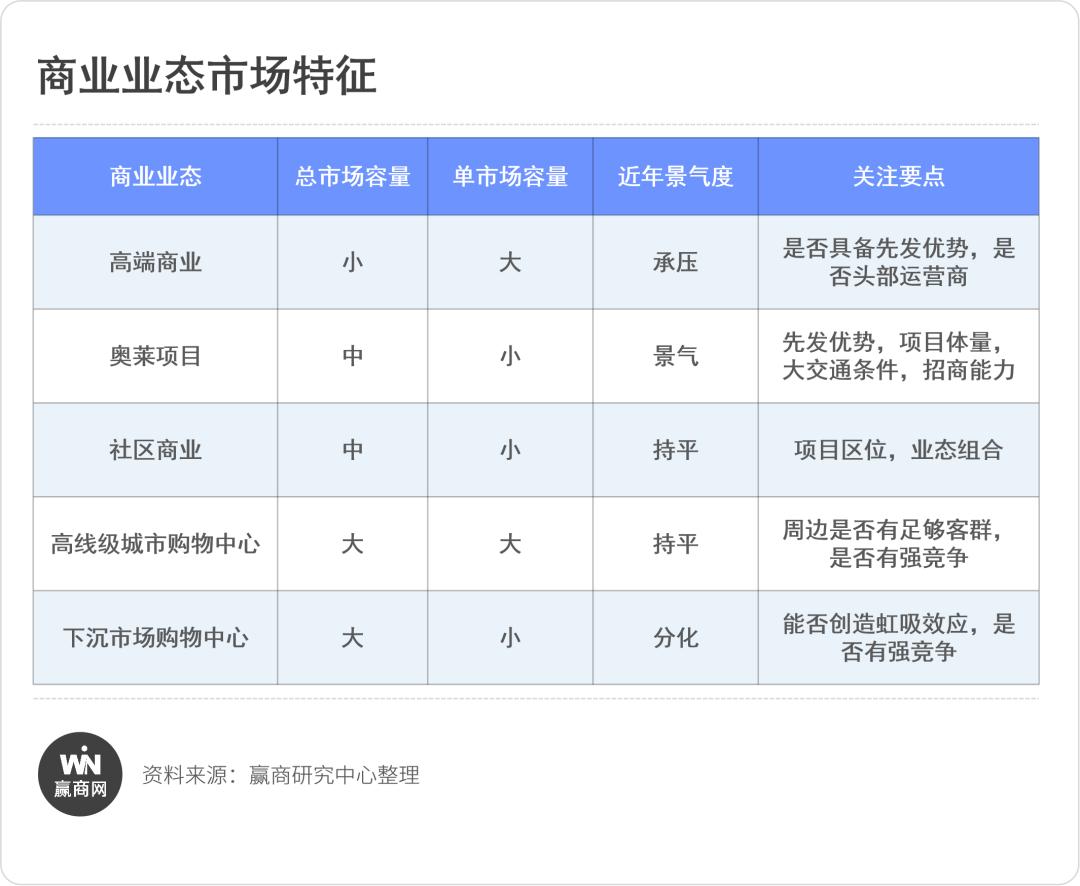
High - end shopping malls at the top of the pyramid have their own independent value curve due to their natural scarcity and strong anti - cycle ability.
How to define high - end shopping malls? How many are there? Where are they?
To accurately define high - end shopping malls, Winshang Big Data has conducted extensive data research and sorting. In the general definition of Winshang Big Data, high - end shopping malls refer to shopping centers and department stores with a grade index of over 9 points and a certain number of luxury brand merchants entering in a non - counter form.
Among them, the determinants of the grade index include indicators such as the number of luxury brands in the project, the proportion of luxury brands, the number and proportion of luxury/upscale/mid - upscale brands, and the average customer order in each business format. Malls with a certain number of high - end brands are defined as high - end shopping malls. At the same time, many high - end shopping malls are built in phases, so reasonable zoning is necessary.
After the above data sorting, according to Winshang Big Data statistics, as of May 2026, there are a total of 88 high - end shopping malls in China, while the number of centralized commercial projects is 9,347, including 7,312 existing shopping centers. In comparison, high - end shopping malls are like the pearls on the crown, a small group at the top of the commercial pyramid.
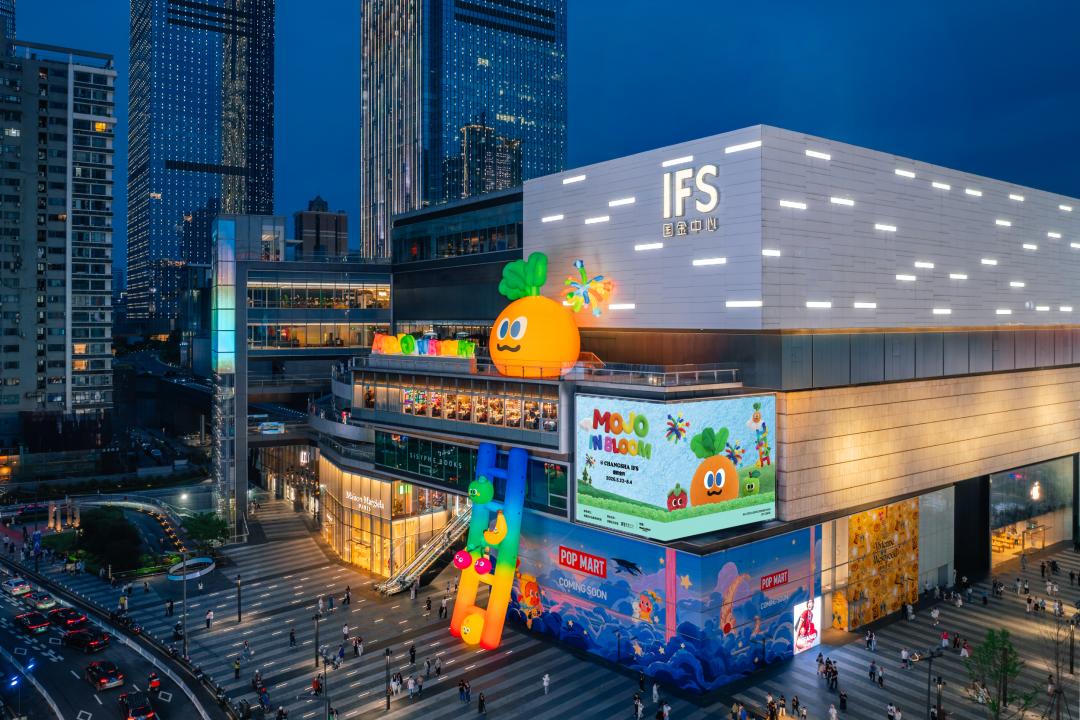
Changsha IFS
The scarcity of high - end shopping malls is not only reflected in the quantity but also in the landscape of their operators: there are very few players who can hold and operate multiple high - end shopping malls on a large scale. Specifically:
Highly Concentrated Large - scale Operators
Among the 88 high - end shopping malls, only 14 enterprises operate 2 or more projects. These 14 enterprises operate a total of 59 high - end shopping malls, accounting for 67% of the national total.
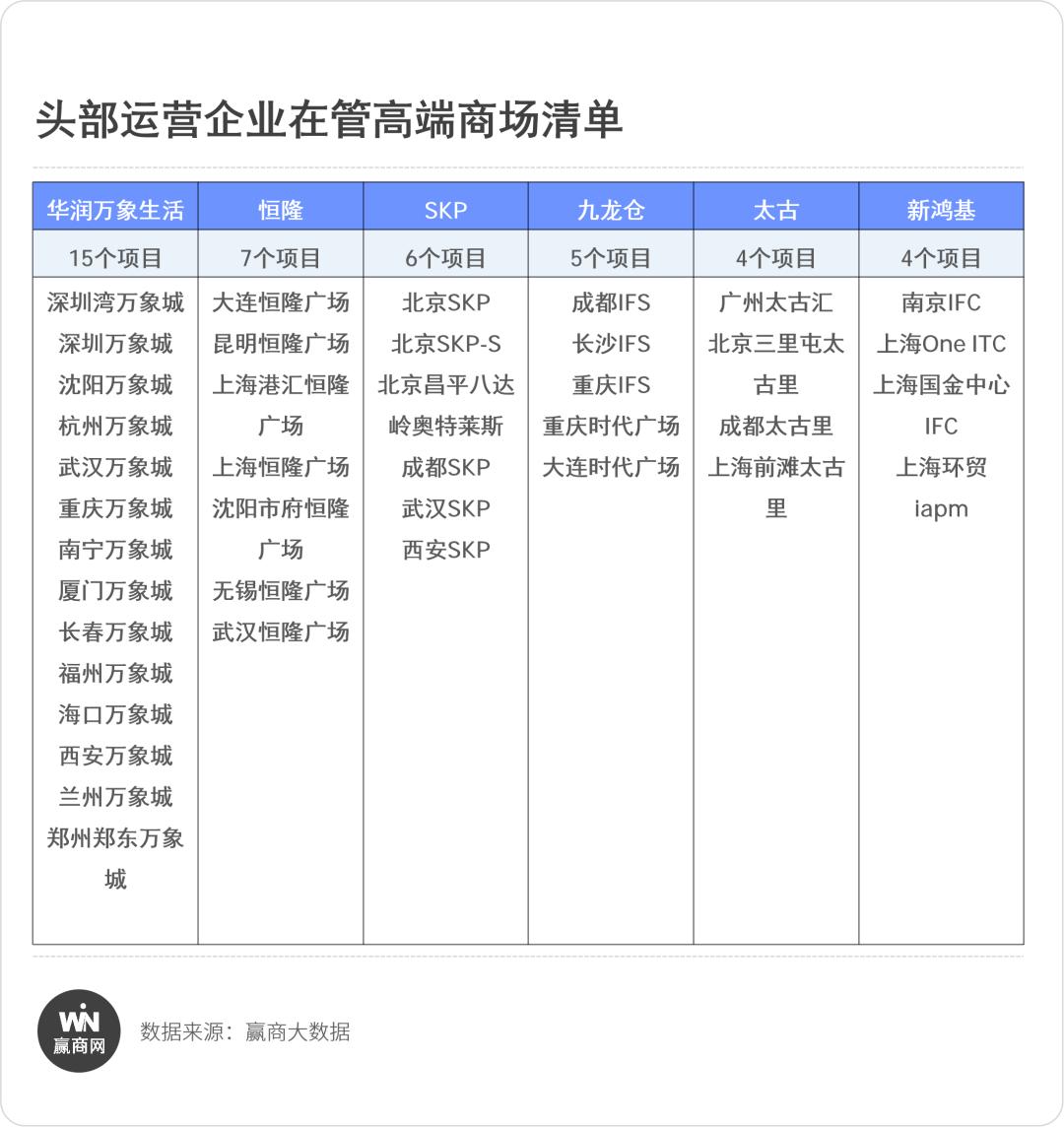
Single - entity Projects Account for Over 30%
The remaining 29 high - end shopping malls are "single - entity projects" — that is, the owners or operators only hold/operate this one and only high - end shopping mall, without forming a chain or group - based layout. The number of single - entity projects accounts for 33% of the total.
What does this mean?
First, the operation threshold of high - end shopping malls is extremely high. Luxury brands have strict requirements for the location, hardware, service, membership system, and marketing ability of shopping malls. Operators who can handle the operation of multiple high - end shopping malls simultaneously must have strong financial strength, brand resources, and cross - city management ability. Therefore, only 14 enterprises in the country can achieve this.
The head - effect is significant, and it is difficult for new entrants. These 14 enterprises occupy nearly 70% of the high - end shopping mall market share, and most of them are established players such as China Resources, Hang Lung, SKP, Swire, and Wheelock. For new enterprises to build a high - end shopping mall from scratch, they not only have to overcome the high wall of luxury brand recruitment but also face the "positioning" advantages of mature operators in core cities — the opportunity window is extremely narrow.
Second, a large number of high - end shopping malls are "unique items". The existence of 29 single - entity projects shows that many high - end shopping malls rely on specific core locations in cities, historical opportunities, or the long - term in - depth operation of the owners to stand firm, and it is difficult to replicate them to a second project. Although these "unique items" are of extremely high grade, their operation experience is often not replicable, further intensifying the rigidity of high - end supply.
02.
City Map of High - end Commerce
Shanghai and Beijing Lead, Guangzhou and Shenzhen Lack
In terms of city distribution, the 88 high - end shopping malls in the country are highly concentrated: Shanghai (11) and Beijing (7) form the first echelon, together accounting for more than 20%; Suzhou ranks third with 5, surpassing traditional strong second - tier cities such as Chongqing, Wuhan, and Chengdu. There are 8 cities with 4 or more high - end shopping malls (Shanghai, Beijing, Suzhou, Chongqing, Wuhan, Shenyang, Hangzhou, and Chengdu), with a total of 39 high - end shopping malls, accounting for 44% of the total — the siphon effect of top cities is extremely obvious.
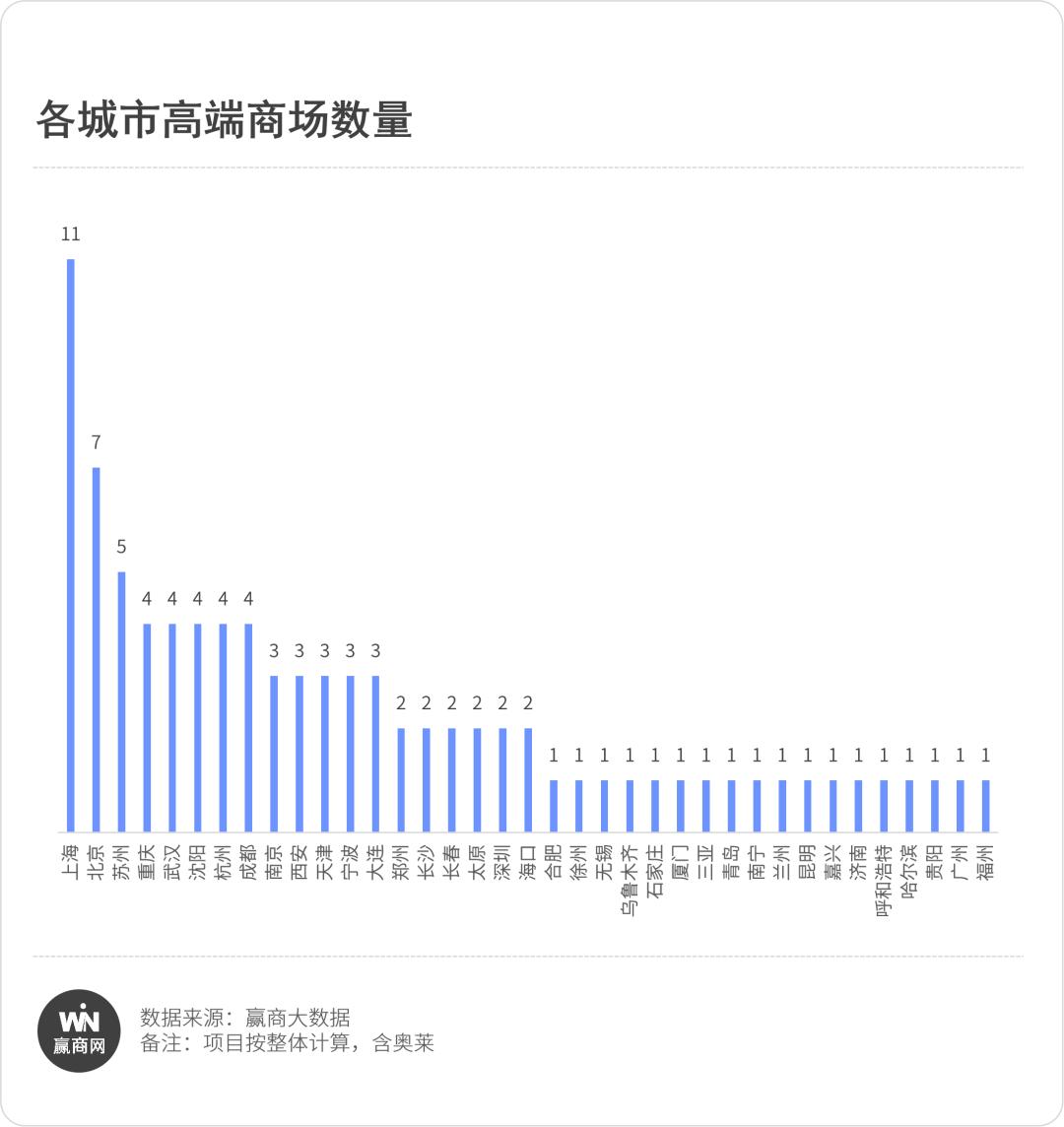
What's more worthy of attention is the long - tail distribution: among the 37 cities with high - end shopping malls, 18 cities only have 1 (such as Guangzhou, Xiamen, Kunming, Guiyang, etc.), accounting for nearly half; and only 6 cities have 2. This means that the high - end commercial supply in most cities is "single - point" — there is only one in the whole city, with no alternative options.
In particular, the two first - tier cities of Guangzhou and Shenzhen only have 1 and 2 high - end shopping malls respectively, forming a huge contrast with Shanghai and Beijing. On the one hand, it reflects the uniqueness of the high - end commercial pattern in South China (diversion by Hong Kong, multi - center dispersion in Guangzhou and Shenzhen, etc.); on the other hand, it also confirms the extremely high entry threshold of high - end shopping malls — even in cities with a leading economic aggregate in the country, it may not be easy to support multiple high - end projects.
Therefore, comprehensively speaking, the city distribution of high - end shopping malls presents a pattern of "multi - polarization in a very small number of top cities and uniqueness in most cities". This distribution not only strengthens the overall scarcity of high - end shopping malls but also reveals the real gap in commercial levels between cities — the number of high - end shopping malls is itself a hard measure of a city's "attraction at the top of the consumption pyramid".
03.
Monopolizing a City Does Not Mean Leading in Sales Volume
Sales volume is the most valuable single indicator for high - end shopping malls, which is the result of consumers' real - money votes.
When the annual sales volume of a high - end shopping mall exceeds 10 billion yuan, it means that it has formed a stable stickiness among high - net - worth customer groups and a strong ability to convert luxury purchases. In addition, when luxury brands (such as LV, Hermès, Chanel) select locations, they value most the "sales ability" of shopping malls. The higher the sales volume of a shopping mall, the more likely it is to obtain resources such as double - layer flagship stores, limited - edition launches, and exclusive exhibitions from brands, forming a positive cycle of "high sales → strong brands → even higher sales".
According to the data in 2025, Deji Plaza in Nanjing became the country's top - selling store with a sales volume of 26.24 billion yuan.
Deji Plaza in Nanjing led the second - place by nearly 3 billion yuan, and the gap exceeded the annual performance of a medium - sized high - end shopping mall.
Shanghai has 11 high - end shopping malls, but the single - mall sales volume is lower than that of Deji and Beijing SKP, confirming the "multi - point diversion" effect — having more high - end shopping malls in a city makes it difficult to produce a super top - selling store.
There is not a linear relationship between cities and shopping malls. Shenzhen has a higher GDP and a higher total retail sales of social consumer goods than Nanjing (in 2025, Shenzhen's was about 1.03 trillion yuan, and Nanjing's was about 0.81 trillion yuan). The sales volume of high - end shopping malls depends on the regional siphon ability + market concentration, rather than the city's economic aggregate.
The competitiveness of high - end shopping malls is essentially the "capture ability" of the city's wealth. The success or failure of a high - end shopping mall depends on the following three factors:
Wealth Structure: The Scale and Radiation Radius of High - net - worth Populations
High - net - worth populations are the core customer groups of high - end shopping malls. According to the "Report on the World's Richest Cities in 2025", 7 Chinese cities have entered the top 50 of the world's millionaire cities, and Shenzhen has become the world's fastest - growing wealth center with a growth rate of 142%.
But more importantly, can this city attract high - net - worth populations from surrounding areas — that is, the radiation radius of wealth.
■ Local Wealth Base
Beijing, Shanghai, and Shenzhen have the most concentrated high - net - worth populations in the country, which is the fundamental reason why they can support multiple high - end shopping malls.
■ Regional Siphon Ability
Provincial capital cities or regional central cities (such as Nanjing, Chengdu, Wuhan) can attract high - purchasing - power customer groups from within the province or even across provinces through the high - speed rail network and their status as provincial administrative centers, even if their local high - net - worth populations are less than those in first - tier cities. For example, Nanjing has a significant siphon effect on cities in eastern Anhui.
A city's "high - end consumption hinterland" is often larger than its administrative boundary. Shopping malls that can break boundaries and gather regional wealth will have a significantly higher sales volume ceiling than those that only rely on local customer groups.
Consumption Power: The "Concentration" of High - end Consumption Rather Than the Total Amount
Consumption power cannot be simply equated with the total retail sales of social consumer goods, which includes a large amount of people's livelihood consumption. For high - end shopping malls, what really matters is the "concentration" of high - end consumption willingness and payment ability in the total population.
Characteristics of cities with high - consumption concentration: high per - capita GDP, developed tertiary industry, dense high - income occupations (finance, technology, professional services), and strong consumption willingness among the wealthy and middle - class.
The trap of low concentration but high total amount: in some cities, the total retail sales of social consumer goods are very high, but they are mainly driven by the population base or low - customer - order consumption, making it difficult for high - end shopping malls to achieve large - scale operations.
Market Competition: Monopoly Dividends and Diversion Risks
The sales performance of high - end shopping malls largely depends on the market competition pattern in the city where they are located — that is, whether the high - end supply is "dominated by one" or "flourishing in multiple points".
Monopoly - type market (the number of high - end shopping malls ≤ 2): The leading shopping mall enjoys excess dividends. Almost all high - end consumption in the city is concentrated here. Luxury brands have no other choices, and consumers also have no diversion options. The floor efficiency and sales volume of such shopping malls are often extremely high.
Dispersed - type market (the number of high - end shopping malls ≥ 4): The customer groups are significantly diverted. Even if the city's total consumption power is strong, the sales volume of single malls will be diluted.
Taking sales volume as the verification indicator, the above three factors work together. Sales volume of high - end shopping malls = f (local high - net - worth population base + regional siphon ability) × high - end consumption concentration ÷ market competition index
Local high - net - worth population base: determines the basic customer flow.
Regional s