88 Hochwertige Einkaufszentren im offenen Wettbewerb: Der Flagship-Store in Nanjing übertrifft die erstklassigen Standorte, Peking und Shanghai überlegen Guangzhou und Shenzhen vollständig
Currently, there are over 9,000 central commercial projects in China. At the top of the pyramid are 88 exclusive shopping centers (Statistical period: up to May 2026).
With a share of 0.94%, they capture the majority of the luxury consumption market and define the true height of the "consumption upper limit" of each city.
Their distribution is extremely uneven. Shanghai has 11, Beijing has 7, while Shenzhen, a city with comparable economic size and the world's highest growth rate of high - net - worth individuals, has only 2, and Guangzhou, which leads in the total GDP, has only 1.
What's even more interesting is that the "King of Stores" in 2025 was not in Beijing, Shanghai, Guangzhou, or Shenzhen, but Deji Plaza in Nanjing – with a turnover of 26.24 billion yuan, it outperformed the top cities and was nearly 3 billion yuan ahead of the second - place one. The difference is equivalent to the annual turnover of a medium - sized exclusive shopping center. It can be concluded that there is no absolute linear relationship between a city's economic size and the turnover of exclusive shopping centers.
Looking at the structure of the operators, another truth is revealed. Only 14 companies in China can operate 2 or more large - scale exclusive shopping centers. In total, there are 59 projects, accounting for 67% of the total. China Resources Mixc Lifestyle leads by far with 15 projects, followed by Hang Lung, SKP, Wheelock, Swire, and Sun Hung Kai Properties.
The remaining 29 exclusive shopping centers, accounting for 33% of the total, are "one - offs" – the owner or operator has only this one shopping center, which is difficult to replicate and is completely based on a specific core area of the city and historical circumstances. The existence of these 29 "one - offs" confirms the high entry barriers for the exclusive business: The strict requirements of luxury brands for location selection, the brand resources, and the membership system of the operators have kept most outside players away.
More importantly, the ranking of the turnover of exclusive shopping centers is re - ordered every year. The success or failure of a shopping center ultimately depends on three consecutive levels: the wealth structure of the city (who buys), the concentration of exclusive consumption (how much one can afford), and the market competition situation (whether it dominates or monopolizes the local exclusive market). Together, these three factors determine the "ability" of the shopping center to "capture" the city's wealth.
Rarity is only the beginning, and dynamic play is the norm. The Research Center of Winshang focuses on the asset picture of exclusive shopping centers and reveals the logic of competitive development under the static map, from the urban distribution and the structure of the operators to the factors that determine the turnover.
01.
Structure of Exclusive Retail Operators: "Oligopoly" and "One - off"
In the field of commercial real estate, there is currently a clear differentiation between different types of assets:
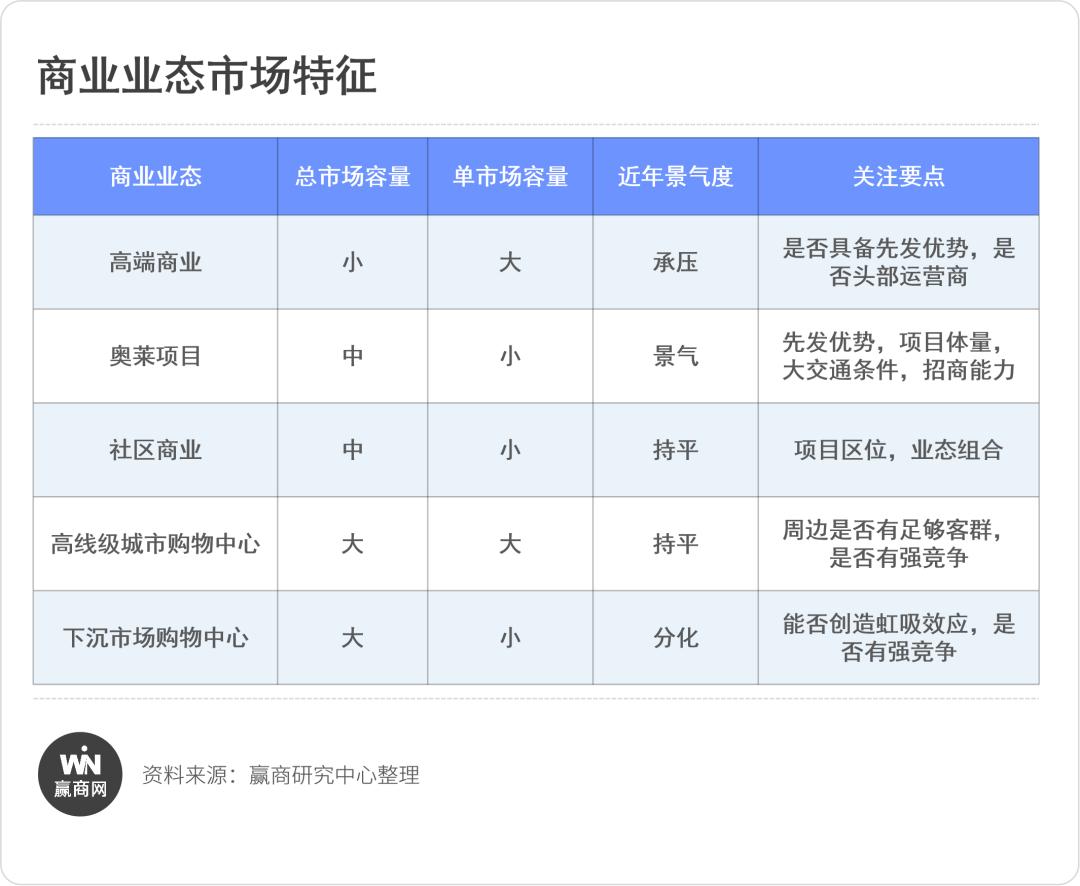
The exclusive shopping centers at the top of the pyramid have developed their own value curve due to their natural rarity and strong resistance to economic fluctuations.
How are exclusive shopping centers defined? How many are there? Where are they located?
To accurately define exclusive shopping centers, Winshang Big Data has conducted comprehensive data research and processing. In the general definition of Winshang Big Data, exclusive shopping centers are shopping centers and department stores with a quality index of over 9 points and a certain number of luxury brand retailers that are not established in the form of sales stands.
The factors that determine the quality index include the number of luxury brands in the project, the proportion of luxury brands, the number and proportion of luxury/upper - class/middle - and upper - class brands, and the average bill amounts in different industries. Shopping centers in which a certain number of exclusive brands are established are defined as exclusive shopping centers. At the same time, many exclusive shopping centers are built in phases because a reasonable zoning is required.
After the above data processing, Winshang Big Data has found that as of May 2026, there are a total of 88 exclusive shopping centers in China, while the number of central commercial projects is 9,347, including 7,312 existing shopping centers. In comparison, exclusive shopping centers are like the pearls on the crown, a tiny minority at the top of the commercial pyramid.
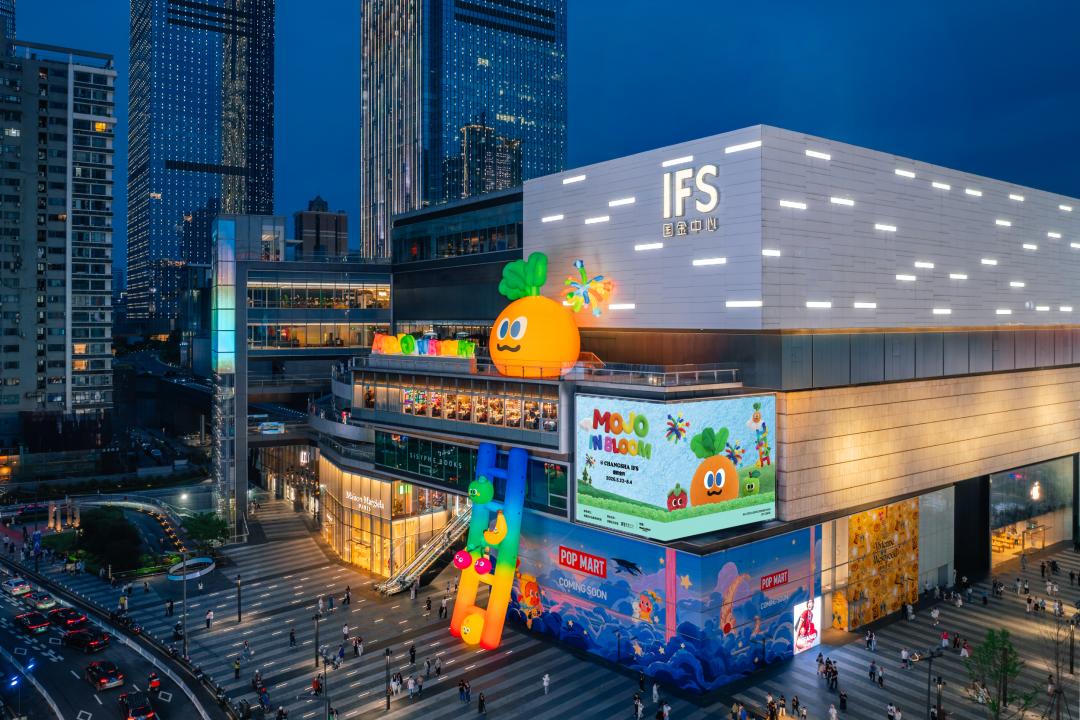
Changsha IFS
The rarity of exclusive shopping centers is not only shown in the number but also in the structure of their operators: There are only a few players who can own and operate multiple large - scale exclusive shopping centers. Specifically:
High - level Concentration of Large - scale Operators
Of the 88 exclusive shopping centers, only 14 companies operate 2 or more projects. These 14 companies operate a total of 59 exclusive shopping centers, accounting for 67% of the national total.
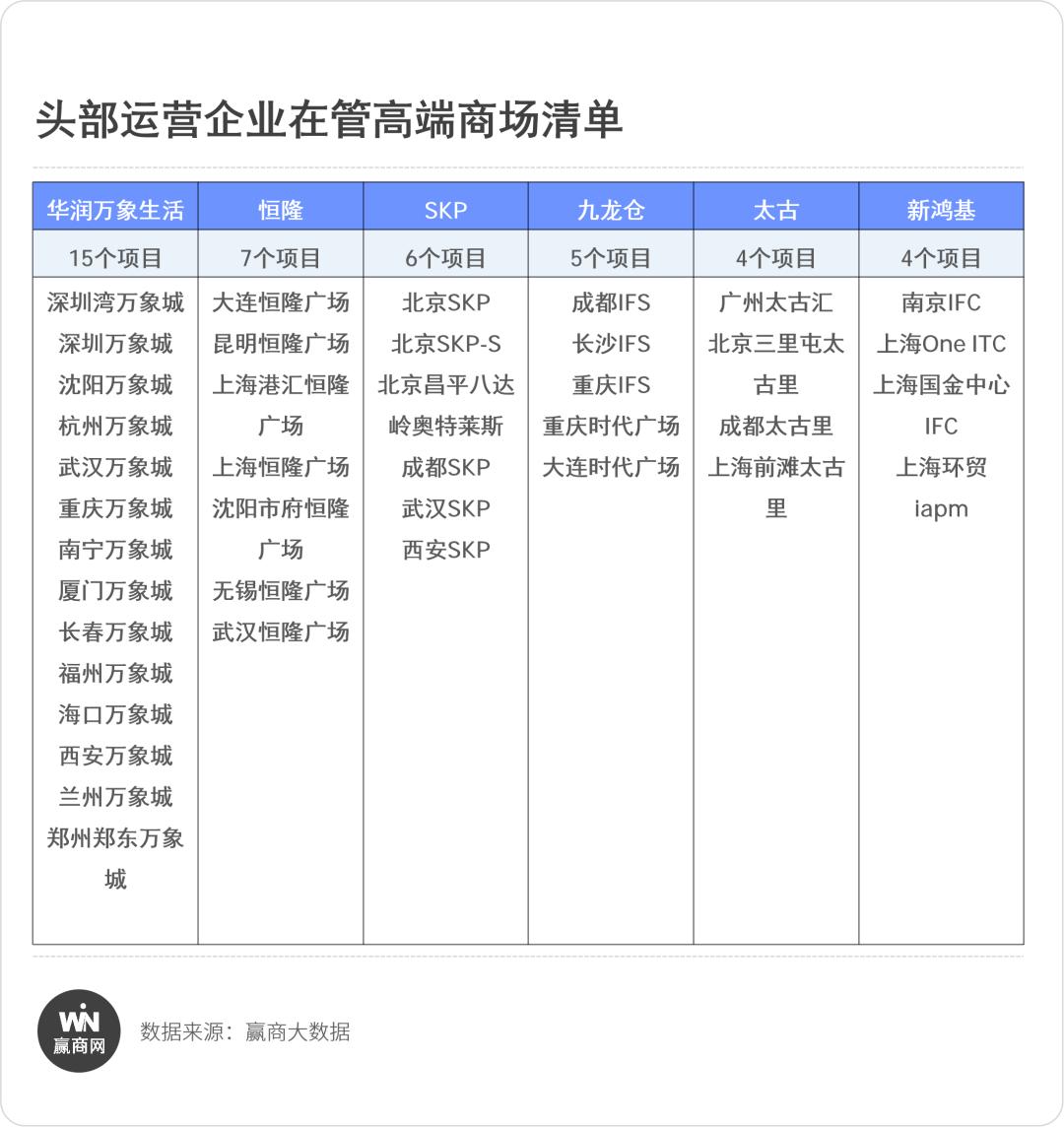
More than One - Third are Single Projects
The remaining 29 exclusive shopping centers are "single projects" – that is, the owner or operator owns/operates only this one exclusive shopping center and has not built a chain or group structure. The number of single projects accounts for 33% of the total.
What does this mean?
First, the operating barriers for exclusive shopping centers are extremely high. Luxury brands have strict requirements for the location, infrastructure, service, membership system, and marketing capabilities of shopping centers. Operators who can handle multiple exclusive shopping centers simultaneously must have strong financial resources, brand resources, and cross - city management capabilities. Therefore, only 14 companies in China can do this.
The effect of leading companies is obvious, and it is difficult for new players to enter. 14 companies have captured nearly 70% of the exclusive shopping center market, and most of them are established players such as China Resources, Hang Lung, SKP, Swire, and Wheelock. New companies that want to build an exclusive shopping center from scratch not only have to overcome the high barrier of recruiting luxury brands but also face the "placement" advantage of established operators in core cities – the chances are extremely slim.
Second, many exclusive shopping centers become "one - offs". The existence of 29 single projects shows that many exclusive shopping centers can only exist due to a specific core area of the city, historical circumstances, or the long - term presence of the owner and are difficult to replicate in a second project. Although these "one - offs" are of high quality themselves, their operating experience is often not replicable, which further strengthens the rigidity of exclusive supply.
02.
Urban Map of Exclusive Retail
Shanghai and Beijing Lead, Guangzhou and Shenzhen Lag
Looking at the urban distribution, the concentration of the 88 exclusive shopping centers in China is extremely high: Shanghai (11) and Beijing (7) form the first group, and together they account for more than 20%; Suzhou with 5 ranks third and surpasses traditional strong second - tier cities such as Chongqing, Wuhan, and Chengdu. There are 8 cities with 4 or more exclusive shopping centers (Shanghai, Beijing, Suzhou, Chongqing, Wuhan, Shenyang, Hangzhou, Chengdu), and the total number of exclusive shopping centers in these cities is 39, accounting for 44% of the total – the siphon effect of leading cities is extremely obvious.
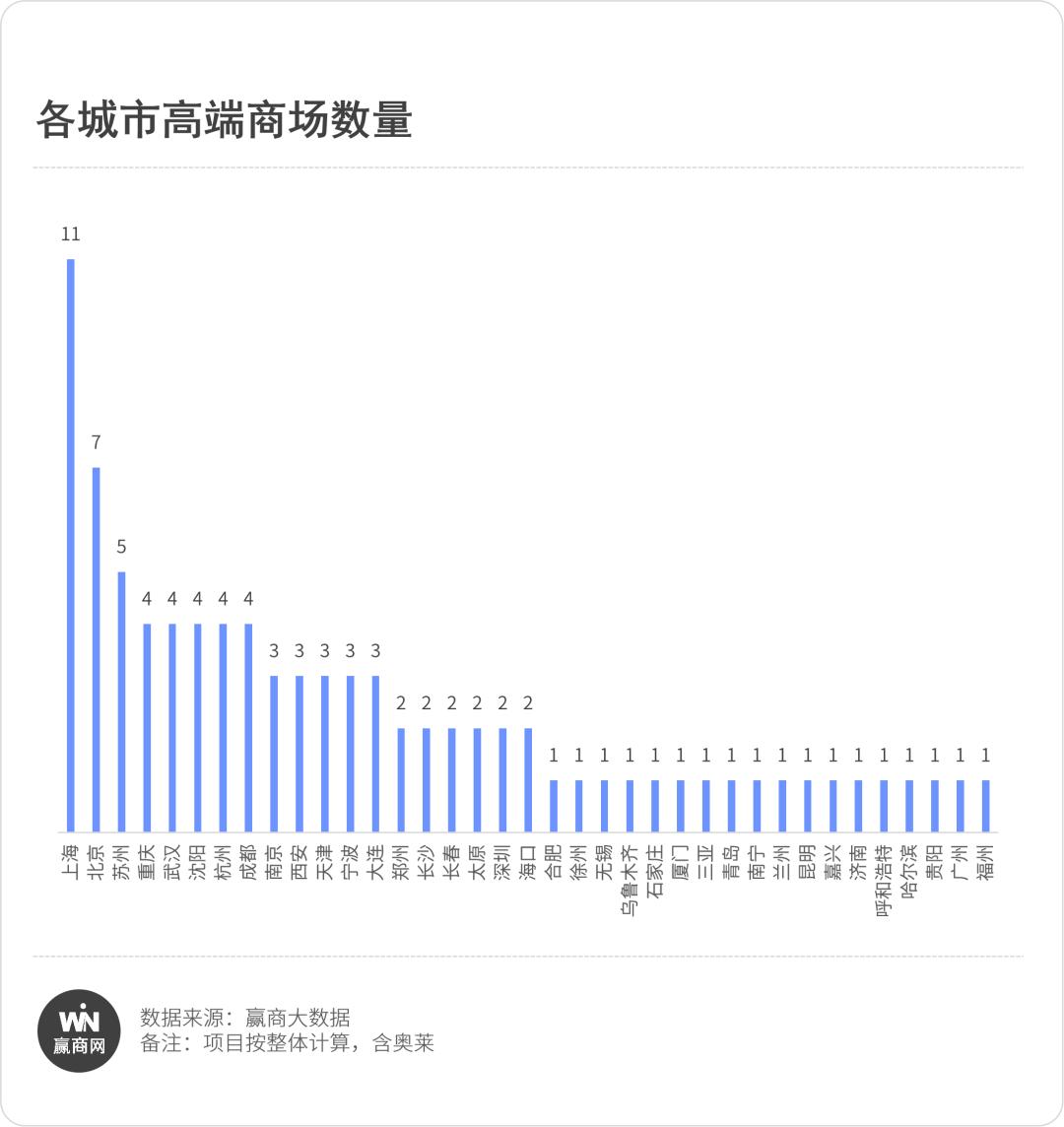
What's even more remarkable is the long - tail distribution: Of the 37 cities with exclusive shopping centers, 18 cities have only 1 (e.g., Guangzhou, Xiamen, Kunming, Guiyang, etc.), accounting for almost half; only 6 cities have 2. This means that the exclusive retail supply in most cities is "spotty" – there is only one such shopping center in the whole city, without alternative options.
In particular, the two metropolises Guangzhou and Shenzhen have only 1 and 2 exclusive shopping centers respectively, which forms a strong contrast with Shanghai and Beijing. On the one hand, this reflects the uniqueness of the exclusive retail structure in South China (diversion by Hong Kong, dispersion of Guangzhou and Shenzhen in multiple centers, etc.); on the other hand, it exactly confirms the high entry barriers for exclusive shopping centers – even in cities with leading economic size in the whole country, it may not be easy to build multiple exclusive projects.
Overall, the urban distribution of exclusive shopping centers shows a pattern of "multi - polarity in a few leading cities and singularity in most cities". This distribution not only strengthens the overall rarity of exclusive shopping centers but also reveals the real difference in retail levels between cities – the number of exclusive shopping centers is itself a measure of the "attraction of the top of the consumption pyramid" of a city.
03.
Monopolizing a City does not Mean Leading in Turnover
Turnover is the most valuable single indicator for exclusive shopping centers and the result of consumers' voting with real money.
When an exclusive shopping center achieves an annual turnover of over 1 billion yuan, it means that it has developed a stable bond with high - net - worth customers and a strong ability to implement luxury purchases. In addition, luxury brands (e.g., LV, Hermès, Chanel) value most the "sales ability" of the shopping center when choosing a location. The higher the turnover of a shopping center, the more likely it is to obtain resources such as double branches, limited first - editions, and exclusive brand exhibitions, which forms a positive cycle of "high turnover → strong brand → even higher turnover".
According to the data in 2025, Deji Plaza in Nanjing became the national King of Stores with a turnover of 26.24 billion yuan.
Deji Plaza in Nanjing is nearly 3 billion yuan ahead of the second - place one, and the difference exceeds the annual turnover of a medium - sized exclusive shopping center.
Shanghai has 11 exclusive shopping centers, but the individual turnover is lower than that of Deji and Beijing SKP, which confirms the "multi - point diversion effect" – when there are many exclusive shopping centers in a city, it is more difficult to produce a super King of Stores.
There is no linear relationship between the city and the shopping center. Shenzhen has a higher GDP and a higher total retail sales than Nanjing (in 2025, the total retail sales in Shenzhen were about 1.03 trillion yuan and in Nanjing were about 0.81 trillion yuan). The turnover of exclusive shopping centers depends on the regional siphoning ability and market concentration, not on the economic size of the city.
The competitiveness of exclusive shopping centers is essentially the "ability" to "capture" the city's wealth. The success or failure of an exclusive shopping center depends on the following three factors –
Wealth Structure: Size and Radiation Radius of High - Net - Worth Individuals
High - net - worth individuals are the core customers of exclusive shopping centers. According to the report "The Richest Cities in the World 2025", 7 Chinese cities have made it into the top 50 of the world's millionaires, and Shenzhen has become the world's fastest - growing wealth center with a growth of 142%.
More importantly...