How many cultural tourism enterprises have fallen into the "low-altitude tourism investment trap"?
In the current hype of the low-altitude economy, many cultural and tourism enterprises are investing substantial funds in low-altitude tourism. However, several recent court cases on the China Judgments Online reveal the investment risks in low-altitude tourism. Low-altitude tourism is by no means a cultural and tourism project that can be invested in casually. There are many uncertainties in the approval, licensing, supervision, and regulations behind it.
Airspace Approval: A Single Veto
The first court case involves a lawsuit between Chongqing Sunac Cultural Tourism City and Futian Aviation Technology Co., Ltd.
Futian Aviation is a company specializing in low-altitude tourism. It originated in Dongguan and operates multiple low-altitude tourism bases in places such as Zhongshan and Zhuhai in Guangdong. In March 2023, Futian Aviation entered Yule Town in Chongqing Sunac Cultural Tourism City, investing tens of millions of yuan to develop the low-altitude tourism market in the Sichuan and Chongqing regions. It rented a 2,000-square-meter site to carry out helicopter aerial tour experiences, aviation research and study programs, wedding charter flights, sales of aviation souvenirs, hot air balloon sightseeing, etc.
Amid the then-booming low-altitude tourism trend, the project faced no obstacles and received strong support from the local government. The court judgment shows that Air Didi, an affiliated company of Futian Aviation, also signed an agreement with the local government, promising to operate in the area for at least 10 years and build an aviation base integrating a flight training center, a science popularization and research study base, a low-altitude tourism center, a commercial flight center, etc. On September 18, 2023, the local government issued a letter regarding the establishment of a helicopter takeoff and landing point in Shapingba District, with the point located in Yule Town of Chongqing Sunac Cultural Tourism City. Futian Aviation planned to conduct the first helicopter takeoff and landing during the National Day Golden Week that year and was also going to use helicopters to advertise in the air, announcing the arrival of the low-altitude tourism era to the whole of Chongqing.
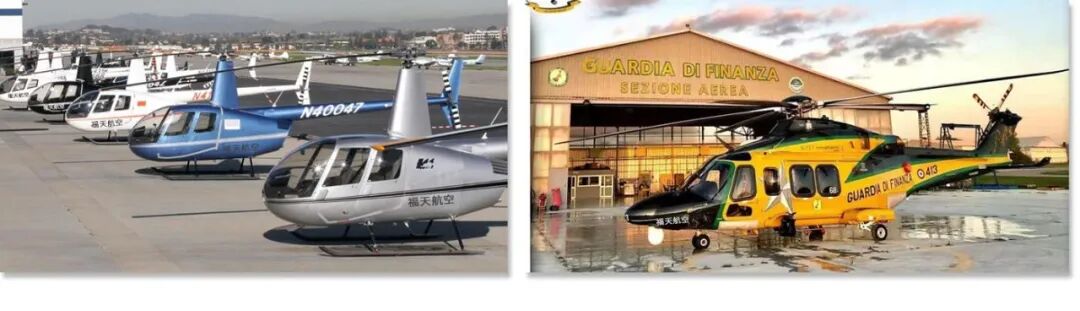
Futian Aviation provides science popularization and research study services
However, the approval of the local government alone is not enough for a low-altitude tourism project. Low-altitude tourism involves three parties: the military (the military forces), the local government, and civil aviation. Some local investment promotion departments make random promises to attract investment, while the military must consider issues such as the safety of military training and anti-leakage in military management areas. The court judgment shows that on September 28, 2023, the military replied, "The temporary field takeoff and landing point in the parking lot of Sunac Cultural Tourism City you applied for is too close to the air force military facilities and does not meet the relevant requirements. It is recommended to choose another location."
The military's single veto shattered Futian Aviation's helicopter tour plan. Without helicopter tours, the tourist attraction lost a major selling point. Futian Aviation wanted to carry out hot air balloon sightseeing, but it lacked the corresponding procedures and could not carry passengers for sightseeing. It only used hot air balloons for advertising during the opening promotion.
If low-altitude tourism cannot take off, how can it be carried out? The entire project was essentially sentenced to death. Subsequently, there was a continuous dispute between Futian Aviation and Sunac Cultural Tourism City. All parties wanted to terminate the cooperation contract, claimed their economic losses, and demanded compensation from the other party. The lawsuit lasted until May 2026. The final judgment ordered Futian Aviation to pay more than 500,000 yuan in overdue rent, liquidated damages, etc. to Sunac Cultural Tourism City.
This court case is the most typical problem in low-altitude tourism. Low-altitude tourism is a project jointly managed by the military, local government, and civil aviation. Both the military and civil aviation have the power of a single veto. Enterprises often only have a good relationship with the local government and think that with the approval of the local government, everything will go smoothly. The investment promotion departments of grass-roots governments are also used to making exaggerated promises to attract enterprises first. Once the enterprises believe these promises and invest in the project, they may find that the project cannot take off just before the opening, and all the investment will be in vain.
Security Accidents Lead to a Major Change in the Regulatory Environment
The second court case involves a lawsuit between Xiamen Star Helium Balloon Park and the China Special Vehicle Research Institute.
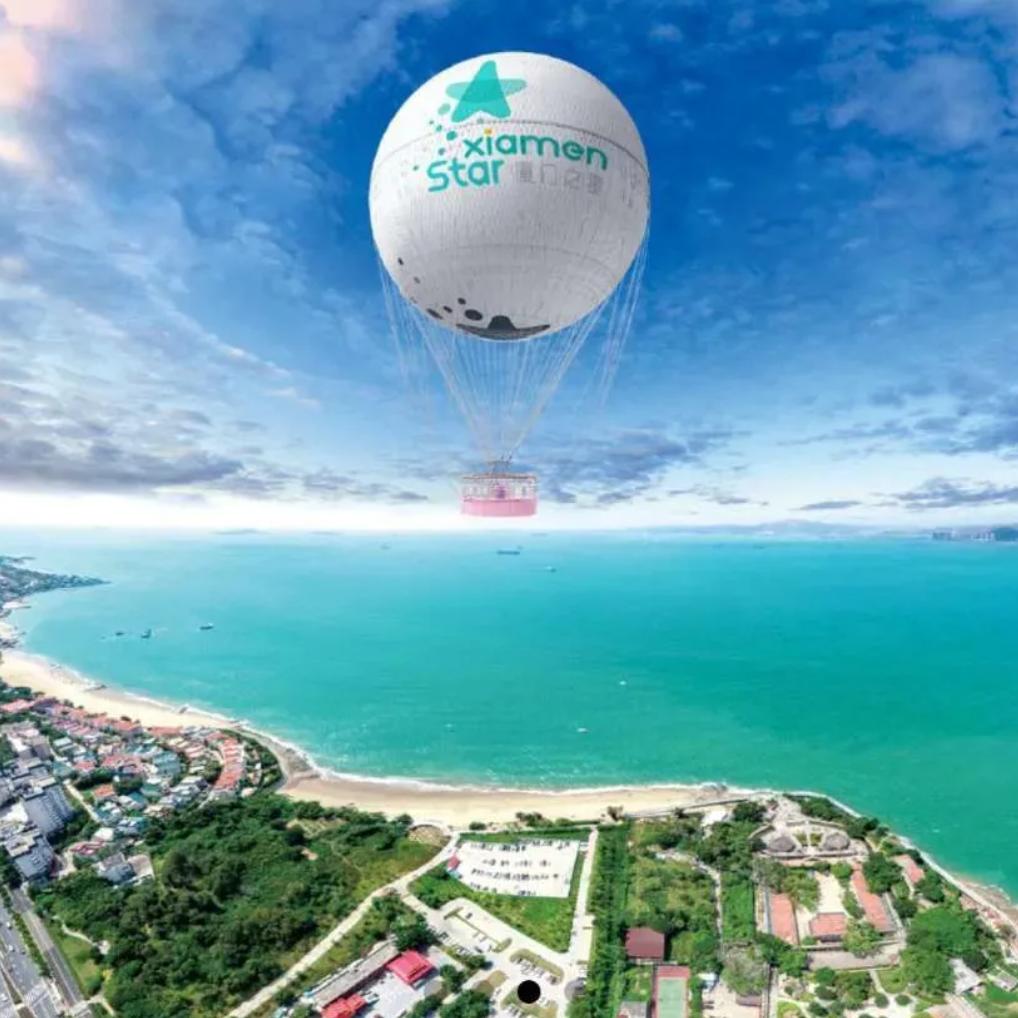
Xiamen Star helium balloon sightseeing project
Hot air balloon sightseeing is a very popular low-altitude tourism project. In 2020, Xiamen Star Company heavily invested in this field and signed a 10.5 million yuan contract with the China Special Vehicle Research Institute. The institute was to produce helium balloons for Xiamen Star Helium Balloon Park. The project opened in July 2020 and immediately became a popular tourist attraction in Xiamen. It allowed tourists to enjoy a 720° panoramic view of Xiamen's coastal scenery at an altitude of 150 meters and observe city landmarks such as Xiamen University and the Twin Towers. It was once included in the recommended projects by the Xiamen cultural and tourism department.
However, several hot air balloon crashes occurred in China in 2023. In January 2023, a hot air balloon crashed in Shawan, Leshan, Sichuan, resulting in one death and three injuries. In March 2023, a hot air balloon in Gui'an, Guizhou was blown away by strong winds and fell into a lake, trapping seven people. Fortunately, no one was injured. These accidents led to two consequences. First, local governments were afraid of safety accidents and changed their attitude towards hot air balloon projects in their regions from welcome to rejection. Second, the State Administration for Market Regulation intervened and upgraded the safety standards and operating licenses for large-scale amusement facilities such as hot air balloons and cliff swings. All hot air balloon projects needed to be re-licensed according to the new regulations.
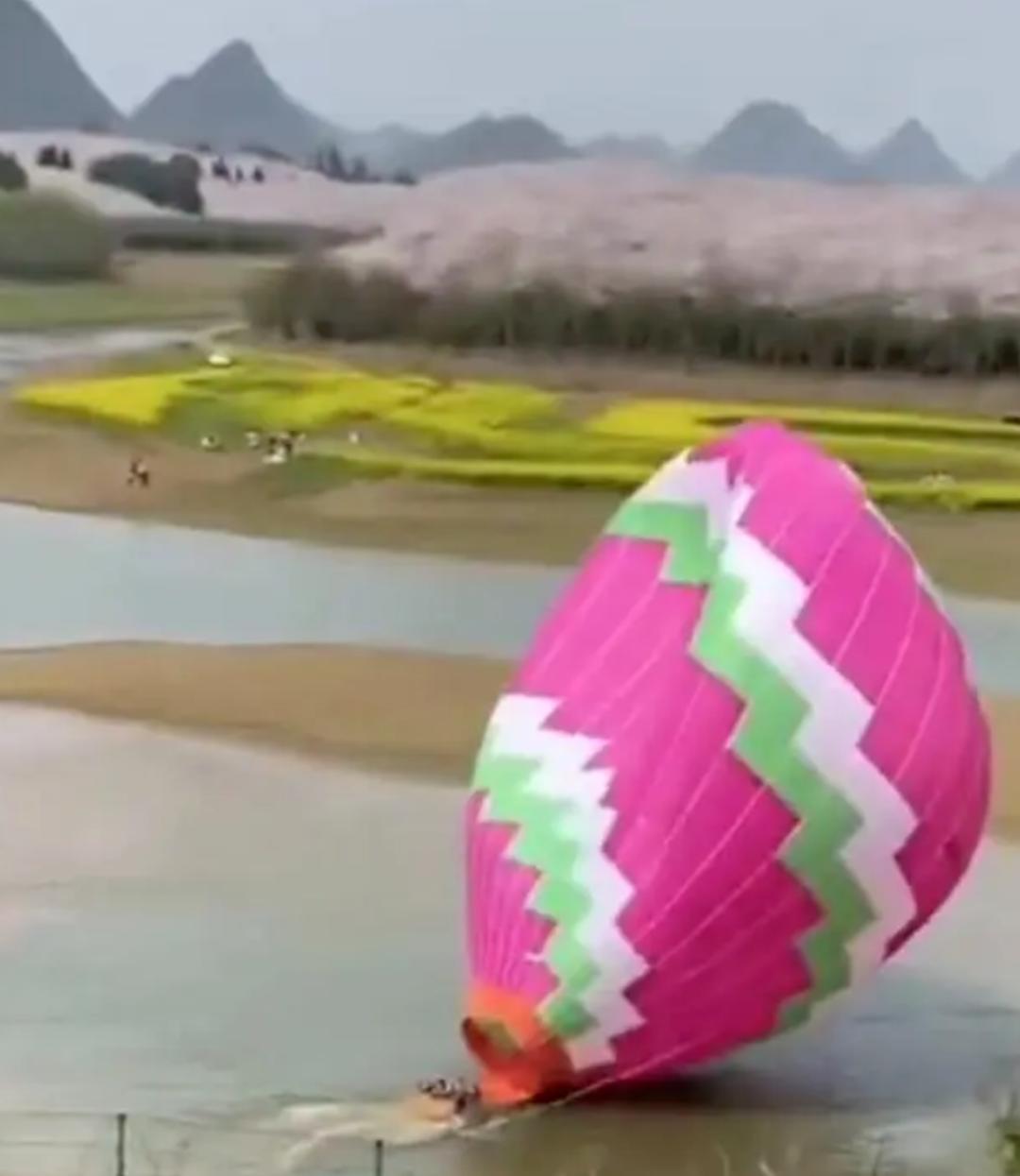
The incident of a hot air balloon falling into the lake in Gui'an, Guizhou
Since then, Xiamen Star has been shut down for a long time. The reason why the hot air balloons in Chongqing Sunac Cultural Tourism City cannot carry passengers is the same. For cities like Xiamen and Chongqing, local officials are most afraid of major safety accidents and the associated public opinions. High-risk projects such as hot air balloons and low-altitude tourism are always a concern for local governments and need to be strictly restricted.
After Xiamen Star was shut down, it still owed more than 5 million yuan in payment to the Special Vehicle Research Institute. So, the two sides engaged in a long lawsuit. Xiamen Star claimed that the balloons supplied by the institute did not meet the new regulations in 2023, resulting in the shutdown of its project, and demanded 5 million yuan in compensation from the institute. The institute tried to clarify that the shutdown of Xiamen Star had nothing to do with the balloons it manufactured and that it had fully fulfilled its contractual obligations.
After repeated negotiations, the court finally ordered Xiamen Star to pay 5 million yuan in payment and liquidated damages to the Special Vehicle Research Institute.
This case reveals another risk in low-altitude tourism, namely the risk of policy changes and changes in the government's attitude. Some low-altitude tourism projects are new things at the beginning and are very popular. However, the supporting policy supervision and industry standards are usually lagging behind, which easily leads to safety loopholes. Once an accident occurs in these aerial projects, the consequences are usually very serious. The pressure on industry regulators and local governments soars, and they quickly introduce regulatory measures for such projects.
For example, Xiamen Star was a popular cultural and tourism project attracted by the local government in 2020. After the risks of the helium balloon project were exposed in 2023, the Xiamen municipal government immediately issued a "hot air balloon ban" in February 2024, banning all commercial helium balloon activities in the whole city. Xiamen Star and all similar projects were shut down.
There are also many similar cases to the low-altitude tourism project in Chongqing Sunac Cultural Tourism City and the Xiamen Star helium balloon on the Judgments Online. Behind the seemingly booming low-altitude tourism lies investment risks that cannot be ignored. There is no stable and predictable standardized system for airspace use, policy supervision, and industry safety standards. Many cultural and tourism enterprises that blindly enter the low-altitude tourism field have suffered heavy losses.
For cultural and tourism investors, the lesson from these court cases is that they should not blindly invest in projects just based on the promises of local investment promotion departments and the popularity of low-altitude tourism. Low-altitude tourism is by no means a short-term business relying on popularity. Only by resolving the three core risks of airspace compliance, safety management, and policy fluctuations in advance can investors avoid investment traps and achieve long-term and stable profitability in this industry.
This article is from the WeChat official account "Zhiku Cultural and Tourism", written by Wu Moyan, and is published by 36Kr with authorization.