From Wall Street to China's A-share market, why is the whole world betting on optical modules?
To be honest, anyone who has paid attention to cutting - edge technology in the first half of this year has probably been bombarded with the term "optical module".
First, Zhongji Xuchuang's market value skyrocketed, and it joined the trillion - dollar club. Then, Jensen Huang of NVIDIA, wearing his signature leather jacket, personally endorsed Marvell and Lumentum. From Silicon Valley to Wall Street, almost everyone is like those who have watched too many Ultraman episodes and want to revive Ultraman Tiga. They have all started to believe in the power of light.
Needless to say, in our country, companies related to this term have been identified. Various internet celebrities often mention optical modules during their live - streams.
It feels like the whole world has secretly gone to study optoelectronic engineering behind our backs...
Some of you may not know what an optical module is. Don't worry. I'll explain it to you in detail today.
Let me clarify that this does not constitute any investment advice. I just want to help you understand what optical modules are and what amazing black technologies they contain.
First of all, the popularity of optical modules, similar to the previous price increases of storage, chips, and even air - conditioners, is due to AI.
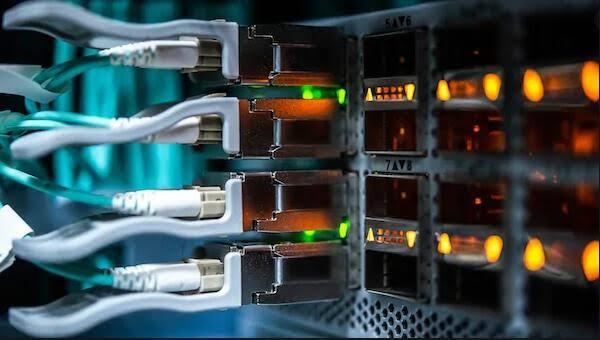
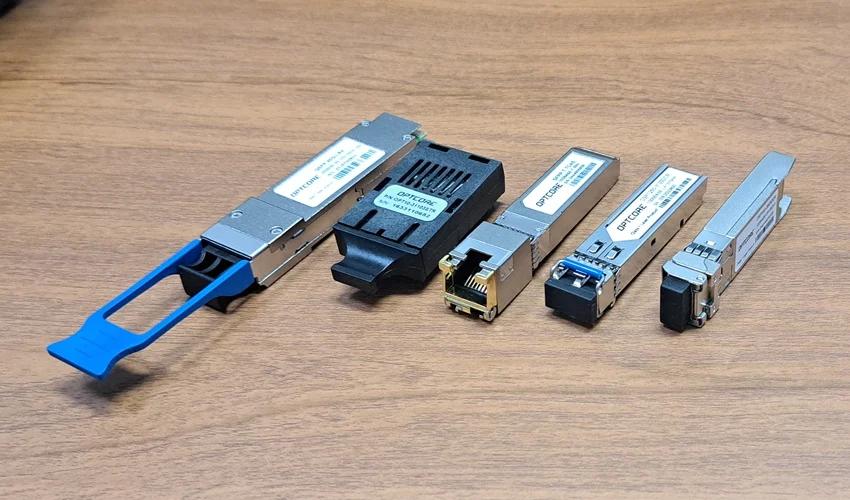
What an optical module does can be explained in one sentence. It translates the electrical signals of a GPU into optical signals, sends them through an optical fiber, and then translates the received optical signals back into electrical signals for the GPU. It's that simple. There's also one in your set - top box.
It looks like a large USB flash drive, seemingly ordinary.
But this job can't be done without it.
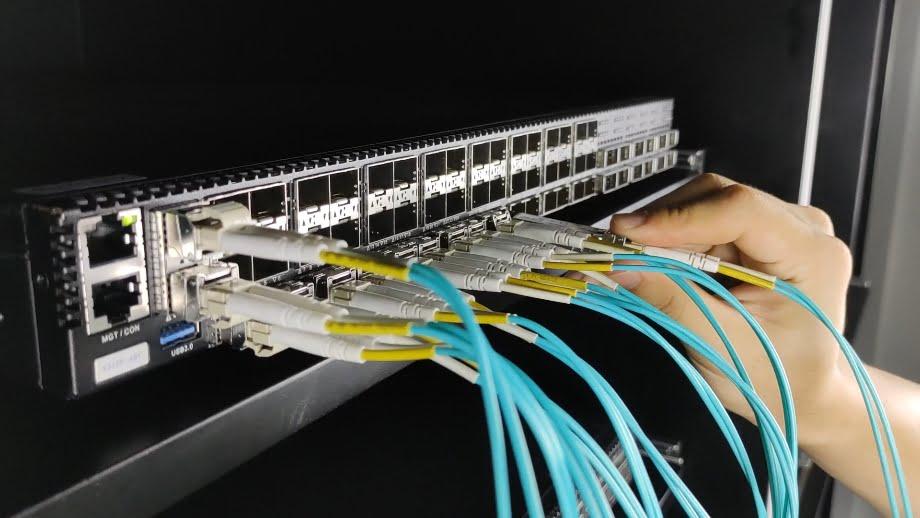
As we all know, large - scale model training requires thousands of GPUs to work together. These graphics cards can be connected by wires, but when it comes to connecting different units or transmitting data externally, copper wires alone won't do.
Electrical signals have a fatal flaw: short transmission distance, heat generation, and easy signal loss. After all, no matter how powerful the computing power is, if the data can't be transmitted, your server is just a deadweight. So the answer is naturally light. Light can travel dozens of kilometers in an optical fiber with little signal loss, which is why AI has driven the demand for optical modules.
So, if this thing seems so simple, why are only a few companies benefiting from the current trend?
This has to do with the fact that there are different levels of optical modules.
Optical modules don't seem complicated. In the past, making low - speed optical modules below 100G was indeed like this. Telecommunication operators used them for video streaming and phone calls. The entry threshold was low, and the profit margin was thin. Anyone could do it, and the market had become a cut - throat assembly market.
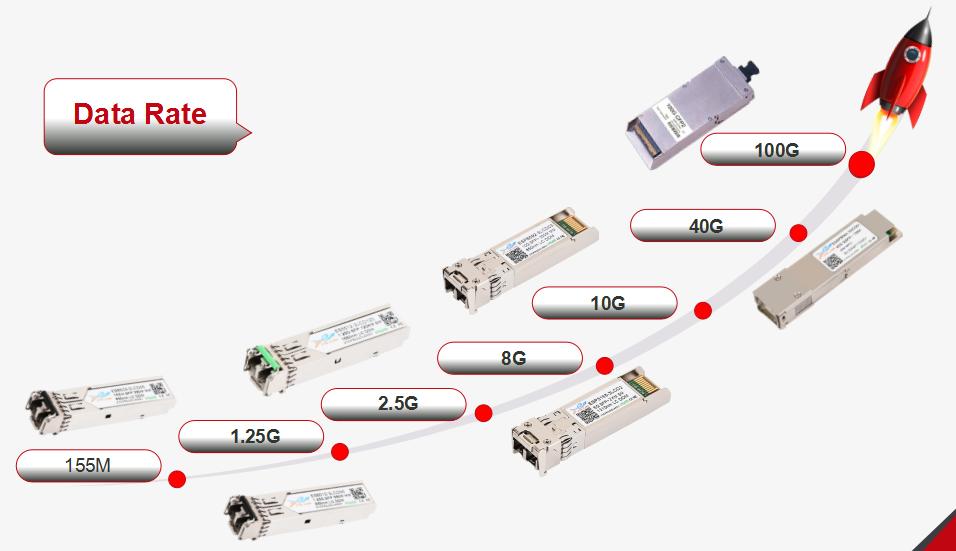
But in the era of AI data centers, things have changed. For the ten - thousand - card clusters in data centers, the data throughput of tens of thousands of GPUs is extremely large. Small optical modules with a transmission capacity of 100G can't handle it at all. High - end ones are a must.
Once you need optical modules with a rate of 400G, 800G, or even 1.6T, the manufacturing threshold soars exponentially. There are very few companies that can do it, and they are all very expensive.
The unit price of an 800G module is several hundred dollars, and the initial unit price of a 1.6T module can even exceed $1300... More than 70% of the cost is for the core components, and the most valuable parts are two chips.
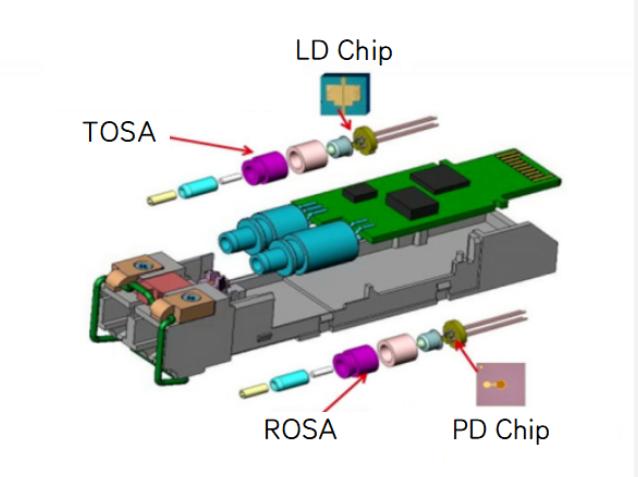
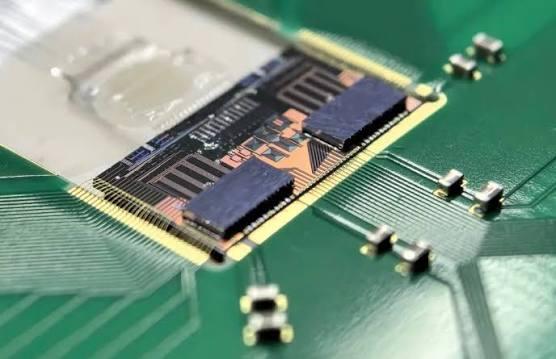
If you disassemble a current mainstream 800G optical module, you'll find that it is mainly divided into two areas. The area near the optical fiber is the optical signal area, and the most important part here is the optical chip.
For low - speed optical chips, China is no longer restricted. In the low - speed era, you can think of the laser as a flashlight being turned on and off rapidly to send Morse code. You just need to keep at it.
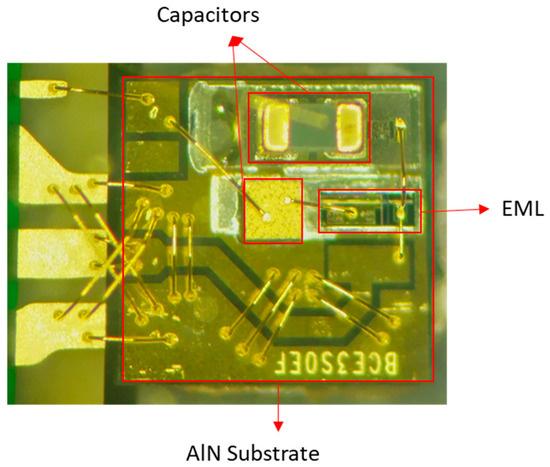
But when the rate reaches above 800G, it's equivalent to pressing the switch hundreds of millions of times per second, and the emitted light will be severely blurred. At this time, a core device called EML (Electro - Absorption Modulated Laser) is needed.
EML is like integrating a constantly - on flashlight and an ultra - fast shutter on the same chip. The flashlight switch is always on, and you only need to control the shutter in front.
But the difficulty lies in its manufacturing. It relies on indium phosphide materials and requires growing an extremely precise structure layer by layer, like making a multi - layer cake. If the thickness of each layer deviates by even one - ten - thousandth of a hair's breadth, the light beam will be useless.
Currently, several large manufacturers in the United States and Japan hold about 70% of the global high - end EML market share.
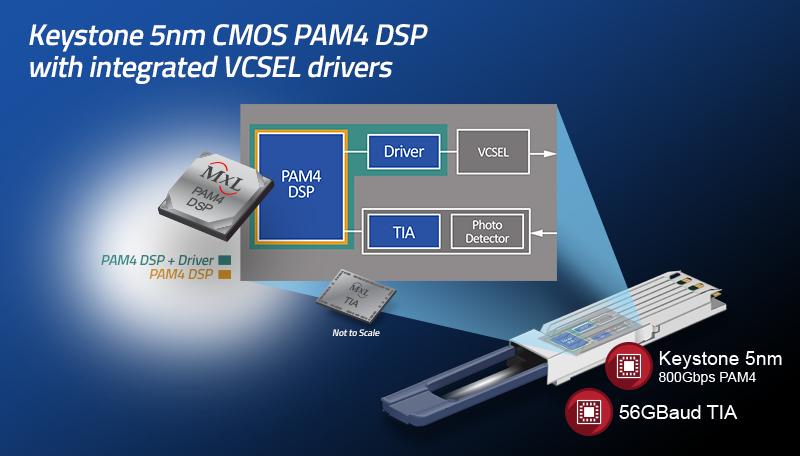
In the optical module, the area near the server is the electrical signal area, and the core is a DSP (Digital Signal Processor) chip, which is the "brain" of the optical module.
Just sending the light is not enough. High - frequency signals will be severely distorted during transmission, and this chip is needed for extensive error correction and signal restoration.
But the monopoly of this chip is even more extreme than that of the optical chip. Two American companies, Broadcom and Marvell, directly account for more than 90% of the global market share. These two chips together account for more than 60% of the cost of an optical module.
In addition, there are also precision optical devices, and the coupling accuracy needs to reach the micron level.
A Chinese company called Tianfu Communication has achieved the top position globally in this field. It's so amazing that more than 60% of NVIDIA's relevant business revenue depends on it.
As for the final packaging and assembly, it's an area absolutely dominated by large Chinese manufacturers.
Zhongji Xuchuang alone has a 30% global market share, followed closely by Xinyisheng. A - share investors have given these three companies the nickname "Yizhongtian".

Don't listen to some nonsense on the internet saying that assembly is a job without technical content.
For an 800G optical module, you need to fit a DSP that generates a lot of heat and a laser that is extremely heat - sensitive into a metal case the size of a USB flash drive. It's like putting an electric heater and an ice - cream in a shoebox and ensuring that the ice - cream doesn't melt for three years.
How to design high - frequency circuits to prevent signal interference? How to do heat dissipation to prevent the module from crashing a few minutes after being inserted into the server? These are engineering experiences gained through trial and error with a lot of money.
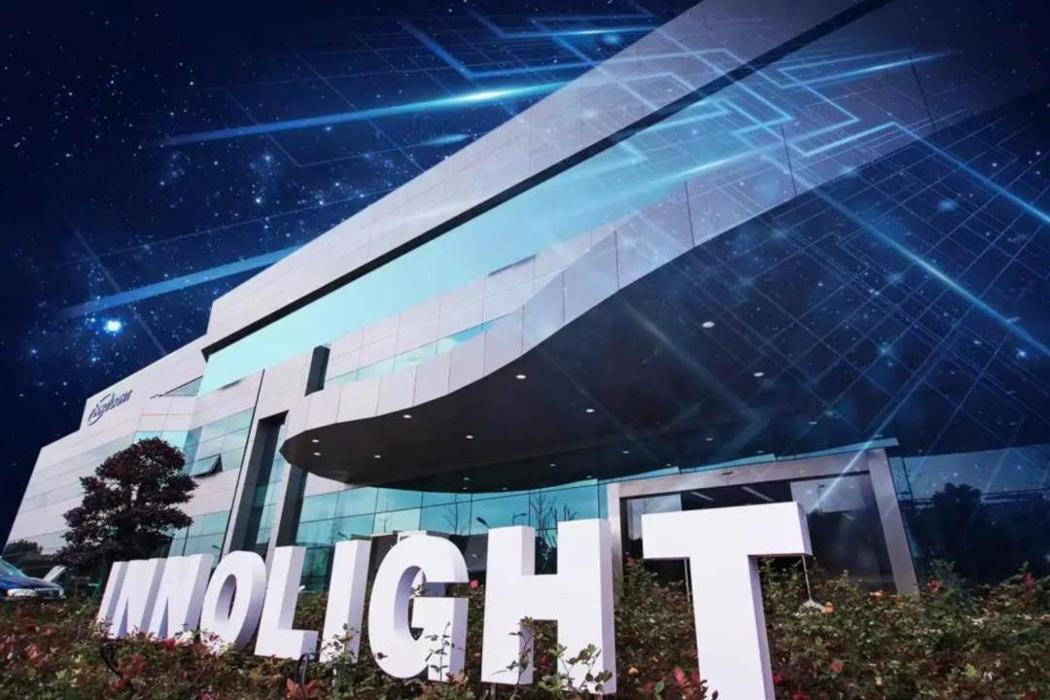
Moreover, in the 1.6T era, optical modules are no longer standard products that can be used by simply plugging them in. They are highly customized devices. So, the reason why Zhongji Xuchuang can be the leader in this field is that its R & D team was already conducting joint development in the laboratories of North American giants before they released new chips.
So, optical modules are truly cutting - edge technology. There are only a few companies that can make them, and it requires global cooperation. China is also deeply involved.
Therefore, when the whole world is investing in AI data centers, these Chinese optical module companies are also reaping huge benefits.
For example, in 2026, the total capital expenditure of the world's nine major cloud providers is expected to reach a staggering $830 billion, a year - on - year increase of 79%. All this wealth is being used to buy GPUs and build data centers.
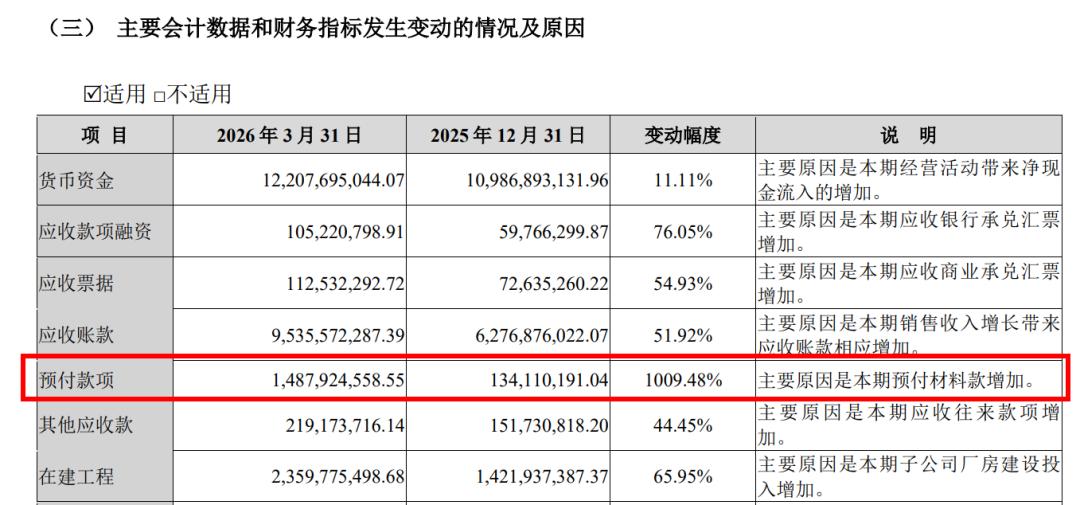
Correspondingly, for Chinese manufacturers, Zhongji Xuchuang's net profit in the first quarter of 2026 was 5.7 billion yuan, a year - on - year increase of 262%, and its market value once exceeded one trillion yuan; Xinyisheng's net profit in the first quarter was 2.8 billion yuan, and its stock price has increased 51 times in three years.
With such performance, even Ultraman Tiga would directly transform into his Shining form. There are too many people believing in the power of light.
Even more astonishingly, at the beginning of 2026, NVIDIA invested $2 billion each in Lumentum and Coherent to lock in their optical chip production capacity in advance.
Some of you may wonder why NVIDIA didn't directly talk to optical module manufacturers but instead reached out to upstream laser manufacturers?
Because what NVIDIA really values is not just the current plug - and - play optical modules, but a new technology route called silicon photonics.
To put it simply, it's about manufacturing optical chips in the same way as CPUs, printing components such as lenses and modulators on silicon wafers in large quantities, just like printing newspapers.
However, since silicon photonic chips can't emit light on their own, they must be externally connected to an indium phosphide laser as a light source. So, whoever has the production capacity of high - end lasers holds the key to this new route.
In the silicon photonics route, NVIDIA also has its own plan, a more radical one.
This is related to data centers again. Although plug - and - play optical modules are useful, they have a drawback. There is a certain distance between them and the switch chip.
So, the higher the rate, the more difficult it is to bear the signal attenuation and power consumption of this section of the wire. At 800G, it can still be tolerated, but at 1.6T, it becomes difficult, and this route will eventually reach its limit.
The industry has also tried the solution of removing the DSP chip, which has significantly reduced latency and heat generation. However, without the DSP for signal compensation and error correction, the error rate has skyrocketed, which is just a temporary solution.
What NVIDIA is more concerned about is CPO (Co - Packaged Optics), which directly welds the silicon photonic engine and the switch chip on the same substrate, reducing the electro - optical conversion distance to a few millimeters. In theory, this is the optimal solution for power consumption and latency.
