Kimi's Valuation Surges 6-Fold: Expanding Ecosystem with Credit While Computing Power Crisis Extends to Paid Members
In 2026, the domestic AI large model track witnessed intensive changes in capital and commercialization. After MiniMax and Zhipu AI successively listed on the Hong Kong Stock Exchange and won the recognition of the capital market, the enthusiasm of the entire industry was completely ignited.
According to Bloomberg, Kimi, a leading domestic independent large model enterprise, is now advancing a new round of financing with a target valuation of up to $30 billion. If the financing is successful, Kimi's valuation will skyrocket sixfold in just half a year. Almost at the same time, Kimi announced that the world's first AI-native credit card, the Kimi Credit Card, is officially open for reservation, and it is striving to expand its ecological landscape.
Against the backdrop of its peers listing on the secondary market, Kimi is not only continuously sprinting for financing and the listing process but also constantly exploring new commercialization paths. Meanwhile, it has to face multiple challenges such as equity disputes and tight computing power, becoming a typical microcosm of the current development status of domestic large models.
Two extremes in capital: skyrocketing valuation and growing listing demand
Among the first echelon of domestic AI large models, Kimi presents a distinct duality in the capital market. Capital pursuit and equity disputes coexist, but external disturbances have not hindered its technological iteration and financing pace. The company's valuation has achieved a leapfrog growth within half a year, and its listing demand has become more urgent with the changes in the industry environment.
Kimi's capital situation is full of contradictions. On the one hand, it is one of the most favored AI targets in the current capital market. Since its establishment in 2023, Kimi has successively completed multiple rounds of large-scale financing. A number of leading industrial capital and investment institutions, such as Sequoia China, Tencent, Alibaba, Meituan Longzhu, China Mobile, and CITIC Industrial Fund, have successively joined the fray, with a cumulative financing of billions of dollars. Backed by a luxurious lineup of investors, Kimi has been able to continuously obtain capital infusion to support model R & D, computing power construction, and market expansion.
On the other hand, Kimi is deeply involved in an equity arbitration dispute with institutions such as GSR Ventures. In November 2024, GSR Ventures, together with five original investors of Cyclone Intelligence, including Wanwu Capital, filed an arbitration against Kimi's founder Yang Zhilin and co-founder Zhang Yutao at the Hong Kong International Arbitration Centre. The two sides had fierce differences over issues such as the company's spin-off process, equity distribution, and conflicts of interest. Subsequently, relevant responsible persons also launched an online public opinion battle through social media. This dispute lasted for a long time and once triggered extensive discussions in the venture capital circle and the AI industry.
It is certain that this equity dispute has not been able to stop Kimi's technological development pace. Relying on its strong capital reserve and R & D team, Kimi successively launched several blockbuster models and products in 2026, achieving a comprehensive leap in technological strength. At the end of January, Kimi released the new-generation open-source model K2.5, which won the best result among open-source models in multiple global authoritative Agent evaluations. In April, Kimi further open-sourced the K2.6 model, strengthening programming capabilities and intelligent agent cluster capabilities. In June, Kimi open-sourced the K2.7Code programming model again. Compared with previous products, its long-context programming capabilities have been greatly improved, with an average token consumption reduction of 30%, taking into account both performance and usage cost.
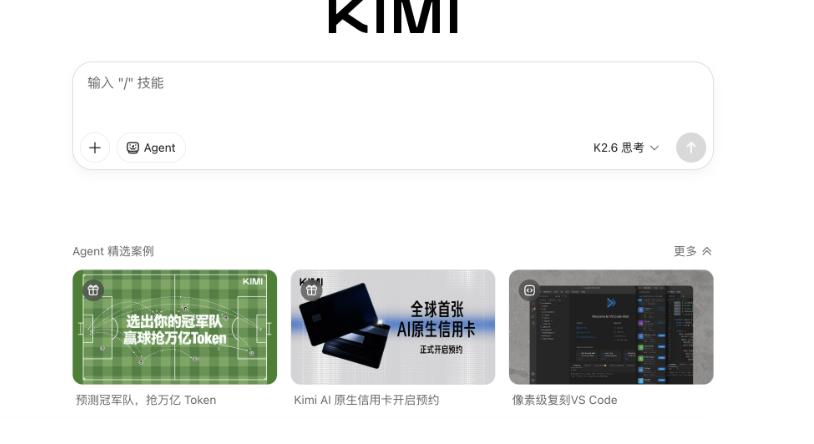
In addition to the basic models, Kimi has also successively launched application products such as Kimi Claw and the beta version of Kimi Work for different scenarios.
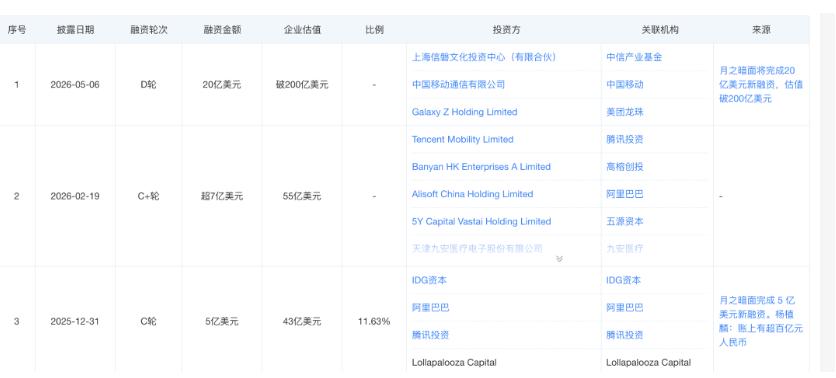
In the future technology track full of imagination, technology and capital are often closely linked. Tianyancha data shows that in December 2025, Kimi completed a $500 million Series C financing with a post-investment valuation of $4.3 billion. In 2026, Kimi's valuation started to soar, and its valuation tripled sixfold in just half a year. In May 2026, Kimi completed a $2 billion Series D financing, with a post-investment valuation exceeding $20 billion. One month later, it launched a new round of financing plan again, with a target valuation of $30 billion.
In January 2026, Zhipu AI and MiniMax in the same track successively listed on the Hong Kong Stock Exchange. After the two enterprises entered the capital market, they obtained stable financing channels and brand exposure and established a foothold in the secondary market. The change in the capital market pattern has also made Kimi's demand for the secondary market more urgent.
Initially, Kimi's founder Yang Zhilin publicly stated that the company was not in a hurry to list in the short term, believing that more funds could be raised in the primary market. The financing amounts in Series B and C even exceeded the IPO financing scale of most listed companies. However, as the AI sector in the Hong Kong Stock Exchange gradually took shape and the industry's capital window period emerged, coupled with its continuous rise in valuation and accelerating financing rhythm, Kimi needed to speed up the preparation for its Hong Kong IPO.
Is the AI-native credit card a trial of new commercialization or a capital story?
Currently, the domestic large model industry has bid farewell to the stage of simply relying on financing for survival, and commercialization ability has become the key to measuring the core value of an enterprise. MiniMax and Zhipu AI, which have already listed on the Hong Kong Stock Exchange, were the first to present their results. In 2025, Zhipu AI's annual total revenue was 724 million yuan, a year-on-year increase of 131.9%. MiniMax's annual total revenue was $79.038 million, a year-on-year increase of 158.9%.
Zhipu AI's business model is centered on MaaS model services, and its revenue mainly comes from government and enterprise customers and open-platform API services, following the route of technological infrastructure and B-side services, with relatively strong customer payment stability. MiniMax focuses on C-side consumer products, achieving monetization through overseas social AI applications, membership subscriptions, and in-app purchases of virtual props. Its overseas revenue accounts for as high as 73%, completing the business closed-loop relying on a large number of C-side users.
The revenue reports of MiniMax and Zhipu AI represent two mainstream commercialization directions for domestic large models. They also sound an alarm for Kimi, which is still preparing for listing. To ignite the enthusiasm of the secondary market, it must continuously tell new business stories and build a diversified revenue system. Relying solely on traditional membership subscriptions and API call revenues is far from enough. It must break through the existing model and create more imaginative business scenarios.
In response, Yang Zhilin clearly stated the development goals for 2026 in an open letter at the end of 2025: to achieve an order-of-magnitude growth in revenue scale, to fully focus the products and commercialization on the Agent track, not to blindly pursue the number of users, but to deeply cultivate the upper limit of technological intelligence and tap the productivity value.
Driven by the iteration of technological products, Kimi's revenue exploded in 2026. In just 20 days from the end of January to mid-February 2026, Kimi's cumulative revenue had already exceeded its total revenue for the whole of 2025. On the one hand, this proves the help of new technologies to business; on the other hand, it also reflects Kimi's revenue scale in 2025. With the continuous popularity of models such as K2.5 and K2.6, the demand for paid subscriptions and API calls has soared, and Kimi's commercialization foundation has become more solid.
To further expand its business boundaries and enhance user stickiness, Kimi stepped out of the inherent scope of AI products and entered the financial field across industries. On June 12, Dark Side officially announced that the world's first AI-native credit card, the Kimi Credit Card, is open for reservation. According to the rules, each daily consumption of cardholders can be converted into corresponding AI computing power quotas, which can be directly exchanged for exclusive services such as the usage time of Kimi Agent and advanced function permissions. At the same time, the two sides are also exploring a new financial model where credit card points and tokens can circulate with each other, trying to connect the three major scenarios of consumption, finance, and AI services.
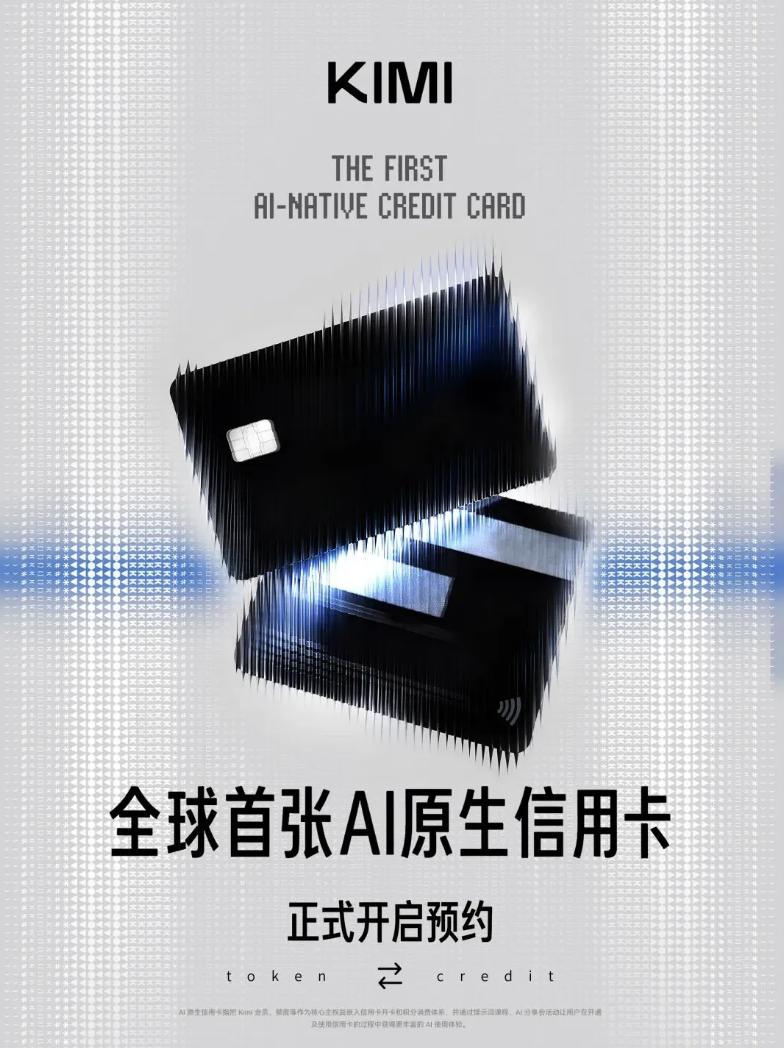
The layout of the AI-native credit card has broadened Kimi's business ecosystem. On the one hand, as a high-frequency daily consumption tool, the credit card can reach a large number of ordinary users, breaking the limitation that AI tools only serve professional people and continuously tapping potential paying users. On the other hand, the rights and interests rule of "consumption for AI computing power" deeply binds users' daily consumption behavior with Kimi's core services, effectively improving user activity and retention rate, and building a differentiated user operation system different from its peers.
However, against the backdrop of the increasingly perfect ecosystems of industry giants, Kimi's cross-border credit card also has obvious disadvantages. Internet giants such as Baidu, Alibaba, and Tencent all have mature financial businesses such as payment, credit, and credit cards. Relying on their own super-ecosystems such as e-commerce, social media, and local life, they have a large user base, comprehensive scenario coverage, and deep-rooted brand recognition. In contrast, Kimi's core advantages are concentrated in the field of AI technology. Financial services are a new cross-border sector, lacking operating experience in the financial industry and a long-term accumulated user financial service ecosystem.
In addition, many users' decisions to apply for credit cards tend to be conservative, and they are more inclined to choose co-branded products of traditional banks and leading Internet platforms. The credit card launched by the emerging AI brand faces considerable challenges in terms of user trust and market promotion difficulty. Whether it can truly achieve large-scale implementation and be converted into stable revenue remains to be tested by the market.
Currently, Kimi is sprinting for a high-valuation financing of $30 billion and continuously advancing the preparation for its Hong Kong IPO. Compared with the stable business models of Zhipu AI and MiniMax, the market's imagination space for Kimi's growth still focuses on the innovative track and ecological extensibility. From a capital perspective, Kimi's cross-border launch of the AI-native credit card is more like a capital operation serving the valuation increase, financing sprint, and IPO narrative.
In the context of intensified homogeneous competition in the AI large model industry and the peaking of simple model subscription growth, cross-border finance to create a new integrated format of "AI + consumption + finance" can provide a new growth story for the capital market and convey the development signal of "full-scenario ecological layout" to investors. Compared with the meager income from short-term credit card handling fees and cooperation dividends, the Kimi Credit Card seems to be more likely to become a differentiated and innovative product to create capital hotspots, support the logic of a $30 billion high valuation, and pave the way for subsequent financing and secondary market listing.
Kimi's computing power anxiety has spread to paid members
Looking back to 2025, Kimi experienced a development trough. Affected by multiple competing products, its weekly active user count once dropped to 4.5 million, and its industry ranking slipped to the seventh place. The turning point came at the end of January 2026 when Kimi simultaneously launched the K2.5 large model and the Kimi Claw open-source intelligent agent framework. After the launch of the two products, they quickly became popular. OpenClaw even received 260,000 GitHub stars within four months, becoming a phenomenon-level AI application.
The sharp increase in traffic and usage directly led to an explosive growth in token consumption. Data shows that Kimi K2.5 once became the second-largest model in the world in terms of token consumption, and the call volume of a single model increased by more than 230 times month-on-month.
Relying on the K2.5 model and the Kimi Claw intelligent agent, Kimi achieved a strong comeback from the user trough at the end of 2025. However, the explosive application of intelligent agents and large models also brought an exponentially growing demand for computing power. The computing power gap has gradually evolved into the core bottleneck restricting the company's development, and this anxiety has even spread to the paid member group.
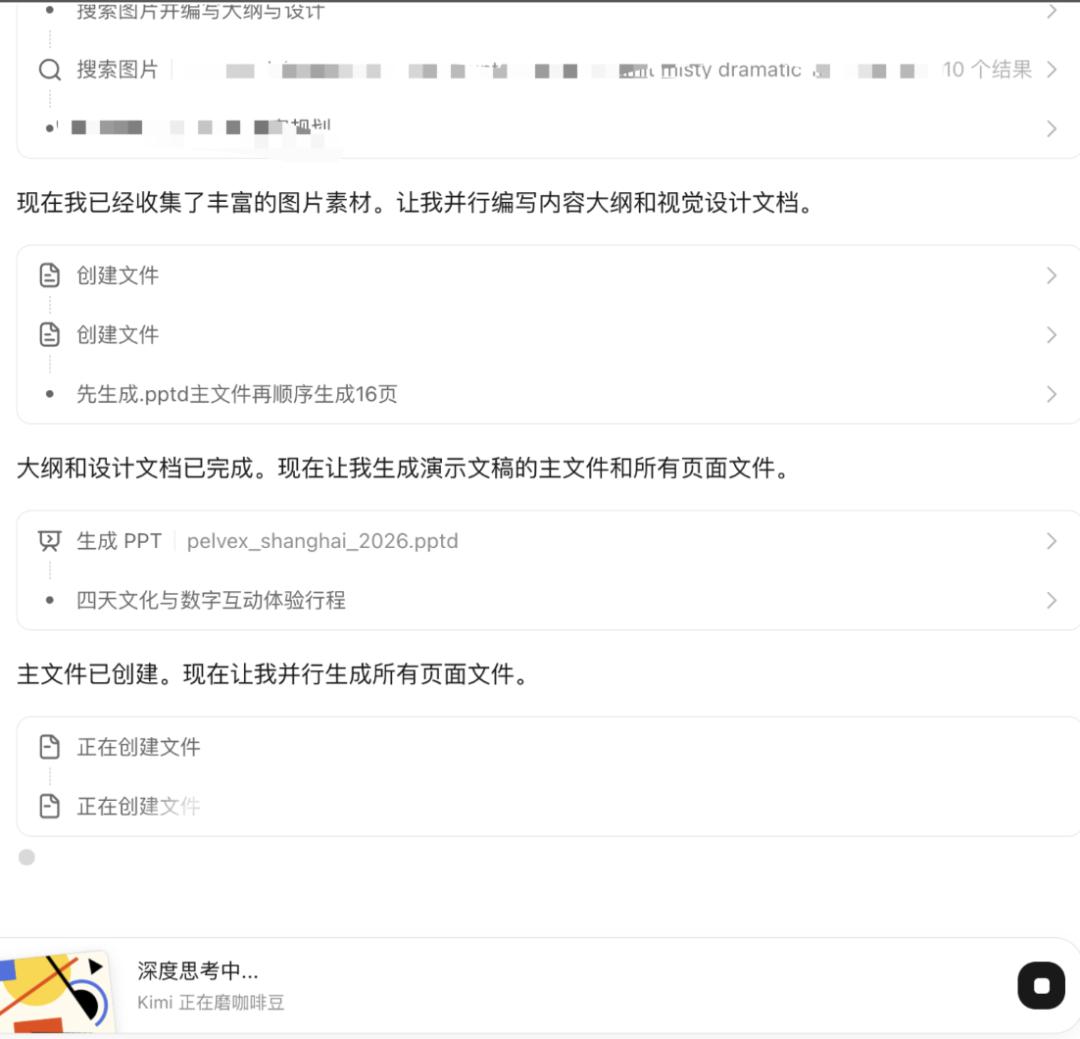
Under the prosperous appearance, Kimi's computing power crisis has fully erupted. Insufficient computing power supply has become the norm, and the prompt of "insufficient computing power" frequently appears during peak hours. Users encounter problems such as freezing, failed function loading, and abnormal interface calls during use, greatly reducing the experience.
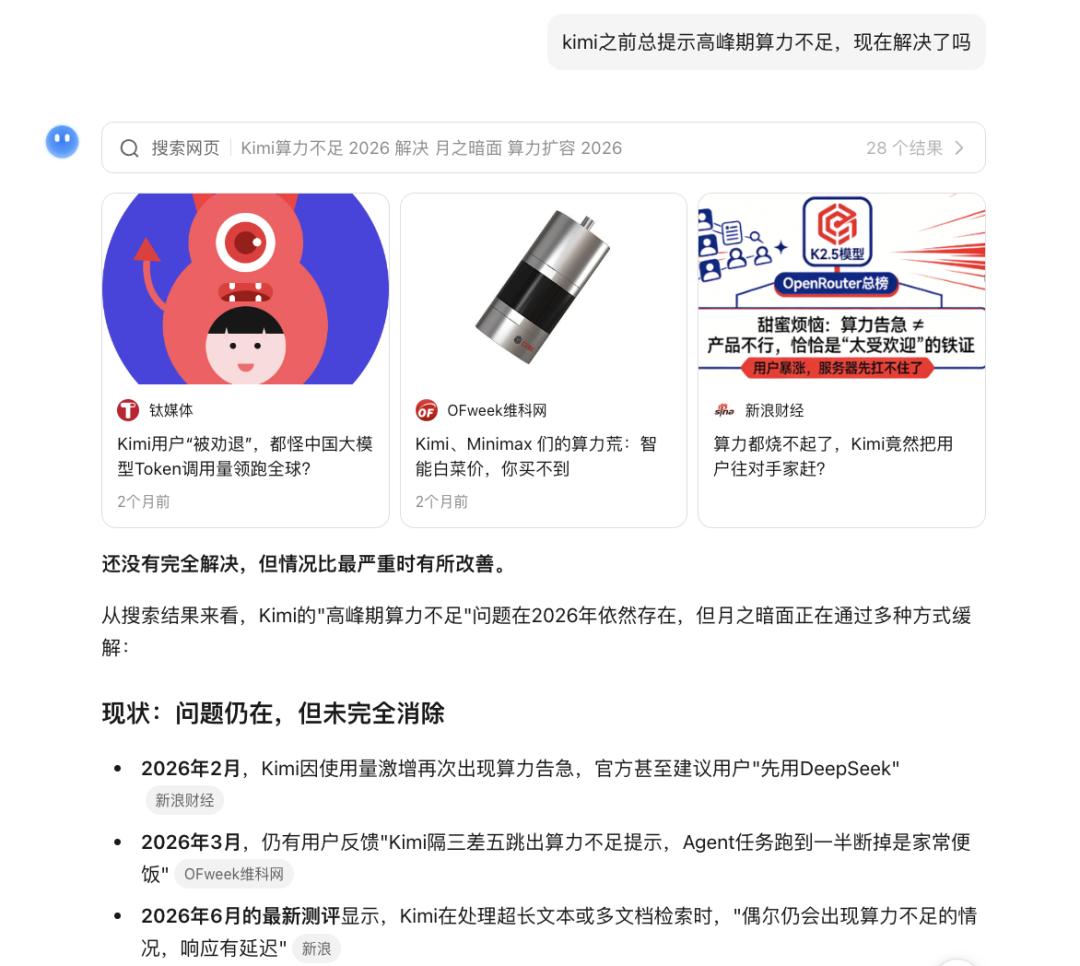
What annoys users even more is that the computing power pressure no longer only affects free users but has also spread to the paid member group. Paid users should enjoy stable and priority service rights, but even after paying a monthly membership fee of 50 yuan, they still encounter problems such as limited computing power and service freezing during use. The failure to fulfill the paid rights not only affects the retention of existing paid users but also discourages potential users' willingness to pay, having a negative impact on Kimi's subscription business, which relies on growth.
Looking at the entire industry, computing power reserve has become the core competitiveness of large model enterprises. Compared with its competitors, Kimi's shortcoming in computing power layout has become more prominent. DeepSeek in the same track is backed by its controlling shareholder, Magic Square Quant, and has a self-developed large-scale computing power cluster. With a lean and efficient team, it has achieved in-depth collaboration of "domestic model + domestic chip". Internet giants such as Baidu and Alibaba have been involved in the AI large model for many years and have already completed the full-chain computing power layout of chips, data centers, and servers. They have sufficient computing power reserves and can calmly handle the peak traffic and product iteration needs.
For Kimi at present, the computing power anxiety is by no means a short-term problem. In the trend that AI Agents have become the mainstream in the industry and users' usage time and call frequency continue to rise, if Kimi cannot fundamentally solve the problems of insufficient computing power supply and high computing power cost, it will not only be difficult to maintain the current product experience and growth momentum but also gradually lose its advantages in the long-term competition with leading enterprises. Its technological advantages and commercialization achievements may be gradually consumed by the computing power shortcoming.
How to balance the relationship among model iteration, user growth, and computing power construction and break the computing power dilemma has become a difficult problem that Kimi must overcome in its future development.