A film that "smears" Ultraman was hurriedly shelved by OpenAI's backers overnight.
In highly industrialized Hollywood, it's rare to pull a film that's already shot and just waiting for release. However, when it comes to "financial backers" or "business partners," such a thing can still be done.
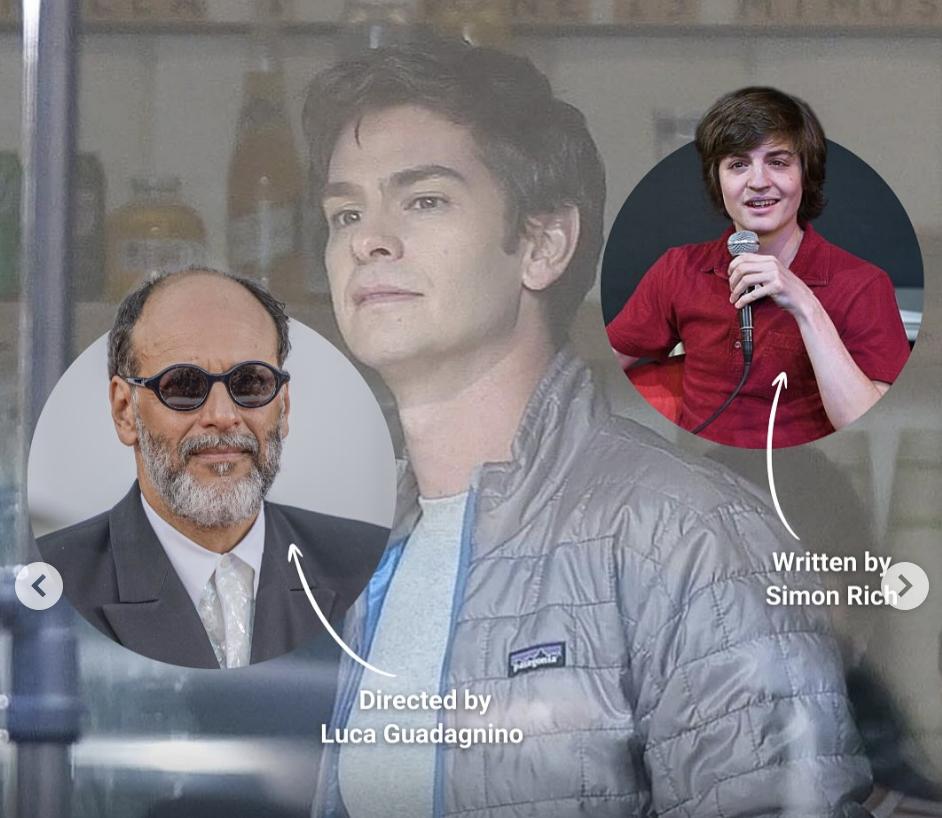
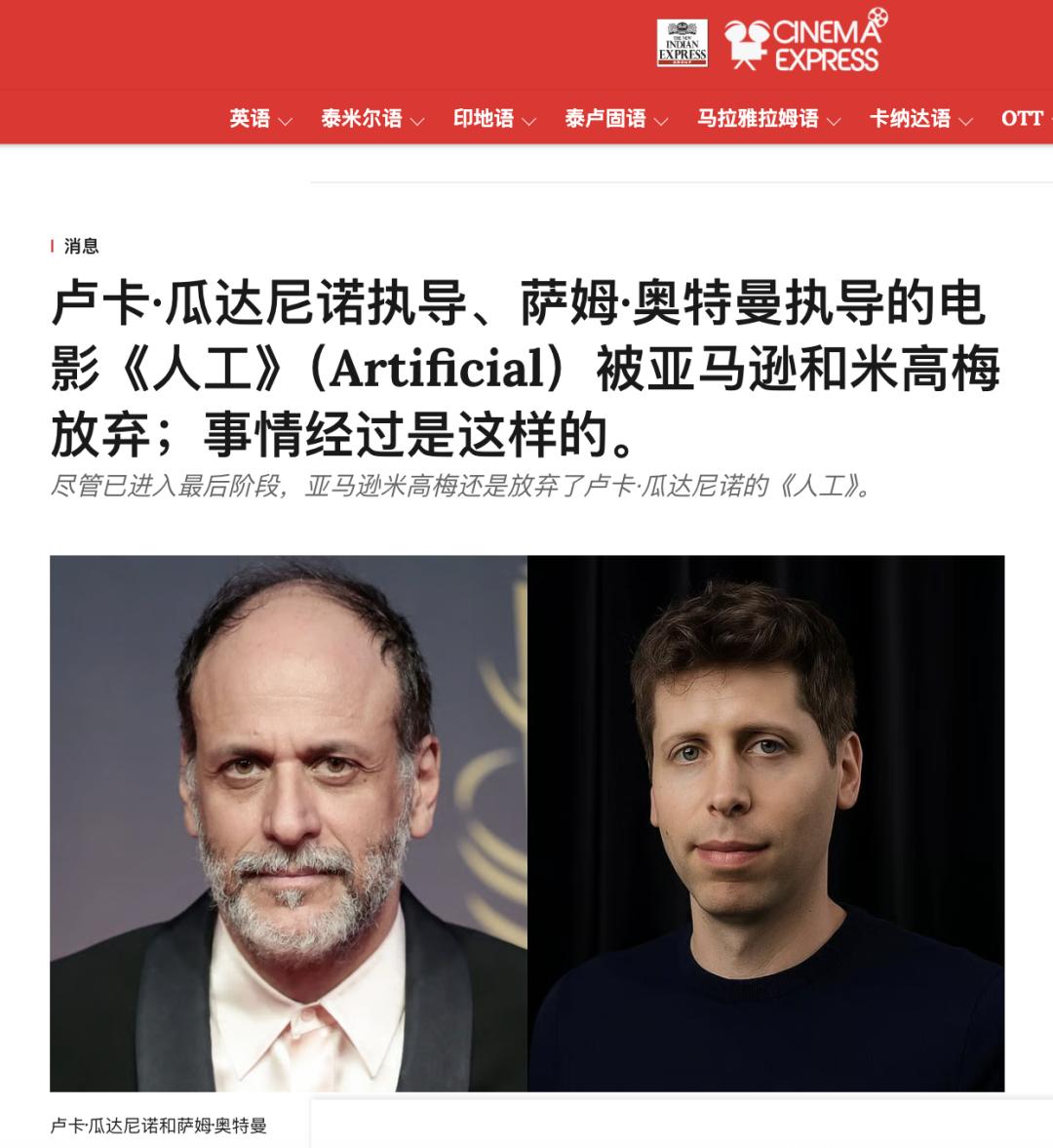
MGM, owned by Amazon, announced that it will no longer distribute the new film "Artificial" directed by Luca Guadagnino. This film tells the story of OpenAI, with Sam Altman as the protagonist, played by Andrew Garfield. The filming is almost completed, and it was originally a strong candidate for the award season.
Amazon's reason is suspiciously vague. In a statement to the media, it only said that the film "would be better off with another distributor." It also expressed great respect for Guadagnino and still showed interest in collaborating with him in the future. It's also helping the creative team find another buyer, but didn't say a word about the reason.
What was the scrapped film originally about?
"Artificial" doesn't cover Altman's whole life, but the thrilling five days three years ago, known as the "OpenAI power struggle."
In November 2023, OpenAI's board suddenly fired Altman, citing that he "was not candid enough in his communication with the board." Once the news broke, the company was on the verge of collapse. Hundreds of employees threatened to resign in a joint letter. A few days later, Altman was reinstated as CEO. This was one of the most dramatic power struggles in the tech circle in recent years, and the script naturally had a lot of tension.
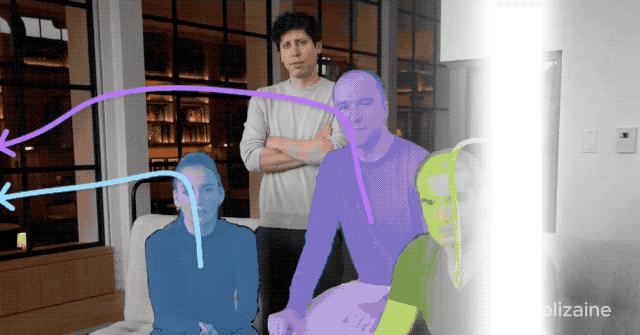
The picture is made by X user @Blizaine using AI.
The director, Luca Guadagnino, is a well - known director who made "Call Me by Your Name." The script is written by Simon Rich, who joined "Saturday Night Live" at the age of 23 and is one of the youngest screenwriters in history. Later, he went to Pixar and participated in "Inside Out" and also wrote scripts for "The Simpsons." In terms of actors, Garfield plays Altman, Monica Barbaro plays OpenAI's Chief Technology Officer Mira Murati, Ike Barinholtz plays Elon Musk, and Yura Borisov, who was nominated for an Oscar for "Ariana," plays Chief Scientist Ilya Sutskever.
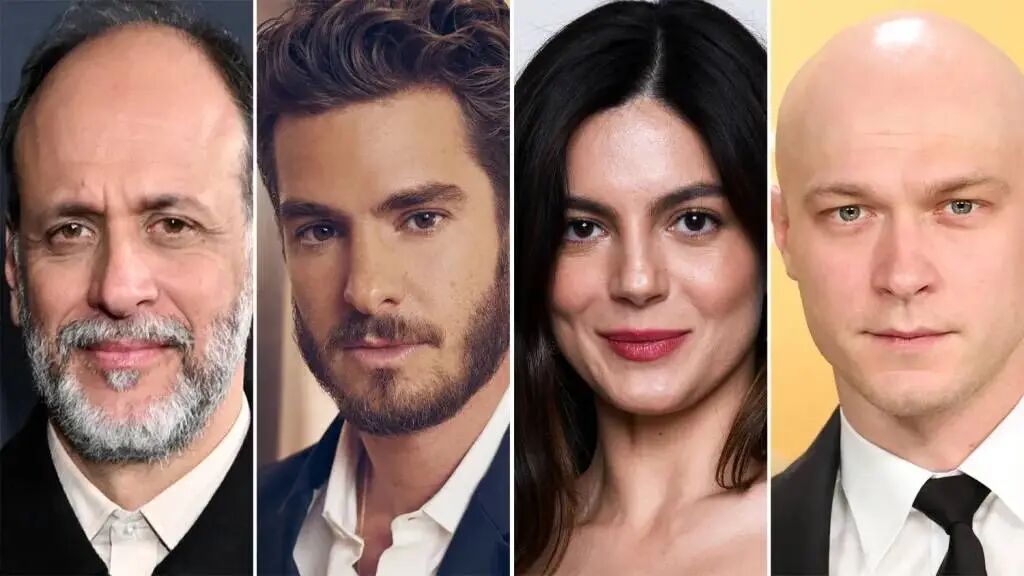
From left to right: Director Luca Guadagnino, actors Andrew Garfield, Monica Barbaro, Yura Borisov
In short, the cast and crew are not a problem. The key is that, according to multiple media reports, it can be described as "The Social Network of the AI era," which is the film that portrayed Zuckerberg as a genius and a jerk.
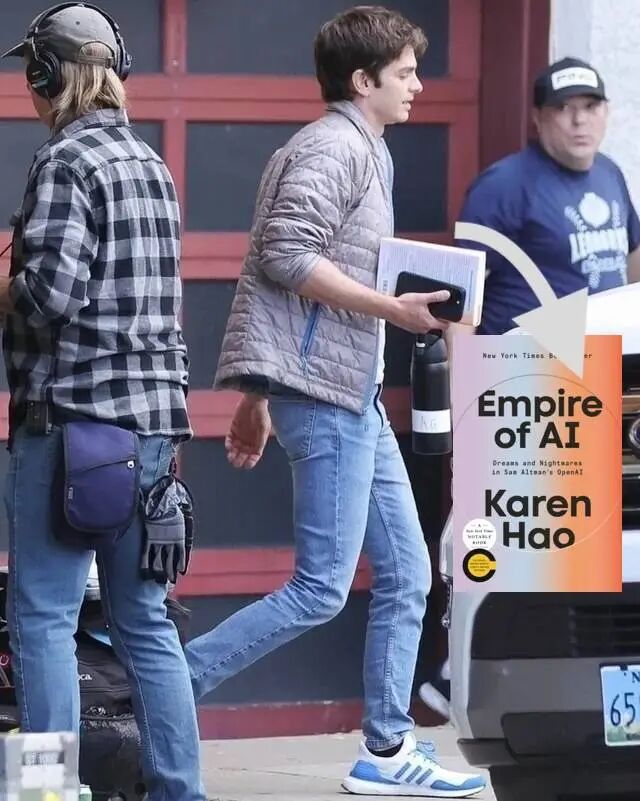
According to people who have read the script, "Artificial" spares no mercy in portraying Altman, directly writing him as a 'liar and a shrewd schemer'. From the leaked on - set photos, Garfield is holding Karen Hao's book "Empire of AI" - a book that Altman himself publicly criticized, which is his "negative news."
What's more embarrassing is that the real protagonist and hero of this film is not Altman, but Ilya, who is not well - known in China. It was Ilya who voted to oust Altman back then, and a few days later publicly regretted it and then quit the board. In the script, he is written as an idealistic and even a bit naive tech genius, the one who really created OpenAI's core technology, but was sidelined and marginalized in this power struggle and lost the most.
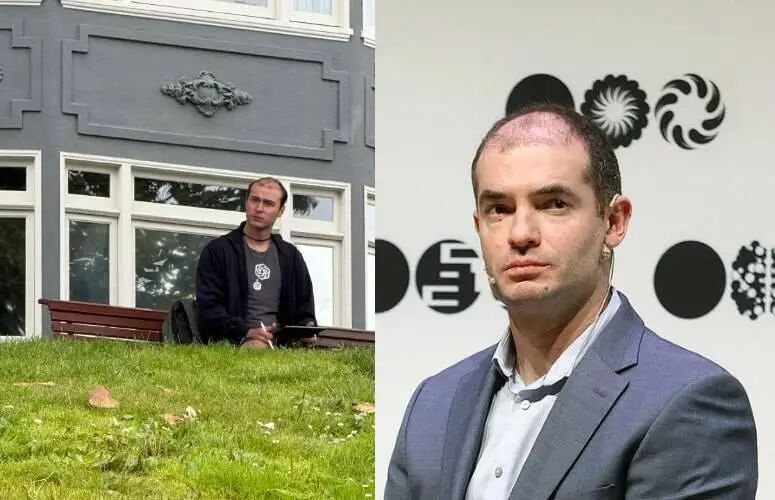
Left: On - set photo of actor Yura Borisov. Right: Ilya Sutskever
Ike Barinholtz's portrayal of Musk is written as a "not - too - bad dictator" in the script. Although he is more concerned about his Tesla than about out - of - control AI, he serves as the villain and the comic relief in only a few scenes throughout the film.
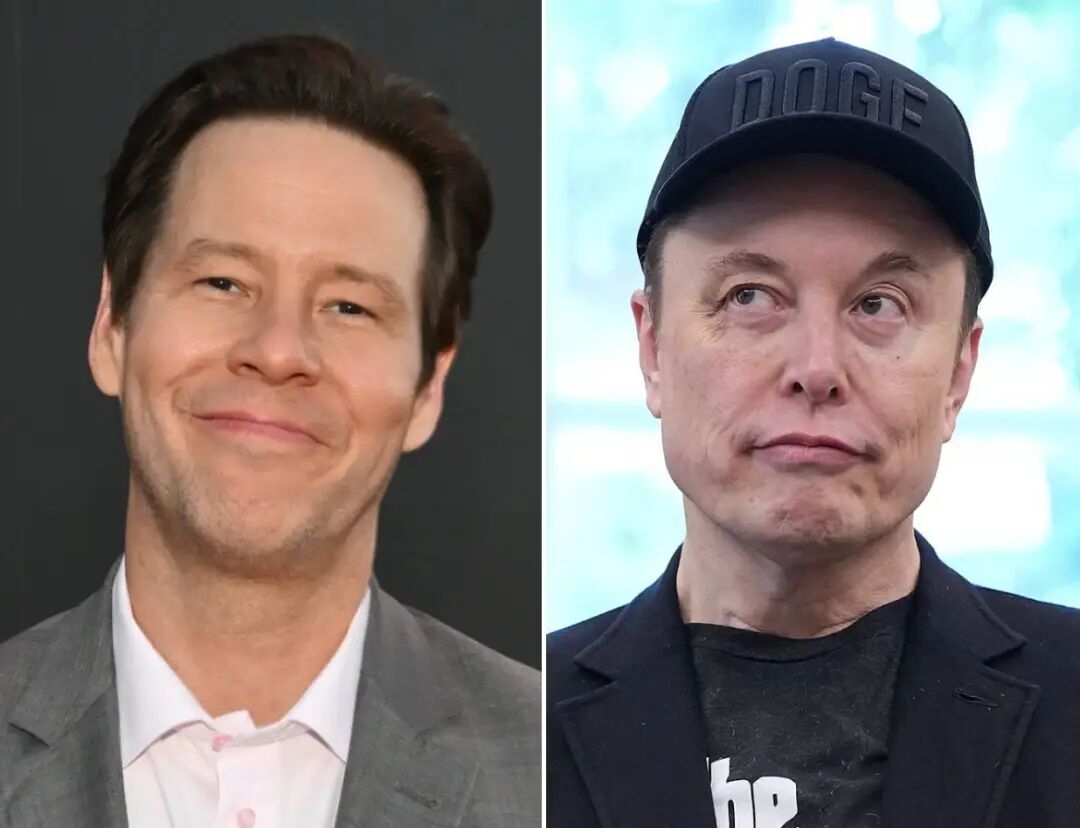
The production of the film is quite luxurious. It was filmed in San Francisco and Italy. The soundtrack is composed by Damon Albarn, the mastermind behind Blur and Gorillaz, and the photography is by Malik Hassan Sayeed, who often collaborates with famous directors. It's worth mentioning that this script was initially rejected by companies like Warner Bros. and Paramount for being "too boring," and was finally picked up by Amazon MGM.
It's reported that the film had good word - of - mouth in several test screenings in Los Angeles. However, some viewers said bluntly that Altman and Musk are the least likable characters in the film, and the audience won't like them at all, and the film tells the power struggle as a story of an idealist being defeated by a schemer.
Judging from the cast, the subject matter, and the script that portrays the industry's top figures as villains, if the film is released normally, it's likely to be one of the most talked - about works next spring.
The timing of pulling the film is the real highlight
If we only look at the act of pulling the film, it's just a business deal in Hollywood. However, the hasty timing of this decision reveals more subtle details.
Just a few months ago, Amazon and OpenAI became a community of interests. In November 2025, the two companies signed a $38 billion cloud - computing deal, and OpenAI moved a large amount of AI computing power to Amazon's AWS. In February 2026, the relationship was further upgraded. Amazon announced an investment of $50 billion in OpenAI and added hundreds of billions of dollars to the cloud agreement.
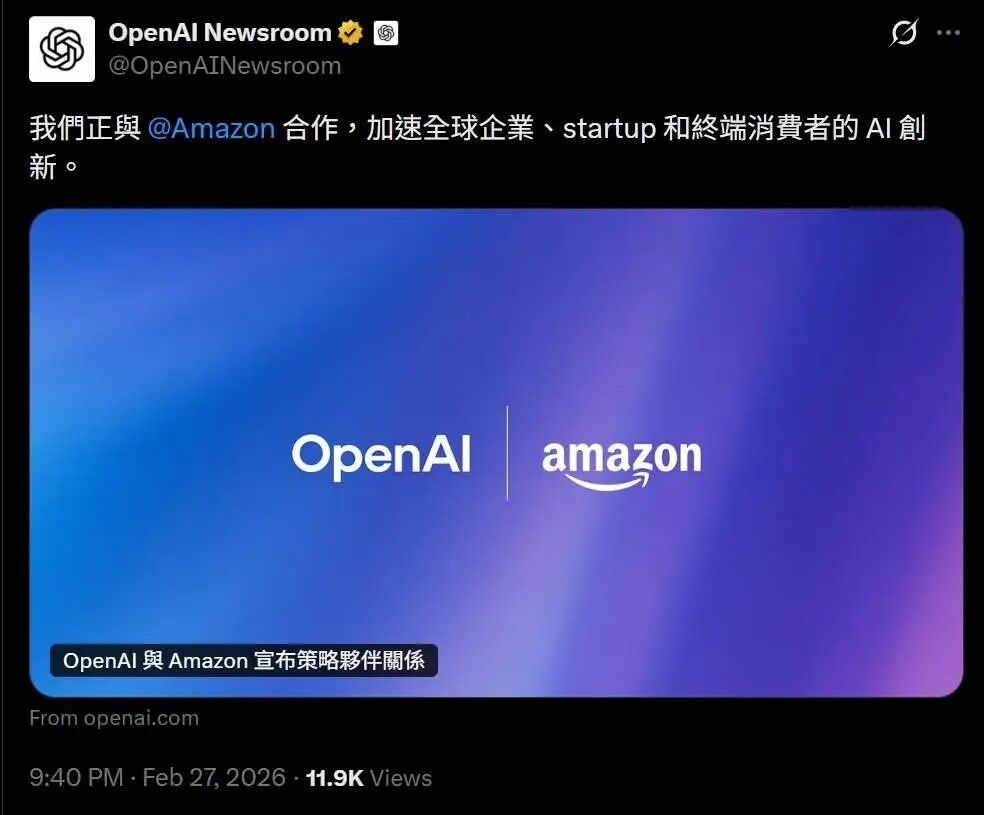
In other words, Amazon is not only the cloud service provider for Altman's company but also its major shareholder. And Amazon's boss, Jeff Bezos, has a good personal relationship with Altman. So, this film that "blackens" Altman suddenly changed from a signature work for the award season to a hot potato that can't offend strategic partners. Its fate seems reasonable.
A hot potato that no one dares to take
No one has publicly issued a ban, but in Hollywood, when a nearly completed film is abandoned by its original distributor and put on the market to find a new buyer, it's often a major setback.
First, it's about time. The distribution of an award - contending film is a precise project that needs to be arranged more than half a year in advance. The premiere at film festivals, the intensive screenings during the award season, the screening resources sent to judges, and the extensive public relations campaigns are all closely linked. Once the distributor withdraws midway, the rhythm will be completely disrupted. The scheduled film festival slots will probably be lost, and the future of the award season will be uncertain.
If it could be released as originally planned, this film would have had a good chance. Amazon is financially strong and willing to spend money on award - related public relations. It has both MGM, which is responsible for theatrical distribution, and the global streaming platform Prime Video, which means it can cover both theaters and streaming. Since the producer is also the distributor, the whole process from scheduling to promotion can be carried out smoothly. In short, staying with Amazon was originally the closest way for this film to reach the Oscars.
Now, after Amazon put the film on the market to find a new buyer, Netflix and Focus Features are said to have watched it and both decided to pass. A24 is also rumored to have watched the film, but its attitude is unclear. A24 is the most popular independent label in Hollywood with a unique vision. It's not clear whether the story didn't appeal to them or they also didn't want to offend anyone.
When a film is abandoned by its producer, it's a negative signal. Potential buyers will use this to lower the price, and the negotiation will be delayed. The worst - case scenario is that the film can't be screened in theaters and won't be available on mainstream streaming platforms either, and will be shelved indefinitely and end up in obscurity. Such an outcome is not impossible. For a highly topical and time - sensitive OpenAI - themed film, the longer it's delayed, the faster its value will decline.
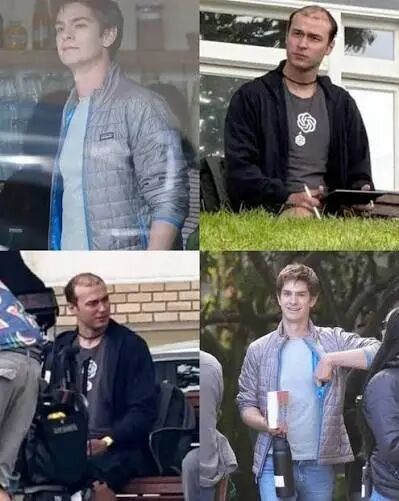
It's sad but not surprising that a nearly completed award - season film directed by a famous director with a great cast has no takers in the market. In an environment where AI giants are deeply involved in the entertainment industry, no distributor wants to offend a tech mogul who could become their financial backer or business partner at any time for the sake of a film.
In today's AI era, several tech giants play multiple roles: They are the major clients in Hollywood, controlling streaming platforms and production budgets, and deciding what films can be made and released. At the same time, they are the financial backers and shareholders of AI companies, with their interests deeply intertwined. Moreover, they themselves are the most important "subjects to be told" in this era, and stories about them are what the audience wants to see the most.
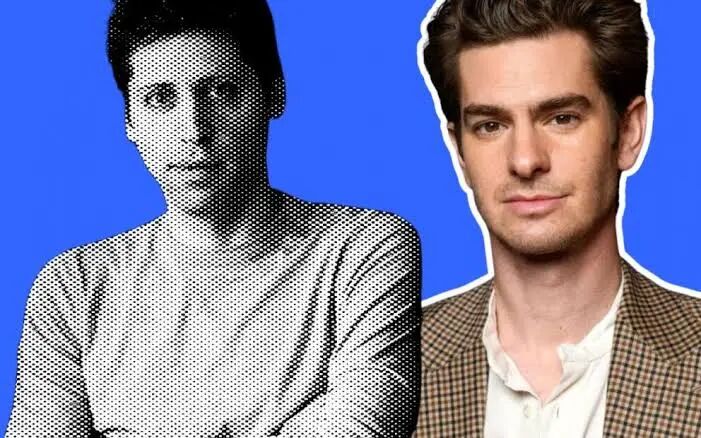
When these three identities are combined in the same group of people, an embarrassing question arises: Can stories about these giants still be told freely? The situation of "Artificial" is obviously not optimistic. It doesn't need anyone to censor or ban it. As long as on the capital's balance sheet, this film changes from an "asset" to a "risk," it will naturally be disposed of.
Earlier this year, the same Amazon MGM spent about $75 million on producing and promoting a documentary praising Melania Trump. That film is generally considered a gesture of loyalty to power, and it had poor word - of - mouth and box - office results after its release. It's predicted to only earn a few million dollars in North America in its opening weekend.
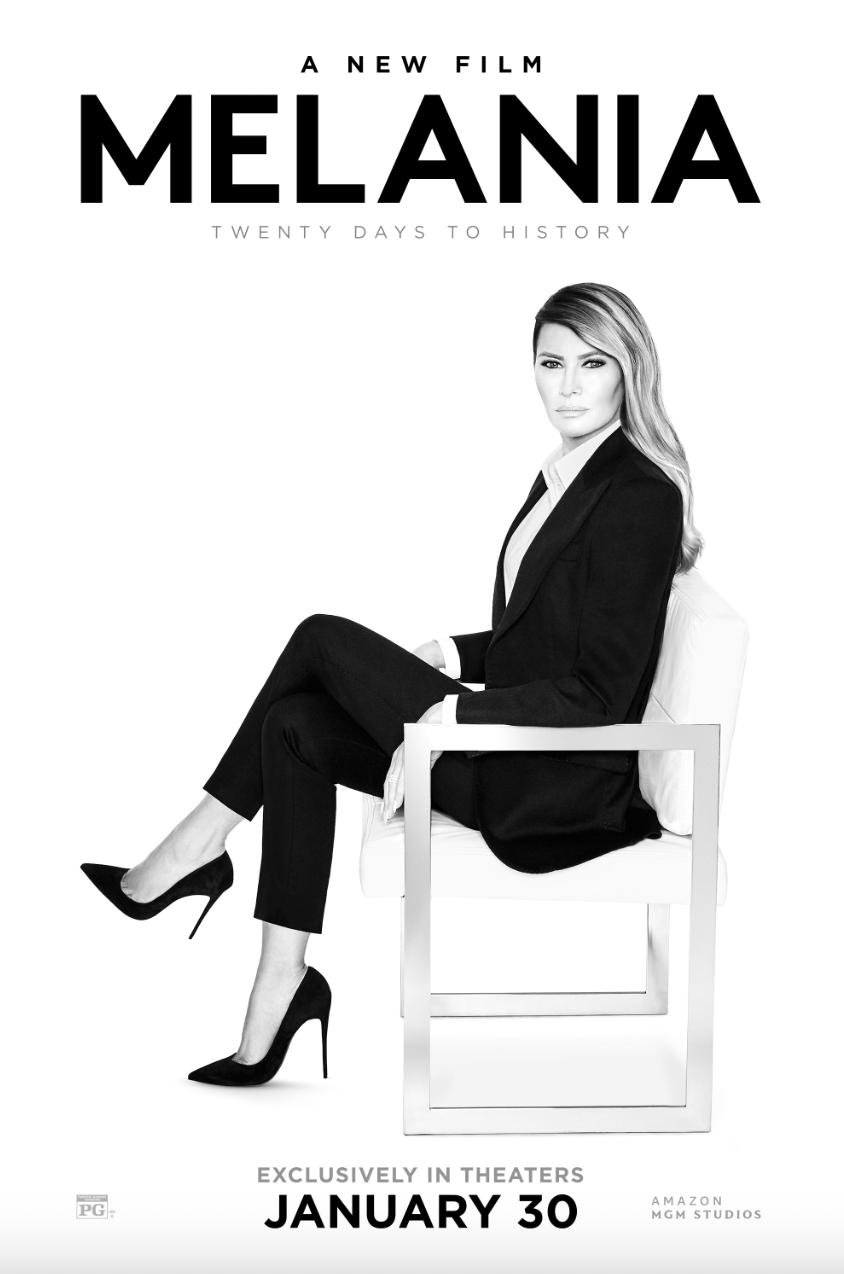
On one hand, it spares no expense to flatter a Trump ally. On the other hand, it quietly pulls a film that will offend a new business partner. After being acquired by Amazon, MGM has only one production standard: not to offend anyone. The fact that "Artificial" has no buyers is the most straightforward illustration of this structure, and finally it offends the audience, pleasing neither side.
We always think that the intervention of power in storytelling is rough, like banning or deleting posts. However, the story of "Artificial" reminds us that the truly efficient kind is often much quieter: It says nothing and doesn't even take any action. Just by its existence, it can make a film that the whole crew has worked hard on disappear without a trace.
This article is from the WeChat official account "APPSO", author: Discovering Tomorrow's Products. Republished by 36Kr with permission.