Dialogue with GONG Xin, CEO of Caocao Mobility: Unpacking the Breakthrough Sample of Large-Scale Commercialization for Physical AI
Text by | Wang Yi
The autonomous driving industry is bidding farewell to the green stage of "technology verification" and standing at the critical point of commercial and large - scale explosion. At this crucial juncture of industry iteration, Caocao Chuxing officially announced a comprehensive strategic upgrade and launched a new strategic system called RoboX.
Different from the single intelligent driving technology iteration or vehicle model update in the industry, Caocao Chuxing's RoboX is a full - dimensional upgrade plan covering products, technology, and operations.
Breaking it down, Caocao Chuxing's intelligent customized vehicle capabilities have been comprehensively evolved. The product matrix will expand from Robotaxi to Robovan, Robobus, and Robotruck; the intelligent driving technology will continue to iterate from the existing capabilities to the L4 level; the operation system will fully introduce an AI brain to achieve a complete closed - loop from demand understanding, supply - demand matching to service fulfillment.
The significance of this strategy goes far beyond the business upgrade of a single travel platform. This is not just another demo display of AI technology, but an important sample of large - scale commercial application, and a key step for AI to move from the digital world to the physical world and create direct benefits.
After the wave of AI large - models has swept the world for three years, the industry has finally waited for another important player to truly land. Recently, 36Kr interviewed Gong Xin, the CEO of Caocao Chuxing, to comprehensively dissect the upcoming new revolution in the field of physical AI.

AI Landing, Starting from Travel
In the past three years, the industry - wide transformation of AI technology has promoted the rapid iteration of intelligent driving technology. The coverage of L2+ assisted driving in the new energy vehicle industry has risen rapidly, and its functions have evolved towards full - scenario applications.
The L4 - level autonomous driving, which the industry has invested in earlier, also entered the stage of large - scale commercial implementation in 2026.
The industrial signals have been fully released now: the Ministry of Industry and Information Technology has issued a draft for comments on the mandatory national standard for L4 - level autonomous driving, and the Ministry of Public Security has simultaneously introduced regulations for autonomous driving on roads. 26 cities across the country have opened the commercial charging operation qualifications for driverless Robotaxis. Undoubtedly, autonomous driving is a field with practical significance among AI landing scenarios.
"The key point in the transition from manned to unmanned driving is whether corner cases (long - tail scenarios) can be solved," Gong Xin has a clear judgment on L4 - level autonomous driving. He pointed out that unmanned travel vehicles are shared spaces. "We have remote safety officers. If a corner case that cannot be solved occurs, the remote safety officer can intervene to ensure safety. However, private cars cannot allow someone to monitor your car in the cloud every day."
Unmanned travel is not just a shell for Caocao Chuxing's story, but a practical business logic. This is also an important reason why Caocao Chuxing can obtain a core position in the commercialization of autonomous driving.
However, for the travel track, the implementation of "driverless cars" is not a smooth journey.
In the traditional travel track, the core of competition lies in the number of vehicles, price advantages, and traffic scale. In the new era of unmanned travel, vehicles will completely break away from the simple attribute of a means of transportation and be upgraded to mobile living spaces, urban data nodes, and intelligent transportation terminals. Industry competition is no longer a single - dimensional comparison, but a comprehensive competition of the entire system and closed - loop capabilities.
Gong Xin told 36Kr, "Intelligent driving technology determines the feasibility of the model, deeply customized vehicles determine the basic capabilities, and platform operation efficiency determines business success. Only when the three complement each other can RoboX be brought into reality."
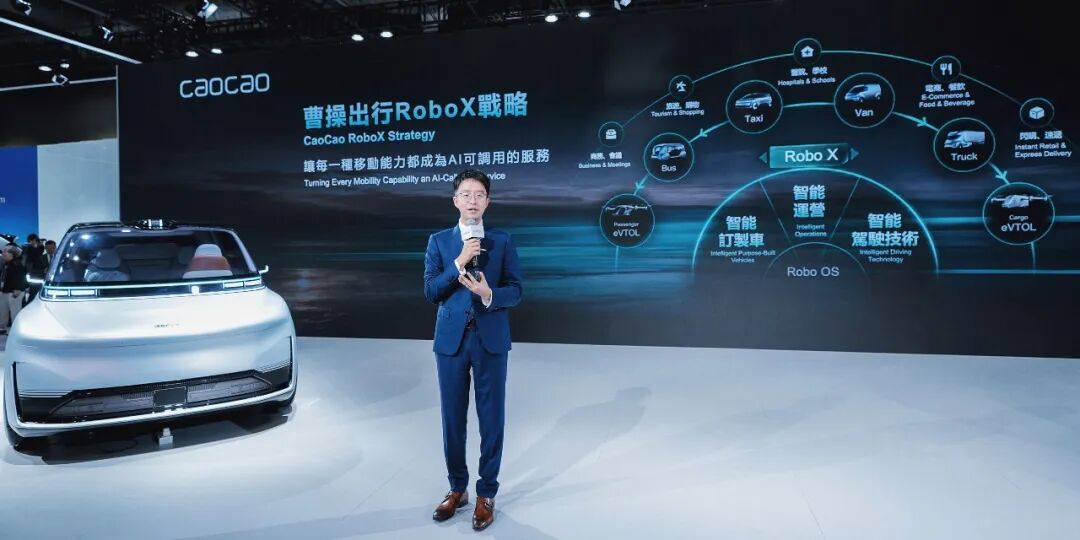
As the most important commercialization carrier of Geely Holding Group's RoboX and with years of in - depth experience in travel operations, Caocao Chuxing has the three core capabilities of technology, products, and operations. It has become a core player that is compatible with the new competition rules of unmanned travel and is expected to promote the large - scale implementation of unmanned travel services.
In addition, Gong Xin believes that the core competitiveness of enterprises in the AI era does not lie in entrances such as APPs, but in how to create a link between AI and the physical world.
"What Caocao Chuxing wants to do is not to strive to be an entrance. Instead, no matter which entrance users come from, they can enjoy intelligent taxi - hailing, delivery, and even low - altitude travel services through our RoboX. At the same time, we also have a cockpit agent that can meet users' more needs such as choosing a restaurant and ordering food after getting off the vehicle."
It is not accidental that Caocao Chuxing has reached this stage. Its layout in the unmanned travel track is much earlier than what the outside world sees. When most players in the industry were still testing the single scenario of Robotaxi and focusing on technology testing, Caocao Chuxing had already completed long - term technology accumulation, product polishing, and operation iteration.

Three Core Chips Support the Full Implementation of the RoboX Strategy
Caocao Chuxing's RoboX strategy is not a bet on a single "black technology" but focuses on three structural elements: customized vehicles, intelligent driving capabilities, and intelligent operations. Others may catch up in any single area, but it is very difficult to replicate the hard barrier of running all three areas smoothly in the same operation network in the short term.
First of all, the implementation of unmanned travel cannot be separated from high - level autonomous driving capabilities. The industry has a common understanding of L4 - level autonomous driving. The improvement of intelligent driving technology never relies on the stacking of algorithm models but on the continuously iterated real - world scenario data.
Caocao Chuxing has large - scale and national - wide operation scenario data of online car - hailing services. According to relevant data of Caocao Chuxing, in 2025, its average monthly active users reached 41.3 million, and it completed more than 1.9 billion travel services throughout the year. The road conditions cover all - dimensional real - world travel scenarios such as complex urban road conditions, extreme weather, peak hours, and special road conditions.
Gong Xin told 36Kr, "Our logic is very clear. We use real operation data to assist algorithm iteration and then return to real - vehicle road testing. Once this flywheel starts to turn, the more we operate, the safer, smarter, and more cost - effective it will be."
On the other hand, in the field of intelligent customized vehicles, Caocao Chuxing is one of the few travel platforms in the industry with the ability of forward - development of the whole vehicle. This is also its core advantage that differentiates it from pure technology - based intelligent driving enterprises.
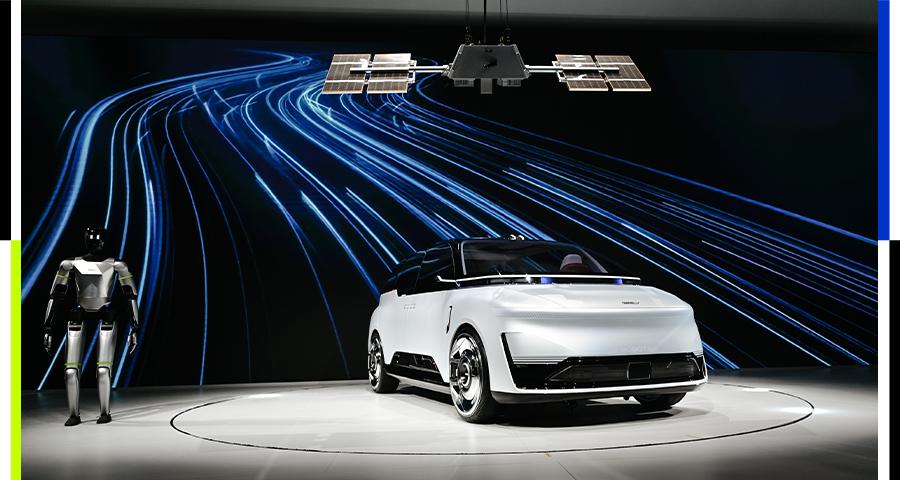
Previously, Caocao Chuxing had launched a uniquely developed Robotaxi model in the industry. This is a "native driverless vehicle" that has been exclusively designed for autonomous driving and shared travel scenarios in terms of space layout, safety configuration, and intelligent interaction experience since its R & D. It supports battery swapping and has a longer theoretical service life than ordinary passenger cars.
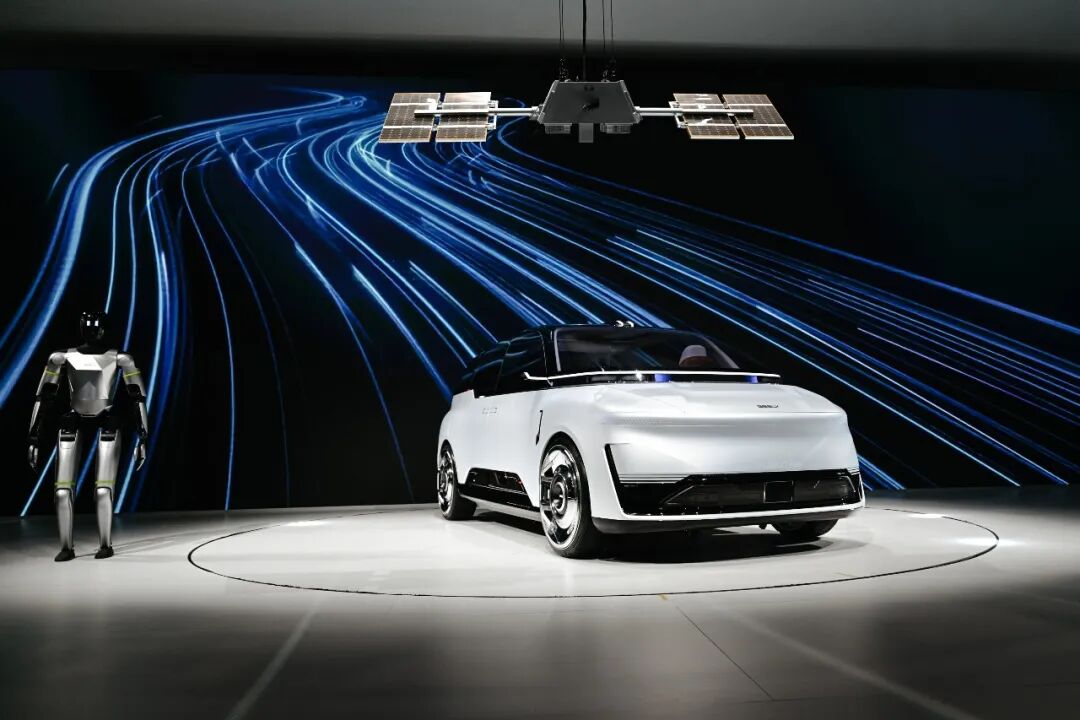
Gong Xin told 36Kr that in 2021 when autonomous driving was just emerging, Caocao Chuxing clearly defined the strategic direction of customized vehicles. "What are the differences between commercial vehicles and private cars? These cannot be discussed in a day or two. It took us 5 - 6 years, stepped on many pitfalls, and put so many vehicles into operation to figure it out."
Autonomous driving technology will eventually converge, and the end - game of the unmanned travel track is still a competition of travel experience. The foundation of experience lies in the vehicle, and vehicle manufacturing is extremely difficult. Caocao Chuxing's heavy investment in customized vehicles will precisely become the most solid moat in the future.
Under the RoboX strategy, Caocao Chuxing's whole - vehicle customization ability will break through the scenario limitations of a single Robotaxi and complete the layout of all - category intelligent transportation vehicle models.
Supported by Geely Holding's complete vehicle manufacturing ecosystem and remote commercial vehicle technology, Caocao Chuxing will gradually implement businesses such as Robovan, covering multiple scenarios such as urban instant delivery, trunk logistics transportation, and public intelligent travel, and build a full - scenario unmanned transportation system of "carrying people + carrying goods, commuting + transportation, private + public".
This also further gets rid of the pain points of "single technology, limited scenarios, and fragmented products" in the industry, making RoboX no longer just a single unmanned taxi - hailing service, but an intelligent travel solution that covers all - dimensional transportation needs in the city.
If the first two chips are just "hardware", then intelligent operation is the "operating system" that makes the hardware truly function.
"In the field of unmanned travel, asset operation ability determines the business gap between enterprises," Gong Xin told 36Kr. In the future, driverless cars will become enterprise assets. "How can you make these assets safer, provide a better experience, and at the same time achieve the highest operation efficiency and the lowest cost? This involves not only intelligent driving and vehicle manufacturing but also maintenance, cleaning, preparation, quality inspection, etc. in the operation process."
Now, Caocao Chuxing has sufficient advantages: 11 years of experience in shared travel operations, the ability to handle complex dispatching of millions of orders, and a mature travel network covering 195 cities. However, under the RoboX strategy, these capabilities will be re - defined by AI.
The new operation system integrated with AI will have the ability to coordinate and dispatch all - category unmanned transportation capabilities, and can dynamically adjust the distribution of transportation capacity according to urban passenger flow, road conditions, and order requirements to solve industry problems such as idle driverless cars, mismatched transportation capacity, and delayed response. This will be the core decisive factor in determining the rise and fall of future unmanned travel service brands and the success or failure of large - scale implementation, and will also become Caocao Chuxing's deepest and most difficult - to - replicate moat.
In the first half of this year, Caocao Chuxing promoted strategic focus, continuously optimized the business structure, and actively shrank non - core businesses. The company re - organized its organizational structure around AI, increased investment in talents and resources in areas such as autonomous driving, AI operation systems, and intelligent transportation networks, promoted the in - depth integration of AI capabilities into product R & D, operation management, and business systems, and accelerated the transformation into an AI - native company.
After the release of the RoboX strategy, Caocao Chuxing simultaneously updated its "Double - 100,000" plan. By 2030, Caocao Chuxing plans to achieve the goal of putting 100,000 Robotaxis and 100,000 Robovans into operation respectively and build an open ecosystem for Robovan.
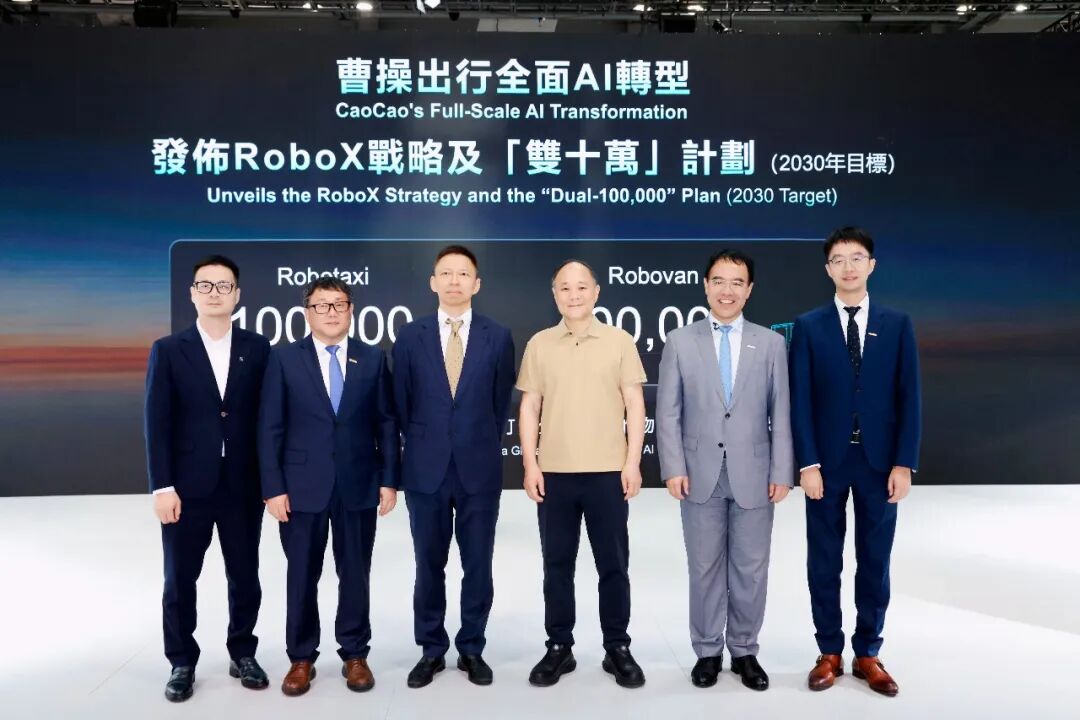
The significance of these 200,000 driverless cars goes far beyond the numbers themselves. It not only means that the boundaries of unmanned travel services have been completely expanded but also symbolizes that the trillion - level market of unmanned travel will enter the real monetization cycle.
With the maturity of AI technology, both policies and the market are pushing the autonomous driving industry to the critical point of explosion.
The upgrade of Caocao Chuxing's RoboX strategy reveals a profound industrial trend. The industry has passed the exploration period of verifying Robotaxi technology and entered the commercial implementation period of large - scale application. The new cycle breeds new rules. Now, the thinking angle should not be "the technology and scenarios of autonomous driving" but "what consumers need in the travel service field and what enterprises can solve".
Who can meet such era needs? The answer is becoming clearer: comprehensive enterprises with autonomous driving capabilities, whole - vehicle capabilities, and operation capabilities.
Looking back at the previous iterations of the travel industry, from traditional cruising taxis to Internet - based online car - hailing services, from manned online car - hailing to Robotaxi unmanned taxi - hailing, and now to the RoboX full - scenario intelligent transportation ecosystem, Caocao Chuxing has always accurately hit the core nodes of industry upgrading. This is not an accidental coincidence but an inevitable result of the enterprise's long - term industrial layout.
When AI moves from the digital world to the real world and when travel and freight become important infrastructures in the AI era, Caocao Chuxing's blueprint of 200,000 driverless cars is itself a statement: AI should not exist in demos but should address the real - world transportation capacity gap.