Expressing concerns about AI: Co-CEOs of CDPR and former executives of Take-Two have made incisive comments one after another
One Person Company (OPC), churning out dozens of games a day... In an era of rapid technological development, with AI generating games efficiently and in large quantities, the idea of making games with low barriers seems to be getting closer to reality.
But is this necessarily a good thing for the industry and the market?
Some executives from major game companies have recently expressed their doubts publicly.
In the recent Edge Knowledge journal, Michał Nowakowski, the co - CEO of CDPR (CD Projekt Red, the developer of The Witcher series and Cyberpunk 2077), mentioned that there will be more and more AI - generated games in the future, which is an inevitable reality. However, he believes that the public generally underestimates the difficulty of game production, especially in the AI era. He cannot fully agree with the production path of "generating a large number of prototypes with AI and then screening them":
"I once talked to a person who just founded a studio. He said, 'I founded an AI - based studio. I can make 40 prototypes in a week; I can select the best five games from them in two weeks; and I can release a game in three weeks.'... Maybe this approach can be successful, but I'm a bit skeptical about whether this is really the right way to make games."
Michał Nowakowski also talked about that the number of game productions is not the key to future industry changes; ideas are:
"Just talking about increasing the output of games, I don't think it will become easier... You have fresh ideas, a soul, and vitality, then you really have a chance to succeed."
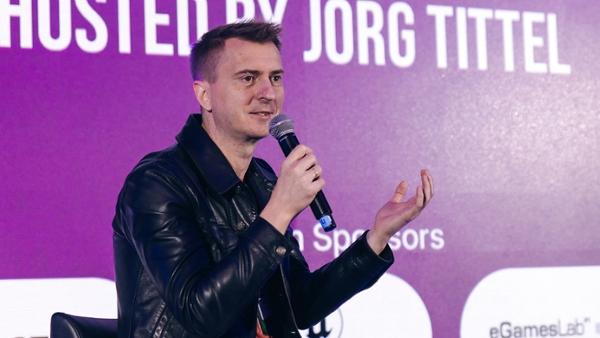
Michał Nowakowski Image source: Edge Knowledge
Take - Two (the parent company of Rockstar Games, the developer of the GTA series) also seems to be more cautious about AI.
They originally acquired a team from Zynga in 2022 and set up a corresponding department in the company to let this team research how AI can be applied to game development. In February this year, Strauss Zelnick, the CEO of Take - Two, also said that he has been enthusiastic about AI from the beginning and holds an optimistic attitude towards it. He revealed that there are already hundreds of AI - related pilot projects within the Take - Two company and its studios...
However, in April this year, according to foreign media reports, Take - Two directly laid off the entire AI research team.
This doesn't mean that Take - Two has completely given up on AI. In an interview in May this year, Strauss Zelnick still mentioned that the company has hundreds of projects trying to apply AI to game production. Interestingly, this time he also mentioned the potential threats brought by technological evolution:
"I fully believe that technology will evolve, and I believe it will affect us. I also believe it may bring some threats - but overall, this new technology will be very beneficial to the industry and our company."
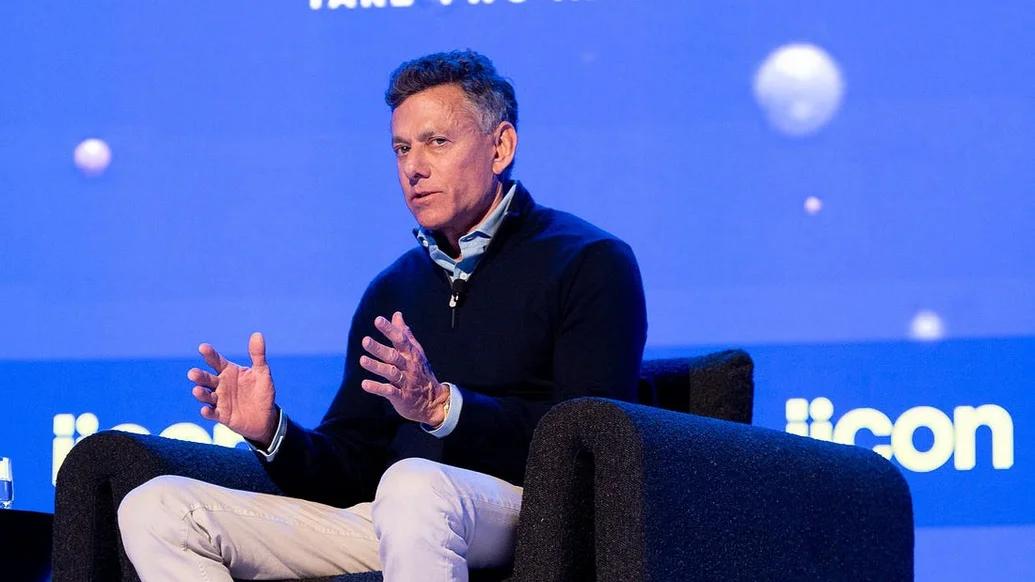
Strauss Zelnick Image source: GamesIndustry.biz
Luke Dicken, the former head of Take - Two's AI research team who was laid off, said in a recent interview with foreign media that he has considerable concerns about generative AI.
First of all, he believes that there are ethical issues in the current training methods of generative AI. For example, some large models "stole" many painters' works to train AI, which makes him feel a lot of pressure: "I really hope I can look my friends in the eye and believe that I haven't made their lives worse."
Secondly, he doubts whether large models can really make better games.
Dicken explained that the technical nature of large language models determines that most of the content generated by AI is mediocre: "On an abstract level, a large language model is a system for predicting the next word, which means it always tends to predict the comment values it knows... If you don't understand programming at all, or you're a very poor programmer, then AI can make you an average programmer; if you're originally a very good programmer, AI can also make you an average programmer. Regression to the mean, that's what AI offers. I'm very worried."
Moreover, minor iterative changes can have a huge impact on large language models, and he believes this will lead to a loss of control in the workflow: "A minor change in the training data or training method of a large model may trigger a chain reaction, causing something that originally worked to stop working... For example, you outsource a job to someone you've tested and who meets the team's requirements, but tomorrow, it may be a completely different person doing the outsourcing. You have no control over this."
Finally, regarding the impact of AI on the industry and business, Dicken quoted the view of technology columnist Ed Zitron. He believes that the economics behind the current AI boom does not hold (Ed Zitron analyzed from an economic perspective and believed that large language models are a scam. AI has not brought any sustainable business models but has been rushed in front of the public and urged users to subscribe and pay).
In addition, Dicken also mentioned the hype around generative AI. He believes that hype and cashing in are not rare, but the problem is that those who hype have exaggerated the capabilities of generative AI.
Once this bubble bursts, the entire industry may have a bad impression of AI as a whole. In extreme cases, practitioners may not even realize that traditional, functional AI technology can still help with game development, but will resist all AI - related technologies:
"I'm worried that generative AI is poisoning the well... I don't think the industry has enough care and insight to preserve those traditional things. As for large language models, we've already hit the bottom of disillusionment."

Luke Dicken Image source: GamesIndustry.biz
Currently, the industry is still in the exploratory stage of "AI - generated games", and we don't know what the end result of this path will be. However, perhaps the statements of executives from major companies like CDPR and Take - Two can provide suggestions for those exploring this field from other perspectives:
What kind of impact can generative AI have on the game industry? It's too early to draw a conclusion. And regardless of whether the result is good or bad, technology itself doesn't need to be put on a pedestal or completely denied.
This article is from the WeChat official account "Game Grapes" (ID: youxiputao), written by Wang Dan, and is published by 36Kr with authorization.