Orders are booked through 2027, and global AI computing power construction is in urgent need of China's optical fiber
The AI industry seems to have fallen into a strange cycle. If you don't grab something, you always feel uncomfortable.
In 2024, they were scrambling for chips. In 2025, it was transformers. And in 2026, they've started to scramble for optical fibers.
If you don't believe it, take a look at the market for optical fibers. The prices aren't changing monthly anymore; they're changing daily. It's as exciting as the cryptocurrency market back then.
For example, the price of the general G.652.D standard single - mode optical fiber has increased by 418%. The G.657.A2 bend - resistant optical fiber has seen a 650% increase. And the G.654.E ultra - low - loss long - haul optical fiber costs as much as 240 yuan per core - kilometer.
If you place an order for optical fibers now, sorry, the earliest delivery date will be the second half of 2027.
It's strange. Optical fibers aren't something new. They've been mass - produced since the 1970s. Why are they in short supply now?
China just smiles and says nothing about this.
Because this time, China has really got a stranglehold on the global AI industry.
Why is there a shortage of optical fibers?
To understand why there's a shortage of optical fibers, we must first figure out what an AI computing power center is.
In the past, there was less data interaction within data centers. Ethernet cables could meet most parallel requirements.
But now? Training a large model often requires tens of thousands of GPUs. With so many GPUs, how can we achieve massive and low - latency data exchange?
Still use Ethernet cables? It's okay that Ethernet cables generate heat, but the key is that their maximum speed is only 40 Gbps. It's really not enough!
So on May 7th this year, Jensen Huang made a prediction: The next - generation AI infrastructure will require a large number of optical connections. Copper wires can no longer meet the demand.
Because of this prediction, NVIDIA developed the Scale - up all - optical architecture.
According to calculations, in the computing power cluster of the all - optical architecture, the ratio of the number of optical modules to GPUs has increased from 1:3 in the past to 1:9. This directly leads to the demand for optical fibers in AI computing power centers being more than 8 times that of old computer rooms.
What does this mean? For an ordinary computing power cluster with ten thousand GPUs, just the interconnection of GPUs requires tens of thousands of kilometers of optical fibers!
This is the real reason for the sharp increase in the demand for optical fibers after the explosion of AI.
In 2024, the global demand for optical fibers increased by 138% year - on - year. In 2025, it increased by 77%. In less than half of 2026, it has already increased by 40%. It is estimated that the total annual demand will exceed 100 million kilometers.
Originally, the current production capacity of optical fibers is already struggling to meet the needs of the AI industry, but unfortunately, the war is also devouring optical fibers crazily.
Here's a little - known fact. In 2025, Russia consumed 10.5% of the world's total optical fiber production, and Ukraine consumed 4.5%, second only to China and the United States.
It's strange. I haven't heard that Russia and Ukraine have any AI industries. Why do they need so many optical fibers? Are they also building computing power centers?
No, they use them for war. They install an optical module on an FPV drone, hang a roll of optical fiber, and let it pay out the fiber while flying. When it reaches the target area, it just dives down.
And all these optical fibers are disposable consumables. They're used only once.
So now, in the fields of Russia and Ukraine, when the sun shines, there are shiny optical fibers everywhere, so dense that even birds have learned to build nests with them.
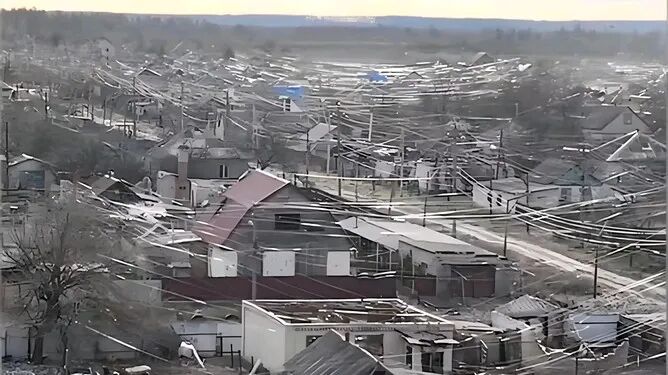

Just like this, AI data centers are scrambling for optical fibers, and the Russia - Ukraine war is also scrambling for them. When these two soaring demands are superimposed on one supply chain, it would be strange if the prices didn't double.
How difficult is it to make optical fibers?
So here's the question. Optical fibers aren't high - tech products. If there's a shortage, just increase production. Is it really necessary to raise the prices like this?
It's really not that simple.
Although optical fibers are a product of the information age, in essence, they are actually heavy industry in high - tech clothing.
For example, the core raw material of optical fibers, the optical preform, is extremely complex to produce.
First is the material selection. The requirements for the material of the optical preform are very high. The silicon tetrachloride used to make the optical preform requires a purity of 11N, that is, 99.999999999%! Even if a tiny speck of dust gets in, it may directly cause a blockage in the optical fiber.
Having high - purity silicon tetrachloride isn't enough. You also need to inject silicon tetrachloride vapor into a quartz liner in a super - high - temperature and airtight environment. Under the excitation of microwaves or an oxy - hydrogen flame, the vapor undergoes a chemical reaction and turns into glass powder, which is "smoked" layer by layer on the inner wall of the tube.
This is called the chemical vapor deposition method. A qualified optical preform needs to be deposited thousands of times like this. The thickness, refractive index, and doping concentration of each layer must be absolutely precise.
After the optical preform is made, it's still not over. You need to hang it on a drawing tower dozens of meters high and melt it in a 2000 - degree high - temperature graphite furnace. Let the tip of the optical preform melt and stretch like a drop of water, and be drawn into a thin glass fiber with a diameter of only 0.125 millimeters at a speed of more than 3000 meters per minute.
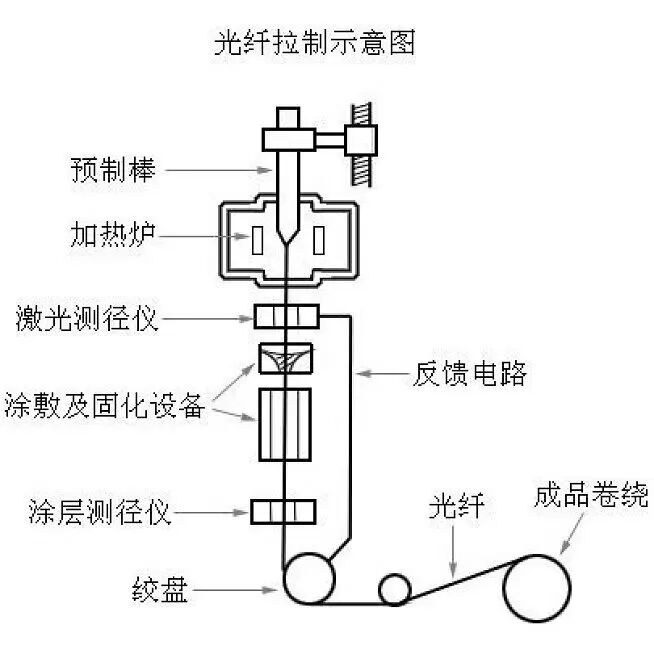
During the drawing process, two layers of resin coating and ultraviolet curing also need to be completed simultaneously.
Notice? Chemical gases, fine chemicals, high - temperature furnaces, giant towers. What's the difference between this and steelmaking? Isn't this heavy industry?
And the characteristics of heavy industry determine that the production of optical fibers can't be easily increased.
In this industry, from the project establishment, environmental assessment, factory construction, introduction of precision equipment to full - capacity commissioning of an optical preform production line, the cycle is as long as 2 - 3 years. It's the same for everyone, and China is no exception.
But the problem is that the AI industry can't wait!
The demand for optical fibers in computing power centers has increased several times in two years, but in two years, you may not even be able to complete the installation of production equipment!
This is the real reason why AI giants are holding huge sums of money and looking for optical fibers everywhere, but optical fiber factories just can't produce them. Who wouldn't want to make money? They just can't!
Although Meta, NVIDIA, and Amazon have pooled $10 billion for Corning Glass, an American optical fiber giant, to expand optical fiber production, well, money can't turn into optical fibers.
Manufacturing has its own rules. So what if the funds are in place? How long will the environmental approval process in the United States take? Where can you find engineers who can operate the super - high - temperature chemical vapor deposition furnace skillfully? Where can you find skilled industrial workers who can endure three - shift work?
Corning has received the money and is indeed planning the factory. But according to the efficiency of Americans, if they can get the optical fibers off the production line within 3 years, it'll be a blessing.
So what to do during this gap? Can't just wait, right? After looking around, they can only turn to China.
China's optical fibers forged through competition
In 2025, China's optical fiber shipments accounted for 56.3% of the global total. It almost single - handedly supported half of the global optical fiber supply.
Why does China produce so many optical fibers?
It's simple. It's the result of intense competition.
In the 1970s, when Corning drew the world's first low - loss optical fiber, China's optical fiber technology was still blank.
It wasn't until 1976 that Zhao Zisen, the "Father of Chinese Optical Fibers," pulled out China's first optical fiber with his bare hands in a bathroom of the Wuhan Research Institute of Posts and Telecommunications.
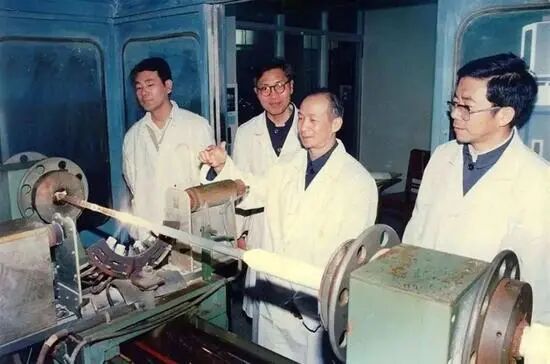
However, this optical fiber was useless because it was only 17 meters long.
In the 1980s, China started to promote the construction of communication networks. But soon, it was found that we couldn't produce optical fibers that met the standards. Finally, we had to use our precious foreign exchange to buy them at high prices from abroad.
At that time, it was really difficult. We had to plead everywhere to buy a little optical fiber.
It wasn't until 1988 that the government decided that this situation couldn't continue. So, it built China's first optical fiber enterprise, "Yangtze Optical Fibre and Cable Joint Stock Limited Company" in Wuhan Optics Valley, with Philips of the Netherlands as the cooperation partner.
At that time, our idea was very characteristic of the era: exchange the market for technology. We provided the money, land, and labor, and you brought in the technology.
However, capitalism quickly gave us a lesson. Philips firmly controlled the most core optical preform manufacturing process, and China could only import optical preforms from the Netherlands and then draw them into fibers.
This model made little money, but the key was that it was insecure. As long as Philips slightly adjusted the export quota or raised the price of optical preforms, China would be in trouble.
To get out of this predicament, Yangtze decided to conduct independent research and development.
In 2005, Yangtze successfully conquered the optical preform production technology and completed the large - scale mass production of PCVD optical preforms independently. Finally, it got rid of the long - term dependence on imported optical preforms.
Since then, Yangtze has been soaring and has been developing non - stop. Up to now, Yangtze has maintained profitability for 33 consecutive years. In 2025, Yangtze's operating income was 14.252 billion yuan, a year - on - year increase of 16.85%. The net profit was 814 million yuan, a year - on - year increase of 20.4%.
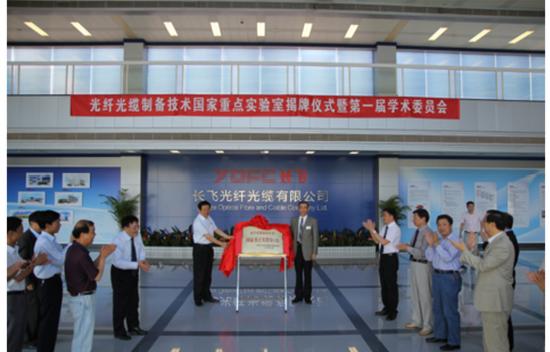
While Yangtze was starting its independent research, Chinese private optical fiber enterprises represented by Jiangsu Hengtong Optic - Electric Co., Ltd. and Zhongtian Technology Co., Ltd. also launched a breakthrough battle in the optical fiber field.
Hengtong Optic - Electric was originally an agricultural machinery factory. Later, it was taken over by Cui Genliang, a veteran. He decided to switch to optical fiber production.
Without blueprints, they bought used foreign equipment and disassembled it to reverse - engineer. Without process parameters, they conducted chemical deposition experiments day and night.
Over the years, they experienced countless furnace explosions, waste products, and restarts. Countless funds were burned in the furnaces.
Finally, in 2010, Hengtong Optic - Electric independently developed its first self - produced optical preform.
Subsequently, Zhongtian and Fenghuo also successively conquered the optical preform production technology and began to be called the "Four Giants of Chinese Optical Fibers" together with Yangtze and Hengtong.
The Chinese people have finally mastered the autonomy of the optical fiber industry by themselves.
The times create heroes. The rise of these four giants coincided with China's infrastructure boom.
In the "Broadband China" and "Connecting Every Village" projects, to meet the massive centralized procurement needs of the three major operators, Chinese optical fiber enterprises began to expand production crazily.
In that era of large - scale infrastructure construction, Yangtze, Hengtong and others obtained huge cash flows. They reinvested this money in technological iteration and production capacity expansion.
Just like this, China's optical preforms became larger and larger, the drawing speed became faster and faster, and the production volume became higher and higher.
By 2017, China not only had the world's highest optical fiber network coverage but also directly reached the world's first in optical fiber production capacity.
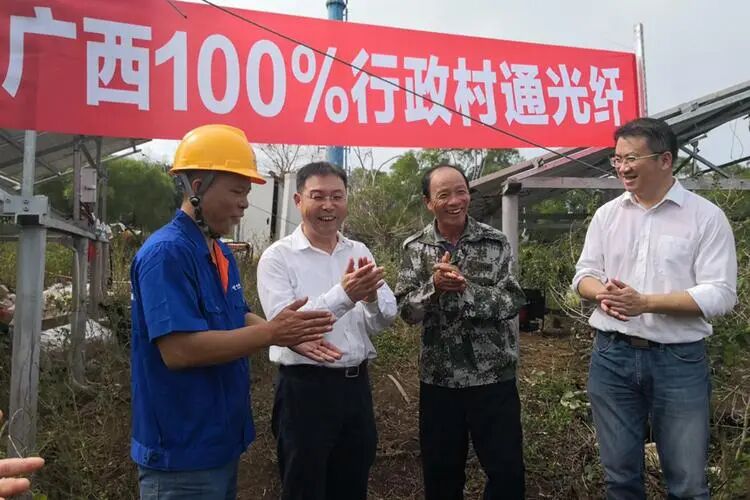
However, success also came from infrastructure, and failure also came from it.
In 2019, the construction of fiber - to - the - home and 4G networks in China was basically completed, and the 5G construction had not yet entered the peak period. The demand for optical fibers suddenly dropped by 40%.
On the one hand, there was a sharp drop in demand. On the other hand, the huge production capacity was still running crazily. This directly led to a huge over - capacity of optical fibers.
So, the Chinese optical fiber industry entered an era of "intense competition" that lasted for four years.
To bid for a contract, each factory started a price war. If you quoted 30, I dared to quote 25. If you quoted 20, I dared to quote 15!