Beijing and Shanghai are no strangers to tourists, so why is it only in Guangzhou that the amusement park giant Chimelong has thrived?
Chimelong Group is the only domestic theme park enterprise in China with the strength to compete with Disney and Universal Studios. In 2024, with only three projects, Chimelong Group squeezed into the seventh place among the world's theme park groups. Among them, Chimelong Paradise in Zhuhai had a passenger flow of 12.63 million person - times, second only to Shanghai Disney's 14.7 million person - times in China and higher than that of Beijing Universal Studios. In terms of both scale and operational ability, Chimelong is China's top cultural and tourism theme park.
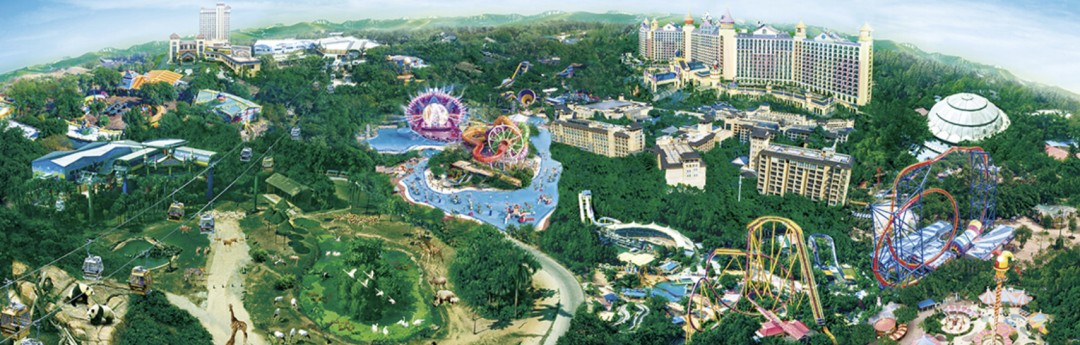
Chimelong Resort
Major cities in China all want to build their own "Chimelong Paradise". For example, Zhengzhou Yinji International Tourism Resort and Zhejiang Taihu Long Dream Resort. The Beijing Daxing International Tourism Resort, which was launched in 2025, also put forward the slogan of "Chimelong in the south, Daxing in the north". It plans to invest a total of 26.5 billion yuan. Relying on the Beijing Wildlife Zoo, it aims to build an international - level tourism resort on a par with Chimelong.
So, why did Chimelong Group emerge in Guangzhou instead of Beijing or Shanghai? Why hasn't Chimelong expanded beyond Guangdong for more than thirty years? Can cities around the country succeed in building their local versions of "Chimelong Paradise"?
The Right Time, Place and People for Chimelong's Rise
First of all, it should be pointed out that the rise of any giant is the comprehensive result of the right time, place and people. Guangdong is located in the subtropical region with an average annual temperature of 22 degrees Celsius. It is the most suitable area for building large - scale zoos and aquariums. There is no frost throughout the year, and many rare animals can be directly displayed outdoors. Tourists can visit and play all year round.
The predecessor of Chimelong Group, Guangzhou Xiangjiang Wildlife Zoo, was established in 1997. It was the first large - scale privately - invested wildlife zoo in China at that time. Moreover, it adopted the mode of free - ranging wild animals and allowing tourists to watch by bus at an early stage, which provided a much better experience than the cage - style viewing mode of state - owned zoos at that time. Chimelong Group caught up with the great development of mass tourism and leisure vacations and also reaped the benefits of innovation in zoo experience.
Su Zhigang of Chimelong Group is a very outstanding entrepreneur. He has been focusing on one thing for decades, that is, running the zoo well. Chimelong doesn't go public, doesn't expand to other regions, and doesn't engage in light - asset management output. In the past 30 years, it has only launched projects in Guangzhou, Zhuhai and Qingyuan. To raise animals well, Chimelong has invested a large amount of R & D resources and established more than a dozen scientific research centers, such as the Animal Nutrition Research Center and the Disease Control Center. For animal breeding and disease prevention and control, Chimelong has delved into the field of molecular biology and developed technologies such as screening of mutant genes, rapid detection reagents for bacterial and viral infections, cryopreservation of rare species cells, and analysis of digestive tract flora. This in - depth and focused approach is not available in other cultural and tourism enterprises.
These are the right time, place and people for the rise of Chimelong Group.
However, these explanations are not thorough enough. Shanghai and Beijing also have a sufficient cultural and tourism consumer market and outstanding and innovative entrepreneurs. Shanghai Wildlife Zoo and Beijing Badaling Wildlife Zoo were established in the same batch as Chimelong Xiangjiang Zoo. In terms of climate and animal breeding, the Pearl River Delta has an advantage, but this geographical advantage is not absolute. The Yangtze River Delta and Beijing also have their own geographical advantages. Shanghai and Beijing are international tourist cities, attracting a large number of Chinese and foreign tourists every year. The tourist base is larger than that of Guangzhou and Zhuhai.
The Micro - environment of Cultural and Tourism in Beijing, Shanghai and Guangzhou
In the view of Zhiku Cultural and Tourism, the right time, place and people are the macro - environment for Chimelong's rise. To understand the underlying factors of Chimelong's rise, we also need to analyze the micro - environment of cultural and tourism in Guangzhou, Shanghai and Beijing.
When the outside world discusses why Chimelong emerged in Guangzhou, the focus is often on Chimelong itself and on the category of zoos and theme parks. In fact, the cultural and tourism industry in a region is holistic. What tourists care about is not the category, but which scenic spots and cultural and tourism projects are interesting. For tourists, a zoo and a cultural and tourism ancient town are both places to play, and there is a subtle substitution effect between them.
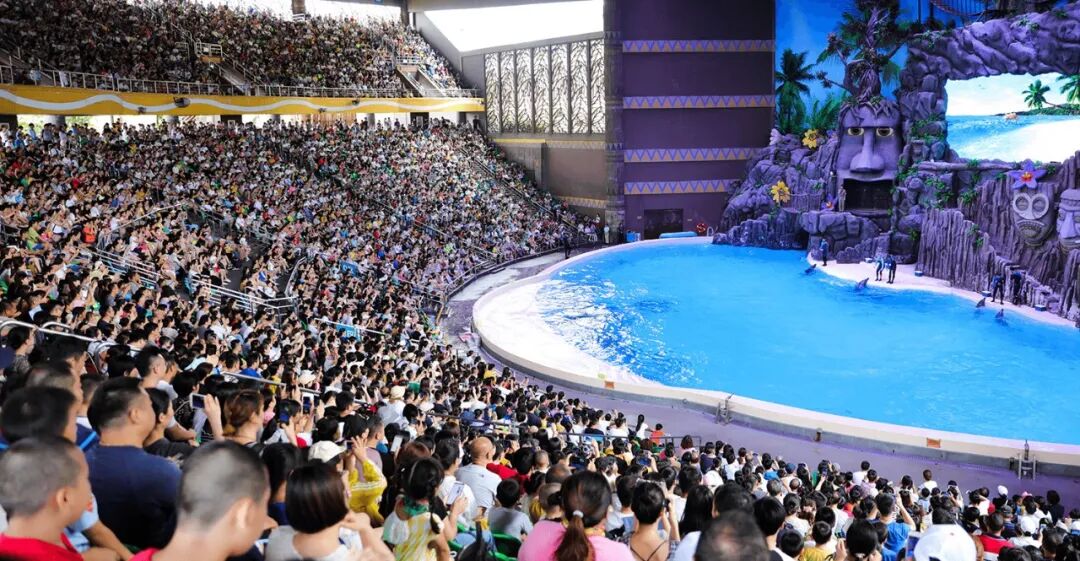
Dolphin Theater in Chimelong Ocean Kingdom
It's true that Beijing and Shanghai don't have world - class animal - themed resorts like Chimelong. But on the other hand, the Pearl River Delta doesn't have world cultural heritages like the Forbidden City, the Great Wall and the West Lake, doesn't have well - known ancient water towns like Wuzhen and Zhouzhuang, and doesn't have cultural and tourism landmarks like the Temple of Heaven and the Summer Palace.
From 1997 to 2005 was the critical period for the start of Guangzhou Chimelong. In economically developed city clusters such as the Yangtze River Delta, the Pearl River Delta and Beijing, local citizens, white - collar workers and middle - class families with children had a pain point, that is, where to go on weekends and holidays?
In response to this demand, the three regions have different solutions. At that time, there was a boom in the leisure tourism of ancient towns such as Zhouzhuang, Wuzhen and Xitang around Shanghai, which gave rise to the subsequent six and eight famous ancient towns in the south of the Yangtze River. At the same time, the Yangtze River Delta has scenic spots such as the West Lake in Hangzhou and the classical gardens in Suzhou, which are very delicate and rich in cultural heritage, meeting the needs of a large number of tourists. In addition, there are theme scenic spots such as Changzhou China Dinosaur Park and Liyang Tianmu Lake that serve parent - child families, and there are holiday resorts and rural tourism benchmarks such as Moganshan and Anji. The Yangtze River Delta also has no shortage of zoos. There are 1 - 2 zoos in each of Shanghai, Suzhou, Hangzhou, Wuxi and Changzhou, with all kinds of rare animals.
The projects in Shanghai and the Yangtze River Delta have well solved the problem of where local citizens, white - collar workers and middle - class families with children should go on holidays.
Actually, Guangzhou and the Pearl River Delta also have Lingnan water towns and old streets of overseas Chinese hometowns that are comparable to the ancient towns in the south of the Yangtze River, and characteristic cultural and tourism resources such as watchtowers and Hakka roundhouses that are comparable to the classical gardens in Suzhou. However, the Pearl River Delta has never had cultural and tourism projects comparable to the West Lake, the classical gardens in Suzhou and Wuzhen. The cities around Shanghai, such as Suzhou, Hangzhou, Wuxi and Changzhou, are all tourist cities. While the cities around Guangzhou, such as Dongguan, Foshan, Zhongshan and Jiangmen, are all manufacturing cities. There is nowhere for short - term holiday - makers to go on holidays.
Guangzhou Chimelong and later Zhuhai Chimelong and Qingyuan Chimelong have actually filled the gap in the short - term holiday market in the Pearl River Delta. Guangzhou Chimelong is different from ordinary zoos. The area of ordinary state - owned zoos in cities is at most a few hundred mu, and the area of larger wildlife zoos is about 2000 - 3000 mu. However, the area of Guangzhou Chimelong reaches an astonishing 10,000 mu. Starting from the original Xiangjiang Wildlife Zoo, new parks such as Chimelong Circus, Chimelong Bird Park, Chimelong Paradise and Chimelong Water Park, as well as a hotel cluster, have been continuously added. It can't be visited in one day. The aim is to let tourists stay and play for at least two days and one night, meeting the needs of short - term holidays.

Guangzhou Chimelong Tourist Resort
The reason why Chimelong can't emerge in Beijing is similar to that in Shanghai. Beijing itself has enough and high - quality cultural and tourism resources. In addition to sightseeing projects such as the Forbidden City, the Great Wall and the Summer Palace, there are also various municipal parks, botanical gardens and zoos. There are even 3 large - scale zoos, and there are also many mansions, cultural and tourism blocks and cultural and museum venues to choose from. There are also a large number of short - term holiday destinations. Backed by the Yanshan and Taihang Mountains, there are all kinds of mountains, rivers, valleys, Bashang Grasslands, ancient temples in the mountains and ancient Great Wall roads. There are also coastal holiday destinations such as Qinhuangdao and Beidaihe in the east, with different ways to play throughout the year. In a word, Beijing doesn't lack short - term holiday destinations.
Beijing and Shanghai can't cultivate an enterprise like Chimelong Group. It's not that the cultural and tourism markets in Beijing and Shanghai are bad. On the contrary, it's because the cultural and tourism resources in Beijing and Shanghai are too rich and the product choices are too diverse, so there is no demand for one - stop vacations in super - large resorts.
Around 1997, Beijing, Shanghai and Guangzhou almost simultaneously established wildlife zoos. At that time, Beijing established Daxing Wildlife Zoo and Badaling Wildlife Zoo. Daxing Wildlife Zoo is the core project of the current Daxing International Tourism Resort with an investment of 26.5 billion yuan. Initially, the areas of the wildlife zoos in the three places were all more than 2000 mu. Because Guangzhou Chimelong was in the right place, it continuously absorbed market nutrients, expanded all the way, and gradually grew to more than 10,000 mu by continuously obtaining land. While the wildlife zoos in Beijing and Shanghai are still excellent zoos locally, they don't have the opportunity to develop into super - resorts. It's not that the parks are not excellent enough, but that there is no market space.
Now, the Beijing Daxing International Resort has put forward the slogan of competing with Chimelong, and the Zhejiang Taihu Long Dream has imitated Chimelong's comprehensive holiday model. However, it's very difficult for both of them to replicate Chimelong's successful path. The emergence of Chimelong has never been simply about product design, management and operation, and marketing strategies. It's the result of the superposition of specific times, regional needs, the micro - environment of cultural and tourism and the in - depth development of the enterprise. To build a local version of "Chimelong" in various places, one can't just copy the shell of Chimelong. One should also see the background of local cultural and tourism supply and demand clearly. Only by understanding the real supply and demand situation in the local market and formulating supporting development plans and policy guidance can there be a chance to cultivate a local cultural and tourism giant.
(Image source | Official new media of relevant companies)
This article is from the WeChat official account "Zhiku Cultural and Tourism", written by Wang Xinyu, and is published by 36Kr with authorization.