Nobel laureate moves to Anthropic, Google loses two top talents in 48 hours, is internal faith collapsing?
In less than 48 hours, Google lost two AI giants.
On June 18th, Noam Shazeer, one of the founders of Transformer and the co - head of Google's Gemini team, announced his departure from Google again and returned to the rival camp to serve as the head of architecture research at OpenAI.
Two days later, in the early morning of the 20th, John Jumper, the vice president and engineering researcher at Google DeepMind who won the 2024 Nobel Prize in Chemistry with Demis Hassabis and was the key contributor to AlphaFold, also bid farewell to Google where he had spent 9 years and publicly announced his high - profile joining of Anthropic.
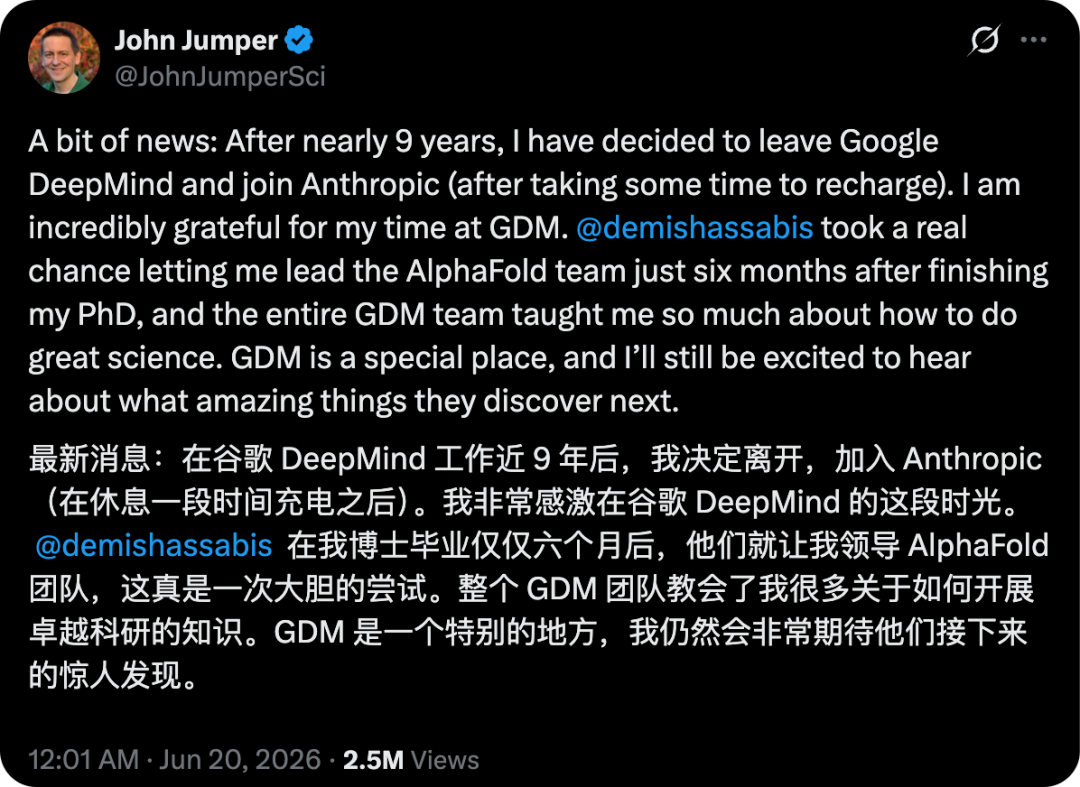
John Jumper officially announced on X that he would leave Google DeepMind and join Anthropic. He is very grateful to DeepMind CEO Demis Hassabis for giving him the opportunity to lead the entire AlphaFold team just six months after he graduated from his doctorate. He believes that the Google DeepMind team will still make more discoveries.
Google DeepMind CEO quickly reposted this message and said that he was very grateful for John's extraordinary cooperation and excellent collaboration with DeepMind in the past 9 years. AlphaFold is a great piece of research.
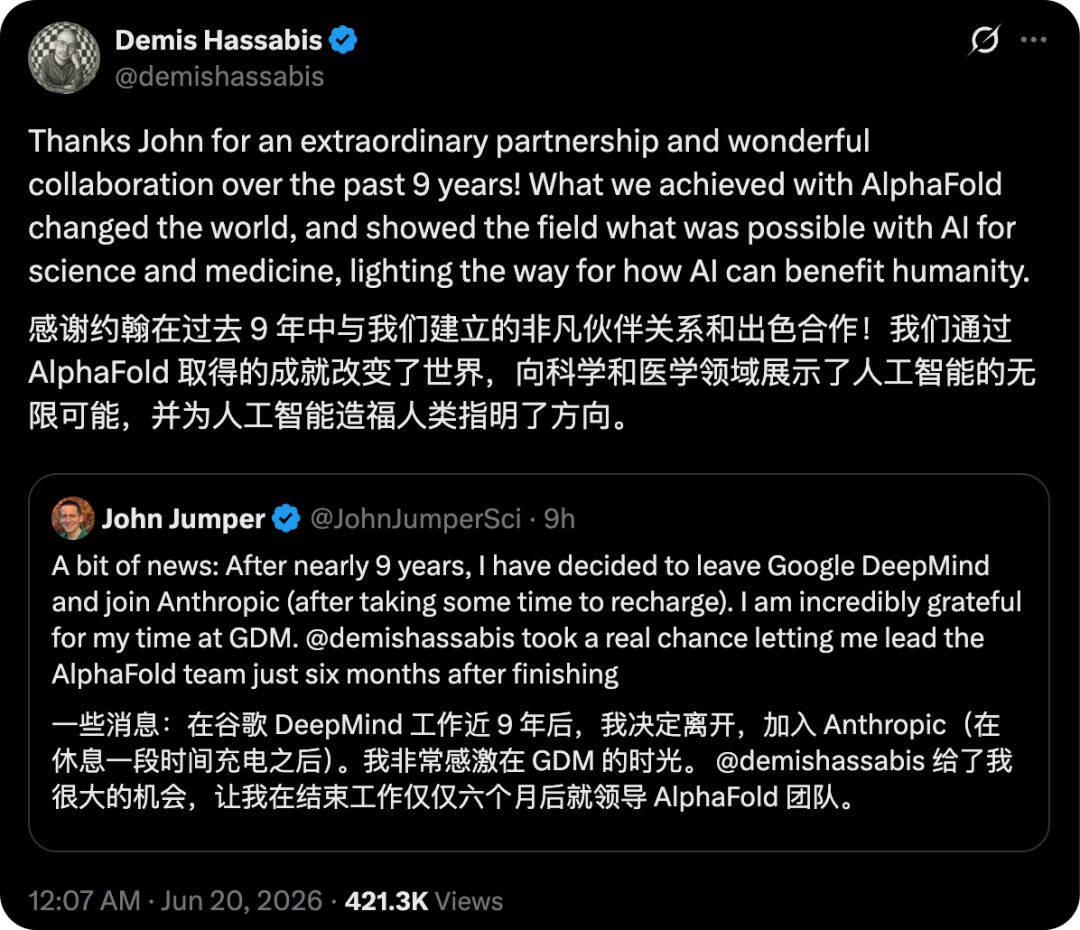
Many netizens commented below that although Demis and other Google AI staff showed great grace, the loss of AlphaFold talent to Anthropic must be very painful for Google.
Transformer and AlphaFold, one is the "god of architecture" who personally built the technical foundation of modern large models and Google's main model Gemini, and the other is a Nobel laureate representing the highest glory of Google's AI - for - Science.
Google lost two aces in a short period of time. According to the information shared by netizens on social media, an insider said, "I can't blame Noam Shazeer for leaving. He won't be the last big shot to leave Google."
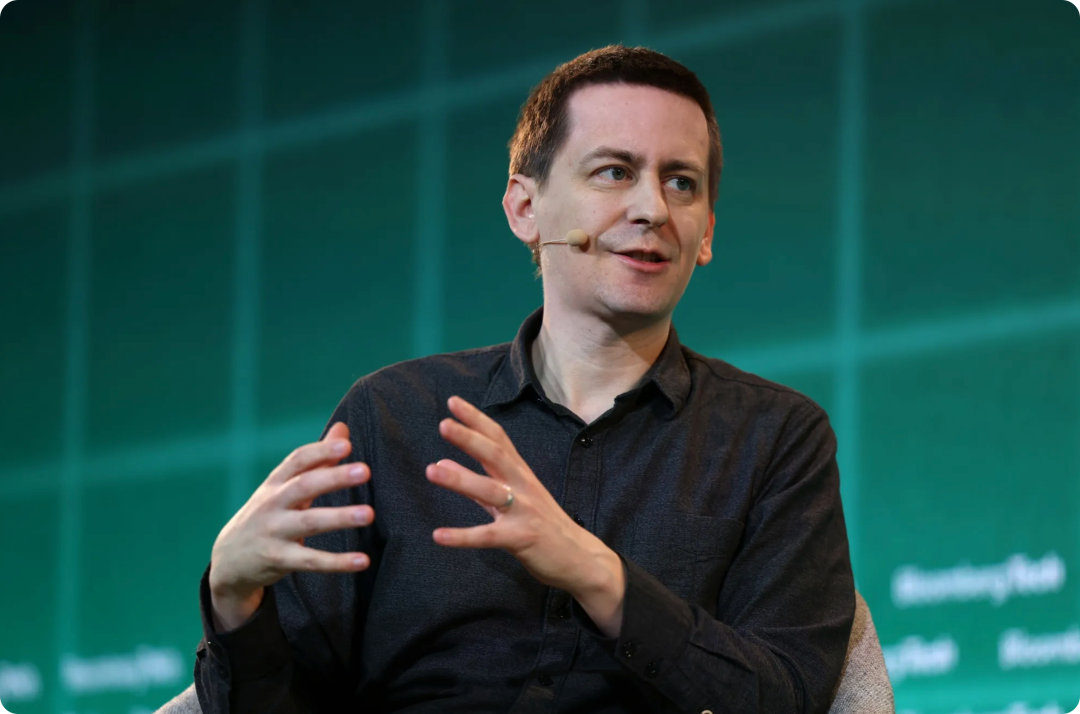
John Jumper
From GPT Image 2 comprehensively crushing Nano Banana to become the new king of AI image generation, to the release of the video generation model Gemini Omni Flash not attracting much attention and being easily defeated by ByteDance's Seedance 2 soon.
And Codex and Claude Code almost dominate most of the Coding Agent market. Google's Antigravity is little - known, and Anthropic's Fable 5 is so powerful that it might be shut down by the government...
"From models to products, the progress is extremely slow, and even a comprehensive defeat."
Currently, extreme frustration and widespread dissatisfaction are spreading within DeepMind. Employees generally believe that this once - number - one global AI laboratory has now slipped to an embarrassing third or even fourth place in the industry.
"In the fields of text, image, video, voice, and even vision, we no longer have any model at the industry's forefront (Frontier)... If after having so many resources and putting in more than four months of effort, we can't even come up with a real leading model, what on earth are we doing?"
According to insiders at Google, the Gemini 3.5 Pro scheduled to be released on June 30th is not the breakthrough innovation that Google needs to be truly competitive in the general artificial intelligence (AGI) race.
The senior management of DeepMind seems to have accepted the reality of losing to Anthropic and OpenAI, saying that only "major reforms" can bring them back to the peak state in the mid - to - late 2025.
Does Google still have a chance to have another "Nano Banana moment"?
The Nobel laureates who went their separate ways
The 2024 Nobel Prize in Chemistry witnessed the supreme glory of Demis Hassabis and John Jumper, two giants at DeepMind.
They won this award together because of AlphaFold. AlphaFold predicted more than 200 million protein structures, compressing what originally took several years in biomedicine into just a few minutes.
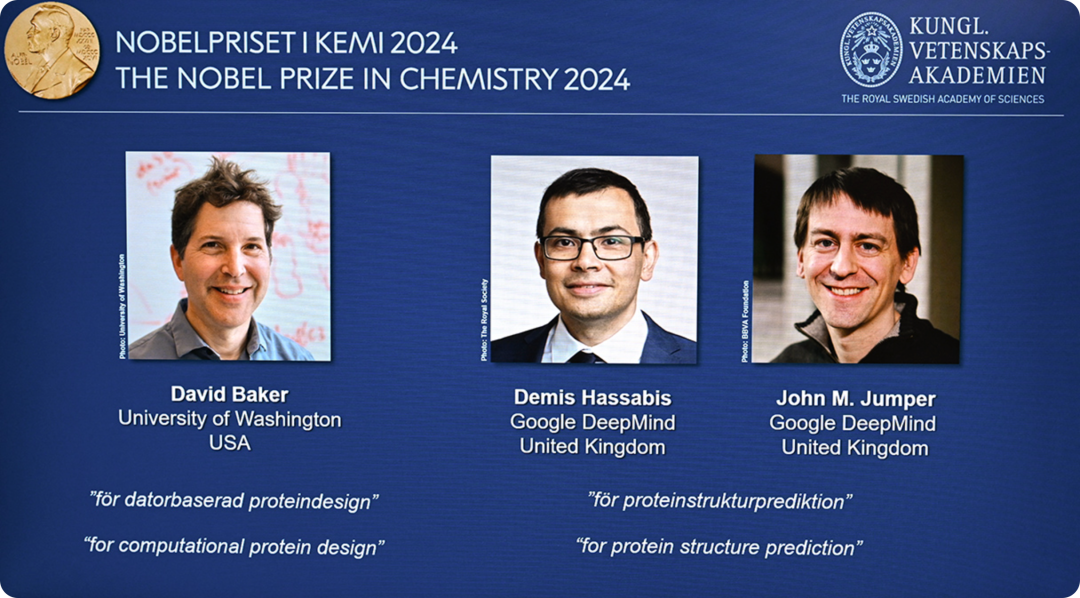
In 2024, at the age of only 39, John Jumper shared the Nobel Prize in Chemistry with Demis Hassabis, the CEO of DeepMind, and David Baker of the University of Washington.
In the biological community, the protein folding problem was once an ultimate puzzle that had plagued humanity for half a century. John Jumper was the core leader who led the team to solve this problem. As the chief researcher and engineering leader of the AlphaFold project, he led the design and evolution of the underlying architecture of this AI system.
From AlphaFold 2 first predicting the three - dimensional structure of proteins with extremely high accuracy, to later AlphaFold 3 expanding the prediction scope to all life molecules (including DNA, RNA, and small - molecule ligands), Jumper's work directly advanced structural biology by several decades.
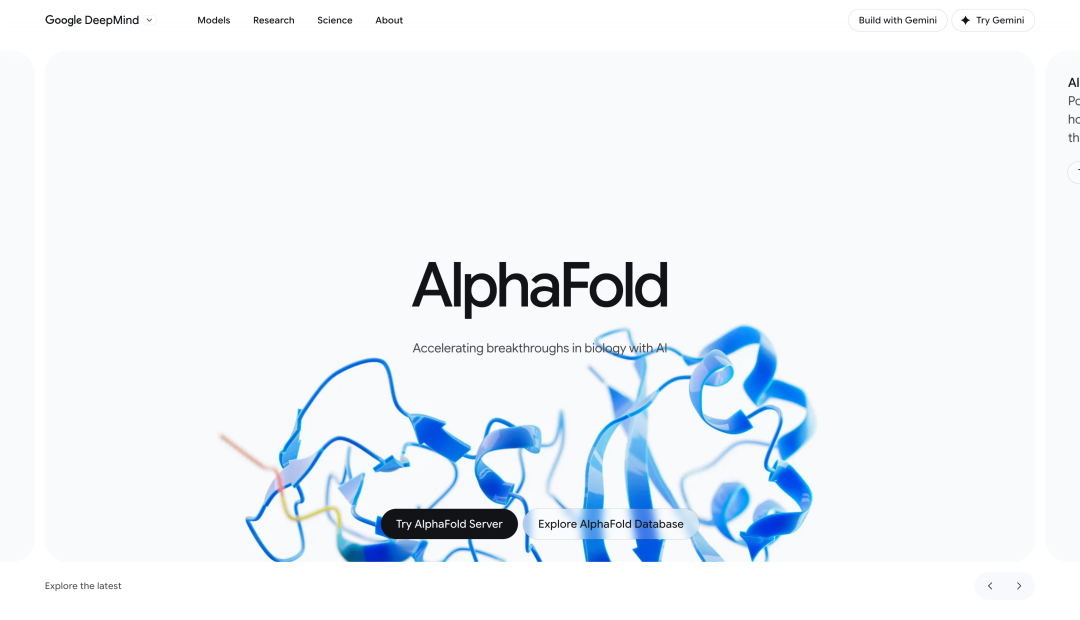
Million of researchers around the world are using his model to accelerate new drug development, design pest - resistant crops, and develop green enzymes.
Before participating in the AlphaFold project, John Jumper studied physics and mathematics as an undergraduate at Vanderbilt University and wanted to be a "pen - and - paper" theoretical physicist.
According to the information shown on LinkedIn, he then won a Marshall Scholarship to pursue a doctorate at the University of Cambridge. However, he found that using computational methods for quantum mechanics didn't suit him, so he dropped out after getting a master's degree and returned to the United States.
In the next three years, he used supercomputers to simulate proteins at D.E. Shaw Research. In 2011, he went to the University of Chicago and applied machine learning to protein folding. He obtained a doctorate in theoretical chemistry in 2017, and people at the University of Chicago later called him an "accidental chemist".
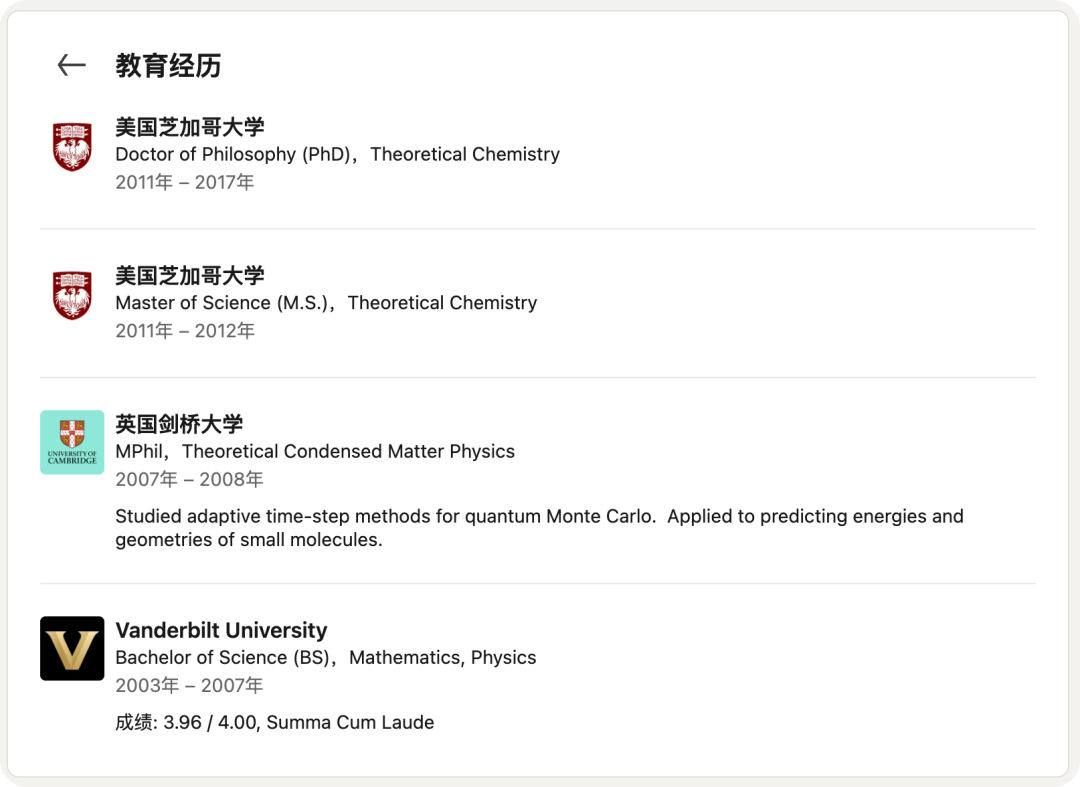
After graduating from his doctorate at the University of Chicago, he joined Google DeepMind.
In 2018, he led the entire AlphaFold team to completely rebuild the system. Two years later, AlphaFold2 achieved an accuracy of 90% in protein structure prediction at CASP14, which means it is almost as accurate as laboratory measurements.
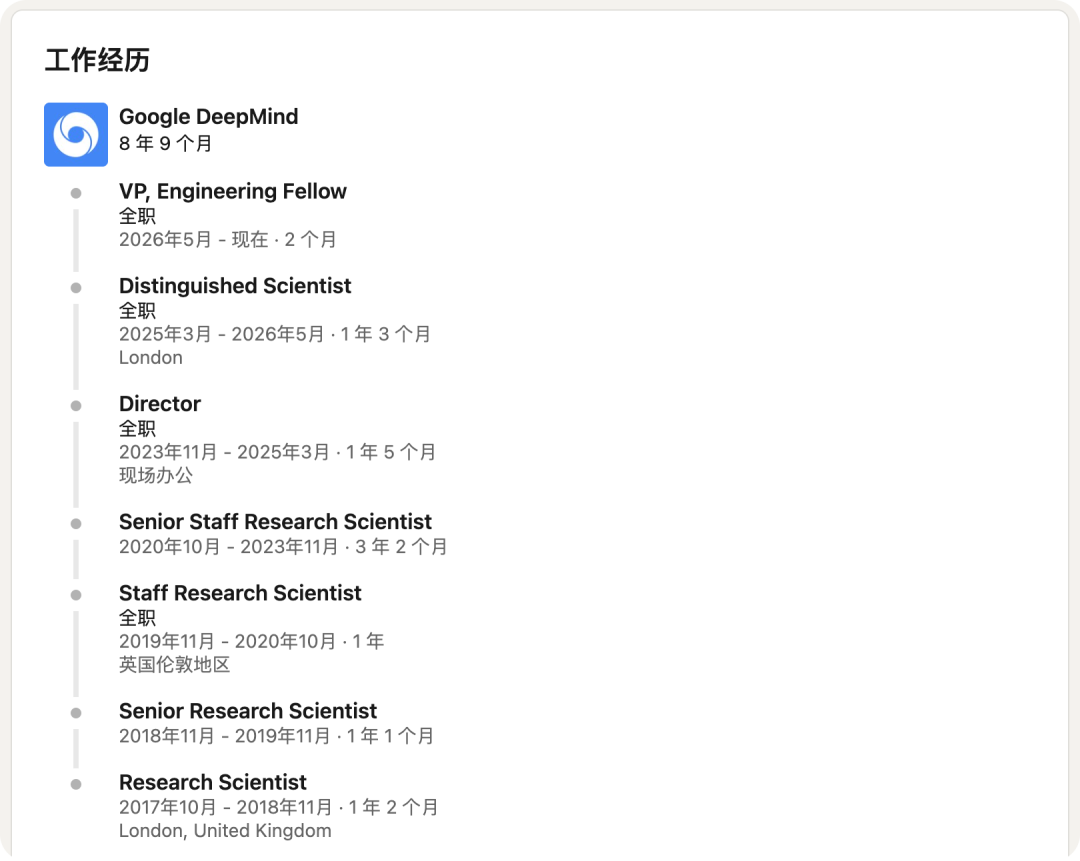
Not only does he understand biology, but he also has top - level capabilities in underlying architecture and engineering implementation. John Jumper is mainly responsible for AI Coding work within DeepMind and is also a key member of the AI Coding development team.
He was deeply involved in the technical research and development of Google's AI programming tools and large - scale code models to compete with GitHub Copilot, OpenAI, and Anthropic.
His departure has made Google's situation even worse in the currently struggling "commercial AI programming market".
Since Google has always been lagging behind OpenAI and Anthropic in the route of selling AI Coding Agents to enterprises, and AI Coding is a big piece of the pie in the entire AI field, Google doesn't want to lose this position.
Jumping to Anthropic, on the one hand, is because Claude is currently the undisputed strongest model in AI Coding.
With the release of Fable 5 and the close pursuit of GPT - 5.6, Anthropic is also investing heavily in the "scientific AI" track this year.
They have not only started to build real wet laboratories (Wet Lab), released research on biology - based agents (Bio - Agents), but also actively allied with top - tier medical institutions.
For Jumper, who has a biological background and combat effectiveness in AI programming engineering, staying at Google at this time is obviously no longer the optimal choice.
DeepMind's internal faith collapses after losing to Zhipu
The flow of talent can probably show a bit of the industry trend. From Meta's large - scale recruitment drive and heavy investment in talent hunting last year to this year when Meta's new model made no splash and there are no more news about Meta's talent - grabbing wars.
When such people start to choose to leave, what the market sees is often not just personal career planning, but a vote for the future.
Because top - level researchers have more information than the outside world. They know how far the next - generation models have progressed, where the internal resources of the organization are flowing, and where real breakthroughs are most likely to occur.
Google just lost Noam Shazeer, the core architect of Gemini, who jumped to OpenAI. And John Jumper's following suit directly confirms the desperate prediction of DeepMind employees in the information that "Noam will never be the last big shot to leave."
Looking back at Google's development during this period, in terms of models, the technology has stagnated and slipped to fifth place.
Since the release of Gemini 3.1 Pro in February this year, Google has not released any new cutting - edge models. The model Gemini 3.5 Flash released at the I/O Conference before is not much better than 3.1 Pro in actual experience. Even on the Artificial Analysis Intelligence Index, Google's best model has miserably dropped to fifth place.
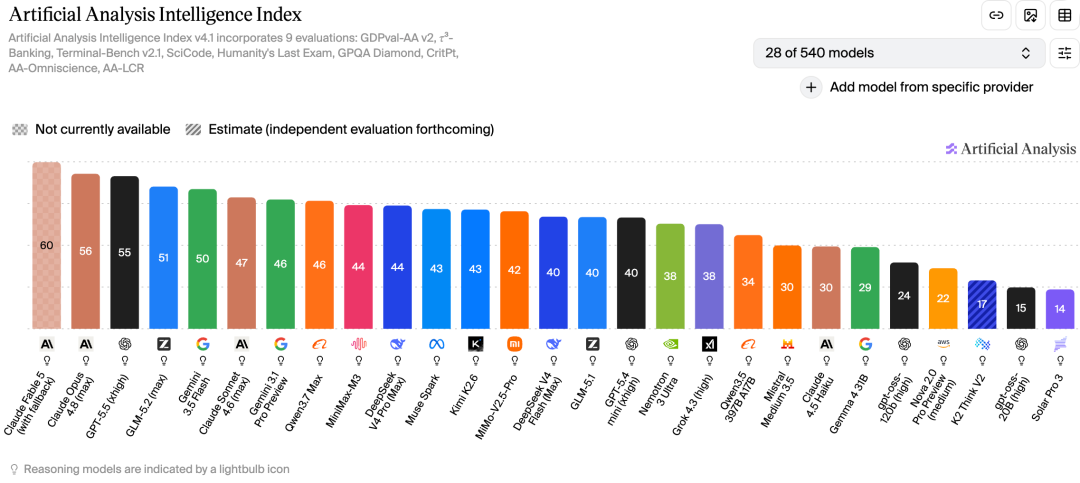
In addition to being firmly suppressed by Anthropic and OpenAI, it has even been overtaken by the domestic large - scale model Zhipu GLM.
Beyond general large - scale models, there is also a comprehensive defeat in multimodality. Google's ambitious multimodal small - scale model Gemini Omni Flash, which integrates the image - editing model Nano Banana Pro, the reasoning model Gemini, and the world model Genie, has hardly made any splash in the market.
There were a few related clips spread on social media, but they were soon easily crushed by Seedance 2, the current champion in the video generation field.
Despair for the future. Even worse, according to DeepMind employees, the Gemini 3.5 Pro to be launched on June 30th is not considered to bring any qualitative breakthrough internally and is completely insufficient to bring Google back to the peak in this AGI arms race.
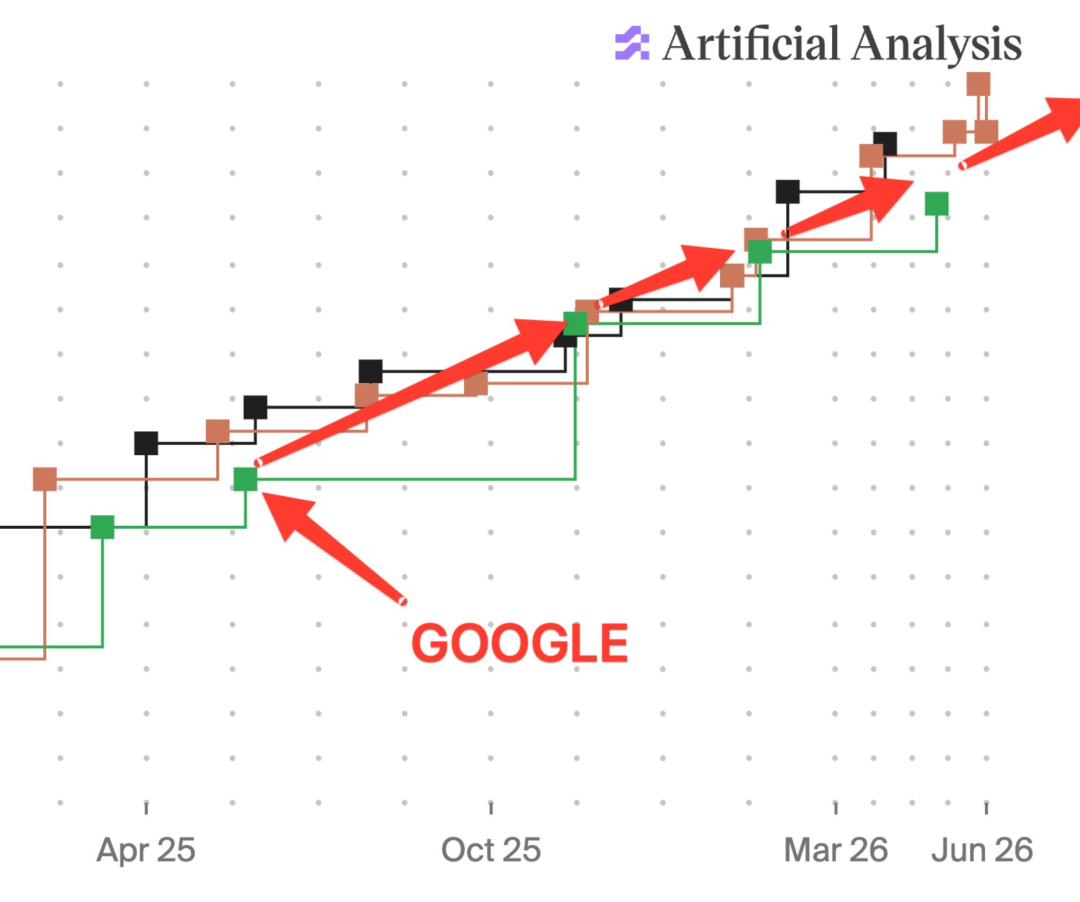
In this suffocating atmosphere of "senior management's disappointment, technological lag, and computing resources being eroded by mediocre commercialization", Noam Shazeer left, and John Jumper also left.
It's easy to understand why Noam Shazeer went to OpenAI. The competition of large - scale models will ultimately come down to training, architecture, data, and inference efficiency. A person who has participated in the Transformer paper and has built models at both Google and Character.AI has self - evident value within OpenAI.
Anthropic's recruitment of John Jumper is more like expanding its own boundaries. No matter how well Claude performs, it can't always just tell stories about text, code, and enterprise assistants. AI companies will increasingly compete in fields such as scientific computing, life sciences, and automated research in the future. Jumper's resume can make this direction more specific.
