The first group of consumers has already started boycotting AI-powered shopping
On June 15, 2026, three days before the end of the 618 Shopping Festival, Lin Xiao deleted that AI shopping assistant app.
This post - 95s Internet operator was once the most enthusiastic early adopter of AI shopping. With the mindset of "getting the best deals", she downloaded multiple AI shopping apps and repeatedly experienced the pleasure of "placing an order with just one sentence". "I thought it was amazing at that time. I said, 'Help me buy a carton of room - temperature, low - fat milk, the cheapest one', and it really jumped directly to the payment page."
During that period, Lin Xiao entrusted almost all her shopping needs to AI. She used the AI assistant of a leading e - commerce platform to buy shampoo, Doubao to buy snacks, and even asked AI to create a "gift - giving guide for straight men" when buying a birthday gift for her boyfriend. She once excitedly wrote in her WeChat Moments: "AI has finally freed me from the hassle of shopping!"

The turning point came in March.
She asked an AI assistant to "recommend a moisturizing cream suitable for sensitive skin with a budget of less than 300 yuan". The top - ranked product by the AI was a domestic brand she had never heard of. "I thought AI should know more about ingredients than me at that time, so I just placed the order." As a result, after using it for three days, her face started to turn red and she had an allergic reaction. When she checked the ingredient list, she found that the cream contained alcohol and fragrance, which was not suitable for sensitive skin at all.
What made her even angrier was that she later saw on Xiaohongshu that this cream was vigorously promoting GEO (Generative Engine Optimization) services, "which means paying to make AI recommend your product first". At that moment, Lin Xiao suddenly felt that she had been deceived. "I thought AI was my personal assistant, but it turned out to be a salesman for the merchants."
That night, Lin Xiao not only deleted that AI shopping assistant but also turned off all the AI recommendation switches in major mainstream e - commerce platforms and Douyin. "I'd rather spend half an hour reading reviews and comparing prices myself than be led around by a paid fool," Lin Xiao told "Mantis Observation".
She is not alone.
The year 2026 is known in the industry as the "Year of the First AI - Native Shopping Festival". Major platforms have invested tens of billions in subsidies, trying to make AI shopping the next big thing in terms of traffic. However, the real user feedback has given a resounding slap to this carnival - the first batch of consumers who tried AI shopping are voting with their feet.
Low Retention Rate Behind High Trial Rate
Data doesn't lie.
During the Spring Festival, the 3 - billion - yuan free - order event attracted more than 130 million people to experience AI shopping for the first time. The total number of interactions of ByteDance's Doubao reached 1.9 billion on Chinese New Year's Eve, and the daily active users of Tencent's Yuanbao once exceeded 50 million. At that time, the industry was full of optimism, and some even predicted that "2026 will be the year when AI shopping replaces traditional e - commerce".
But just three months later, the tide ebbed.
A report released by the third - party data agency Nosto shows that 69% of early users of AI shopping assistants gave up using them directly after receiving irrelevant product recommendations, and only 28% would actively adjust their needs and continue to interact. Even more astonishing, the latest "2026 AI Consumption Confidence Index Report" released by the China Consumers Association shows that consumers gave a high score of 8.4 for the convenience of AI shopping, but their trust in the fairness of recommendations and privacy security was only a pitiful 5.1.

This contradiction was particularly evident during the 618 Shopping Festival.
Data released by an e - commerce platform shows that the cumulative number of users who had conversations with its independent AI shopping app exceeded 3 million, a more than 10 - fold increase compared to last year's Double 11. However, reporters from "Daily Economic News" found in interviews that about 20% of users would refer to AI's suggestions when purchasing fast - moving consumer goods, but hardly anyone would directly place an order through AI.
"Everyone is trying it, but they leave after the trial," a product manager of an e - commerce platform who preferred to remain anonymous told "Mantis Observation". "Our back - end data shows that the 7 - day retention rate of AI shopping is less than 15%, and the 30 - day retention rate is only 3%. This is far from what we expected."
Why does this phenomenon of "high trial, low retention" occur? The answer lies in the experiences of countless users like Lin Xiao who have been let down.
Accuracy Failure
The biggest selling point of AI shopping is that it "understands you", but in reality, it can't even understand the most basic needs.
36Kr conducted a real - world test in May this year, asking the AI shopping assistants of three major platforms to "recommend prescription food for a puppy diagnosed with portal vein shunt". As a result, the recommendation list of one AI shopping assistant prominently included kidney prescription food, and another AI assistant recommended an ordinary adult dog food. Only Doubao barely gave the correct answer, but the top - ranked product was a niche brand with extremely low sales.
Reporters from "Daily Economic News" also conducted a similar test, inputting "a household coffee maker for two people, non - automatic, easy to clean, with a budget of less than 2000 yuan". The AI of a certain platform first replied, "As an artificial language model, I haven't learned how to answer this question." After trying again, the three recommended products were even more absurd: the first one was a coffee maker accessory, the second one didn't have a single official flagship store, and the third one cost as much as 4990 yuan, far exceeding the set budget.

"Today's AI shopping assistants are essentially just an upgraded search engine," an AI industry insider explained to "Mantis Observation". "They don't really 'understand' your needs. They just match products based on keywords. If there are words they don't recognize in what you say, or if your needs are a bit more complex, they'll fail."
Even more laughable is that many AIs can't even distinguish between "out of stock" and "discontinued". Some netizens complained that when they asked AI to recommend a mobile phone, it recommended three models that had already been discontinued. Others have encountered situations where the recommended products showed "this product has been deleted" when they clicked on them.
"I spent 10 minutes describing my needs to the AI, but it recommended a bunch of junk to me. In the end, I just searched by myself for 5 minutes and found what I wanted," a netizen wrote on Xiaohongshu. "It's a waste of time."
AI Becomes a Paid Salesman for Merchants
If the lack of accuracy is a technical problem, then the lack of neutrality in recommendations is a problem of business ethics.
Since this year, GEO has suddenly boomed. "Now, as long as you're willing to pay, AI will rank your brand first," a GEO service provider publicly sold services in a WeChat group. "We have a set of mature methodologies that can make your products rank among the top in the recommendations of all major mainstream models. The fee is calculated quarterly. The basic version costs 9800 yuan, and the advanced version costs 39800 yuan."
This "paid recommendation" model has directly destroyed consumers' trust in AI.
"I used to think that AI was neutral and would recommend the best products to me. Now I know that it recommends whoever pays more," Lin Xiao said. "Now, as long as AI repeatedly recommends the same brand, my in - born sense of alertness kicks in. I'll immediately turn off AI and check the information myself."

The research data of the China Consumers Association also confirms this: 75% of consumers said that they would immediately lose trust if the AI recommendation results contained sponsored content. 68.3% of consumers are worried that AI will use big data to "target regular customers" and recommend products at different prices to different people.
Even worse, the AIs of many platforms have obvious channel barriers. They preferentially push the goods from their own e - commerce platforms, and most cross - platform product links cannot be retrieved. That is to say, in all likelihood, if you search for products in the AI assistant of a leading e - commerce platform, it will only recommend products from its own platform; if you search in Doubao, it may only recommend products from the Douyin Mall.
"This is not an AI shopping assistant at all. It's clearly a tool for platform traffic acquisition," a netizen complained. "It won't help you find the lowest price across the whole network. It only helps the platform keep you within its own ecosystem."
Who Is the Consumer Data Sold to?
In addition to inaccurate recommendations and lack of neutrality, data privacy and security are also important reasons for consumers to resist AI shopping.
A survey by YouGov shows that data privacy and security, with a 51% share, has become the primary reason for consumers to resist AI shopping. 88% of Generation Z believes that AI - driven personalized recommendations should be more strictly regulated. 65% of young people are worried that AI will over - collect and abuse their consumption data.
For AI to understand consumers, it must collect all of their consumption data: what you've bought, what you've browsed, how long you've stayed on a certain page, and even your chat records with customer service. Once this data is leaked, the consequences will be unimaginable. Even more terrifying is that many platforms will sell this data to third - party merchants for targeted advertising.

In March this year, the media exposed that the AI shopping assistant of an e - commerce platform collected users' chat records and used them for advertising. Some users reported that after just chatting with the AI about "having trouble sleeping recently", they received a large number of advertisements for sleeping pills and sleep aids the next day.
"I feel like I'm running around naked," a user said. "I use AI for convenience, not for it to expose all my privacy."
I Don't Want to Ask AI Even What Color of Shirt to Buy
What worries young people more than privacy leakage is the loss of decision - making autonomy.
"In the past, when buying things, I would do my own research, compare the advantages and disadvantages of different brands, and finally make a choice. Although this process was a bit troublesome, I could feel that I was in control. Now, with AI, many people are too lazy to think and just ask AI, 'What should I buy?'", a college student's video posted on Douyin received a large number of likes. "Don't let AI make decisions for you, or you'll gradually lose your ability to think independently."
Under this video, many people said they felt the same way: "My first reaction when buying things now is to ask AI. Sometimes, I even let AI help me choose what color of shirt to buy." "Once I asked AI to recommend a book, and it recommended a book that I wasn't interested in at all, but I still bought it. Now, I'm thinking, am I buying a book for myself or paying for AI's recommendation?"
A study by the Fudan Consumer Big Data Laboratory shows that 42% of consumers are worried that over - relying on AI will lead to decision - making inertia and the degradation of even the most basic judgment ability. 36.8% of college students believe that the excessive personalization of AI will reduce their freedom of choice.
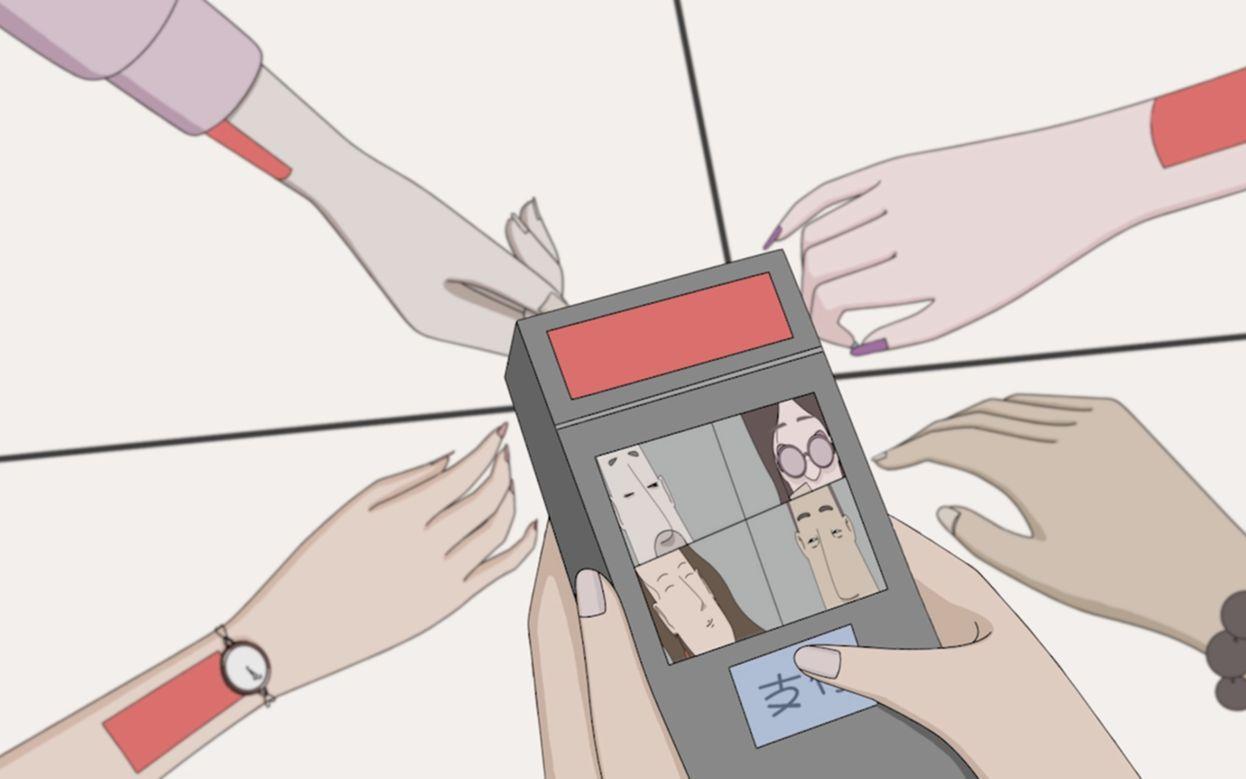
"Zero - friction convenience may be the most desired way of harvesting for capital," a netizen wrote. "They let AI make all the decisions for you, and you just need to pay. Over time, you'll become a thoughtless consumption machine."
In fact, shopping is not just a transactional behavior but also an emotional experience.
"I like the feeling of window - shopping. I like to stroll slowly in the mall, try on the things I like, and chat with my friends. This process itself is very enjoyable," a post - 90s girl said. "AI shopping simplifies shopping to inputting needs and clicking to pay, completely losing the fun."
Research shows that in hedonic consumption involving personal feelings, tastes, and emotional connections, the proportion of people choosing AI recommendations drops sharply to 42%, far lower than the 67% for practical products. Only 9% of Generation Z is willing to rely on AI to discover trendy items. They prefer offline store visits, app shopping, and recommendations from relatives and friends.
"When buying clothes, you need to consider the style and fabric; when buying cosmetics, you need to consider the color and texture; when buying gifts, you need to consider the recipient's preferences. AI simply doesn't understand these things," Lin Xiao said. "AI can help you compare prices and put together orders, but it can't help you feel the comfort of a piece of clothing on your body, nor can it help you experience the touch of receiving a carefully - selected gift."
Use AI as a Tool, Not Rely on It Completely
However, young people are not completely against AI shopping. They are forming a more rational and mature usage strategy: using AI as an efficiency tool rather than a decision - making agent.
"I only use AI to do some simple and mindless things now," a consumer said in a conversation with "Mantis Observation". "For example, calculate how to put together orders most cost - effectively during the 618 Shopping Festival, compare the parameters of different brands of mobile phones, or check the historical lowest price of a certain product. As for what to buy and which brand to choose, I still make the final decision myself."
This "tool - based usage" attitude is particularly evident in different consumption fields:
For standardized, parameter - oriented products such as 3C digital products, daily necessities, and medicines, the acceptance of AI is relatively high. It can indeed save a lot of time in price comparison, parameter comparison, and discount calculation.
For products that require aesthetic judgment and emotional connection, such as fashion clothing,