Is traditional Chinese wellness water replicating the category miracle of sugar-free tea?
In June, a "water battle" breaks out again on the supermarket shelves.
The health - promoting water, which was a new face just a couple of years ago, has significantly expanded its territory. Red bean and barley water, five - fingered fig and barley water, mung bean and lily water... Health - promoting waters of different brands and packaging are vying for attention on the shelves.
"This stuff has become a regular here," said the owner of a convenience store in Chaoyang District, Beijing, pointing at the health - promoting waters that occupy two rows of freezers. "When it was first introduced a couple of years ago, customers would ask about it. Now they just pick it up and leave. And it hasn't been taken off the shelves in winter either, and it's been selling well all the time."
Health - promoting water is no longer just a trendy and novel concept; it is becoming a regular item on the beverage shelves.
Recently, the "Insight Report on the Development Trend of China's Chinese - style Health - promoting Water Industry (2026)" (hereinafter referred to as the "Report") released by the Forward - looking Trend Research Institute pointed out that Chinese - style health - promoting water has risen from a niche segment to an indispensable core incremental category in the beverage sector. At the same time, after going through the initial stage of category development, the pattern of "one dominant and many strong" has basically taken shape.
But obviously, it's just the beginning. In this report, more than 80% of consumers are optimistic that it will become a daily drink like sugar - free tea.
The question is, is it replicating the category miracle that sugar - free tea achieved in the past decade, or is it possible to blaze a more remarkable path?
The New Star of Healthy Drinks
Chinese - style health - promoting water has become the fastest - growing category on the beverage shelves.
The Report shows that the market size in 2025 has soared 35 times compared to 2022, and its growth rate ranks among the top in all beverage sub - categories. According to the analysis and monitoring data from Magic Mirror, from January to November 2025, the overall sales of the Chinese - style health - promoting water market increased by 35.4% year - on - year, and the sales volume climbed by 36.3% simultaneously, with both volume and price rising.
In the view of the person in charge of a supermarket in Beijing, this change is very obvious at the terminal. "Last year, most people just tried the health - promoting water. This year, there are significantly more repeat customers."
What makes Chinese - style health - promoting water grow so fast? It's the convergence of two forces.
One force comes from the supply side.
If Chinese - style health - promoting water was just a game for a few players in the past few years, now it has become a hotly contested territory. The Report believes that with the entry of industry giants such as Nongfu Spring, Master Kong, and Uni - President in 2025, Chinese - style health - promoting water has officially entered the 2.0 development stage, and the popularity of the track has soared across the board.
Currently, the industry has formed four major factions: emerging brand faction, traditional cross - border faction, retail platform faction, and time - honored pharmaceutical enterprise faction. Among them, the emerging brand faction, represented by Hao Zizai under Yuanqi Forest, is the pioneer and leader of this track, seizing the consumers' minds in advance with its strong product strength through process innovation and formula innovation.
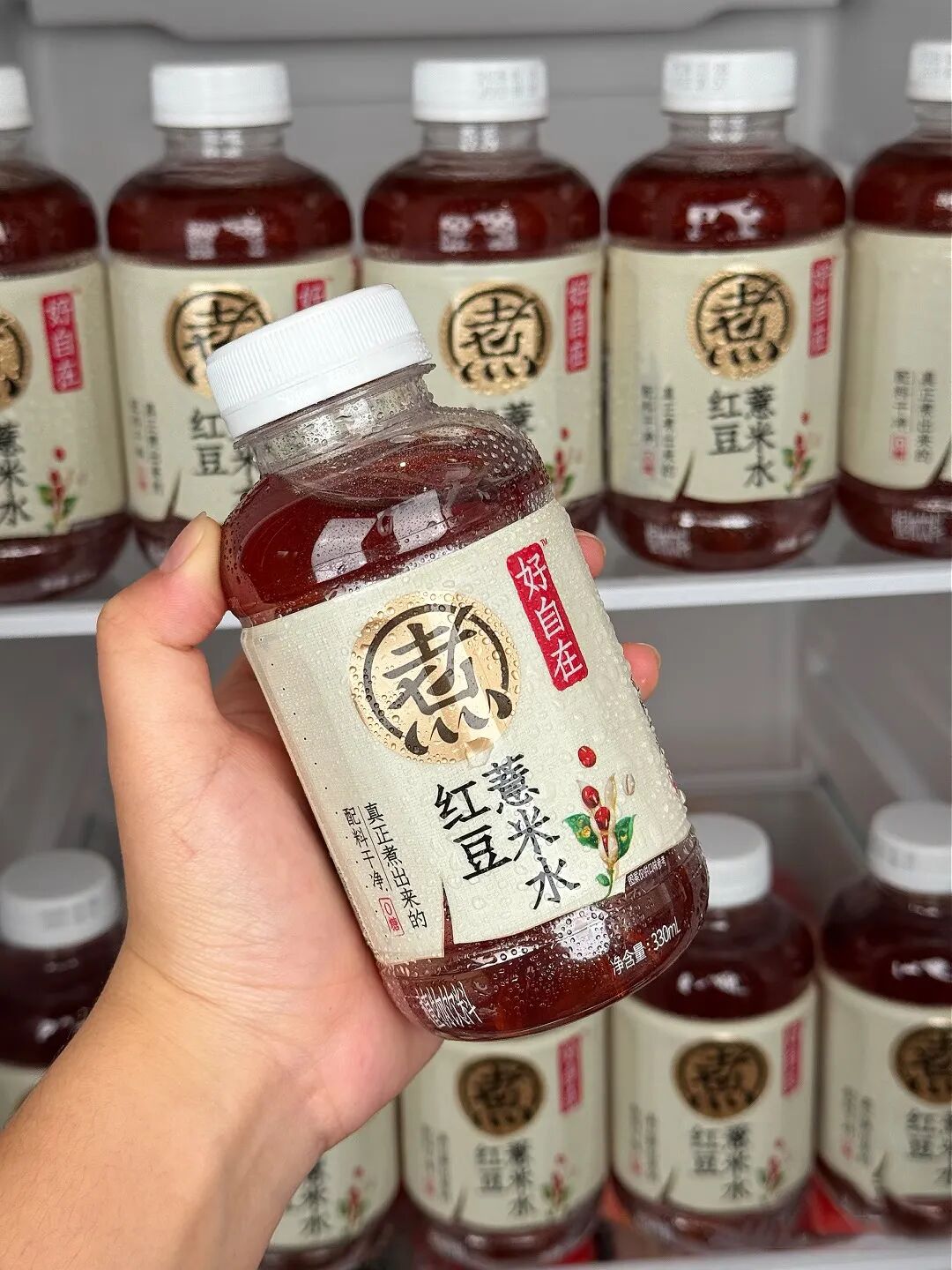
The retail platform faction, represented by Hema, Sam's Club, and Dingdong Maicai, has also gained a good reputation in recent years. With their strong channel traffic and resources from contract manufacturers, their products are launched and updated very quickly. It may only take a few months from project establishment to shelf placement, and the time from shelf placement to removal may be even shorter.
After the "flourishing of a hundred flowers," the Chinese - style health - promoting water industry will face a reshuffle. Compared with the emerging brand faction, the products of the retail platform faction still need to improve their irreplaceability and competitiveness and have a longer way to go.
The other force comes from the demand side.
Sugar - free tea took ten years to educate consumers about "de - sugaring" their taste, making drinking sugar - free water a daily habit. Health - promoting water takes it a step further. It is not only sugar - free but also "nourishing." The Report shows that 60.7% of consumers buy health - promoting water for specific health benefits, and the same proportion of consumers buy it to replace milk tea and carbonated drinks.
In other words, health - promoting water meets both the needs of "getting rid of the bad" and "adding the good," which has carved out a differentiated path in the healthy beverage market.
Meanwhile, compared with other health - oriented products like sugar - free tea, Chinese - style health - promoting water has a natural advantage: it contains no caffeine. This gives it a larger audience and more diverse consumption scenarios.
Sugar - free tea contains caffeine, which means there are natural time restrictions for its consumption. Many people dare not drink it after 4 p.m. for fear of affecting their sleep. There are also implicit thresholds for the consumer group, such as children, pregnant women, and those sensitive to caffeine, who are automatically excluded.
Health - promoting water is different. Its base ingredients are red beans, barley, wolfberries, and jujubes, which are both food and medicine. It contains no caffeine, and there are no restrictions on when to drink it throughout the day. It also covers a wider age range of consumers. A consumer said in a survey, "I stop drinking tea after 4 p.m., but I can drink health - promoting water until I go to bed."
This seemingly small difference directly determines the ceiling of the category. A product that can circulate among all people at all times naturally has a larger penetration space.
There is also a more fundamental driving force behind the rise of health - promoting water.
In 2024, the National Health Commission updated the list of substances that are both food and medicine, covering 106 substances, providing clear compliance space for beverage companies' formula innovation. In the beginning year of the 15th Five - Year Plan, the use of substances that are both food and medicine was clearly identified as a policy - favored area in the functional food industry. The policy certainty has encouraged more enterprises to invest in this track.
The Quality Competition is Accelerating
What happened in the health - promoting water track from 2024 to 2026? One word: competition.
After statistics on 50 Chinese - style health - promoting water brands on the market, the Report found that there were 25 types of red bean and barley water, 8 types of jujube and wolfberry water, 7 types of tangerine peel and hawthorn water, 6 types of mung bean and lily water, and 6 types of five - fingered fig and barley water, which emerged last year.
Ingredients like red beans, barley, wolfberries, and jujubes are combined in different ways in products of different brands, just like building blocks.
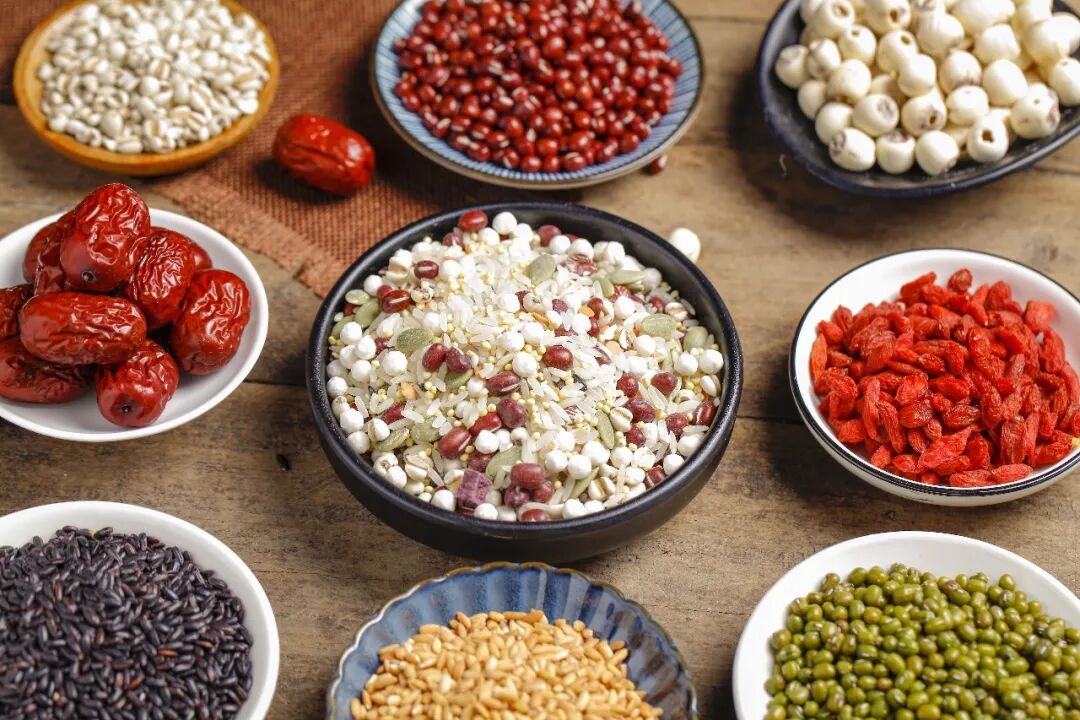
Under the homogenization, it is becoming increasingly difficult to impress more and more savvy consumers with just concepts and packaging. This anxiety has forced the industry to try to introduce some niche flavors and improve the basic skills to enter the next stage.
The Forward - looking Trend Research Institute believes that Chinese - style health - promoting water has entered a new 2.0 "health - quality improvement" stage. The industry competition has shifted from concept marketing, which anyone can do, to a competition of product strength that requires real skills.
This product - strength competition is taking place on two fronts simultaneously: formula and supply chain.
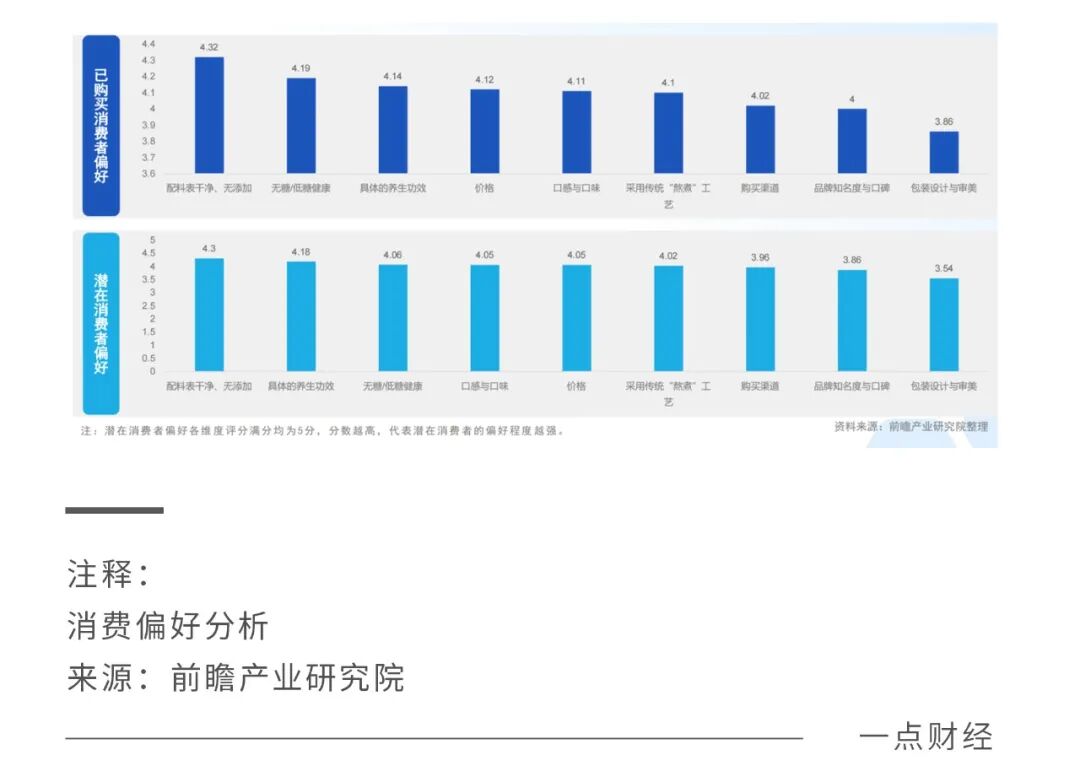
What consumers want is a "trustworthy" bottle of water. Health benefits are a bonus, and cleanliness and health are the bottom line. The consumer survey in the Report shows that among the factors that consumers who have already purchased value the most, the first is "clean ingredient list, no additives," the second is "sugar - free/low - sugar and healthy," and the third is "specific health benefits."
Driven by demand, Chinese - style health - promoting water is entering an upgrade era dominated by "clean formulas." The problem is that a shorter and cleaner ingredient list doesn't necessarily mean better taste and more trust. Good raw materials and good production are also needed. Without a complete link from the origin to the factory, "cleanliness" is just a castle in the air.
The core selling point of health - promoting water is the ingredients themselves. The upper limit of the ingredient quality determines the upper limit of the product. Commonly used ingredients such as red beans, barley, wolfberries, and jujubes have long been circulated in the form of bulk agricultural products, with uneven quality and a lack of a unified standard system.
This means that whoever can make efforts upstream and establish standards first will gain the trust anchor of Chinese - style health - promoting water. Naturally, the health - promoting water track is becoming more and more resource - intensive, and brands are starting to lock in production areas and build their own factories.
The Report shows that from 2023 to 2025, the number of brands in the Chinese - style health - promoting water industry that publicly disclose the origin of their raw materials increased from 9 to 23, and the proportion increased from 47% to 55%; the number of brands with self - production increased from 4 to 14, and the proportion increased from 21% to 34%.
"The market share will further concentrate on the leading players with product strength, brand power, and full - link operation advantages," predicted the Forward - looking Trend Research Institute.
The leading brands are already in the forefront. Hao Zizai of Yuanqi Forest is even one of the main promoters of the 2.0 era.
In 2023, just four months after its launch, the sales volume exceeded 100 million yuan; in 2024, the sales reached 1 billion yuan, becoming Yuanqi Forest's third single product with a sales volume of over 1 billion yuan after bubble water and electrolyte water; in 2025, according to media reports, the sales continued to grow at a high speed.
In terms of raw materials, Hao Zizai clearly disclosed the specific production areas of core categories such as red bean and barley, and jujube and wolfberry. In 2025, it even established its first red bean planting base in Heilongjiang, growing the "Pearl Red" variety, a special variety in Northeast China. Good soil, good water, and good beans finally give rise to a dense bean aroma.
In production, Hao Zizai relies on Yuanqi Forest's own factories. From the construction of the first factory in 2019 to the upcoming construction of the seventh new factory in Xuchang, Henan in 2026, Yuanqi Forest has been increasing its investment in self - built production capacity.
Building its own supply chain enables it to solve the problems of trust and quality across the whole link. For example, it can explore the best boiling process.
There are two main production processes for health - promoting water: boiling and extraction. Extraction pursues efficiency, quickly extracting active ingredients under high temperature and pressure, but the aroma and layering of the ingredients are often flattened; boiling allows the ingredients to fully release their flavors in a slow fire, and the bean aroma of red beans, the grain aroma of barley, and the after - taste of tangerine peel can be retained as much as possible.
From planting, R & D, production to terminal delivery, this link is becoming more and more resource - intensive but also more and more difficult to replicate.
How Much Growth Space is Left?
Will health - promoting water be another sugar - free tea, or does it have more room for growth?
The Report predicts that by 2030, the market size of Chinese - style health - promoting water is expected to increase by more than 6 times compared to 2025, with an average annual compound growth rate of about 45%.
Beyond growth, the "water replacement" with a wider range of scenarios and a larger consumer group is the ultimate support for the story of health - promoting water.
Whether a category can truly stand on its own depends on whether consumers will make repeated purchases. The Report shows that 43% of consumers buy it 1 to 3 times a week, and 31% buy it 1 to 3 times a month. This means that more than 70% of consumers have formed relatively stable purchasing habits, and its positioning as a "water replacement" is gradually being solidified.
The feedback from the terminal also confirms this. A retail practitioner in Beijing revealed that the repurchase rate of health - promoting water is catching up with that of traditional sugar - free tea. In particular, Hao Zizai has already taken the prime position in the beverage area.
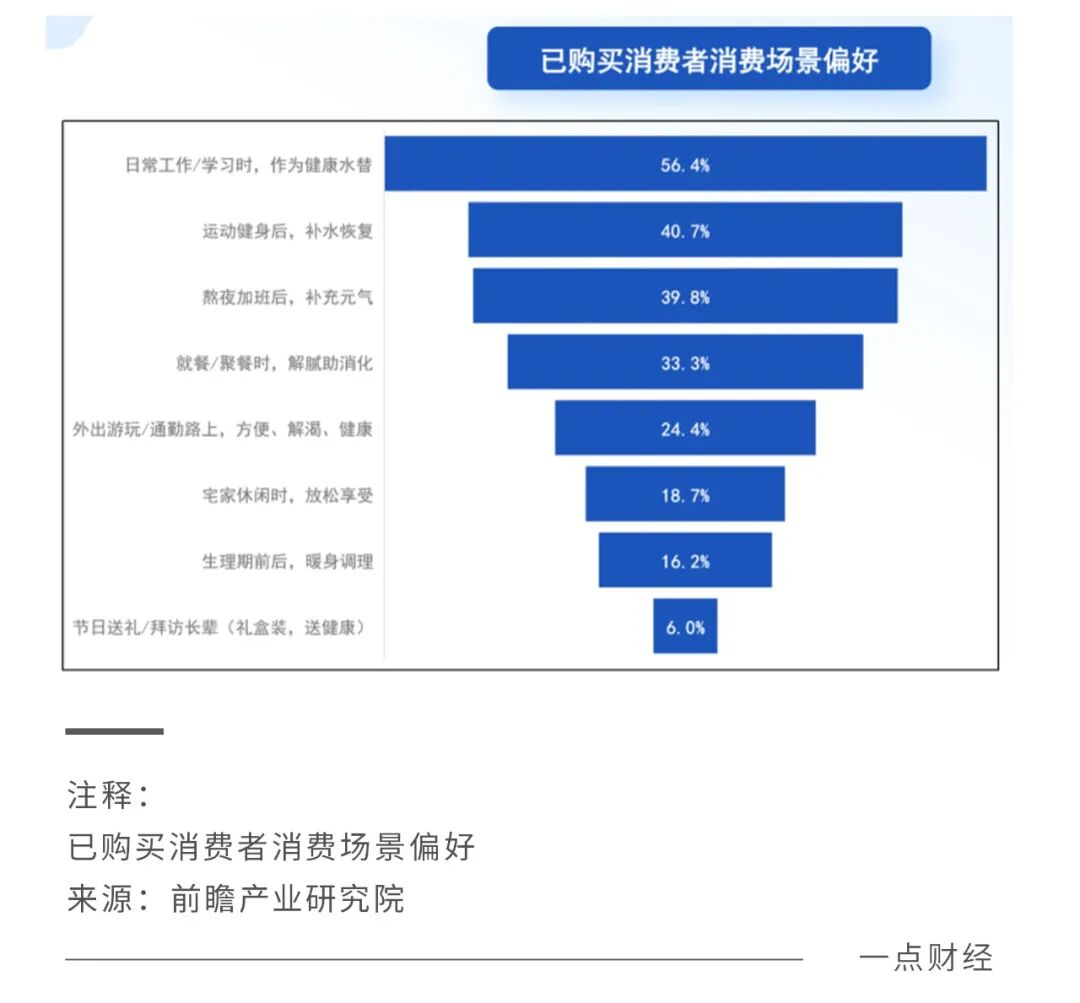
The expansion of consumption scenarios is also making health - promoting water more of a daily drink. The Report shows that drinking it as water during work or study ranks first, followed by replenishing water after exercise and regaining energy after staying up late. It is also used to relieve greasiness during meals and quench thirst during commuting... Chinese - style health - promoting water has appeared in these high - frequency daily scenarios of consumers.
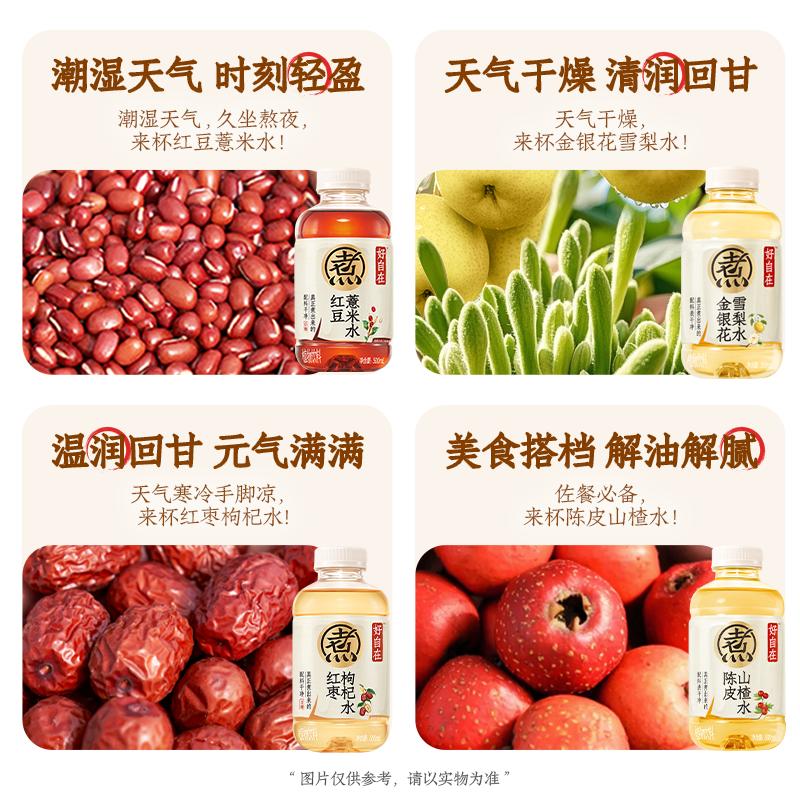
Meanwhile, as the ingredients gradually become more focused, Chinese - style health - promoting waters are also gradually shifting from general health - promotion to focusing on core scenarios with urgent needs, such as "dampness - removing and spleen - strengthening," "qi - tonifying and blood - nourishing," and "recovery after staying up late." The product matrix of Hao Zizai corresponds to these scenarios: red bean and barley water for dampness and edema, jujube and wolfberry water for staying up late and eye strain, and tangerine peel and hawthorn water for indigestion after a big meal.
Channel sinking is the next growth point.
Currently, consumers of health - promoting water are highly concentrated in first - tier cities, accounting for more than half, while the proportion of low - tier cities for sugar - free beverages has reached 50%. The Report clearly points out that channel sinking is one of the core trends in the future. Leading brands such as Hao Zizai of Yuanqi Forest have taken the lead in this regard.
In May last year, a relevant person in charge of Yuanqi Forest told the media that Hao Zizai would increase the distribution in the sinking market. By the end of 2025, the number of Yuanqi Forest's cooperation outlets across the country exceeded 1.28 million, and 64 new cities were covered.
Of course, to expand the consumer group, health - promoting water still faces greater challenges.
The Report shows that "taste experience" is one of the core concerns of consumers who have not purchased Chinese - style health